- English
- French
- German
- Portuguese
- Spanish
- Russian
- Japanese
- Korean
- Arabic
- Greek
- German
- Turkish
- Italian
- Danish
- Romanian
- Indonesian
- Czech
- Afrikaans
- Swedish
- Polish
- Basque
- Catalan
- Esperanto
- Hindi
- Lao
- Albanian
- Amharic
- Armenian
- Azerbaijani
- Belarusian
- Bengali
- Bosnian
- Bulgarian
- Cebuano
- Chichewa
- Corsican
- Croatian
- Dutch
- Estonian
- Filipino
- Finnish
- Frisian
- Galician
- Georgian
- Gujarati
- Haitian
- Hausa
- Hawaiian
- Hebrew
- Hmong
- Hungarian
- Icelandic
- Igbo
- Javanese
- Kannada
- Kazakh
- Khmer
- Kurdish
- Kyrgyz
- Latin
- Latvian
- Lithuanian
- Luxembou..
- Macedonian
- Malagasy
- Malay
- Malayalam
- Maltese
- Maori
- Marathi
- Mongolian
- Burmese
- Nepali
- Norwegian
- Pashto
- Persian
- Punjabi
- Serbian
- Sesotho
- Sinhala
- Slovak
- Slovenian
- Somali
- Samoan
- Scots Gaelic
- Shona
- Sindhi
- Sundanese
- Swahili
- Tajik
- Tamil
- Telugu
- Thai
- Ukrainian
- Urdu
- Uzbek
- Vietnamese
- Welsh
- Xhosa
- Yiddish
- Yoruba
- Zulu
What Makes Ti-6Al-4V Titanium Sheets the Best for High-Temperature Applications?
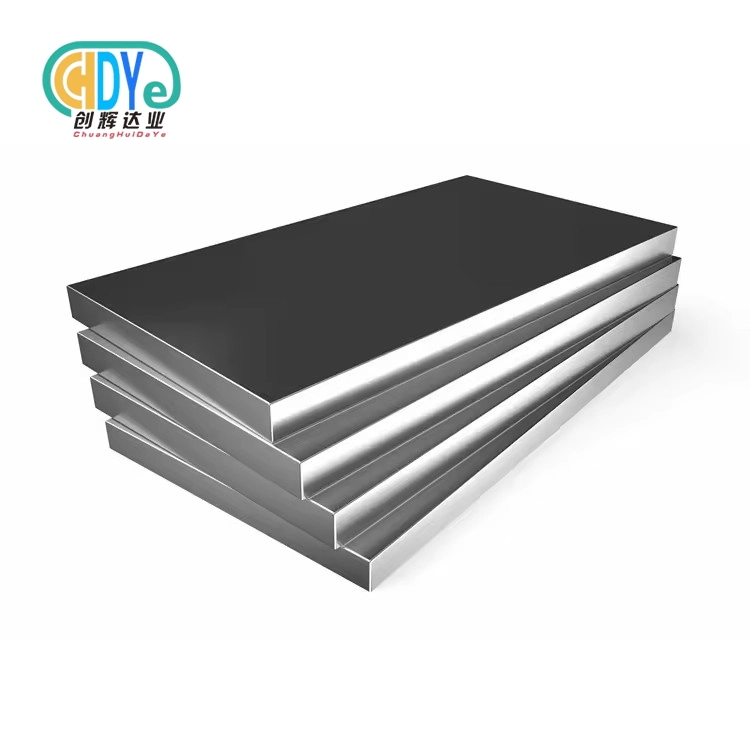
When evaluating materials for extreme thermal environments, Ti-6Al-4V Titanium Sheet stands as the premier choice for high-temperature applications. This Grade 5 titanium alloy combines 6% aluminum and 4% vanadium with titanium, creating an α+β alloy that maintains exceptional strength up to 400°C (750°F) while offering superior corrosion resistance and a remarkable strength-to-weight ratio. The unique chemical composition enables thermal stability that surpasses conventional materials like steel and aluminum alloys, making it indispensable for aerospace, automotive, and chemical processing industries where performance under thermal stress is critical.
Understanding the Properties That Make Ti-6Al-4V Ideal for High Temperatures
The exceptionally high-temperature performance of Grade 5 titanium stems from its carefully balanced chemical composition. The 6% aluminum content stabilizes the alpha phase structure, which maintains mechanical strength even when exposed to elevated temperatures. Meanwhile, the 4% vanadium addition strengthens the beta phase, providing enhanced fatigue resistance and creep properties essential for long-term thermal exposure.
Chemical Composition and Thermal Stability
The alloy's composition creates a dual-phase microstructure that exhibits remarkable thermal stability. At temperatures up to 400°C, the material retains approximately 80% of its room-temperature strength, significantly outperforming aluminum alloys that begin losing structural integrity around 200°C. The aluminum content also forms a protective oxide layer that prevents further oxidation, ensuring consistent performance in oxidizing environments.
Mechanical Properties Under Thermal Stress
Ti-6Al-4V Titanium Sheet demonstrates exceptional mechanical properties that remain stable under thermal cycling. With a tensile strength of 895 MPa and a yield strength of 828 MPa at room temperature, the alloy maintains useful strength levels even at elevated temperatures. The low thermal expansion coefficient of 8.6 × 10⁻⁶/°C minimizes dimensional changes during thermal cycling, crucial for precision applications.
Microstructural Advantages
The dual-phase microstructure provides unique advantages for high-temperature service. The alpha phase contributes to thermal stability and corrosion resistance, while the beta phase enhances ductility and fracture toughness. This combination allows the material to withstand thermal shock and rapid temperature changes without compromising structural integrity.
The Manufacturing and Heat Treatment Processes that Optimize Ti-6Al-4V Sheets for High-Temp Use
Advanced manufacturing techniques play a crucial role in optimizing titanium Grade 5 sheets for high-temperature applications. The production process involves careful control of melting, forging, and rolling parameters to achieve the desired microstructure and properties.
Controlled Rolling and Annealing Processes
The first step in making something is vacuum arc remelting. Also, any flaws in the chemicals are taken care of, so they are all the same. This makes sure that the metal works well at high temperatures. Controlled rolling methods make sure that the grain structure is the same across the whole width of the sheet. After that, annealing steps make sure that the alpha and beta phases are perfectly balanced. These steps make sure that the whole surface of the sheet has the same mechanical qualities.
Heat Treatment Optimization
Titanium metal sheets can handle high temperatures even better with solution treatment and aging. When the solution is heated to about 955°C, beta-stabilizing elements are taken out and put into the alpha phase. You can change the end pattern by changing how fast it cools. Temperatures between 480°C and 650°C can be used to age metal and make it stronger while still letting it move easily enough for making.
Quality Control During Manufacturing
Modern companies use a lot of different quality control methods to make sure that their goods work well at high temperatures. An ultrasonic test finds flaws in a product that could make it break down quickly when hot. Spectrometry-based chemical makeup analysis confirms the exact number of alloying elements that are present. Mechanical testing shows that the metal has the strength and flexibility needed for high-temperature service.
Comparing Ti-6Al-4V with Other Materials for High-Temperature Applications
When selecting materials for high-temperature applications, engineers must evaluate multiple factors, including strength retention, oxidation resistance, and thermal expansion characteristics. Grade 5 titanium consistently outperforms alternative materials across these critical parameters.
Performance Against Stainless Steel
304 stainless steel doesn't rust, but it's not as strong as titanium. If you heat stainless steel to 400°C, it loses a lot of its strength and rusts faster. Ti-6Al-4V Titanium Sheet is stronger than steel but only 40% as heavy. This is very important for airplanes and cars, where losing weight has a direct effect on how much gas they use.
Advantages Over Aluminum Alloys
You can't use aluminum metals in hot places because they get weaker and bigger faster when the temperature goes above 200°C. Titanium Grade 5 stays together at temperatures where aluminum metals would really start to break down. Titanium is the only metal that can be used for many building tasks that require high temperatures because it stays strong at those temperatures.
Comparison with Other Titanium Grades
Some types of pure titanium don't rust at all, but they're not strong enough for building uses that need to be strong. Ti-3Al-2.5V is a little stronger than pure titanium, but when it comes to high temperatures, it can't beat Grade 5. There is a good combination of elements in Ti-6Al-4V that makes it strong, flexible, and stable at high and low temperatures.
Key Industrial Applications of Ti-6Al-4V Sheets in High-Temperature Environments
The unique properties of titanium alloy sheets have established them as essential materials across multiple high-temperature industries. Each application leverages specific characteristics that make Grade 5 titanium superior to alternative materials.
Aerospace and Defense Applications
Aerospace businesses use Ti-6Al-4V Titanium Sheet to make parts for engines, frames for wings, and heat shields that need to be able to handle very high temperatures. Jet engines have parts that work at temperatures over 600°C, so they need strong materials that don't rust. It is important for airplane parts that are stressed during takeoff and landing to be made of metal because it can handle quick changes in temperature.
Chemical Processing Equipment
For heat exchangers, reactor tanks, and pipe systems in chemical plants, titanium sheets are used. These parts are exposed to high temperatures and things that can damage them. Temperature stability and rust resistance work together to make sure that the material will last in places where other materials would need to be changed often. The material is very useful in marine and chemical processing areas because it doesn't break when chloride stress is put on it.
Automotive and Energy Applications
Titanium is being used more and more in high-performance car engines for parts like fuel systems, turbocharger housings, and valve springs. Titanium's ability to cut down on weight directly makes a car more fuel-efficient and efficient. In geothermal systems, nuclear power plants, and solar thermal collectors, titanium sheets are used to make energy. These sheets need to be very strong when they are heated up.
Procurement Insights: Buying Ti-6Al-4V Titanium Sheets for High-Temperature Projects
Successful procurement of high-quality titanium materials requires careful evaluation of supplier capabilities, certification standards, and technical specifications. The complexity of titanium processing demands partnerships with experienced manufacturers who understand the critical requirements for high-temperature applications.
Supplier Selection Criteria
People who want to buy Grade 5 titanium sheets should give more weight to sellers who are ISO 9001:2015 qualified and have aircraft industry approvals. The best manufacturers spend a lot of money on the most up-to-date heating and processing tools so they can make materials that are all the same quality. If a provider is based in a place that already makes titanium, they may be able to get specific information and tools.
Technical Specification Requirements
In the specific specs, there should be rules for the chemical makeup, the mechanical properties, and the surface finish. People who want to use something at high temperatures have to write down the tests they need, like tensile testing at high temperatures and thermal cycle review. Full-length mill test papers give you the proof and tracking you need for important uses.
Cost Optimization Strategies
Many people think that Ti-6Al-4V Titanium Sheet is too expensive, but there are smart ways to buy it that won't hurt the quality. Unit costs go down when you mix orders to meet minimum number requirements, and prices stay the same when you work with sellers for a long time. Shipping costs don't go up if you know how long things take to ship and plan when to buy them.
Conclusion
The superior performance of Ti-6Al-4V titanium sheets in high-temperature applications stems from their unique chemical composition, advanced manufacturing processes, and exceptional material properties. The balanced combination of aluminum and vanadium creates thermal stability unmatched by alternative materials, while modern processing techniques ensure consistent quality and performance. Industries ranging from aerospace to chemical processing rely on these materials for critical applications where failure is not acceptable. The investment in premium titanium materials delivers long-term value through reduced maintenance, improved performance, and enhanced safety in demanding thermal environments.
FAQ
Q: What temperature range can Ti-6Al-4V titanium sheets withstand?
A: Metal strips made of Ti-6Al-4V stay strong even when heated to 400°C (750°F) for a long time. You can use this material in most high-temperature business settings because it is still about 80% as strong as it was at room temperature. This process speeds up a lot after 400°C, and special titanium metals made for high temperatures may be needed.
Q: How does the thermal expansion of Ti-6Al-4V compare to steel?
A: It takes about 8.6 × 10⁻⁶/°C for Ti-6Al-4V to expand at room temperature, which is less than the 11–13 × 10⁻⁶/°C that most steels need. Thermal stress and changes in size during temperature changes are lessened by this slower rate of expansion. This is good for exact uses and parts that need to be made with close tolerances.
Q: Can Ti-6Al-4V sheets be welded for high-temperature applications?
A: Yes, Ti-6Al-4V sheets can be successfully welded using TIG (tungsten inert gas) or electron beam welding techniques. But it's important to use the right neutral gas defense to keep things from getting weak or dirty. If the metal is going to be used at high temperatures, it might need a post-weld heat treatment to improve the microstructure and provide full mechanical properties in the hot area.
Q: What surface treatments are recommended for high-temperature service?
A: Usually, titanium sheets need to be pickled or chemically ground before they can be used at high temperatures. This gets rid of any pollution on the surface and stops alpha-case formation. It's possible to use heat shield layers or anodizing to make things less likely to rust. What kind of surface treatment is used depends on where it will be used and how long it will be in hot places.
Q: How does sheet thickness affect high-temperature performance?
A: When the temperature changes, the sheet's width changes, how it responds to heat, and how stress is spread. Less thick sheets can have bigger differences in thermal stress because they heat and cool more quickly. Even though thick sheets are more solid, the temperature can change along their length. How the heat will be handled and the needs of the product, will help you choose the right thickness.
Partner with Chuanghui Daye for Premium Ti-6Al-4V Titanium Sheet Solutions
Shaanxi Chuanghui Daye stands as your trusted Ti-6Al-4V Titanium Sheet manufacturer, combining over 30 years of rare metal expertise with state-of-the-art manufacturing facilities in China's Titanium Capital. Our ISO 9001:2015 certified production processes ensure every sheet meets stringent aerospace and industrial standards through comprehensive testing, including chemical composition analysis, mechanical property verification, and ultrasonic flaw detection. Located in Baoji High-tech Development Zone, we leverage advanced melting, forging, and rolling equipment to deliver superior quality materials with complete traceability documentation. Contact our technical team at info@chdymetal.com to discuss your high-temperature application requirements and experience the reliability that has made us a preferred Ti-6Al-4V titanium sheet supplier for global aerospace, chemical processing, and automotive manufacturers.
References
1. Donachie, Matthew J. "Titanium: A Technical Guide, 2nd Edition." ASM International Materials Park, Ohio, 2000.
2. Boyer, Rodney, Gerhard Welsch, and E.W. Collings. "Materials Properties Handbook: Titanium Alloys." ASM International, 1994.
3. Lutjering, Gerd, and James C. Williams. "Titanium: Engineering Materials and Processes, 2nd Edition." Springer-Verlag Berlin Heidelberg, 2007.
4. Peters, M., A. Hemptenmacher, J. Kumpfert und C. Leyens. "Structure and Properties of Titanium and Titanium Alloys." Titanium and Titanium Alloys: Fundamentals and Applications, Wiley-VCH, 2003.
5. Banerjee, Dipankar, and John C. Williams. "Perspectives on Titanium Science and Technology." Acta Materialia, Volume 61, Issue 3, 2013.
6. Froes, Francis H. "Titanium: Physical Metallurgy, Processing, and Applications." ASM International Materials Park, Ohio, 2015.
Learn about our latest products and discounts through SMS or email