- English
- French
- German
- Portuguese
- Spanish
- Russian
- Japanese
- Korean
- Arabic
- Greek
- German
- Turkish
- Italian
- Danish
- Romanian
- Indonesian
- Czech
- Afrikaans
- Swedish
- Polish
- Basque
- Catalan
- Esperanto
- Hindi
- Lao
- Albanian
- Amharic
- Armenian
- Azerbaijani
- Belarusian
- Bengali
- Bosnian
- Bulgarian
- Cebuano
- Chichewa
- Corsican
- Croatian
- Dutch
- Estonian
- Filipino
- Finnish
- Frisian
- Galician
- Georgian
- Gujarati
- Haitian
- Hausa
- Hawaiian
- Hebrew
- Hmong
- Hungarian
- Icelandic
- Igbo
- Javanese
- Kannada
- Kazakh
- Khmer
- Kurdish
- Kyrgyz
- Latin
- Latvian
- Lithuanian
- Luxembou..
- Macedonian
- Malagasy
- Malay
- Malayalam
- Maltese
- Maori
- Marathi
- Mongolian
- Burmese
- Nepali
- Norwegian
- Pashto
- Persian
- Punjabi
- Serbian
- Sesotho
- Sinhala
- Slovak
- Slovenian
- Somali
- Samoan
- Scots Gaelic
- Shona
- Sindhi
- Sundanese
- Swahili
- Tajik
- Tamil
- Telugu
- Thai
- Ukrainian
- Urdu
- Uzbek
- Vietnamese
- Welsh
- Xhosa
- Yiddish
- Yoruba
- Zulu
How to Maximize Performance with ASTM B863 Titanium Wire?
To get the most out of ASTM B863 titanium wire, you need to know how it works mechanically, pick the right grade, and treat it properly. This special titanium wire doesn't rust, is strong for its weight, and always has the same mechanical properties when bought from a reputable manufacturer. Make sure the right types are used for the job, the store rules are followed, and you work with experienced sources who keep a close eye on quality the whole time the product is being made.
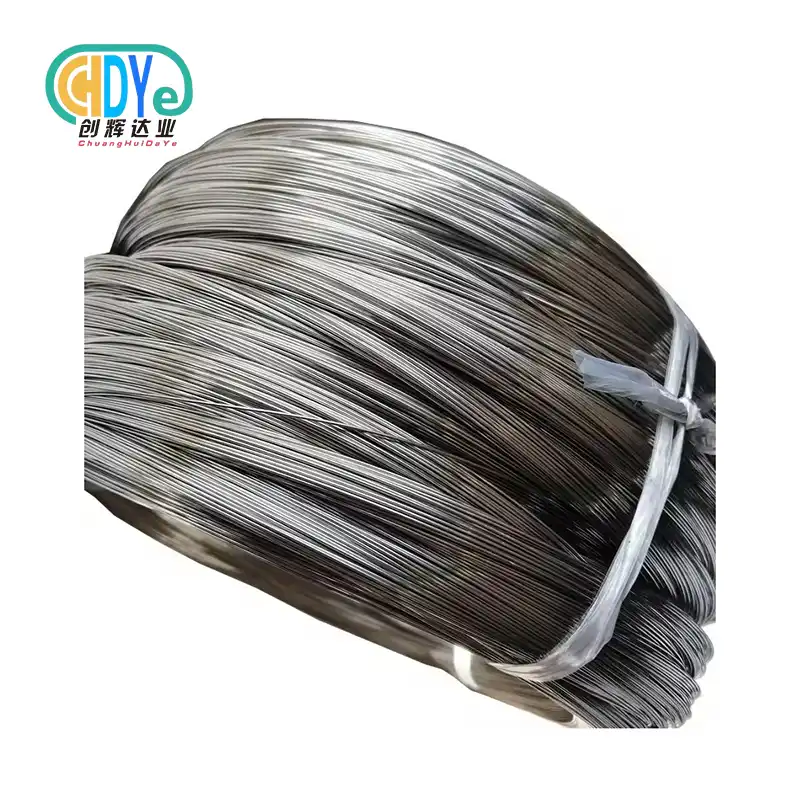
Understanding ASTM B863 Titanium Wire Specifications and Properties
The first thing you need to do to get the most out of titanium wire is to understand its strict requirements. Over 30 types of titanium and titanium alloy wire are used in airplanes and in factories. ASTM B863 has strict rules for these wires. These grades include ones that are commercially pure and ones that are made up of a lot of different alloys.
Chemical Composition Requirements and Their Impact
The standard carefully controls the amount of iron, nitrogen, oxygen, and carbon in the area between the cells. These things have a direct effect on how well the wire resists rust and how strong it is. Grade 1 titanium wire has the least oxygen (up to 0.18%), which makes it very flexible and simple to shape for tasks that need tricky shapes. On the other hand, grade 2 titanium is a little stronger and doesn't rust as easily, so it's great for tools used in chemical processes.
Due to careful management of the alloying elements, it is possible to predict the performance qualities. Grade 5 Ti-6Al-4V is made up of 3.5–4.5% vanadium and 5.5–6.75% aluminum. It is very strong (over 895 MPa tensile strength) but still very light, which is typical of titanium products.
Mechanical Properties and Dimensional Tolerances
If you follow the rules for making ASTM B863 titanium wire, its tensile strengths range from 240 MPa for Grade 1 to over 1300 MPa for alloy grades that have been fired. The standard calls for certain thickness tolerances, generally ±0.002 inches for thin lines. In exact jobs like cold heading or weaving, this makes sure that the wires always work the same way.
Surface quality standards get rid of flaws on the inside and outside that could be dangerous and slow things down. Polished surfaces are better for making things with a lot of accuracy, while acid-pickled surfaces are better for everyday use. Each style is made to work with a certain purpose.
Common Challenges and How to Overcome Them Using ASTM B863 Titanium Wire
When things go wrong in the workplace, it's usually because the wrong materials were used or the right processes weren't followed. When engineers find these problems, they can focus on making things work better by putting in place focused answers.
Addressing Premature Wire Failure Issues
Early failure is often caused by grades that don't match or bad quality control during production. When you cold head titanium wire, Grade 5 is needed so that it can handle big changes in shape without getting tiny cracks. If you use widely pure grades for high-strength tasks, they will always break when loaded and unloaded quickly.
The answer is to work with qualified manufacturers who keep track of paperwork and give material certificates that confirm the chemical makeup and mechanical qualities. When you vacuum heat metal, any imperfections that could cause cracks are removed. Then, controlled cooling makes sure that the wire's cross-section has the same grain structure all the way through.
Combating Corrosion in Aggressive Environments
In places where chemicals are worked with, normal stainless steel wire can break down quickly because of pitting rust. The outside of titanium wires creates a strong TiO2 oxide film on its own, which shields them from most of the damage that chloride can do. This means they can be used in places with wet chlorine for more than 10 to 20 years.
Many chlor-alkali plants have used demister pads made of Grade 2 titanium wire for decades, even though they have been in very acidic environments for decades, where other materials would have broken down in just a few months. This means that maintenance will take less time and cost less overall, even though the ingredients cost more at first.
ASTM B863 Titanium Wire vs Alternative Materials and Grades: Making the Informed Choice
To pick the best wire materials, you need to know how different standards and grades work in various work settings. People who work in buying can use this comparison to make decisions that are based on facts and improve both performance and affordability.
Comparison with Related ASTM Standards
Titanium bars and billets are discussed in ASTM B348. Medical inserts that need to be safer are discussed in ASTM F136. When mechanical properties and regular diameter deviation are more important than medical-grade purity standards, ASTM B863 titanium wire is made for use in industry and building.
The main difference is the uses that are planned and the features that are most important for those uses. Extra tests are done on ASTM F136 materials to make sure they are safe and don't break down in living things. B863, on the other hand, is about the consistency of chemicals used in industry settings that need solid resistance to rust.
Grade Selection Within ASTM B863 Framework
Grade 1 titanium is the most bendable and easiest to shape, so it can be used when you need to weave or shape wires in a difficult way. It's not very strong, so it's not good for making things. But it works great in chemistry processes where not rusting is more important than strength.
Pure titanium grade 2 is the most popular type used in business. Not only is it strong, but it is also flexible and doesn't rust. This grade can handle modest loads on structures and is very easy to shape for making purposes.
Since Grade 5 (Ti-6Al-4V) is so strong, it's perfect for airplane screws and other high-performance uses where cutting weight is very helpful. Though it costs more and is less flexible, it should only be used when it fits the needs of the application.
Advantages Over Conventional Materials
Titanium wire works better than stainless steel and other materials that are used every day. Because it weighs about 4.51 g/cm³, it is 44% lighter than steel, but it is just as strong or stronger than steel.
Most of the time, it doesn't rust as easily as 316L stainless steel, especially when chlorides or strong acids are present. The inactive oxide film gives this protection. If it gets broken, it heals itself right away. With this amount of self-healing protection, nothing else can compare.
Effective Procurement Strategies for ASTM B863 Titanium Wire
To make the buying process go smoothly, you need to find accepted suppliers who keep their quality control up to date and have the right licenses. To make sure the supply chain will work in the long run, sources need to be carefully looked at because titanium mining is so hard to do.
Supplier Qualification and Certification Requirements
Providers of titanium wire must meet at least the ISO 9001:2015 quality standard to get signed off on. This approval makes sure that quality is planned to be checked at every step of the production process, from the raw materials to the delivery and packing.
Extra qualifications, such as AS9100 (aerospace quality management) or NADCAP (aerospace processing accreditation), make things more reliable when they are used for important things. You have to show that you know how to do certain things, like vacuum freezing and controlled atmosphere heat treatment, in order to meet these standards.
Quality Verification and Sample Testing
You can see how the material works before placing a large order by getting sample pieces. As part of checking a sample to make sure it meets the standard, it should be chemically analyzed, stretched, and have its surface quality checked.
Papers about the materials should explain where the raw materials came from and where they went during each step of prep. This information is very important for apps that need to figure out why something went wrong or show that they follow the rules.
Pricing Dynamics and Lead Time Considerations
Prices for ASTM B863 titanium wire depend on how much the raw materials cost, how hard they are to work with, and how many orders there are. Because of economies of scale, prices are generally better when you buy more. Unit costs go up, though, if you need specifics or want it faster.
Lead times change a lot based on the grade, width, and quantity that is needed. It may take two to four weeks to ship standard grades and typical sizes. On the other hand, it can take eight to twelve weeks to plan and carry out production of specialty metals or custom specs.
Best Practices for Handling, Installation, and Long-Term Maintenance
To get the most out of titanium wire, it's important to store, handle, and put it away in the right way. If you follow these steps, the stuff will keep working right for as long as you use it.
Storage and Handling Protocols
Titanium wire should be kept somewhere clean and dry, away from things that could get dirty and damage the surface. Keeping carbon steel with other steels could lead to cross-contamination, which could lead to galvanic rust or surface discoloration.
Little to no mechanical damage should happen to things because of how they are treated, so that stress collection points don't form. If you move and put something in the right way, it won't kink or harden, which can make it less flexible and less resistant to wear.
Installation Best Practices
For each use, there are different ways to add things, but there are some rules that work for most situations. If you use a bent radius that is too big, the material might become too hard to use and last less long. After complex forms have been made, stress-relief annealing can be used to get the best mechanical properties back.
Titanium has some unique properties that should work with the way you join things. For welding, the work area needs to be kept clean with a neutral atmosphere, and when fitting titanium mechanically, it needs to be taken into account that it sticks to similar materials.
Long-Term Maintenance and Monitoring
Since ASTM B863 titanium wire doesn't rust, it doesn't need much care, but it should be checked often to make sure it keeps working well. When you look at something, you might notice mechanical damage or odd wear patterns that could mean there were issues with the fitting or that the load isn't being spread out correctly.
The protective oxide surface shouldn't be cleaned with harsh chemicals or chlorine agents because they could damage it. The surface will look good and keep its ability to fight rust as long as you clean it with soap and water.
Conclusion
To get the most out of ASTM B863 titanium wire, you need to know a lot about it, pick the right grade, and work with it in the right way. You should only do business with qualified sellers who keep a close eye on quality and give you all the paperwork you need to keep track of your orders. Titanium wire that has been properly described is useful in many fields, such as aircraft, chemical processing, and making medical devices. The metal is stronger, lighter, and more stable over a long period of time. It also resists rust better. It is guaranteed that the work will last longer and work better if you buy good items and put them correctly.
FAQ
Q: What diameter ranges are available for ASTM B863 titanium wire?
A: ASTM B863 titanium wire comes in sizes ranging from 0.15 mm to 7 mm, so it can be used for a wide range of things, from small electrical parts to fasteners for buildings. It can be used with both metric and imperial units, and the circle limits stay the same all the way through.
Q: How does Grade 2 titanium wire differ from Grade 5 in practical applications?
A: Grade 2 offers excellent corrosion resistance and moderate strength (345 MPa minimum tensile strength) with superior formability for complex shapes. Grade 5 (Ti-6Al-4V) provides much higher strength (895+ MPa) but requires more careful handling and specialized processing techniques.
Q: What certifications should I require from titanium wire suppliers?
A: You should ask for ISO 9001:2015 at the very least. You should also need airplane certificates (AS9100, NADCAP) for important uses. Certificates for materials should include full science tests, industrial tests, and proof of where the materials came from.
Partner with Chuanghui Daye for Premium ASTM B863 Titanium Wire Supply
Shaanxi Chuanghui Daye has been working with rare metals for 30 years and has state-of-the-art production facilities in China's Titanium Capital. This means you can trust them to make high-performance titanium wire goods. This center, which is ISO 9001:2015 approved, makes sure that the product is always the same by vacuum freezing, exact drawing, and controlled annealing. No matter if you need commercially pure grades for chemical processing or high-strength metals for airplanes, our large range of sizes, from 0.1mm to 7mm, can meet your needs. Send us an email at info@chdymetal.com to talk about your specific needs and get samples to look over.
References
1. American Society for Testing and Materials. "Standard Specification for Titanium and Titanium Alloy Wire." ASTM International, West Conshohocken, PA, 2019.
2. Boyer, Rodney R. "Attributes, Characteristics, and Applications of Titanium and Its Alloys." JOM: The Journal of Materials, Minerals, Metals & Materials Society, vol. 62, no. 5, 2010, pp. 21-24.
3. Lutjering, Gerd, and James C. Williams. "Titanium: Engineering Materials and Processes." 2nd ed., Springer-Verlag, Berlin, 2007.
4. Rack, Henry J., and John I. Qazi. "Titanium Alloys for Biomedical Applications." Materials Science and Engineering: C, vol. 26, no. 8, 2006, pp. 1269-1277.
5. Schutz, R.W., and H.B. Watkins. "Recent Developments in Titanium Alloy Application in the Energy Industry." Materials Science and Engineering: A, vol. 243, no. 1-2, 1998, pp. 305-315.
6. Titanium Development Association. "Guidelines for Design with Titanium." Technical Manual, Titanium Development Association, Dayton, OH, 2015.
Learn about our latest products and discounts through SMS or email