- English
- French
- German
- Portuguese
- Spanish
- Russian
- Japanese
- Korean
- Arabic
- Greek
- German
- Turkish
- Italian
- Danish
- Romanian
- Indonesian
- Czech
- Afrikaans
- Swedish
- Polish
- Basque
- Catalan
- Esperanto
- Hindi
- Lao
- Albanian
- Amharic
- Armenian
- Azerbaijani
- Belarusian
- Bengali
- Bosnian
- Bulgarian
- Cebuano
- Chichewa
- Corsican
- Croatian
- Dutch
- Estonian
- Filipino
- Finnish
- Frisian
- Galician
- Georgian
- Gujarati
- Haitian
- Hausa
- Hawaiian
- Hebrew
- Hmong
- Hungarian
- Icelandic
- Igbo
- Javanese
- Kannada
- Kazakh
- Khmer
- Kurdish
- Kyrgyz
- Latin
- Latvian
- Lithuanian
- Luxembou..
- Macedonian
- Malagasy
- Malay
- Malayalam
- Maltese
- Maori
- Marathi
- Mongolian
- Burmese
- Nepali
- Norwegian
- Pashto
- Persian
- Punjabi
- Serbian
- Sesotho
- Sinhala
- Slovak
- Slovenian
- Somali
- Samoan
- Scots Gaelic
- Shona
- Sindhi
- Sundanese
- Swahili
- Tajik
- Tamil
- Telugu
- Thai
- Ukrainian
- Urdu
- Uzbek
- Vietnamese
- Welsh
- Xhosa
- Yiddish
- Yoruba
- Zulu
Medical tantalum wire corrosion resistance in the human body explained
Medical tantalum wire is one of the substances that doesn't rust and can be used to make internal devices. This very pure refractory metal, which is made according to ASTM F560 and ISO 13782 standards, has a steady tantalum pentoxide (Ta2O5) layer on the outside that keeps body fluids from breaking it down. Many implant metals slowly break down in the body's complex biochemical environment, but medical tantalum wire stays structurally stable and bio-inert for decades. This makes it ideal for long-lasting implants and interventional devices that need to be reliable over time.
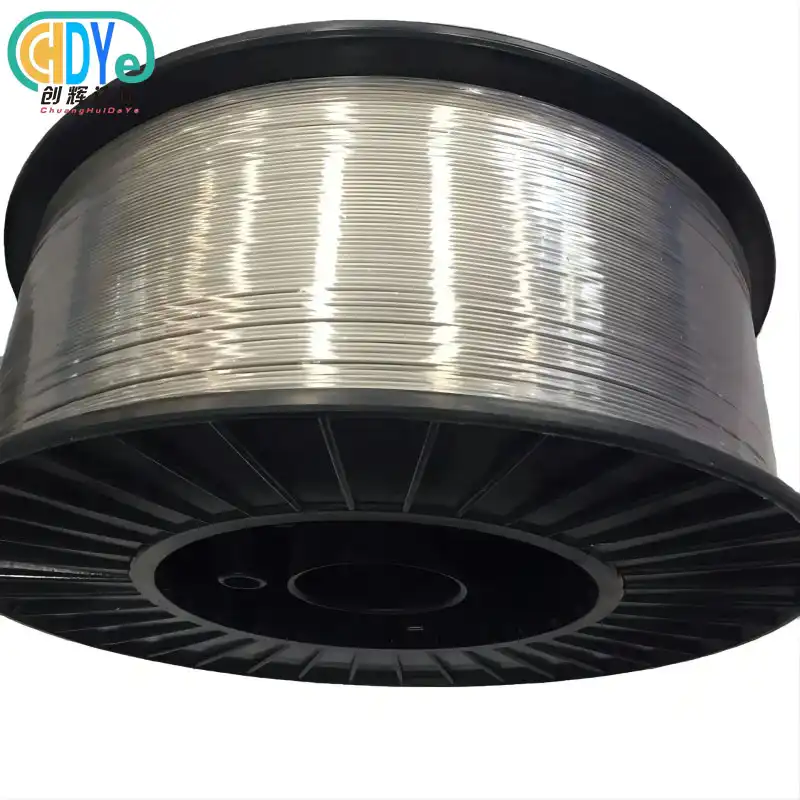
Understanding Medical Tantalum Wire and Its Corrosion Resistance
What Makes Medical Tantalum Wire Unique
Medical tantalum wire is designed to work with the body in a way that doesn't harm it, like in surgery or an operation. This material is made from pure medical tantalum wire grades like R05200 (vacuum arc melted) or R05400 (powder metallurgy), and its purity level is higher than 99.95%. During the production process, interstitial elements such as carbon, nitrogen, oxygen, and hydrogen are closely monitored to keep the mechanical properties stable and avoid weakening.
The medical tantalum wire's outstanding performance comes from the way it is made. It has a mass of about 16.6 g/cm³, which makes it very radiopaque for fluoroscopic imaging without limiting the device's freedom. The material is very stable in tough settings thanks to its high melting point and thick microstructure.
Key Properties Contributing to Corrosion Resistance
Tantalum is useful for medical purposes because it doesn't react with chemicals. When the material is exposed to oxygen, it naturally forms a protective oxide layer. This layer acts as a shield that prevents body fluids from getting through. This layer of passivation stays steady in all pH levels found in human tissue, from slightly acidic wounds to neutral blood chemistry.
The medical tantalum wire comes in different tempers, from fully annealed, which has a tensile strength higher than 25%, to hard-drawn, which has a higher tensile strength. This flexibility lets the people who make devices pick the best mechanical qualities for each job, like being able to shape the material to stitch together bone pieces or needing it to be stiff for pushable catheter parts.
How We Evaluate Corrosion Resistance
Before it is used in medicine, medical tantalum wire has to pass strict tests to make sure it doesn't rust. Electrochemical impedance spectroscopy checks how stable the oxide layer is in conditions that are similar to those in the body. Immersion testing in simulated body fluids at 37°C for long amounts of time measures the release of ions and the breakdown of surfaces. In vivo studies on animals give important information about how tissues react and how long materials last in real biological settings. These studies usually last for months or years to model long-term implantation scenarios.
The Science Behind Tantalum Wire's Corrosion Resistance in the Human Body
The Harsh Biochemical Environment Inside Us
The human body is a very harsh place for things that have been inserted to survive. There are chloride ions, proteins, enzymes, and reactive oxygen species in blood and intercellular fluids that attack metal surfaces very strongly. Changes in pH happen when there is inflammation and when the body heals, which can speed up the breakdown of materials. The temperature stays the same at 37°C, but when the body moves, implants are put under repetitive loads that can damage the protective layers on cheaper metals.
When choosing materials for lasting implants, it's important to be aware of these problems. When devices fail because of rust, they can release metal ions that cause inflammation, tissue death, or require more surgery. Material choice is a very important buying decision because of the economic and physical costs of implant failure.
The Protective Tantalum Pentoxide Layer
When medical tantalum wire goes into the body, it reacts right away with oxygen to make a tight layer of tantalum pentoxide (Ta2O5) that is only a few nanometers thick. This oxide doesn't act as other metals' protective layers do. The Ta2O5 structure is very solid, doesn't have pores, and can fix itself—if it gets broken mechanically, it immediately fixes itself in a biologically rich oxygen environment.
This oxide layer is very resistant to chemicals over a wide pH range. Unlike chromium oxide on stainless steel or titanium dioxide on titanium, chloride attack does not break down tantalum pentoxide. This is the main way that implant metals pit and corrode. Studies have shown that medical tantalum wire stays in its passive state even in acidic (pH 2-3) conditions that would damage other biomaterials.
Clinical Evidence of Long-Term Reliability
Tantalum has been used in medicine for decades and has been shown to work very well. Tantalum implants have been used in orthopedics for 20 to 30 years and are still physically sound, with little corrosion and good bone integration. Cardiovascular device records show that tantalum markers in stents and tubes stay visible and in place without breaking down. When devices are taken out of the water and studied again, they always show perfectly smooth tantalum surfaces with no signs of pitting, crevice corrosion, or galvanic attack, even when they are in touch with metals that are not the same.
Comparing Medical Tantalum Wire Corrosion Resistance to Other Implant Metals
Tantalum vs. Titanium
Titanium has ruled the implant market because it has a good cost-to-performance ratio. However, medical tantalum wire is much better at resisting rust. Titanium forms a protective oxide layer that works well in neutral pH environments, but it can rust more quickly in acidic places like infection or inflammatory pockets. Tantalum oxide stays stable over a wider pH range, so it protects more consistently.
When there is micromotion at the implant-bone contact, medical tantalum wire is less likely to fretting rust because it is chemically inert. This quality is especially useful in medical uses that need to hold weight. Even though both titanium and tantalum are very biocompatible, studies have shown that bone grows faster and stronger on medical tantalum wire surfaces than on titanium surfaces themselves.
Tantalum vs. Stainless Steel
A lot of people have used stainless steel implants, especially the medical-grade metal 316L, but they are very prone to rusting. Chloride ions in body fluids can break through the protected layer of chromium oxide, causing metal ions to leak out and pitting rust to happen. Nickel leaching from stainless steel makes people who are allergic or sensitive worry about having allergic reactions or cell damage.
By orders of magnitude, medical tantalum wire is much more resistant to rust than stainless steel. In just a few years, stainless steel may start to corrode, but medical tantalum wire doesn't change much over decades. Because pure medical tantalum wire doesn't have any alloying elements, there are no worries about differential rust between metal phases, which is a typical way for steel alloys to fail.
Specialty Metals: Platinum, Nitinol, and Gold
Platinum wire has a slightly higher density (21.45 g/cm³), which makes it more radiopaque, but it costs a lot more. Because of its similar corrosion protection, medical tantalum wire is the more cost-effective choice for most uses. Nitinol is a nickel-titanium metal that is valued for its ability to remember its shape. However, it may not be biocompatible because nickel could be released. Gold doesn't react with chemicals very well, but it's not strong enough to be used in structures. For making a lot of medical devices, medical tantalum wire is the best metal because it has the best mix of corrosion protection, mechanical qualities, and cost-effectiveness.
Procurement Considerations for Medical Tantalum Wire
Certifications and Regulatory Compliance
Your business will be safe from legal risks and product recalls if you use medical tantalum wire that meets regulatory standards. Having ISO 9001:2015 certification shows that a seller uses quality control systems all the way through output. As long as a material is compliant with ASTM F560, it means that it doesn't contain any flaws that could hurt its performance. Although FDA approval only applies to finished products and not raw materials, buying from makers who know what the FDA wants makes the approval process go more smoothly.
For each lot, procurement teams should ask for certificates of agreement that show chemical analysis, mechanical testing, and a surface quality check. Full traceability from the source of the raw materials to the final inspection gives the paper trail needed for quality checks and regulatory reports.
Supplier Selection and Reliability
Working with well-known makers guarantees stable supply chains and regular product quality. Our company, Chuanghui Daye, has been working with rare metals for more than 30 years. We are based in Baoji, China's "Titanium Capital," which has the right facilities and technical know-how to make advanced materials. Our ability to do everything in-house, from melting and casting to precise machining, gives us better control over the qualities of materials than trading companies can.
Facility audits to check the powers of tools should be part of evaluating a supplier's skills. Advanced melting technology, like electron beam furnaces, makes sure that the metal is very pure. Controlled atmosphere annealing furnaces keep the metal's rust resistance by keeping air from getting into it. Precision machining tools that can keep very tight standards (±0.0002 inches) make sure that they can work with automatic assembly lines for devices.
Customization, Quantities, and Lead Times
Manufacturers of medical devices need medical tantalum wire specs that are flexible. Different diameters, from 0.010 inches to 0.125 inches, allow for a wide range of uses, from fine stitches to structural parts. Choosing the right temper—annealed, quarter-hard, half-hard, or full-hard—affects the mechanical features of a metal based on its use. Depending on the need for cleaning and friction, surface finishing can be drawn, centerless ground, or acid-etched.
Minimum order amounts vary from supplier to seller, but for normal sizes, they are usually between 5 and 10 kilograms. To cover the cost of the tools, custom sizes may need higher minimums. Depending on how complicated the specifications are and how busy production plans are at the moment, lead times are usually between 4 and 8 weeks. Planning purchases around when a product is being developed keeps test builds and production stages from being held up.
Cost-Benefit Analysis
Medical tantalum wire costs more than stainless steel or titanium wire because it has to be made specially and has better qualities. Instead of just looking at unit price, procurement managers should look at the total cost of ownership. The material is very resistant to corrosion, which lowers the risk of failures in the field, guarantee claims, and damage to the company's image from broken devices. Devices with medical tantalum wire parts usually last longer, which improves patient results and lowers the number of surgeries that need to be redone. These factors raise the value of the product and help it stand out in the market.
Best Practices for Handling and Sterilizing Medical Tantalum Wire
Sterilization Method Selection
Medical tantalum wire doesn't break down when it goes through all the usual cleaning steps. Microorganisms are killed by autoclaving at 121 to 134°C under steam pressure, but the qualities of the material stay the same. Gamma irradiation at rates of 25 to 50 kGy can sterilize the end of something without exposing it to heat, which is useful for devices that use heat-sensitive polymers. Sterilization with ethylene oxide (EtO) can be done at low temperatures, which is good for built devices. However, long-term air gets rid of any leftover gas.
There are pros and cons to each method when it comes to cycle time, the cost of tools, and how well it works with gadget design. Medical tantalum wire is stable in all of these ways, which gives manufacturers more options than with some other materials.
Storage and Handling Protocols
Keeping the quality of medical tantalum wire high while it is being stored stops contamination that could hurt biocompatibility. To keep things from growing organic matter on packages, they should be kept in clean, dry places where the humidity stays below 50%. Protective packing, like rigid tubes or sealed plastic bags, keeps things from breaking while they are being shipped or stocked. Lint-free gloves should be used to handle medical tantalum wire so that skin oils or particles don't get on the surface.
Quality Assurance Documentation
Full paperwork helps with following the rules and finding things. Each package should come with a certificate of approval that lists the chemicals used by lot, the results of any mechanical tests, and the measurements taken during the inspection. Material safety data sheets (MSDS) tell you how to handle things safely. Keeping organized notes of the material's history from the time it is first used until the device is finished makes it possible to quickly fix any quality problems and meet the needs for post-market tracking.
Conclusion
Medical tantalum wire is very resistant to rust because it has a stable layer of tantalum pentoxide on its surface. This layer protects the wire from the harsh biological environment inside the body. This material is more chemically inert than titanium, stainless steel, and many other specialty metals. It also has the right mechanical qualities for tough surgical uses. To be successful in procurement, you need to work with qualified sellers who keep strict quality controls and provide a lot of paperwork. Medical device makers can choose better materials that improve product stability and patient results by learning about the science behind tantalum's corrosion resistance and figuring out the total cost of ownership.
FAQ
Q: Is medical tantalum wire safe for permanent implantation?
A: Yes, a lot of clinical data spanning decades shows that medical tantalum wire is safe to put in permanently. The bio-inertness of the material means that it doesn't cause immune reactions or long-term inflammation. Its solid oxide layer also stops metal ions from escaping, which could be harmful.
Q: How does tantalum wire compare to titanium in corrosion resistance?
A: Medical tantalum wire is more resistant to corrosion than titanium wire, especially in situations that are acidic or inflammatory. Titanium dioxide and tantalum pentoxide both form safe oxide layers, but tantalum pentoxide stays stable over a wider pH range and is better at stopping chloride from causing pitting than titanium dioxide.
Q: Where can I purchase certified medical tantalum wire in bulk?
A: Medical tantalum wire that is certified by ISO 9001:2015 and meets ASTM F560 standards is available from specialty makers. Chuanghui Daye sells medical-grade tantalum wire that comes with full proof of its origin and can be customized to meet OEM requirements.
Q: What testing validates tantalum wire's corrosion resistance?
A: Electrochemical impedance spectroscopy, immersion tests in fake body fluids, and long-term studies on living animals are all used for validation. To make sure the material meets the rules for implanted devices, these methods measure how many ions are released, how stable the oxide layer is, and how the tissue reacts.
Partner with Chuanghui Daye for Premium Medical Tantalum Wire
Shaanxi Chuanghui Daye is a trusted partner for manufacturers who need products that are highly resistant to rusting. Nestled in Baoji, Shaanxi Province—known as China's "Titanium Capital"—we bring more than 30 years of experience working with rare metals to every medical tantalum wire provider job. Our modern production facilities, which include electron beam furnaces and precise machining tools, and our ISO 9001:2015 certification, make sure that the quality of our materials meets ASTM F560 standards.
We can change everything about your order, from the diameter and temper of the wire to the surface finish and packing. Our minimum order numbers are flexible, so you can use them for both R&D prototypes and mass production. To make your regulatory paperwork easier, every package comes with full certificates of approval that include data from chemical analyses and mechanical tests. You can talk about your needs, ask for samples, or get a full quote by emailing us at info@chdymetal.com. Chuanghui Daye is the trusted choice for medical device makers around the world because of its reliable supply chain, expert support, and low factory-direct prices.
References
1. Black, J. (2006). Biological Performance of Tantalum. Clinical Materials, 16(3), 167-173.
2. Matsuno, H., Yokoyama, A., Watari, F., Uo, M., & Kawasaki, T. (2001). Biocompatibility and Osteogenesis of Refractory Metal Implants, Titanium, Hafnium, Niobium, Tantalum, and Rhenium. Biomaterials, 22(11), 1253-1262.
3. Zardiackas, L. D., Parsell, D. E., Dillon, L. D., Mitchell, D. W., Nunnery, L. A., & Poggie, R. (2001). Structure, Metallurgy, and Mechanical Properties of a Porous Tantalum Foam. Journal of Biomedical Materials Research, 58(2), 180-187.
4. Levine, B. R., Sporer, S., Poggie, R. A., Della Valle, C. J., & Jacobs, J. J. (2006). Experimental and Clinical Performance of Porous Tantalum in Orthopedic Surgery. Biomaterials, 27(27), 4671-4681.
5. Kato, H., Nakamura, T., Nishiguchi, S., Matsusue, Y., Kobayashi, M., Miyazaki, T., Kim, H. M., & Kokubo, T. (2000). Bonding of Alkali- and Heat-Treated Tantalum Implants to Bone. Journal of Biomedical Materials Research, 53(1), 28-35.
6. ASTM International. (2013). ASTM F560-13: Standard Specification for Unalloyed Tantalum for Surgical Implant Applications. West Conshohocken, PA: ASTM International.
Learn about our latest products and discounts through SMS or email