- English
- French
- German
- Portuguese
- Spanish
- Russian
- Japanese
- Korean
- Arabic
- Greek
- German
- Turkish
- Italian
- Danish
- Romanian
- Indonesian
- Czech
- Afrikaans
- Swedish
- Polish
- Basque
- Catalan
- Esperanto
- Hindi
- Lao
- Albanian
- Amharic
- Armenian
- Azerbaijani
- Belarusian
- Bengali
- Bosnian
- Bulgarian
- Cebuano
- Chichewa
- Corsican
- Croatian
- Dutch
- Estonian
- Filipino
- Finnish
- Frisian
- Galician
- Georgian
- Gujarati
- Haitian
- Hausa
- Hawaiian
- Hebrew
- Hmong
- Hungarian
- Icelandic
- Igbo
- Javanese
- Kannada
- Kazakh
- Khmer
- Kurdish
- Kyrgyz
- Latin
- Latvian
- Lithuanian
- Luxembou..
- Macedonian
- Malagasy
- Malay
- Malayalam
- Maltese
- Maori
- Marathi
- Mongolian
- Burmese
- Nepali
- Norwegian
- Pashto
- Persian
- Punjabi
- Serbian
- Sesotho
- Sinhala
- Slovak
- Slovenian
- Somali
- Samoan
- Scots Gaelic
- Shona
- Sindhi
- Sundanese
- Swahili
- Tajik
- Tamil
- Telugu
- Thai
- Ukrainian
- Urdu
- Uzbek
- Vietnamese
- Welsh
- Xhosa
- Yiddish
- Yoruba
- Zulu
How to avoid contamination when using titanium welding rod?
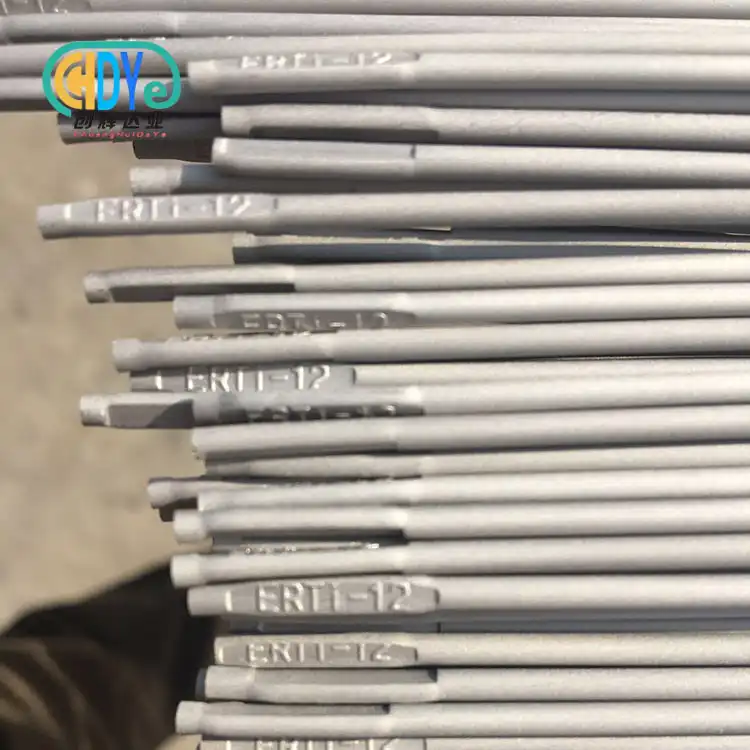
To keep the titanium welding rod from getting dirty, it's important to be very careful about cleaning, make sure there is enough protective gas, and handle the rod carefully. Oxygen, nitrogen, hydrogen, or surface impurities can damage the structure of a weld and make it less resistant to rust. To stop this from happening, rods should be kept in dry places, base metal and filler material should be cleaned before welding, high-purity argon shielding should be kept up throughout the process, and cooling welds should be protected with the following shields. At Shaanxi Chuanghui Daye Metal Material Co., Ltd., we make high-quality pure titanium welding rods with sizes ranging from 1.0mm to 3.2mm that meet AWS A5.16 standards. This makes sure that your welds stay defect-free and work exceptionally well in serious situations.
Understanding Contamination in Titanium Welding
One of the biggest problems with working with titanium filler products is that they can get contaminated. Titanium is not as reactive as steel or aluminum at high temperatures. It easily absorbs gases from the air that weaken its mechanical qualities and resistance to rust.
Common Contaminants and Their Impact
When oxygen is exposed above 400°C, it makes the alpha case layer on the weld surfaces weak. This can be seen as gold, blue, or gray stains. This oxygen-rich area is less flexible and more likely to crack when it is stressed. Nitrogen pollution weakens things in the same way, but hydrogen absorption causes cracks to appear hours or days after welding is done. During welding, surface particles like oils, moisture, dirt, and machine leftovers evaporate, leaving holes in the joint that make it less strong.
Root Causes of Contamination
Exposure to the environment while welding is still the main source of pollution. When protecting gases aren't enough, nitrogen and oxygen from the air can come into contact with molten metal. When rods are stored incorrectly, wetness and dust can build up on them. Base materials that are dirty move impurities into the joint pool. If you don't clean the surface well enough before welding, surface oxides and oils can form, that make the joint less pure. Understanding these processes makes it possible to use successful methods for prevention.
Core Principles to Prevent Contamination When Using Titanium Welding Rods
To keep things from getting contaminated, storage, handling, and welding must all be controlled in a planned way. These rules are always the same, whether you're working with commercially pure types or titanium mixtures.
Storage and Handling Best Practices
When rods are stored correctly, the surfaces stay clean and don't absorb water. Our titanium welding rods are kept in climate-controlled warehouses where the humidity stays below 50%. When things are shipped or stored in a building, sealed packaging keeps them safe. To keep fingerprint oils from getting on rod surfaces, handlers wear clean gloves that don't have lint on them. Rod cases should stay closed until they are used, so they don't have to be exposed to air for too long.
Before you start welding, look at the rods to see if they are discolored, dirty, or broken. Any dirt or dust needs to be removed mechanically with stainless steel wire brushes made just for titanium, and then it needs to be cleaned with acetone or alcohol. Cross-contamination brings in elements that don't work with welds, so never use brushes or cleaners that have been used on other metals.
Shielding Gas Management
For TIG and MIG welding, the usual shielding gas is high-purity argon that is at least 99.995% pure. The cleanliness of the gas directly affects the risk of contamination—even small amounts of oxygen or nitrogen can change the color of a weld and make it less durable. For torch protection, gas supply systems must not leak and must have their pressure checked regularly to make sure that flow rates stay between 15 and 20 cubic feet per hour.
When gas lenses are put into TIG torch units, they create a laminar gas flow that increases the shielding area and makes security work better. Trailing screens keep the cooling weld metal safe as it falls below 400°C, the temperature at which titanium stops reacting. For important medical and military uses, backup purging systems fill the weld root side with argon. This keeps air from getting under the joint and contaminating it.
Welding Parameter Optimization
Using the right welding method keeps pollution to a minimum. Keep the length of the arc between 1.5 and 3 mm short to keep air gases from getting into the weld pool. Carefully control the amount of heat that goes in—excessive temperatures make the molten pool bigger and the cooling time longer, which means that the contamination is exposed for longer. Travel speeds should stay the same, which will make the shape of the beads the same and the protective area the same.
Our pure titanium welding rods, which come in sizes from 1.0 mm to 3.2 mm, let you precisely control the amount of heat that goes into different types of joints. The usual length of 1000 mm cuts down on the number of stops and starts, which means there are fewer chances for contamination during rod changes. These rods provide great spark stability and very little spatter, which keeps the welding area clean throughout the process.
Case Studies: Successful Contamination Prevention in Industrial Applications
Implementation in the real world shows how contamination control leads to practical success in tough businesses.
Aerospace Component Fabrication
An aircraft company that made titanium parts for airplane frames had weld failure rates that were higher than 15% because of porosity and discoloration. An investigation showed that the following shield covering and base metal cleaning were not good enough. Rejection rates dropped below 2% when longer following shields, strict solvent cleaning processes, and the use of our ERTi-2 grade rods were put in place. The welds always had a silver or light straw color, which meant they were protecting properly. The company met the AWS D17.1 aircraft welding standard and cut the cost of repairs by more than $200,000 per year.
Chemical Processing Equipment
When welding large-diameter titanium heat exchangers, a person who makes chemical equipment had a hard time keeping the work area clean during multiple passes. Longer welding times and bigger heat-affected areas made it easier for contamination to spread. Some solutions were using chamber purging systems to keep the gas pressure high while welding, pre-heating steps to get rid of moisture on the surface, and planning the weld process to use the least amount of heat possible. Together with our high-purity titanium plates that meet strict AWS A5.16 requirements, these steps got rid of porosity problems that had been going on for a long time. Completed heat exchangers now pass hydraulic testing on the first try, which cuts the average time it takes to finish a job by three weeks.
Selecting the Right Titanium Welding Rod to Minimize Contamination Risks
The choice of material has a big effect on how easily pollution can happen and how well the weld works. Knowing the differences between grades helps people who work in buying make smart choices.
Grade Comparison and Contamination Tolerance
Titanium welding rods that are sold in stores, like ERTi-1 and ERTi-2, are very good at resisting rust and being shaped, and they can handle some contamination. ERTi-2 has controlled oxygen amounts of 0.08 to 0.16%, which makes it strong and easy to bond. These types are good for a wide range of industry uses, such as chemical processing equipment and marine parts.
ERTi-5 (Ti-6Al-4V) metal bars are stronger, but they need to be cleaned more carefully to avoid contamination. The aluminum and vanadium alloying elements make the material more reactive, so better protection methods are needed. This type is used for medical devices and structures in spacecraft where strength-to-weight ratios are very important.
Supplier Selection Criteria
Choosing suppliers with a good reputation guarantees a stable product that can be tracked. Our ISO 9001:2015 approval at Chuanghui Daye makes sure that we strictly control quality throughout the whole production process. Each output batch is tested for its mechanical properties, chemical makeup, and surface quality. Every shipment comes with full traceability paperwork, which lets important applications check the material completely.
Our position in Baoji, China's Titanium Capital, gives us access to high-quality products and 30 years of experience in specialized manufacturing. Our rods are made in modern factories with electron beam ovens, controlled atmosphere annealing systems, and precision cutting tools that make sure they meet the strictest requirements. This high level of industrial quality lowers the risks of contamination, which gives your welding processes the best chance of succeeding.
Practical Checklist: How to Avoid Contamination When Using Titanium Welding Rods
This organized guide gives procurement managers and welding workers steps they can take to effectively control contamination.
Pre-Welding Preparation:
- Verify rod storage conditions maintain cleanliness and controlled humidity
- Inspect rods visually for surface contamination or damage before use
- Clean base metal surfaces mechanically with dedicated stainless steel brushes
- Degrease all joint surfaces using fresh acetone or isopropyl alcohol
- Ensure welding area cleanliness, removing dust and debris within three meters of the work zone
Shielding Gas Setup:
- Confirm argon purity certification shows a minimum 99.995% purity
- Check all gas delivery connections for leaks using soap solution
- Install and inspect the gas lens condition in TIG torch assemblies
- Set appropriate flow rates: 15-20 CFH for the torch and 10-15 CFH for the trailing shield
- Implement backup purging for full-penetration welds and critical applications
Welding Execution:
- Maintain short, consistent arc length throughout the welding pass
- Monitor weld bead coloration continuously—silver to light straw means the protection is working right
- Use our 1.0-3.2mm diameter rods to match joint requirements and control heat input
- Avoid excessive weaving that extends shielding gas coverage boundaries
- Continue trailing shield protection until the weld metal cools below 400°C
Post-Weld Inspection:
- Examine completed welds for coloring that could mean pollution. Any blue, purple, or gray color needs to be removed
- Visual observation and dye penetrant testing can be used to check for surface porosity
- Record the quality of the welds and any pollution events to help the process get better
- Keep tools in good shape by cleaning and calibrating them regularly
Training and Awareness:
- Hold regular training events that stress titanium's unique sensitivity to contamination
- Share pictures that show the difference between a good and a bad weld look
- Encourage operator feedback about potential contamination sources
- Look over the refusal data to find patterns of deliberate contamination that need to be fixed
Conclusion
When using a titanium welding rod, you need to pay close attention to how you store, handle, block, and use it to avoid contamination. Knowing how titanium reacts in a specific way lets you set up controls that protect the quality of the weld throughout the heat cycle. Systematic methods that include choosing the right materials, taking care of the environment, and using the right welding settings produce reliable, high-quality results in medical, industrial, aerospace, and chemical processing fields. If you choose approved providers with tried-and-true quality systems, you can be sure that you can get contamination-proof filler materials, which are essential for successful welding operations. Putting money into good processes for controlling contamination pays off in a big way: fewer rejects, lower rework costs, and more reliable parts in tough service settings.
FAQ
Q: What are the main contaminants affecting titanium welds?
A: Oxygen, nitrogen, and hydrogen from the air, as well as surface elements like oils, moisture, grease, and dirt, are the main pollutants. Oxygen makes the alpha case layers weak, which can be seen as darkening, and hydrogen makes the cracks happen later. When surface contaminants are vaporized during welding, they leave holes in the joint that make it less strong.
Q: How can I detect contamination in completed welds?
A: The color of the weld bead shows right away if there is contamination. A silver or light straw color means good quality and proper protection. Blue discoloration means mild rust, while purple, gray, or white discoloration means heavy contamination that needs to be removed from the weld. Porosity and internal flaws can be found with a visual check, dye penetrant tests, and X-rays.
Q: Can contamination be eliminated?
A: Complete removal is still hard to achieve, but using the right methods can lower contamination to levels that meet strict industry standards. Contamination risks are kept to a minimum with high-purity shielding gases, strict cleaning procedures, controlled settings, and high-quality filler materials from approved sources like Chuanghui Daye. Consistently following the steps leads to reliable aerospace-grade weld quality.
Partner With a Trusted Titanium Welding Rod Supplier
Shaanxi Chuanghui Daye makes titanium welding rods that are resistant to contamination and are designed for use in critical situations in aircraft, chemical processing, medical device manufacturing, and industrial production. Our 1.0–3.2 mm diameter pure titanium rods are very resistant to rust and can be bent easily. They can be used for both TIG and MIG welding. Because we are ISO 9001:2015 certified and have worked with rare metals for 30 years, we can guarantee stable quality and full traceability documentation. You can email our technical team at info@chdymetal.com to talk about your unique welding problems, get material certifications, or get cheap quotes for large orders. To help you meet your project deadlines, we offer quick development, open small-batch production, and reliable shipping around the world.
References
1. American Welding Society. (2014). Specification for Titanium and Titanium Alloy Welding Electrodes and Rods (AWS A5.16/A5.16M). Miami: American Welding Society.
2. Donachie, M. J. (2000). Titanium: A Technical Guide, 2nd Edition. Materials Park: ASM International.
3. Lütjering, G. & Williams, J. C. (2007). Titanium, 2nd Edition. Berlin: Springer-Verlag.
4. Leyens, C. & Peters, M. (2003). Titanium and Titanium Alloys: Fundamentals and Applications. Weinheim: Wiley-VCH.
5. Boyer, R., Welsch, G., & Collings, E. W. (1994). Materials Properties Handbook: Titanium Alloys. Materials Park: ASM International.
6. ASTM International. (2018). Standard Specification for Titanium and Titanium Alloy Welding Electrodes and Rods (ASTM B863). West Conshohocken: ASTM International.
Learn about our latest products and discounts through SMS or email