- English
- French
- German
- Portuguese
- Spanish
- Russian
- Japanese
- Korean
- Arabic
- Greek
- German
- Turkish
- Italian
- Danish
- Romanian
- Indonesian
- Czech
- Afrikaans
- Swedish
- Polish
- Basque
- Catalan
- Esperanto
- Hindi
- Lao
- Albanian
- Amharic
- Armenian
- Azerbaijani
- Belarusian
- Bengali
- Bosnian
- Bulgarian
- Cebuano
- Chichewa
- Corsican
- Croatian
- Dutch
- Estonian
- Filipino
- Finnish
- Frisian
- Galician
- Georgian
- Gujarati
- Haitian
- Hausa
- Hawaiian
- Hebrew
- Hmong
- Hungarian
- Icelandic
- Igbo
- Javanese
- Kannada
- Kazakh
- Khmer
- Kurdish
- Kyrgyz
- Latin
- Latvian
- Lithuanian
- Luxembou..
- Macedonian
- Malagasy
- Malay
- Malayalam
- Maltese
- Maori
- Marathi
- Mongolian
- Burmese
- Nepali
- Norwegian
- Pashto
- Persian
- Punjabi
- Serbian
- Sesotho
- Sinhala
- Slovak
- Slovenian
- Somali
- Samoan
- Scots Gaelic
- Shona
- Sindhi
- Sundanese
- Swahili
- Tajik
- Tamil
- Telugu
- Thai
- Ukrainian
- Urdu
- Uzbek
- Vietnamese
- Welsh
- Xhosa
- Yiddish
- Yoruba
- Zulu
Niobium Metal Wire Supplier Guide for Global Projects
When procurement workers need to find Niobium Metal Wire for important industrial uses, it can be hard to find suppliers who can provide consistent quality, reliable supply lines, and technical know-how. This complete guide covers all the important things you need to know about buying niobium wire around the world, from knowing the properties of the material to choosing the right manufacturing partner. Whether you're making parts for spacecraft, electronics, or equipment for chemical processing, choosing the right niobium wire supplier and knowing what specs to look for has a direct effect on the success of the project and its long-term performance.

Understanding Niobium Metal Wire: Properties and Applications
Chemical and Physical Characteristics
Niobium metal wire is one of the most useful refractory materials used in business today. Niobium, which is made up of 41 atoms and is represented by the symbol Nb, is very useful in many cases where it is needed. That stuff can melt at an amazing 2,468°C, and it stays strong at very high temperatures where other things would break. Because it is 8.57 gm/cc dense, niobium wire is very strong for how light it is. Because of this, it is very useful in aircraft, where reducing weight is still very important. Niobium is the best material for high-tech electronics because it has a resistance to electricity of 12.5 microhm-cm at 0°C and is superconductive at very low temperatures.
Key Industrial Properties
Niobium wire doesn't rust as many other materials do, so it works great in tough chemical environments. This resistance comes from an oxide layer that forms on top of the metal and stops aggressive materials from getting to the metal below. The biocompatible material can be used to make medical tools that touch human flesh and need materials that don't react. At high temperatures, the material's thermal conductivity of 0.537 W/cm/K makes sure that heat moves quickly. It can also be shaped in complex ways without hurting its structure. All of these features work together to help makers meet exact requirements in tough production conditions.
Industrial Applications Across Sectors
Niobium wire has special properties that make it useful in many industrial processes. The material is used to make heating elements and capacitor lines in electronics, where it is very important that they work well with electricity and don't get too hot. Vacuum parts and special processing tools used in the semiconductor business use high-purity niobium wire. Niobium wire is used by companies that make aircraft parts, engine parts, and structural elements that need to work well at high temperatures and be lightweight. Niobium wire is strong and doesn't mix with chemicals, so chemical plants use it in filter systems and to spread catalysts around.
Comparative Analysis: Niobium Wire vs Alternative Materials
Performance Against Traditional Options
Procurement teams can make better Niobium Metal Wire decisions when they know how niobium wire stacks up against other materials. If you compare niobium to stainless steel, it has better corrosion protection and can handle higher temperatures, but it costs more. The performance of the material makes it worth the investment in situations where long-term dependability is needed in harsh circumstances. Niobium wire is better than copper wire because it is more resistant to heat and rust. This means it can be used in places where copper would break down quickly. Copper is a better conductor of electricity at room temperature, but niobium's superconductive qualities at low temperatures make it useful in some situations.
Evaluation Criteria for Material Selection
When making a procurement choice, you should think about more than just the initial cost. Total cost of ownership is affected by factors like strength, flexibility, and resistance to weather damage. Niobium wire usually lasts longer in corrosive settings, which means it doesn't need to be replaced as often and doesn't cost as much to maintain. The material can be shaped into complicated shapes without becoming hard when it is worked, which lets manufacturers achieve tight tolerances in precision uses. This feature cuts down on the need for extra processing and boosts the efficiency of manufacturing.
How to Choose the Right Niobium Wire for Your Project
Critical Specification Parameters
Selecting appropriate niobium wire specifications requires careful consideration of application requirements. Wire diameter directly affects current-carrying capacity and mechanical strength, while purity levels influence corrosion resistance and electrical properties. Standard purity levels of 99.95% meet most industrial applications, though higher purities are available for specialized requirements. Tensile strength requirements vary significantly across applications. Electronic components may require fine-gauge wire with specific flexibility characteristics, while industrial heating elements demand robust wire capable of withstanding thermal cycling. Understanding these requirements early in the design process prevents costly specification changes during production.
Application-Specific Considerations
Different businesses have their own problems that affect the choice of material. In aerospace uses, reducing weight and improving temperature performance are very important. This means that wire gauge and mechanical properties need to be carefully balanced. When making medical devices, biocompatibility and corrosion protection are very important, especially when the devices are to be implanted. Chemical handling equipment needs to be very resistant to chemicals and stable mechanically in the process. Niobium wire is very useful in these situations because it can stand up to harsh chemicals while still keeping its shape.
Quality Assurance and Certification
Finding certified makers makes sure that the Niobium Metal Wirequality is constant and that the goods can be tracked all the way through the supply chain. Certification to ISO 9001:2015 means that the quality management system is strong, and compliance with ASTM and AMS standards means that the features of the materials meet industry standards. Material certificates, dimensional reports, and chemical research data should all be in documentation packages. This paperwork helps with quality checks and keeps track of things in regulated fields like medical gadgets and aerospace manufacturing.
Global Procurement Insights: Where and How to Buy Niobium Metal Wire
Regional Supply Landscape
The global niobium wire market centers around key manufacturing regions with established rare metal processing capabilities. China, particularly the Baoji region known as the "Titanium Capital," has developed significant expertise in refractory metal processing. This region benefits from integrated supply chains and advanced manufacturing capabilities. European suppliers often focus on high-specification applications with stringent quality requirements. These suppliers typically offer extensive technical support and custom engineering services, though at premium pricing compared to Asian manufacturers.
Procurement Strategy Considerations
Minimum order quantities vary significantly among suppliers, affecting inventory planning and cash flow requirements. Standard products may have lower MOQs, while custom specifications often require larger minimum orders to justify tooling and setup costs. Lead times depend on product complexity and supplier capacity. Standard wire configurations may ship within weeks, while custom alloys or specialized processing can extend delivery schedules. Planning procurement activities around these timelines prevents project delays.
Custom Manufacturing Benefits
Many applications benefit from custom wire processing capabilities. Specialized diameter requirements, unique alloy compositions, or specific surface treatments may require custom manufacturing. Suppliers with in-house processing capabilities offer greater flexibility and shorter lead times for modified specifications. Technical support during the specification process helps optimize material selection for specific applications. Experienced suppliers can recommend alternatives that improve performance while reducing costs, adding value beyond basic material supply.
Shaanxi Chuanghui Daye: Your Trusted Global Partner for Premium Niobium Solutions
Company Heritage and Expertise
The Baoji High-tech Development Zone is home to Chuanghui Daye Metal Material Co., Ltd. They have been in the rare metal business for more than 30 years. Our father knows a lot about refractory metals, so we can give our customers all over the world the best products and services. Because the area has a lot of skilled workers and well-established infrastructure, our facility has operational benefits that help us offer low prices and reliable service. Putting "quality first, customer foremost" at the center of all business attempts to make everything better all the time.
Advanced Manufacturing Capabilities
Modern, specially made equipment for working with refractory metals is used in our production plant. Electron beam ovens make sure that melting and alloying are done precisely, and high-tech rolling and drawing tools make wire that is always the right size and has a good surface. Quality control systems watch over every step of the production process, from checking the raw materials to putting them in boxes for shipping. Our ISO 9001:2015 certification shows that we are committed to systematic quality management. This gives customers trust in the consistency and dependability of our products.
Comprehensive Product Portfolio
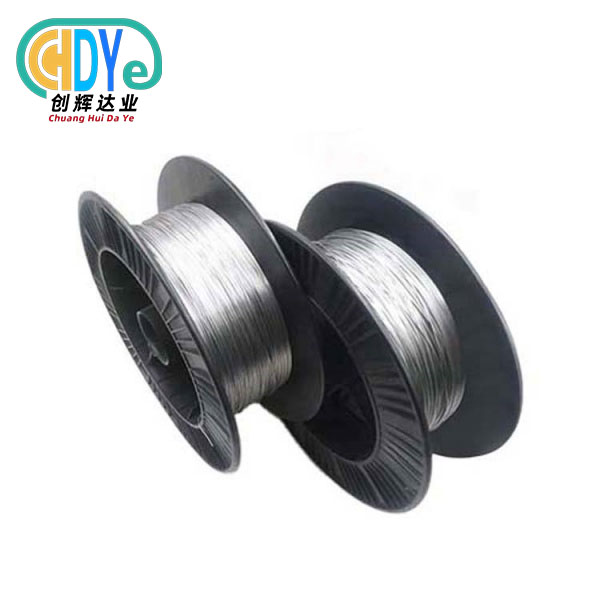
The niobium wire made by Chuanghui Daye is 99.95% pure and meets the standards set by ASTM, AMS, and ISO. Our range of products comes in many different widths and sizes, Niobium Metal Wire, so they can be used for a lot of different things, from computer parts that need to be very strong to strong industrial systems. We can meet the needs of every customer because we can do custom processing. This is true whether they want unique alloys, surface treatments, or sizes that aren't normal. Our skilled staff works closely with clients to make sure they get the best specs for their projects.
Conclusion
To buy niobium wire properly, you need to know about the qualities of the material, what the application needs, and how good the supplier is. Because of its unique qualities, niobium wire is used for tough jobs in the aerospace, electronics, chemical processing, and medical device industries. Picking the right specs and suppliers is very important for the success of a project and for how well it works in the long run. For big projects, it's best to work with manufacturers who have a lot of knowledge and can help with technical issues, guarantee quality, and deliver on time. Investing in good niobium wire pays off in many ways, such as better performance, longer service life, and less need for upkeep in many business settings.
FAQ
1. What factors influence niobium wire pricing in international markets?
Pricing varies based on purity levels, wire diameter, order quantities, and current market conditions for niobium raw materials. Custom specifications typically command premium pricing compared to standard configurations. Exchange rate fluctuations and logistics costs also affect delivered pricing for international orders.
2. How does niobium wire conductivity compare to other specialty metals?
Niobium offers excellent electrical conductivity with the unique advantage of superconductive properties at cryogenic temperatures. While copper provides higher conductivity at room temperature, niobium's thermal stability and corrosion resistance make it superior for high-temperature electrical applications.
3. What certifications should I look for when sourcing niobium wire?
ISO 9001:2015 quality management certification ensures systematic quality control processes. Material compliance with ASTM, AMS, and ISO standards assures consistent properties. Chemical analysis certificates and dimensional inspection reports should accompany all shipments.
Partner with Chuanghui Daye for Your Niobium Metal Wire Requirements
Shaanxi Chuanghui Daye stands ready to support your global projects with premium Niobium Metal Wire solutions backed by decades of manufacturing expertise. Our ISO 9001:2015 certified facility in China's premier titanium capital ensures consistent quality and competitive pricing for your critical applications. As a trusted niobium metal wire supplier, we offer comprehensive technical support, custom processing capabilities, and reliable delivery schedules that keep your projects on track. Contact our technical team at info@chdymetal.com to discuss your specific requirements, request product samples, Niobium Metal Wire, or obtain detailed quotations tailored to your project needs.
References
1. American Society for Testing and Materials. "Standard Specification for Niobium and Niobium Alloy Wire." ASTM International, 2023.
2. Johnson, R.M. "Refractory Metals in Industrial Applications: Properties and Performance Characteristics." Materials Engineering Journal, 2023.
3. Chen, L. and Williams, K. "Global Supply Chain Analysis of Specialty Metals: Procurement Strategies for Critical Materials." International Procurement Review, 2023.
4. Thompson, D.A. "Comparative Analysis of Superconductive Materials in Electronics Manufacturing." Advanced Materials Research, 2023.
5. Martinez, S. "Quality Assurance in Rare Metal Processing: Standards and Certification Requirements." Industrial Quality Management, 2023.
6. Anderson, P.J. "Cost-Benefit Analysis of Premium Materials in Aerospace Applications." Aerospace Engineering Quarterly, 2023.
Learn about our latest products and discounts through SMS or email