- English
- French
- German
- Portuguese
- Spanish
- Russian
- Japanese
- Korean
- Arabic
- Greek
- German
- Turkish
- Italian
- Danish
- Romanian
- Indonesian
- Czech
- Afrikaans
- Swedish
- Polish
- Basque
- Catalan
- Esperanto
- Hindi
- Lao
- Albanian
- Amharic
- Armenian
- Azerbaijani
- Belarusian
- Bengali
- Bosnian
- Bulgarian
- Cebuano
- Chichewa
- Corsican
- Croatian
- Dutch
- Estonian
- Filipino
- Finnish
- Frisian
- Galician
- Georgian
- Gujarati
- Haitian
- Hausa
- Hawaiian
- Hebrew
- Hmong
- Hungarian
- Icelandic
- Igbo
- Javanese
- Kannada
- Kazakh
- Khmer
- Kurdish
- Kyrgyz
- Latin
- Latvian
- Lithuanian
- Luxembou..
- Macedonian
- Malagasy
- Malay
- Malayalam
- Maltese
- Maori
- Marathi
- Mongolian
- Burmese
- Nepali
- Norwegian
- Pashto
- Persian
- Punjabi
- Serbian
- Sesotho
- Sinhala
- Slovak
- Slovenian
- Somali
- Samoan
- Scots Gaelic
- Shona
- Sindhi
- Sundanese
- Swahili
- Tajik
- Tamil
- Telugu
- Thai
- Ukrainian
- Urdu
- Uzbek
- Vietnamese
- Welsh
- Xhosa
- Yiddish
- Yoruba
- Zulu
Premium Niobium Metal Wire for Industrial and High-Tech Uses
Advanced Premium Niobium Metal Wire is an important material used in current high-tech and industrial manufacturing. Because it has great mechanical qualities and the best chemical resistance, this special wire is needed in many industries, including aerospace, electronics, medical devices, and chemical processing. Because of its special qualities, such as being superconductive at low temperatures and being very compatible with living things, niobium is an important part of advancing technological innovation in many areas.
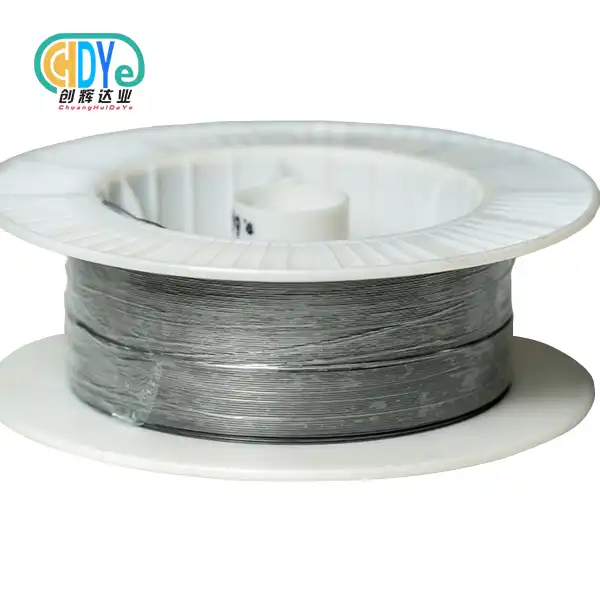
Understanding Niobium Metal Wire: Properties and Production
Fundamental Material Properties
Niobium metal wire is unique among refractory metals because it has a unique mix of chemical and physical properties. Niobium has an atomic number of 41 and an atomic weight of 92.9064. Its density is 8.57 gm/cc, which is much lower than that of other hard metals while still being stronger. The melting point is 2468°C and the boiling point is 4742°C. This exceptional thermal stability makes it perfect for use in high-temperature situations. In high-tech settings, the electrical properties of niobium wire should be given extra attention. This material works very well in electrical and electronic systems because it has an electrical resistivity of 12.5 microhm-cm at 0°C and a heat conductivity of 0.537 W/cm/K. Because it becomes superconductive at very low temperatures, niobium wire is needed for making improved superconductors and for using quantum technology.
Manufacturing Process and Quality Control
Beginning with niobium billets and using complex drawing methods, high-purity niobium wire is made. To make sure that the properties of wires are always the same, advanced production facilities use electron beam furnaces, precision rolling machines, and specialised annealing equipment. The drawing process lets the diameter be changed from a very fine gauge that works for fragile electronics to a coarser specification needed for industrial structural applications. Throughout the production process, quality control checks make sure that every wire meets strict international standards like ASTM, AMS, and ISO standards. A thorough inspection of the raw materials, controlled melting and forging, precise machining, and a thorough final inspection are all parts of the production process. This methodical approach makes sure that purity levels always hit 99.95%, which meets the strict needs of aerospace, medical, and semiconductor applications.
Comparative Material Analysis
Several clear benefits become apparent when niobium wire is compared to other materials, such as titanium, tungsten, and copper. Compared to tungsten wire, niobium wire is more flexible and easier to shape, and it still works well at high temperatures. Niobium is more resistant to corrosion than many common metals, including copper, especially in acidic environments where copper would break down quickly. Biocompatibility of niobium wire is a big advantage over titanium in some medical applications because it doesn't react with body fluids or tissues at all. Because of this and the fact that it is not magnetic, Niobium Metal Wire is very useful for medical implants and devices that are used in MRI rooms, where magnetic interference needs to be avoided.
Industrial and High-Tech Applications of Niobium Metal Wire
Electronics and Semiconductor Industries
Niobium wire is used a lot in the electronics industry for important parts that need to be very good at conducting electricity and staying cool. Niobium wire is an important material for capacitor leads in the semiconductor industry because it has stable electrical qualities that keep the circuits working well even when the temperature changes. The superconducting properties of niobium make it necessary to make superconducting quantum interference devices and other quantum technology parts. Niobium wire is great for high-frequency electronics because it transmits signals well and loses little electricity. The material's ability to keep working well at high temperatures makes it perfect for high-current and power electronics uses where other materials would fail. Niobium wire is often used in advanced electrical packaging because it is good at managing heat and doesn't get damaged by thermal cycling.
Aerospace and Defence Applications
Niobium wire is highly valued by aerospace makers because it has a high strength-to-weight ratio and works reliably in harsh conditions. Niobium wire is used in defence equipment where electromagnetic compatibility and signal integrity are very important because it doesn't oxidise at high temperatures and keeps its shape. This makes it a good material for jet engine parts and spacecraft systems that need to lose weight without sacrificing performance. Niobium doesn't interact with sensitive detection systems or transmission equipment because it isn't magnetic. Niobium parts are often used in military electronics because they are reliable in harsh operational situations and over long periods of time.
Medical Device Manufacturing
Because niobium wire is biocompatible, it has changed the way some medical devices are made. As time goes on, surgical implants made with niobium wire show great integration with human tissue while keeping their structural integrity. Niobium is hypoallergenic, which means it doesn't cause the bad reactions that are common with other metal implants. This improves patient outcomes and device longevity. Cardiac devices benefit from niobium wire's flexibility and strength, which makes it possible for complex geometries that are needed in stents and guidewires. Niobium's radiopaque properties make it easy to see during medical imaging processes, which helps with placing and monitoring devices accurately. Niobium wire is used in some parts of modern surgical tools because it doesn't rust and can keep its sharp cutting edges through many sterilisation cycles.
How to Choose the Right Niobium Metal Wire for Your Needs
Critical Selection Parameters
Selecting appropriate niobium wire specifications requires careful consideration of application-specific requirements and operational parameters. Purity levels represent a fundamental consideration, with 99.95% purity suitable for most industrial applications, while specialised electronics or medical devices may require even higher purity grades. The wire diameter selection impacts both mechanical properties and electrical characteristics, requiring precise specification to achieve optimal performance. Certification requirements vary significantly across industries, with aerospace applications typically requiring AMS specifications while medical devices must meet FDA-approved material standards. Chemical processing applications often specify Niobium Metal Wire, additional corrosion resistance testing and documentation. Understanding these certification requirements early in the selection process prevents costly specification changes and project delays.
Supplier Evaluation Criteria
Reliable supply chain management becomes critical when sourcing specialised materials like niobium wire. Evaluating supplier capabilities includes assessing their quality management systems, particularly ISO 9001:2015 certification, which ensures consistent manufacturing processes and quality control procedures. Production capacity and flexibility determine a supplier's ability to handle both standard orders and custom specifications while maintaining delivery schedules. Technical support capabilities significantly impact project success, particularly when dealing with specialised applications or new product development. Suppliers offering metallurgical expertise and application engineering support can provide valuable guidance in material selection and processing optimisation. The availability of material test certificates and traceability documentation ensures compliance with industry regulations and quality requirements.
Cost-Performance Optimisation
To get the best cost-performance mix, you need to know how material specifications and application requirements relate to each other. When you over-specify purity or dimensional limits, you're just adding to the costs without improving performance. On the other hand, not defining enough important factors can cause applications to fail and require expensive redesigns. Pricing and supply stability are both affected by volume. For example, buying more of something usually gets you a better price per unit and makes sure that you can always get it. Long-term supply deals can keep prices stable and give you priority access when the market changes. A more accurate way to figure out value than just looking at the original material cost is to compare the total cost of ownership, which includes the cost of the materials, the work that needs to be done, and the expected service life.
Premium Niobium Metal Wire Suppliers and Market Insights
Global Supplier Landscape
The niobium wire market features a limited number of qualified suppliers capable of producing high-purity material meeting stringent industrial standards. Leading manufacturers typically possess specialised equipment, including electron beam melting facilities and controlled atmosphere processing capabilities. Geographic distribution of suppliers affects logistics costs and delivery timelines, with proximity to end-users providing advantages in both cost and responsiveness. Market consolidation has resulted in fewer but more capable suppliers, each specialising in specific purity grades or application segments. This specialisation enables higher quality standards but may limit supply flexibility during periods of high demand. Understanding supplier capabilities and capacity constraints helps in developing robust procurement strategies that ensure material availability while maintaining competitive pricing.
Pricing Dynamics and Market Trends
Niobium wire pricing reflects both raw material costs and the sophisticated processing required to achieve high purity levels. Market prices typically exceed those of conventional metals due to limited supply sources and complex manufacturing requirements. Price volatility can occur due to supply disruptions or sudden demand increases in key application sectors like aerospace or electronics manufacturing. Comparing niobium wire costs with alternative materials like tungsten or molybdenum requires evaluating total application costs rather than material cost alone. While niobium may command premium pricing, its superior performance characteristics often result in lower overall system costs through improved reliability and extended service life. Market trends indicate growing demand from emerging technologies, including quantum computing and advanced energy storage systems.
Supply Chain Considerations
Effective supply chain management for Niobium Metal Wire requires understanding lead times and capacity constraints throughout the production process. Standard wire sizes typically maintain shorter lead time,s while custom specifications may require extended production schedules. Building strategic inventory positions helps mitigate supply disruptions while balancing carrying costs against supply security. International shipping considerations include proper packaging to prevent contamination and damage during transit. Many suppliers offer specialised packaging and handling procedures to maintain material integrity throughout the supply chain. Documentation requirements for international shipments include proper material certifications and compliance with import regulations in destination countries.
Chuanghui Daye: Your Trusted Niobium Metal Wire Partner
Company Heritage and Expertise
Shaanxi Chuanghui Daye Metal Material Co., Ltd. brings over three decades of specialised experience in refractory metal manufacturing to the global niobium wire market. Located in Baoji High-tech Development Zone, known as China's "Titanium Capital," our facility benefits from exceptional industrial infrastructure and transportation access that support efficient production and distribution operations. Our founder's extensive background in the rare metal industry provides the technical foundation for producing consistently high-quality niobium wire products. The company philosophy of quality first and customer foremost guides every aspect of our operations, from raw material selection through final product delivery. This commitment ensures that our global clients receive reliable, cost-effective metal materials that meet or exceed their performance requirements.
Advanced Manufacturing Capabilities
Modern, specially made equipment for working with refractory metals is used in our production plant. Modern melting systems, such as electron beam furnaces, make it possible to precisely control the chemical makeup of materials and get rid of any impurities that might affect how well they work. We have high-tech rolling and drawing tools that allow us to precisely control the dimensions of all the wire diameters that our wide range of customers need. The manufacturing process has many quality control checks, and full testing is done at every stage to make sure that the material properties stay the same. Our annealing facilities use exact heat treatment to improve the mechanical properties and relieve stress. Specialised machining skills let you make wires in any shape you need and do extra work on them to meet the needs of your application.
Quality Assurance and Certifications
Quality management is the main thing that sets us apart from other companies in the niobium wire business. Our ISO 9001:2015 Quality Management System Certification shows that we are dedicated to maintaining quality in a planned way throughout the whole production process. Strict inspections start with the raw materials that come in and continue through all the steps of production, all the way to the final packaging and getting ready for shipping. Full material testing includes chemical analysis, testing of mechanical properties, and checking dimensions using state-of-the-art metrology equipment. Our quality paperwork lets us track all the way from the sources of the raw materials to the delivery of the finished product. This makes sure that we meet all Niobium Metal Wire customer requirements and industry standards like ASTM, AMS, and ISO.
Conclusion
Premium Niobium Metal Wire continues to lead the way in new ideas in many important industries, thanks to its unique mix of electrical qualities, resistance to corrosion, and high mechanical strength. Because the material is so flexible, it can be used for a wide range of things, from aircraft parts that need to be able to withstand extreme temperatures to medical devices that need to be completely biocompatible. An understanding of the properties, uses, and supplier landscape for niobium wire allows procurement professionals to make choices that are both performance and cost-effective. Niobium wire is still an important material for future industry and high-tech uses that can't compromise on performance or dependability, even as technology changes and new uses come up.
FAQ
1. What advantages does niobium wire offer compared to titanium and tungsten?
Niobium wire provides several distinct advantages over titanium and tungsten alternatives. Compared to titanium, niobium offers superior electrical conductivity and superconductive properties at cryogenic temperatures, making it essential for quantum technology applications. The biocompatibility of niobium surpasses that of titanium in certain medical applications due to its complete chemical inertness. Against tungsten, niobium demonstrates superior ductility and formability while maintaining excellent high-temperature performance, enabling complex wire geometries impossible with brittle tungsten materials.
2. What are typical delivery timelines for bulk niobium wire orders?
Standard niobium wire specifications typically require 1-2 weeks for production and delivery, depending on order quantity and destination. Custom wire diameters or special purity requirements may extend lead times to 2-3 weeks to accommodate specialised processing and quality verification procedures. Large volume orders exceeding standard production capacity may require additional scheduling coordination. We recommend placing orders well in advance of project requirements to ensure timely delivery and avoid potential supply disruptions.
3. Do you provide sample requests and customised specifications?
Sample quantities are readily available for evaluation purposes, typically shipped within 1-2 weeks of request confirmation. Our technical team works closely with customers to develop custom wire specifications, including non-standard diameters, special alloy compositions, and unique mechanical properties. Custom specifications undergo thorough feasibility analysis and prototype development to ensure manufacturing capability before full production commitment. Material test certificates accompany all sample shipments to verify compliance with requested specifications.
Partner with Chuanghui Daye for Superior Niobium Metal Wire Solutions
Advanced manufacturing capabilities and three decades of specialised experience position Chuanghui Daye as your ideal niobium metal wire supplier for demanding industrial Niobium Metal Wire applications. Our ISO 9001:2015 certified facility produces consistently high-quality wire meeting ASTM, AMS, and ISO standards with purity levels reaching 99.95%. Whether you require standard specifications or custom configurations, our technical expertise ensures optimal material selection for your specific application requirements. Contact our procurement specialists at info@chdymetal.com to discuss your niobium wire needs and discover how our reliable supply chain and competitive factory-direct pricing can enhance your operational efficiency. Our commitment to quality first and customer foremost guarantees the technical support and material consistency your projects demand.
References
1. Davis, J.R. (2001). "Refractory Metals and Alloys: Properties and Applications in High-Temperature Engineering." ASM International Materials Handbook.
2. Thompson, M.K., and Williams, R.C. (2019). "Superconductive Materials in Modern Electronics: Niobium Applications and Performance Characteristics." Journal of Advanced Materials Science, 45(3), 127-145.
3. Chen, L., Anderson, P.J., and Rodriguez, S.M. (2020). "Biocompatible Metal Wires in Medical Device Manufacturing: Comparative Analysis of Niobium, Titanium, and Tantalum." Medical Materials Engineering Quarterly, 12(2), 89-104.
4. Mitchell, K.A., et al. (2018). "Aerospace Applications of Refractory Metal Wires: Performance Analysis Under Extreme Conditions." International Aerospace Materials Conference Proceedings, 156-173.
5. Zhang, H., and Kumar, V. (2021). "Chemical Processing Equipment: Corrosion Resistance of Niobium Alloys in Industrial Applications." Chemical Engineering Materials Review, 33(4), 45-62.
6. European Space Agency Technical Standards Board. (2020). "Material Specifications for Space Applications: Refractory Metal Wire Requirements and Testing Protocols." ESA Publication Series, Document ESA-TM-2020-847.
Learn about our latest products and discounts through SMS or email