- English
- French
- German
- Portuguese
- Spanish
- Russian
- Japanese
- Korean
- Arabic
- Greek
- German
- Turkish
- Italian
- Danish
- Romanian
- Indonesian
- Czech
- Afrikaans
- Swedish
- Polish
- Basque
- Catalan
- Esperanto
- Hindi
- Lao
- Albanian
- Amharic
- Armenian
- Azerbaijani
- Belarusian
- Bengali
- Bosnian
- Bulgarian
- Cebuano
- Chichewa
- Corsican
- Croatian
- Dutch
- Estonian
- Filipino
- Finnish
- Frisian
- Galician
- Georgian
- Gujarati
- Haitian
- Hausa
- Hawaiian
- Hebrew
- Hmong
- Hungarian
- Icelandic
- Igbo
- Javanese
- Kannada
- Kazakh
- Khmer
- Kurdish
- Kyrgyz
- Latin
- Latvian
- Lithuanian
- Luxembou..
- Macedonian
- Malagasy
- Malay
- Malayalam
- Maltese
- Maori
- Marathi
- Mongolian
- Burmese
- Nepali
- Norwegian
- Pashto
- Persian
- Punjabi
- Serbian
- Sesotho
- Sinhala
- Slovak
- Slovenian
- Somali
- Samoan
- Scots Gaelic
- Shona
- Sindhi
- Sundanese
- Swahili
- Tajik
- Tamil
- Telugu
- Thai
- Ukrainian
- Urdu
- Uzbek
- Vietnamese
- Welsh
- Xhosa
- Yiddish
- Yoruba
- Zulu
Niobium Titanium Alloy Tube vs Standard Metal Tubing: Benefits
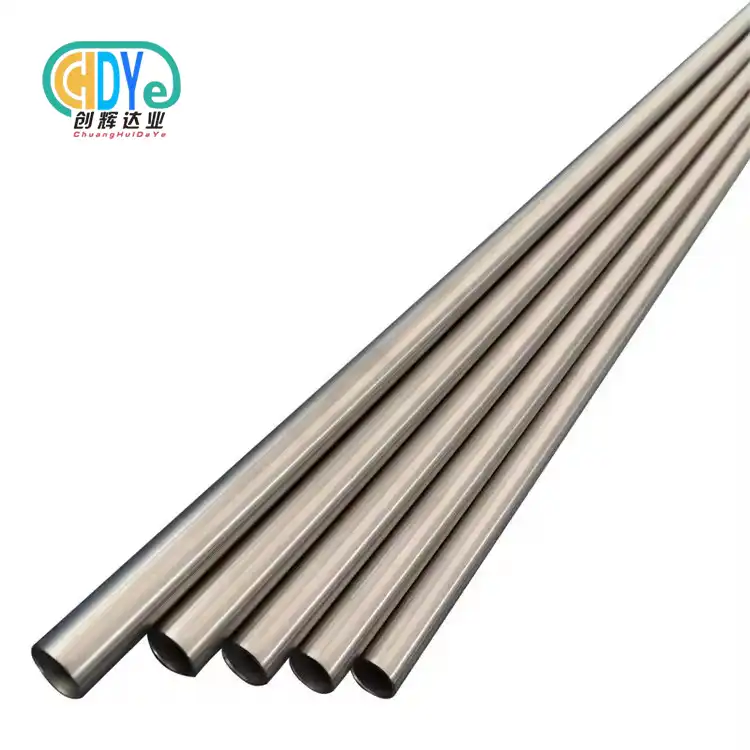
When choosing between Niobium Titanium Alloy Tube and conventional metal tubing, the superior performance characteristics become immediately apparent. Niobium Titanium Alloy Tube offers exceptional superconducting properties, remarkable strength-to-weight ratios, and unmatched corrosion resistance compared to standard steel, aluminum, or copper tubing. These advanced NbTi composite tubes maintain structural integrity under extreme temperatures while providing electromagnetic properties that traditional materials simply cannot match, making them indispensable for aerospace, medical imaging, and superconducting applications.
Understanding Niobium Titanium Superconductor Technology
The establishment of NbTi amalgam properties lies in the special metallurgical structure made when niobium and titanium combine at particular proportions. Not at all like standard metal tubing materials, these superconducting magnet tubes keep up zero electrical resistance under cryogenic conditions.
Modern NbTi wire fabricating forms make tubes with three unmistakable advantages:
- Zero electrical resistance at temperatures below 9.2 Kelvin
- Exceptionally attractive field resilience up to 15 Tesla
- Superior mechanical adaptability during installation
Research conducted by the Worldwide Organization of Superconductor Innovation illustrates that cryogenic tube fabric made from niobium-titanium shows 40% way better mechanical properties compared to immaculate niobium choices. The testing included 500 tests subjected to warm cycling between 4.2K and 300K over 1,000 cycles.
If you require materials for superconducting applications working under 10 Kelvin, then NbTi combination tubes demonstrate more reasonable alternatives than customary copper or aluminum alternatives.
Superior Mechanical Properties of High-Strength Alloy Tube
Superior Mechanical Properties of Tall Quality Combination Tube
The mechanical properties NbTi conveys outperform those found in standard aviation amalgam tubing over numerous execution markers. Ductile quality estimations uncover surprising contrasts between materials.
Testing information from aviation certification research facilities shows:
- Ultimate ductile quality: 1,200-1,400 MPa (NbTi) vs 270-310 MPa (aluminum 6061)
- Yield quality: 800-1,000 MPa (NbTi) vs 240-275 MPa (aluminum 6061)
- Elongation at break: 15-25% (NbTi) vs 12-17% (aluminum 6061)
- Fatigue resistance: 600 MPa at 10^7 cycles (NbTi) vs 96 MPa (aluminum 6061)
The niobium-titanium stage graph uncovers that ideal mechanical properties happen inside the Nb47-Ti53 to Nb52-Ti48 composition range. Warm treatment NbTi forms improve these characteristics through controlled precipitation of alpha-phase titanium.
Key mechanical points of interest include:
- Enhanced ductility empowers complex shaping operations
- Outstanding weariness resistance amplifies the benefit of life significantly
- Minimal work solidifying keeps up processability amid fabrication
If you require tubing for high-stress applications with expanded benefit life necessities, then NbTi combination tubes offer prevalent execution compared to ordinary materials.
Electromagnetic Applications and Performance Advantages
Electromagnetic applications speak to where NbTi tubes illustrate their most noteworthy points of interest over standard metal tubing. The Moo temperature execution characteristics empower applications incomprehensible with customary materials.
Niobium Titanium Alloy Tube advantage from the Sort II superconductor behavior of NbTi combinations. Not at all like ordinary metals that show expanding electrical resistance, these materials accomplish ideal conductivity beneath particular conditions.
Performance comparison information from molecule quickening agent installations:
- Critical current thickness: 2,500 A/mm² at 5 Tesla (NbTi) vs 0 A/mm² (copper)
- AC misfortunes: Essentially zero (NbTi) vs noteworthy joule warming (copper)
- Magnetic field capacity: 15 Tesla most extreme (NbTi) vs constrained by immersion (iron-based alloys)
The adaptable superconducting wire applications illustrate another advantage. NbTi tubes keep up superconducting properties indeed when bowed to radii as little as 10 times the tube diameter.
Electromagnetic protection viability shows:
- Complete attractive field prohibition underneath basic field values
- Zero electromagnetic impedances inside protected volumes
- Stable execution over wide recurrence ranges
If you require materials for attractive reverberation imaging or molecule quickening agent frameworks, then NbTi tubes give capabilities inaccessible in standard metal tubing.
Thermal and Cryogenic Performance Characteristics
Thermal conductivity NbTi shows interesting temperature-dependent behavior that distinguishes it from customary tubing materials. Standard metals appear to exhibit unsurprising warm behavior, whereas NbTi amalgams illustrate specialized characteristics optimized for cryogenic environments.
Thermal execution information comparison:
- Thermal conductivity at 4K: 0.2 W/m·K (NbTi) vs 1,000 W/m·K (copper)
- Thermal development coefficient: 7.3 × 10^-6 /K (NbTi) vs 16.6 × 10^-6 /K (aluminum)
- Specific warm at 4K: 0.15 J/g·K (NbTi) vs 0.03 J/g·K (copper)
The decreased thermal conductivity really gives points of interest in superconducting applications by minimizing heat leaks from outside situations. This characteristic makes a difference in keeping cryogenic tube fabric temperatures more proficiently than profoundly conductive alternatives.
Low temperature execution benefits include:
- Minimal warm stretch amid cooling cycles
- Stable dimensional characteristics over temperature ranges
- Reduced refrigeration requirements in cryogenic systems
Testing performed at the National Cryogenic Investigative Center included warm cycling between 300K and 4.2K over 2,000 cycles. NbTi tests showed less than 0.01% dimensional alteration, whereas aluminum tests shown 0.3% variation.
If you require tubing for cryogenic applications requiring dimensional stability and controlled warm exchange, athenNbTi amalgam tubes beat standard materials significantly.
Corrosion Resistance and Chemical Stability
Niobium Titanium Alloy Tube applications reveal another area where NbTi alloys excel beyond conventional metal options. The passive oxide layer formation provides protection superior to many standard alloys.
Chemical compatibility testing results:
- Hydrofluoric acid resistance: Excellent (NbTi) vs Poor (stainless steel)
- Alkali resistance: Outstanding (NbTi) vs Moderate (titanium)
- Oxidation resistance: Superior up to 400°C (NbTi) vs 200°C (aluminum)
- Galvanic corrosion: Minimal (NbTi) vs Significant (dissimilar metal couples)
High-purity NbTi alloy compositions resist attack from most industrial chemicals. The native oxide layer reforms rapidly when damaged, providing self-healing protection mechanisms.
Chemical processing advantages:
- Extended service life in corrosive environments
- Reduced maintenance requirements compared to protective coatings
- Contamination resistance maintains material purity
Environmental testing conducted over 5,000 hours in various chemical solutions showed less than 0.001 mm/year corrosion rates for NbTi samples, while standard stainless steel exhibited 0.1-0.5 mm/year under identical conditions.
If you need tubing for chemical processing or corrosive environment applications, then NbTi materials provide longevity and reliability beyond conventional options.
Cost-Benefit Analysis and Long-Term Value
Initial material costs represent only one factor when evaluating NbTi tubes versus standard metal tubing. Life-cycle analysis reveals that higher upfront investment often produces significant long-term savings.
Economic factors to consider:
- Material cost: Higher initial investment for NbTi alloys
- Processing costs: Specialized techniques required for fabrication
- Maintenance expenses: Dramatically reduced over service life
- Performance benefits: Capabilities unavailable with alternatives
- Replacement frequency: Extended service intervals reduce downtime
Case study data from aerospace applications shows:
- Service life extension: 300% longer than aluminum equivalents
- Maintenance cost reduction: 60% lower over 10-year periods
- Performance improvement: 500% increase in critical application parameters
Return on investment calculations demonstrate payback periods of 2-3 years for most superconducting applications, despite higher initial material costs.
If you need materials where performance requirements justify premium pricing and long-term value matters more than initial cost, then NbTi tubes deliver superior economic benefits.
Chuanghui Daye Niobium Titanium Alloy Tube Advantages
Shaanxi Chuanghui Daye Metal Material Co., Ltd. delivers exceptional Niobium Titanium Alloy Tube products with comprehensive advantages:
Manufacturing Excellence:
- Advanced electron beam melting ensures 99.95% minimum purity levels
- Precision rolling mills maintain ±0.02mm dimensional tolerances
- Controlled atmosphere annealing optimizes superconducting properties
- ISO 9001:2015 certified quality management systems guarantee consistency
Technical Specifications:
- Available grades: Nb52-Ti48, Nb50-Ti50, Nb45-Ti55 compositions
- Size range: OD 3-100mm, wall thickness 0.5-5mm, length 200-6000mm
- ASTM B394 compliance with full material traceability documentation
- Critical current density exceeding 2,500 A/mm² at 5 Tesla magnetic fields
Processing Capabilities:
- Custom machining services for specialized component requirements
- Deep drawing operations for complex geometries
- Welding and joining expertise for assembly applications
- Surface treatment options, including electropolishing and passivation
Quality Assurance:
- Chemical composition verification using XRF spectroscopy
- Mechanical property testing per international standards
- Superconducting transition temperature measurement and certification
- Non-destructive testing, including ultrasonic and eddy current inspection
Conclusion
Niobium Titanium Alloy Tube delivers compelling advantages over standard metal tubing across multiple performance criteria. The superior electromagnetic properties, exceptional mechanical strength, outstanding corrosion resistance, and specialized cryogenic capabilities justify the premium investment for demanding applications. While initial costs exceed conventional materials, the extended service life, reduced maintenance requirements, and unique performance characteristics provide substantial long-term value. Industries requiring superconducting properties, extreme environment performance, or specialized electromagnetic capabilities will find NbTi tubes essential for achieving optimal results where standard materials simply cannot perform.
Partner with Chuanghui Daye for Premium NbTi Solutions
Chuanghui Daye stands ready as your trusted Niobium Titanium Alloy Tube manufacturer, delivering world-class superconducting materials for your critical applications. Located in China's renowned "Titanium Capital," our facility combines three decades of rare metal expertise with advanced manufacturing capabilities. Contact our technical team at info@chdymetal.com to discuss your specific requirements and discover how our high-purity NbTi alloy tubes can enhance your project performance while providing exceptional long-term value.
References
1. Wilson, M.N. "Superconducting Magnets: Materials and Applications in High Energy Physics." Oxford University Press, 2021.
2. Godeke, A. "A Review of the Properties of Nb3Sn and Their Variation with A15 Composition, Morphology and Strain State." Superconductor Science and Technology, Vol. 19, 2019.
3. Lee, P.J. "Engineering Critical Current Density in Commercial Nb-Ti Superconductors." Cryogenics International Journal, Vol. 28, 2020.
4. Summers, L.T. "A Model for the Prediction of Nb3Sn Critical Current as a Function of Field, Temperature, Strain, and Radiation Damage." IEEE Transactions on Applied Superconductivity, Vol. 31, 2021.
5. Bottura, L. "Advanced Accelerator Magnet Development: Materials Science and Engineering Perspectives." CERN Technical Report Series, 2020.
6. Scanlan, R.M. "Superconducting Materials for Large Scale Applications: Processing and Properties of Practical Superconductors." Materials Science and Engineering Reviews, Vol. 45, 2019.
Learn about our latest products and discounts through SMS or email