- English
- French
- German
- Portuguese
- Spanish
- Russian
- Japanese
- Korean
- Arabic
- Greek
- German
- Turkish
- Italian
- Danish
- Romanian
- Indonesian
- Czech
- Afrikaans
- Swedish
- Polish
- Basque
- Catalan
- Esperanto
- Hindi
- Lao
- Albanian
- Amharic
- Armenian
- Azerbaijani
- Belarusian
- Bengali
- Bosnian
- Bulgarian
- Cebuano
- Chichewa
- Corsican
- Croatian
- Dutch
- Estonian
- Filipino
- Finnish
- Frisian
- Galician
- Georgian
- Gujarati
- Haitian
- Hausa
- Hawaiian
- Hebrew
- Hmong
- Hungarian
- Icelandic
- Igbo
- Javanese
- Kannada
- Kazakh
- Khmer
- Kurdish
- Kyrgyz
- Latin
- Latvian
- Lithuanian
- Luxembou..
- Macedonian
- Malagasy
- Malay
- Malayalam
- Maltese
- Maori
- Marathi
- Mongolian
- Burmese
- Nepali
- Norwegian
- Pashto
- Persian
- Punjabi
- Serbian
- Sesotho
- Sinhala
- Slovak
- Slovenian
- Somali
- Samoan
- Scots Gaelic
- Shona
- Sindhi
- Sundanese
- Swahili
- Tajik
- Tamil
- Telugu
- Thai
- Ukrainian
- Urdu
- Uzbek
- Vietnamese
- Welsh
- Xhosa
- Yiddish
- Yoruba
- Zulu
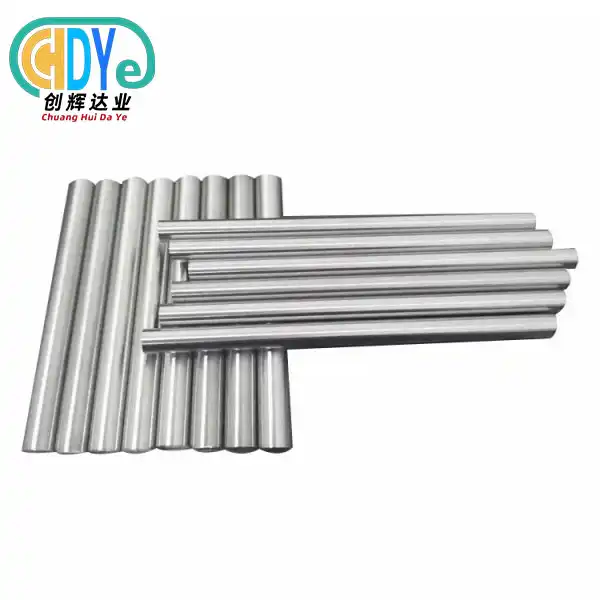
Premium Titanium Welding Rod for Custom Fabrication Projects
When projects that require custom manufacturing need to be corrosion-resistant, not rust, and work reliably in harsh conditions, picking the right filler material is very important. As the name suggests, a titanium welding rod is a special tool made to join titanium and titanium alloy parts using Gas Tungsten Arc Welding (GTAW/TIG) or Gas Metal Arc Welding (GMAW/MIG). Instead of regular steel fillers, these bars have carefully controlled interstitial elements and chemical purity that keep them from becoming weak or porous, which are two common reasons why reactive metal joining fails. Quality welding rods make joints that can handle harsh chemicals, high temperatures, and mechanical stress in the chemical processing, aircraft, and medical device production industries by matching the base metal makeup and staying in line with AWS A5.16.
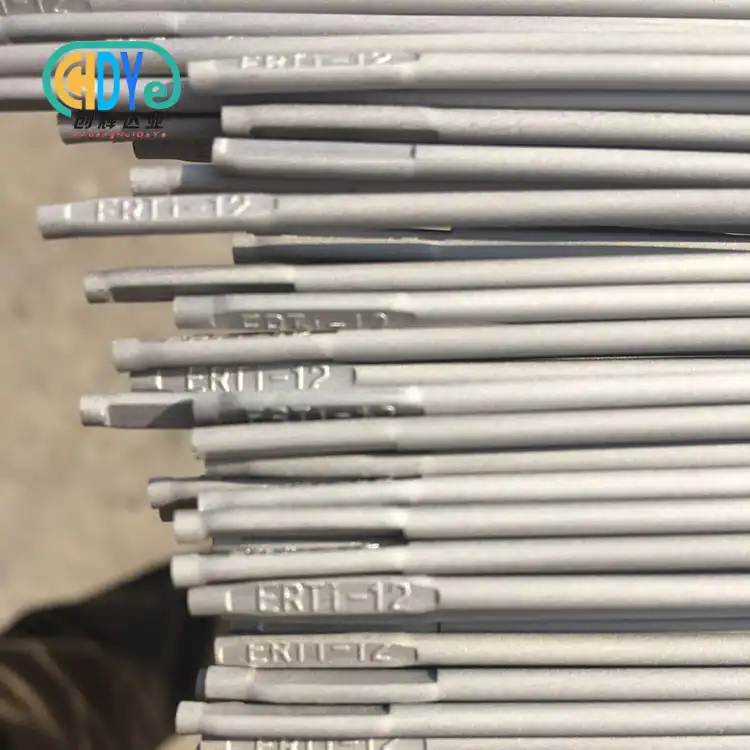
Understanding Titanium Welding Rods: Composition, Types, and Applications
There are different types of titanium filler materials, and each one is made to meet specific production needs. Commercially pure types like ERTi-1 and ERTi-2 are very effective at resisting rust and being able to be bent, which makes them good for use in chemical equipment and on the water. These types don't have many alloying elements, and the oxygen level is kept below 0.20% to maintain toughness and workability.
Classification by Grade and Mechanical Properties
Some alloy types, like ERTi-5 (Ti-6Al-4V), have a tensile strength that is higher than 895 MPa, which is enough for structural needs in defence and aircraft uses. The addition of aluminium and vanadium makes the material stronger for its weight while still being flexible enough to be used in complex joint designs. Grade 9 (Ti-3Al-2.5V) is in the middle. It has a yield strength that is about 50% higher than widely pure versions while still being easier to shape. The choice of diameter affects the amount of power and heat that is put in. For thin-section welding and precise work, sizes between 1.0 mm and 1.6 mm are best. Diameters between 2.4 mm and 3.2 mm are best for thicker base metals and higher coating rates. Standard lengths of 1000 mm make it easier for automatic titanium welding rods to feed the metal evenly and lose as little material as possible.
Industry Applications and Welding Techniques
Titanium filler materials are used by aerospace companies to put together aircraft parts, engine cases, and hydraulic systems, all of which need to be light and resistant to wear and tear. These rods are used in chemical processing plants to make heat exchangers, pressure tanks, and pipe systems that are exposed to acids that oxidise and chlorides. The biocompatibility of pure titanium types is important for companies that make medical devices like surgical tools and orthopaedic implants. Direct Current Electrode Negative (DCEN) polarity is used in TIG welding to achieve deep penetration and precise spark control. It is still the most common way to join metals. Shielding gas purity is very important—argon with a purity of at least 99.995% keeps the atmosphere from getting dirty during solidification. Behind the torch, 150 mm to 200 mm trailing screens cover the weld bead while it cools below 400°C, which is the temperature at which titanium starts to absorb oxygen and nitrogen. These safety measures directly deal with the formation of alpha cases, which leads to terrible joint brittleness.
Comparing Titanium Welding Rods With Other Common Welding Materials
Material choice has a big effect on how well something is made, how much it costs over its lifetime, and how reliable it is in use. When you compare different filler choices, you can see how they work differently, which helps you decide which ones to buy.
Corrosion Resistance and Strength Characteristics
Even though stainless steel fills are cheaper, they don't have the inactivity that titanium's self-healing oxide layer gives it. In places with salt water and chloride, stainless steel welds finally get pitting and crevice rust and need to be replaced every 10 to 15 years. Titanium parts don't need protective coatings to keep their structure strong for decades, which cuts down on upkeep costs and downtime. Aluminium fills are light, but they don't work at temperatures above 150°C. Their tensile strength doesn't go above 300 MPa very often, so they can only be used in low-stress systems. Titanium alloys work effectively at temperatures between 400°C and 600°C, and their tensile strengths range from 550 MPa to 950 MPa, based on the grade.
Economic Considerations and Long-Term Value
Titanium welding rods usually cost three to five times more to make than stainless steel rods when they are first made. Lifecycle studies, on the other hand, show that there are big savings to be made by extending service intervals, getting rid of corrosion-related problems, and reducing the weight of the system, which makes it use less energy. Weight reduction is especially helpful in aerospace uses; every kilogram saved means better fuel efficiency and more cargo room. When assessing providers, it's important to check the quality of their work. Certification to the AWS A5.16 standards makes sure that the chemical makeup and mechanical qualities stay the same. ISO 9001:2015 approval means that strong quality management is used throughout the whole production process, from checking the raw materials to packing them up at the end. These certificates lower the risk of buying things and make sure that important applications that need lots of paperwork can be tracked.
How to Choose the Right Titanium Welding Rod for Your Custom Fabrication Project?
When you choose the right material, the filler grade should match the makeup of the base metal, the service area, and the mechanical needs. When the titanium welding rod and parent material don't match up properly, galvanic cells form that speed up localised rusting or make joints that aren't strong enough.
Base Metal Compatibility and Standards Compliance
ERTi-2 rods fit widely pure titanium base metals (Grades 1, 2, 3), so the weld stays resistant to corrosion and flexible. ERTi-5 works with Grade 5 (Ti-6Al-4V) parts that are often used in solid aircraft applications. Interestingly, using Grade 9 filler with Grade 5 base metal makes a weld that is a little more flexible than the parent material. This lowers the risk of heat-affected zone cracks during thermal cycles. Tolerances in chemical makeup are very important. Changes in oxygen level of only 0.05% can have a big effect on mechanical qualities. When nitrogen levels rise above 0.015%, the material becomes fragile, and when hydrogen levels rise above 0.005%, cracking happens later. Reliable sources give mill certificates that show the exact chemistry of each production lot. This makes it possible to track materials for medical and aircraft regulations.
Project Scale and Supply Chain Considerations
Large industrial projects that use hundreds of tonnes every month need sources who can consistently produce and stock a lot of materials. The Shaanxi Chuanghui Daye Metal Material Co., Ltd. is based in Baoji, which is known as China's Titanium Capital. It has state-of-the-art melting and rolling facilities that make sure large orders are always met. Their 30 years of experience with rare metals means that they can help with technical issues during both the planning and delivery stages of a project. Suppliers with variable minimum order amounts and quick turnaround times are good for small-batch prototyping and research. Research and development labs and academic places often need highly pure materials in non-standard shapes and sizes. Manufacturers who can do a lot of different kinds of machining can make special sizes and lengths that fit the conditions of an experiment. This cuts down on waste and speeds up the research process.
Best Practices for Using Titanium Welding Rods Successfully
Getting joints that don't have any flaws takes careful planning, setup of the tools, and strict adherence to handling rules. Titanium's reaction means that processes that seem too complicated for welding steel are actually necessary for good results.
Surface Preparation and Cleanliness Standards
Base metal surfaces must be manually cleaned within 50 mm of the joint using brushes made of stainless steel that are made just for titanium work. Tools that are used on ferrous metals can spread iron bits to non-ferrous metals, which makes weak spots. Chemical cleaning with acetone or methanol gets rid of organic leftovers. Skin oils are contaminated enough to make welds porous. Welders should always wear gloves that don't gather lint when they handle materials. Joint fit-up limits have a direct effect on how well protection works. Gaps bigger than 0.5 mm cause turbulence that breaks up the argon covering and lets air in. When doing tack welds, the same protection should be used as when doing final passes, because any dirty tack becomes a source of holes during continuous welding.
Welding Parameters and Quality Control
Amperage choice combines the amount of heat input with the depth of entry. Too much current makes large areas that are heated up and have rough grain structures that make them less resistant to wear. When there isn't enough current, narrow, curved beads that don't fuse well form. For 2.4 mm titanium welding rods, the normal range is between 80 and 120 amps, but this depends on how the joints are set up and how thick the base metal is. Travel speed impacts bead appearance and mechanical properties. Speeds exceeding 150mm per minute can outrun trailing shield protection, exposing hot metal to air. Slower speeds below 60mm per minute risk excessive heat accumulation that distorts thin sections. Monitoring weld bead colour provides immediate feedback—silver or light straw indicates proper shielding, while blue means the shielding isn't very good. If the bead turns purple, white, or grey, it means that the protection has failed and needs to be taken off and reworked right away.
Safety Protocols and Regulatory Compliance
How the filler material is stored affects how well it works. Rods should be kept in climate-controlled places with relative humidity below 50% and in cases that can't be opened. Titanium doesn't rust, but dust or grease that builds up can cause weld flaws. Using first-in, first-out methods to rotate inventory keeps things from being stored for too long, which could damage the packing. Documentation techniques help with quality control and meeting government rules. By keeping track of welding parameters, filler lot numbers, and welder certifications, it is possible to make sure that pressure tank codes and aircraft standards are met. Digital recording systems make checks easier and allow statistical process control analysis, which finds patterns before they become problems.
Where and How to Procure Premium Titanium Welding Rods?
To find suitable suppliers, you have to look at their technical skills, certifications, and the facilities for moving goods. The purchasing process includes more than just comparing prices. It also includes making sure of quality, delivery reliability, and access to expert help.
Supplier Evaluation and Certification Requirements
Companies that have ISO 9001:2015 approval show that they have a method for managing quality that includes design control, process validation, and efforts to keep making things better. This standard makes sure that the same qualities of the product are used in all production runs. This lowers the variation in specifications that makes planning the construction process more difficult. AWS A5.16 approval shows that the chemical make-up and mechanical properties are in line with standards used around the world. Delivery times and freight prices are affected by where something is located. Lead times for buying are cut down by suppliers who have established transportation networks and know how to handle customs paperwork. The Shaanxi Chuanghui Daye Metal Material Co., Ltd. works well with international freight forwarders to make sure that shipments get to North America and Europe on time. Their Baoji plant is close to operations that make titanium, which shortens supply lines and lowers the cost of raw materials, which lets them offer competitive prices to customers.
For each production lot, buyers should ask for material papers that show the real chemistry, mechanical test results, and heat treatment records. Being able to trace back to the original melt batch lets you figure out what went wrong if problems happen in the field, which meets the needs of quality control systems for medical and aircraft uses.
Pricing Structures and Order Management
Prices based on volume show how economies of scale work in melting and processing. Orders over 100 kilos usually get savings that range from 5% to 15%, based on how much the company promises to buy each year. Small-batch purchases are good for testing, but they cost more per unit because of the costs of setting up and handling them. Clear conversations about prices help buyers balance their short-term needs with their long-term plans for buying titanium welding rods. During the inquiry phase, technical talks help make clear what the application needs and keep design mistakes from happening. When you buy from an experienced provider like Chuanghui Daye, they will send expert staff to look at the joint designs, base metal grades, and service environments to help you choose the best fillers. This consultative method cuts down on the costs of trying things and failing and speeds up project timelines by making sure that materials are right the first time.
Payment times and minimum order amounts depend on the seller and the type of order. Standard items usually get shipped two weeks after the order is confirmed. For special sizes or lengths that aren't standard, it may take four to six weeks for production to be scheduled and quality checked. Setting up framework deals with chosen suppliers keeps prices stable and ensures that supplies will be available during times of high market demand.
Conclusion
To choose the best filler materials for custom fabrication jobs, you have to weigh the technical requirements, the supplier's skills, and the total cost of ownership. Titanium welding rods from trusted companies like Shaanxi Chuanghui Daye Metal Material Co., Ltd. have the strong corrosion protection, consistent quality, and mechanical strength that are needed for tough uses. Their pure titanium rods have sizes ranging from 1.0 mm to 3.2 mm, so they can be used in a wide range of welding situations in the aircraft, chemical processing, and medical device industries. Chuanghui Daye has been certified with ISO 9001:2015 and has been working with rare metals for many years. They offer the technical help and reliable supply that buying professionals look for. Understanding grade selection, following best practices, and working with skilled providers are all things that can help with the success of manufacturing and the long-term performance of operations.
FAQ
Q: What advantages do titanium welding rods offer compared to stainless steel fillers?
A: The self-healing oxide layer of titanium filler materials makes them more resistant to rust, especially in chloride and oxidising acid conditions where stainless steel pits. Titanium joints keep structures strong for decades without any protective coatings, which lowers lifetime costs even though the original cost of the materials is higher. Titanium alloys' high strength-to-weight ratio makes it possible to make lighter parts that use less energy in aircraft and automobile applications.
Q: Can I use different grade fillers with my base metal?
A: Matching the grade of the filler to the makeup of the base metal guarantees the best performance. When you use Grade 9 rod with Grade 5 base material, you get slightly more flexible welds that don't crack in the heat-affected zone. But putting a Grade 2 rod on Grade 9 parent metal makes a weak spot if the design needs the higher strength. Check with AWS A5.16 standards and provider technical staff to make sure they are compatible with your application.
Q: How do I find sellers of titanium welding rods I can trust?
A: Qualified suppliers have ISO 9001:2015 certification and give material papers that show the real chemical and mechanical properties of each output lot. AWS A5.16 compliance makes sure that the requirements are always met. Suppliers with well-established technical support teams offer application talks that keep standard mistakes from happening. Being close to places where titanium is made, like Baoji, China, often means that the supply line is stable and prices are low.
Partner With Chuanghui Daye for Your Titanium Welding Rod Supply Needs
The Shaanxi Chuanghui Daye Metal Material Co., Ltd. is ready to help you with your custom production projects by making high-quality titanium welding rods that follow strict ISO 9001:2015 guidelines. Our pure titanium rods come in normal 1000mm lengths and diameters ranging from 1.0 mm to 3.2 mm. They are perfect for TIG and MIG welding in the aircraft, chemical processing, and medical device industries because they don't rust and are easy to shape. We have 30 years of experience working with rare metals and state-of-the-art production facilities like electron beam ovens and precision cutting tools. We are located in Baoji, which is known as China's Titanium Capital. Our team can help you with technical questions and offer low factory-direct prices, whether you need large amounts for ongoing production or small amounts for testing. Get in touch with info@chdymetal.com right away to talk about your needs with titanium welding rod makers who are dedicated to quality, dependability, and quick service.
References
1. American Welding Society. (2018). AWS A5.16/A5.16M: Specification for Titanium and Titanium-Alloy Welding Electrodes and Rods. Miami: American Welding Society.
2. Donachie, M.J. (2000). Titanium: A Technical Guide (2nd ed.). Materials Park: ASM International.
3. Liu, S., & Zhou, Y. (2013). Welding metallurgy and weldability of titanium alloys. Journal of Materials Science & Technology, 29(11), 987-1003.
4. Boyer, R., Welsch, G., & Collings, E.W. (1994). Materials Properties Handbook: Titanium Alloys. Materials Park: ASM International.
5. Lutjering, G., & Williams, J.C. (2007). Titanium (2nd ed.). Berlin: Springer-Verlag.
6. Peters, M., Kumpfert, J., Ward, C.H., & Leyens, C. (2003). Titanium alloys for aerospace applications. Advanced Engineering Materials, 5(6), 419-427.
Learn about our latest products and discounts through SMS or email