- English
- French
- German
- Portuguese
- Spanish
- Russian
- Japanese
- Korean
- Arabic
- Greek
- German
- Turkish
- Italian
- Danish
- Romanian
- Indonesian
- Czech
- Afrikaans
- Swedish
- Polish
- Basque
- Catalan
- Esperanto
- Hindi
- Lao
- Albanian
- Amharic
- Armenian
- Azerbaijani
- Belarusian
- Bengali
- Bosnian
- Bulgarian
- Cebuano
- Chichewa
- Corsican
- Croatian
- Dutch
- Estonian
- Filipino
- Finnish
- Frisian
- Galician
- Georgian
- Gujarati
- Haitian
- Hausa
- Hawaiian
- Hebrew
- Hmong
- Hungarian
- Icelandic
- Igbo
- Javanese
- Kannada
- Kazakh
- Khmer
- Kurdish
- Kyrgyz
- Latin
- Latvian
- Lithuanian
- Luxembou..
- Macedonian
- Malagasy
- Malay
- Malayalam
- Maltese
- Maori
- Marathi
- Mongolian
- Burmese
- Nepali
- Norwegian
- Pashto
- Persian
- Punjabi
- Serbian
- Sesotho
- Sinhala
- Slovak
- Slovenian
- Somali
- Samoan
- Scots Gaelic
- Shona
- Sindhi
- Sundanese
- Swahili
- Tajik
- Tamil
- Telugu
- Thai
- Ukrainian
- Urdu
- Uzbek
- Vietnamese
- Welsh
- Xhosa
- Yiddish
- Yoruba
- Zulu
What Makes a High-Quality Titanium Welding Rod Supplier?
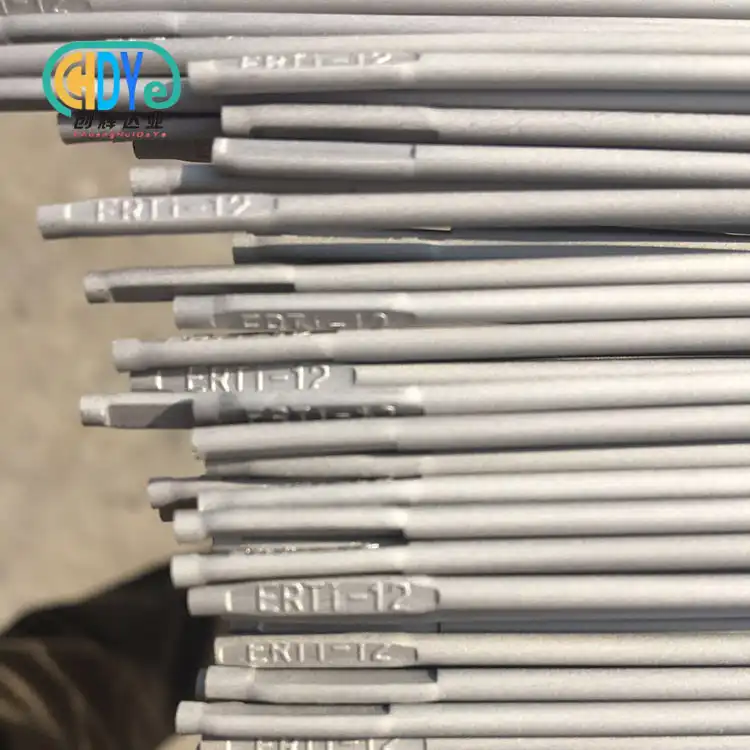
A good titanium welding rod seller stands out by always ensuring the cleanliness of the materials they use, following international standards like AWS A5.16, and making sure their products work well in all kinds of tough situations. The provider must have quality control systems that can be checked, keep detailed records of all shipments, and offer professional knowledge that covers the specific issues of titanium welding, such as stopping oxidation and controlling interstitial contamination. When you need reliable filler metals for important aerospace, chemical processing, or medical device manufacturing, work with a supplier that has decades of experience with rare metals and certified manufacturing capabilities. This will make sure that your welding operations produce strong joints that don't rust and work in harsh conditions.
Understanding the Core Dimensions of a High-Quality Supplier
To find a reliable source for titanium filler metals, you need to look at several factors that will have a direct effect on your production results and the long-term success of your business.
Material Specifications and Purity Standards
The makeup of the material is the first step to getting great welding results. Interstitial elements are strictly controlled by premium providers. For fully pure grades, oxygen levels must be below 0.10%, nitrogen levels must be below 0.015%, and hydrogen levels must be below 0.005%. These controlled amounts of impurities stop the formation of weak alpha case layers that weaken the stability of joints. When we make pure titanium welding rods at Shaanxi Chuanghui Daye Metal Material Co., Ltd., we do a lot of chemistry testing on them to make sure that their composition stays the same. Before being sent out, each batch goes through a lot of tests to make sure it meets all the requirements for the ERTi-2 and ERTi-5 classifications. Our factory in Baoji, China's famous "Titanium Capital", uses over 30 years of experience in the rare metals business to make bars that are more resistant to corrosion and more flexible, so they can work successfully in the harshest conditions.
Compliance with International Standards
Adhering to well-known industry standards gives buying teams the trust they need that a product will work. Suppliers who meet the standards of AWS A5.16 show their dedication to quality by using uniform manufacturing methods and testing routines that have been checked. ISO 9001:2015 approval adds to the credibility of a supplier's quality management system, making sure that all steps are followed, from inspecting raw materials to packing them up. This certification system lowers the risk in the supply chain by making sure that goods can be tracked and that regulations are followed. Our company has ISO 9001:2015 approval, which controls every step of the production process, from heating in our electron beam furnace to controlled annealing to final review. This methodical technique gets rid of variation and makes sure that every order gets rods with reliable welding properties.
Comprehensive Product Range and Technical Capabilities
A reliable provider gives a range of rod diameters, grades, and specifications that are specifically made for different industry uses. Our products come in normal 1000mm lengths and sizes ranging from 1.0 mm to 3.2 mm. They can be used for both TIG and MIG welding. Aside from basic product supply, what sets exceptional sellers apart from commodity vendors is their technology know-how. Our team helps you choose the right rod by looking at the base metal compatibility, the welding position needs, and the service setting. This consultative method helps engineers improve joint performance while reducing the need for expensive trial-and-error testing during the early stages of a project.
Evaluating Supplier Capability: Quality, Compliance, and Innovation
A thorough evaluation of suppliers keeps your company safe from quality problems that could threaten important projects and hurt relationships with customers.
Verification of Alloy Grades and Chemical Composition
For different uses, different types of titanium with different mechanical traits are needed. As a general-purpose metal, ERTi-2 works very well and doesn't rust, which makes it perfect for chemical handling equipment and naval uses. ERTi-5, which has aluminum and vanadium alloy added to it, gives solid aircraft parts a higher tensile strength of over 895 MPa. A good provider keeps a close eye on the alloy's makeup to make sure it works well with base materials chemically. This stops galvanic corrosion and keeps the passivation properties the same across the weld zone. Because we have modern melting equipment and in-house analytical tools, we can check the makeup accurately before production starts. This way, there is no chance of grade mix-ups that could lower the quality of your creation.
Certifications and Traceability Assurance
Full material traceability from where the raw materials come from to where they are shipped at the end gives important paperwork for businesses that are regulated. Every order from a good source comes with mill test results, chemical analysis certificates, and data on the material's mechanical properties. This paperwork backs up your internal quality processes and meets audit standards for use in aerospace, medical devices, and pressure vessels. Our detailed record-keeping system keeps track of each production batch as it moves through our plant, connecting specific heat numbers to the sources of raw materials and processing conditions. This tracking makes sure that we can respond quickly to questions and shows that we are committed to being open and honest with our suppliers.
Advanced Testing and Performance Data
Suppliers who are on the cutting edge spend money on material analysis that goes beyond simple compliance testing. Engineers can learn a lot about how well something works by looking at its microstructure, testing its strength at service temperatures, and checking its resistance to corrosion in certain chemical conditions. Many sellers depend solely on standard certifications, but our centre does extra tests to make sure it works well in tough situations. This proactive method finds problems before they affect production and gives you faith that our rods will work as expected in the welding situations you describe.
Procurement Considerations for B2B Buyers: Price, Availability, and Logistics
Strategic procurement strikes a balance between lowering costs, meeting quality standards, and making sure the supply chain is reliable so that production processes can keep running smoothly.
Understanding Price Factors and Value Propositions
Titanium filler metal prices depend on a number of factors, such as the grade's complexity, the diameter's limits, the surface finish standards, and the amount of metal ordered. The unit cost is important, but the total cost of ownership includes things like consistent quality, the value of technical help, and the cost of working with broken materials. When you buy directly from the maker, you avoid the markups that distributors add, and you can get access to technical support and customization options. Our low prices come from the fact that we work efficiently in Baoji's well-established rare metal industrial environment, which benefits from having access to specialized suppliers and skilled workers. We offer flexible buying for both big production runs and small batches for research and development projects, so you can get what you need no matter how much you need.
Supply Chain Reliability and Lead Time Management
Material deliveries must happen on time for production plans to work. Costly project delays can be avoided if suppliers have good inventory management and production ability. Our manufacturing capabilities, which include annealing ovens, precise rolling machines, and multiple sawing stations, allow us to meet pressing needs quickly while keeping high-quality standards. We know that deadlines are often tight for aerospace projects and turning around chemical plants, so our team makes it a priority to talk to you about realistic wait times and give you information right away if things change. This practical openness lets your planning teams make smart choices and come up with backup plans in case something goes wrong.
International Logistics and Customer Communication
Global supply chains need sellers who know how to handle international shipping paperwork, customs processes, and safe packaging standards for fragile items while they're in transit. Our export operations team takes care of all the rules and works with dependable freight partners to make sure that the goods arrive without any damage. Our customer service team is ready to answer questions about specifications, application help, or the state of your order. Responsive contact can cross time zones and language barriers. This makes things easier to get and boosts trust, which helps the buying process go smoothly from the first question to help after delivery.
Brand Reputation and Customer Support: Building Trust in Supplier Partnerships
Long-term ties with suppliers depend on reliable work, professional know-how, and helpful service that goes beyond simple transactions.
Industry Recognition and Customer Feedback
Established providers build their reputations by consistently delivering high-quality goods and fixing problems for a wide range of customers over many years. Major names like Lincoln, ESAB, and Hobart have become well-known through a lot of advertising. However, rare metal makers often have more experience with difficult tasks. We have worked with titanium, tantalum, niobium, tungsten, and molybdenum for 30 years, so we know a lot about how these metals behave and how hard they are to work with. Customer comments from companies that make flight equipment, chemical equipment, and research facilities confirm our technical skills and quality standards. Because we've gained their trust, they keep coming back and working with us for a long time, making us an extension of their tech teams.
Technical Training and Application Support
Because titanium welding rods are explosive, you need to know a lot about it to get perfect results. Good providers can help you with things like the right shielding gas, setting up the tail shield, following the right steps for cleaning the surface, and controlling the heat input. Our expert team helps customers come up with new welding procedures, fix problems with porosity, and find the best parameters for different joint designs. This consultative method speeds up the process of making new goods and keeps customers from making the costly mistakes that happen when people work with reactive metals without the right training. Having access to this information base is worth a lot more than the physical object itself.
Customization Capabilities and Problem-Solving
Many situations can be solved well with standard goods, but sometimes unique needs call for custom solutions. When project requirements call for it, suppliers with a wide range of manufacturing skills can make parts with non-standard sizes, special lengths, or certain surface finishes. The precise lathes and shearing machines in our facility's machining tools allow us to meet special requests that meet the needs of each customer. This level of adaptability shows that we want to solve customer problems instead of just meeting standard orders. Our team works together to come up with solutions that meet all of your needs, whether you need small amounts for trying the viability or large amounts of output with specific requirements.
How to Choose the Best Supplier for Your Business Needs?
When you choose the right suppliers, you can make sure that their skills and your business's needs are matched perfectly. This will help your business grow.
Assessing Application-Specific Requirements
Different businesses have different problems that affect the choice of material. Ti-6Al-4V (ERTi-5) is the best material for aerospace uses because it has high strength-to-weight ratios and doesn't wear down easily. When working with chemicals, places that need the best corrosion protection against certain chemicals are often the ones where widely pure types work best. Manufacturers of medical devices need materials that are certified to be biocompatible and meet strict cleaning standards. Our product line meets these different needs by offering the right grade choices and paperwork to help with regulatory compliance in every field. Knowing the exact performance needs of your application lets you choose the right materials and evaluate suppliers based on their unique skills instead of general criteria.
Volume Requirements and Scalability
The amount of goods made affects how suppliers set prices and which ones are best. Small amounts for research need providers with flexible minimum order requirements and who are ready to help with development projects that could lead to larger production numbers in the future. Large factories need sources that can keep up with their growth without lowering quality or causing supply delays. Our industrial infrastructure strikes a good balance between being adaptable for small prototype runs and expandable for large production runs. Because we're flexible, we can help clients throughout the whole lifecycle of their products, from the initial design phase to full-rate production, without making them switch providers as production volumes rise.
Quality Benchmarks and Inspection Protocols
Setting clear quality acceptance standards will keep your company safe from production problems caused by materials. Suppliers should give thorough inspection records, allow third-party proof when needed, and keep statistical process control data that shows consistent performance. Our quality management system keeps track of inspection records so that all the steps in the production process can be fully tracked. This makes it easy for new inspection teams to check for compliance, and it gives you faith that the materials will do what they're supposed to. When quality issues come up, our complete records make it easy to quickly look into them and find an answer.
Conclusion
To find a reliable provider of titanium welding rods, you need to look at their standards for material purity, their production skills, their ability to meet certification requirements, and their technical support system. The best provider keeps clear traceability systems and consistently high quality through strict inspection processes and provides expert advice that addresses the unique challenges of reactive metal welding. In addition to offering competitive prices and dependable service, exceptional suppliers add value by being able to solve problems, giving advice that is specific to the application, and committing to a long-term relationship. You can build relationships with suppliers that improve product quality, lower business risks, and support manufacturing excellence in your most demanding uses by carefully comparing these factors to your needs.
FAQ
Q: Can I use different grade rods to weld dissimilar titanium alloys?
A: Yes, careful choice of rods allows welding of different types to work. When you use a grade 9 bar to join two grade 5 pieces together, the weld is more flexible and less likely to crack in the heat-affected zone, but it has slightly lower fracture strength than the base material. The most important thing to think about is making sure that the filler metal makeup works well with both base materials and meets the mechanical performance needs of the joint. Talking to sellers with a lot of knowledge can help you find the best combinations for your needs.
Q: What storage conditions do titanium filler metals require?
A: Titanium rods need to stay in places that are clean, dry, climate-controlled, and blocked off from getting dirty. Titanium doesn't rust as steel does, but keeping the surface clean is very important for good welding. The weld pool gets holes from things like dust, grease, or fingerprint oils. Handlers should wear gloves that don't gather lint, and rods should stay in their original packing until they are ready to be used. This will keep the surface in perfect condition, which is necessary for flawless welding results.
Q: How does surface finish affect welding performance?
A: Surface quality has a direct effect on the strength of the weld. "Silver bright" finishes are found on high-end rods. They are made by acid cleaning or vacuum annealing, which gets rid of oxides and any drawing oils that are still on the rod. When these particles are vaporized during welding, they leave holes in the joint and make it weak. The reactive nature of liquid titanium makes it very sensitive to impurities that wouldn't cause much of a problem in steel welding applications. This is why good providers spend money on proper surface treatment.
Partner with a Trusted Titanium Welding Rod Manufacturer
Shaanxi Chuanghui Daye can help you with your most important welding jobs with unmatched skill and quality. Our pure titanium welding rods, which come in sizes from 1.0 mm to 3.2 mm, give your users the better corrosion protection and ductility they need. We offer factory-direct prices without lowering quality or service because we are located in Baoji's specialized production hub and are ISO 9001:2015 certified. Get in touch with us at info@chdymetal.com to talk about your needs and find out how our 30 years of experience working with rare metals can help you with your biggest welding problems.
References
1. American Welding Society. (2014). Specification for Titanium and Titanium-Alloy Welding Electrodes and Rods (AWS A5.16/A5.16M:2013). Miami: American Welding Society.
2. Donachie, M. J. (2000). Titanium: A Technical Guide (2nd ed.). Materials Park, Ohio: ASM International.
3. Leyens, C., & Peters, M. (Eds.). (2003). Titanium and Titanium Alloys: Fundamentals and Applications. Weinheim: Wiley-VCH.
4. Liu, S., & Olson, D. L. (1986). "The Role of Inclusions in Controlling GTAW Weld Pool Convection." Welding Journal, 65(6), 139s-152s.
5. Schutz, R. W., & Watkins, H. B. (1998). "Recent Developments in Titanium Alloy Application in the Energy Industry." Materials Science and Engineering: A, 243(1-2), 305-315.
6. Welding Handbook Committee. (2007). Welding Handbook: Volume 4 - Materials and Applications, Part 2 (9th ed.). Miami: American Welding Society.
Learn about our latest products and discounts through SMS or email