- English
- French
- German
- Portuguese
- Spanish
- Russian
- Japanese
- Korean
- Arabic
- Greek
- German
- Turkish
- Italian
- Danish
- Romanian
- Indonesian
- Czech
- Afrikaans
- Swedish
- Polish
- Basque
- Catalan
- Esperanto
- Hindi
- Lao
- Albanian
- Amharic
- Armenian
- Azerbaijani
- Belarusian
- Bengali
- Bosnian
- Bulgarian
- Cebuano
- Chichewa
- Corsican
- Croatian
- Dutch
- Estonian
- Filipino
- Finnish
- Frisian
- Galician
- Georgian
- Gujarati
- Haitian
- Hausa
- Hawaiian
- Hebrew
- Hmong
- Hungarian
- Icelandic
- Igbo
- Javanese
- Kannada
- Kazakh
- Khmer
- Kurdish
- Kyrgyz
- Latin
- Latvian
- Lithuanian
- Luxembou..
- Macedonian
- Malagasy
- Malay
- Malayalam
- Maltese
- Maori
- Marathi
- Mongolian
- Burmese
- Nepali
- Norwegian
- Pashto
- Persian
- Punjabi
- Serbian
- Sesotho
- Sinhala
- Slovak
- Slovenian
- Somali
- Samoan
- Scots Gaelic
- Shona
- Sindhi
- Sundanese
- Swahili
- Tajik
- Tamil
- Telugu
- Thai
- Ukrainian
- Urdu
- Uzbek
- Vietnamese
- Welsh
- Xhosa
- Yiddish
- Yoruba
- Zulu
Trusted Titanium Alloy Tube Manufacturer for OEM Orders
When procurement experts look for a reliable titanium alloy tube maker for OEM sales, they have to make a big choice that could affect the performance of the product, the timing of the project, and the long-term success of the business. Chuanghui Daye is located in Baoji, China, which is known as the "Titanium Capital." They make high-purity tubular goods that meet ASTM B338, B337, B861, and B862 standards. Their types include Gr1, Gr2, Gr7, Gr9, and Gr12, and their sizes range from OD 10 to 300 mm, wall thickness 0.5 to 10 mm, and lengths up to 18,000 mm. Our ISO 9001:2015-certified facility combines more than 30 years of experience working with rare metals with advanced melting and precise machining skills to make tubes that are both smooth and soldered to meet the exact needs of industries around the world, including aerospace, chemical processing, medical devices, and energy.
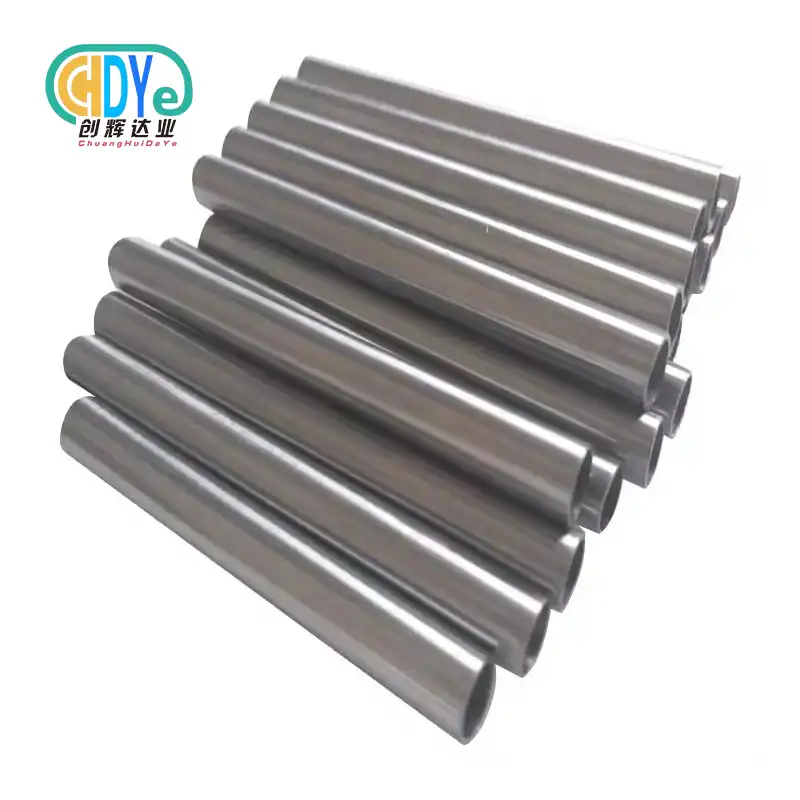
Understanding Titanium Alloy Tubes for OEM Applications
In high-performance industrial systems where normal materials fail in harsh situations, titanium alloy tubes are essential parts that can't be left out. These designed tubes use titanium's naturally low density (about 4.5 g/cm³) and improve its mechanical qualities by adding specific alloying elements.
Material Characteristics That Define Performance
Grade 2 economically pure titanium is very easy to shape and doesn't rust, so it's the best choice for heat exchangers in chemical processing and salinity plants. The material can handle places with a lot of salt without pitting or crevice rust, which is how stainless steel usually breaks. Grade 9 (Ti-3Al-2.5V) is the standard for hydraulic systems in the aircraft business. It has a tensile strength of over 620 MPa and is easy to weld. This alpha-beta metal can handle internal pressures between 3,000 and 5,000 PSI and temperatures between -50°C at cruise altitude and 150°C on the ground. Molybdenum and nickel are added to Grade 12 to make it more resistant to reducing acids. This is done to meet special needs in petrochemical processing equipment.
Industry Applications Driving Demand
Aerospace companies use these tubes in fuel lines, hydraulic systems, and engine parts where lowering weight directly leads to better fuel economy. Titanium metals are biocompatible, which is important for medical device makers who make surgical tools and implant delivery systems that need to be able to withstand multiple sterilisation processes without breaking down. Titanium pipes are used in underwater umbilical risers on offshore oil platforms, which are hard to reach for repair and would have terrible results if they failed. Chemical plants use titanium condensers and evaporators in high-temperature processes with corrosive media because they last three to five times longer than regular materials.
How to Choose the Right Titanium Alloy Tube Manufacturer for OEM Orders?
When choosing a manufacturing partner, there are a lot of things to think about besides just price. During the whole lifetime of the product, the choice affects not only the quality of the parts but also the reliability of the supply chain and the ability to solve technical problems.
Certification and Compliance Standards
ISO 9001:2015 certification is a good starting point for checking the standard of management systems, but OEM buyers should look into other qualifications as well. Compliance with ASTM B338 makes sure that seamless tubes meet the standards for mechanical properties and size tolerances for heat exchangers and condensers. ASTM B861 sets the rules for smooth titanium pipes that can be used in high-pressure situations, and B862 covers welded designs. Aerospace Material Specifications (AMS) must be known by manufacturers who work with aerospace clients, and manufacturers must keep records that link each batch to specific mill test results and chemical composition studies.
Manufacturing Capabilities Assessment
Lead times and order options are directly related to how much can be made. We use electron beam melting furnaces that get very pure by getting rid of intermediate contamination and keeping oxygen levels below 1500 parts per million and hydrogen levels below 125 parts per million, which are important levels that keep materials from breaking down. Our cold-drawing skills allow us to keep wall thickness limits within ±0.05 mm across the OD range of 10-300 mm. This lets us make sure that finished systems fit perfectly without having to do any extra work. Annealing furnaces use controlled heat to improve the structure of the grains. This makes sure that the tubes have stable mechanical qualities and can be shaped for later bending or flaring operations.
Technical Support and Customisation
OEM projects often need non-standard layouts or types of materials that work best in certain conditions. During the design phase, a skilled maker can help with the metallurgy and suggest the right grades based on stress analysis, corrosion exposure, and temperature cycles. With 30 years of experience handling rare metals, Chuanghui Daye's engineering team works with clients to create custom alloy compositions when normal grades aren't enough. We offer pilot services for small-batch testing before committing to full-scale production. This lowers the risk in the product creation process.
Titanium Alloy Tube Manufacturing Process: Ensuring Quality and Performance
Disciplined process control at every stage of production leads to excellent production, turning raw titanium sponge into precisely designed titanium alloy tubes that meet strict OEM specifications.
Raw Material Selection and Melting
To make sure the amounts of intermediate elements are correct, we get high-purity titanium sponge that has been checked using glow discharge mass spectrometry (GDMS). The electron beam melting process takes place in a very dry environment, so there is no pollution from the air and the metal is spread out evenly. Multiple melting passes improve the structure of the grains and get rid of any remaining segregation. This makes ingots with uniform mechanical properties across the whole cross-section of the billet.
Extrusion and Cold-Working Techniques
Hot extrusion carefully controls the temperatures to keep the material flexible while preventing too much grain growth. This process turns billets into tube shapes. After that, the material is cold-drawn several times to lower its outer width and wall thickness. This works to make it harder so that it can reach certain tensile strength goals. Precision mandrels are used to keep inner diameter tolerances and stop ovality, which is important for pressure tank uses because it ensures even wall thickness distribution.
Quality Assurance and Testing Protocols
Ultrasonic testing according to ASTM E213 is done on every production lot to find any internal flaws, laminations, or inclusions that could spread when the product is loaded and unloaded again and again. Eddy current inspection finds flaws and cracks close to the surface that can't be seen with the naked eye. Tensile strength, yield strength, and elongation numbers are checked against the standards of the design through mechanical testing. During hydrostatic testing, finished tubes are inflated to 1.5 times their working pressure to make sure they are leak-proof. Each package comes with full traceability paperwork, such as material certificates, chemical analysis reports, and NDT records that make it easier for customers to check the quality of the goods and make sure they are in line with regulations.
This strict procedure makes sure that tubes that leave our site work effectively in tough service environments. This protects client investments and the reputations of brands.
Comparing Titanium Alloy Tubes with Alternative Materials
Material selection is a multidimensional optimisation problem that involves matching the need for performance with the ability to make titanium alloy tubes and the cost of doing so.
Titanium Versus Stainless Steel
Type 316L stainless steel is easier to work with and costs less, but it cracks easily when exposed to chloride conditions above 60°C, which is a typical way for marine heat exchangers to fail. Titanium tubes completely get rid of this weakness, keeping the passive oxide layer protection even when the water in the sea stays still. Titanium has a density of 4.5 g/cm³, while stainless steel has a density of 8.0 g/cm³. This means that titanium is 44% lighter than stainless steel in the same construction uses. This weight advantage is very useful in aircraft systems, where every kilogram saved saves thousands of dollars in fuel costs over the life of the system.
Titanium Versus Aluminum Alloys
Aluminium metals have the same low density as titanium, but they can't handle temperatures above 200°C without losing a lot of their strength. For chemical processing, corrosion protection in acidic or salty conditions is not good enough. Titanium keeps its mechanical qualities even at temperatures of up to 600°C. This means it can be used in exhaust systems and power generation equipment where aluminium would fail horribly.
Grade Selection Within Titanium Family
Grade 2 has the best corrosion protection and can be shaped into complex shapes. It is perfect for condenser tubes that need to be able to bend with small angles. Grade 9 is 50% stronger than Grade 2, which is why it is used for high-pressure hydraulic lines where lowering the wall thickness saves weight without lowering the burst pressure values. Grade 12 is used in specific situations where normal grades don't offer enough protection, like when hot, strong hydrochloric acid is present or when the environment is reducing. People who are in charge of buying things should talk to materials experts about which grades will work best for their application's stress, temperature, and corrosion levels.
Procurement Strategies for OEM Orders: Price, Delivery, and Supplier Trust
Procurement strategies that balance managing costs with ensuring the stability of the supply chain and building up vendors' skills lead to long-term relationships that work well.
Pricing Structure and Volume Considerations
Titanium prices are based on the cost of the raw materials, how hard the process is, and how many orders are placed. Mill prices for annealed seamless tubes range from $45 to $85 per kilogram, based on grade and size. Welded configurations can save you 15-20% on costs when the stress levels of the product allow them to be used. By making production schedules more efficient and buying materials in bulk, volume agreements make it possible to get better prices. To find ways to save money, buyers should ask for thorough quotes that break down the prices of materials, processing, testing, and certification.
Lead Time Management and Inventory Strategies
Standard production wait times are between 6 and 10 weeks from the time an order is confirmed until it is shipped. This is because of the time it takes to melt the materials, extrude them, and test them thoroughly. Buyers with tight project deadlines should ask about surcharges for faster processing or consider stocking programmes for specs that they often buy. We keep a planned stock of common grades and sizes to meet requests for fast prototyping and emergency replacement orders. This way, we can keep production running smoothly even when something goes wrong.
Building Supplier Relationships
Clear communication helps everyone understand what is expected in terms of quality, service, and technology issues. Partner value can be measured using data from regular seller performance reviews that look at things like on-time delivery rates, meeting specs, and answering technical questions. Buyers should check the facility's production skills, quality systems, and efforts to keep getting better on a regular basis. Chuanghui Daye is happy for customers to visit our Baoji plant. We offer tours of our freezing, shaping, and testing processes to help customers trust our technical skills and quality commitment.
Conclusion
To find a reliable titanium alloy tube provider, you need to carefully look at their manufacturing skills, quality systems, technical knowledge, and the dependability of their supply chain. Chuanghui Daye has been working with rare metals for more than 30 years and has ISO 9001:2015-certified factories in China's titanium manufacturing hub. Our wide range of products, including grades Gr1, Gr2, Gr7, Gr9, and Gr12 in sizes ranging from OD 10 to 300 mm, is used by OEMs in many fields, such as aerospace, chemical processing, medical devices, and energy. Strict quality standards, such as ultrasonic testing, hydrostatic pressure testing, and full material tracking, make sure that products always work well in tough working settings. We want people who work in procurement to see the difference between transactional source relationships and real partnerships through our technical help and high-quality manufacturing.
FAQ
Q: What quality certifications should I expect from a titanium tube manufacturer?
A: Manufacturers with a good reputation keep their ISO 9001:2015 quality management approval as a basic safety measure. OEM buyers should also make sure that the products they are interested in meet the ASTM standards (B338, B3337, B861, B862) that govern sizes and mechanical features. For aerospace uses, you need to know about the AMS standard. Medical device makers, on the other hand, need sources who can work in a cleanroom and provide biocompatibility paperwork. To keep full material traceability, ask for copies of mill test results, chemical analysis certificates, and non-destructive testing records to be sent with every package.
Q: How do seamless tubes differ from welded configurations?
A: Seamless tubes have a consistent microstructure because they don't have any weld gaps. This makes them very strong for high-pressure uses and very resistant to rust in harsh settings. Welded tubes are cheaper by 15 to 20 per cent and can fit bigger sizes, but they need to be carefully inspected after welding and may have different properties near the fusion zone. The right choice is based on the stress levels, pressure rates, and rust exposure in the application.
Q: What lead times should I plan for custom titanium tube orders?
A: According to standard production plans, it takes 2 to 3weeks from the time an order is confirmed until it is shipped. This schedule includes getting the raw materials, melting them, hot extrusion, cold-working passes, the heat treatment, full testing, and the final inspection. Custom metal formulas or non-standard sizes may add two to four weeks to the lead time. Buyers who need to meet tight dates should ask about options for faster processing or look into stocking programmes for specifications that are often bought.
Partner with Chuanghui Daye for Your Titanium Alloy Tube Requirements
The stability of operations in the coming years will depend on the purchases made today. Shaanxi Chuanghui Daye is ready to help you with your OEM projects by making high-purity tube goods that meet the strictest international standards. During the whole process of making a product, our engineering team gives mechanical advice and suggests the best grade to use and how to make custom alloys when normal materials aren't enough. As a top provider of titanium alloy tubes, we keep our production flexible so that we can handle both large orders and small trial runs with the same level of technical precision. Email our sales team at info@chdymetal.com to talk about your unique application needs, get full technical datasheets, or set up a tour of our Baoji manufacturing site. In the titanium alloy tube business, quality, knowledge, and customer commitment are what make for long-term relationships that work.
References
1. Boyer, R., Welsch, G., & Collings, E.W. (1994). Materials Properties Handbook: Titanium Alloys. ASM International, Materials Park, Ohio.
2. Donachie, M.J. (2000). Titanium: A Technical Guide, 2nd Edition. ASM International, Materials Park, Ohio.
3. Lutjering, G. & Williams, J.C. (2007). Titanium, 2nd Edition. Springer-Verlag, Berlin Heidelberg.
4. ASTM International. (2021). ASTM B338-21: Standard Specification for Seamless and Welded Titanium and Titanium Alloy Tubes for Condensers and Heat Exchangers. West Conshohocken, Pennsylvania.
5. Peters, M., Kumpfert, J., Ward, C.H., & Leyens, C. (2003). Titanium Alloys for Aerospace Applications. Advanced Engineering Materials, Volume 5, Issue 6.
6. Schutz, R.W. & Watkins, H.B. (1998). Recent Developments in Titanium Alloy Application in the Energy Industry. Materials Science and Engineering: A, Volume 243, Issues 1-2.
Learn about our latest products and discounts through SMS or email