- English
- French
- German
- Portuguese
- Spanish
- Russian
- Japanese
- Korean
- Arabic
- Greek
- German
- Turkish
- Italian
- Danish
- Romanian
- Indonesian
- Czech
- Afrikaans
- Swedish
- Polish
- Basque
- Catalan
- Esperanto
- Hindi
- Lao
- Albanian
- Amharic
- Armenian
- Azerbaijani
- Belarusian
- Bengali
- Bosnian
- Bulgarian
- Cebuano
- Chichewa
- Corsican
- Croatian
- Dutch
- Estonian
- Filipino
- Finnish
- Frisian
- Galician
- Georgian
- Gujarati
- Haitian
- Hausa
- Hawaiian
- Hebrew
- Hmong
- Hungarian
- Icelandic
- Igbo
- Javanese
- Kannada
- Kazakh
- Khmer
- Kurdish
- Kyrgyz
- Latin
- Latvian
- Lithuanian
- Luxembou..
- Macedonian
- Malagasy
- Malay
- Malayalam
- Maltese
- Maori
- Marathi
- Mongolian
- Burmese
- Nepali
- Norwegian
- Pashto
- Persian
- Punjabi
- Serbian
- Sesotho
- Sinhala
- Slovak
- Slovenian
- Somali
- Samoan
- Scots Gaelic
- Shona
- Sindhi
- Sundanese
- Swahili
- Tajik
- Tamil
- Telugu
- Thai
- Ukrainian
- Urdu
- Uzbek
- Vietnamese
- Welsh
- Xhosa
- Yiddish
- Yoruba
- Zulu
Pure niobium bar applications in superconducting research
Due to their exceptional physical qualities and capacity to maintain zero electrical resistance at cryogenic temperatures, pure niobium bars are used as building blocks in superconducting research. These metal bars are more than 99.9% pure, which makes it possible for big steps forward in particle accelerators, quantum computers, and advanced magnetic resonance technologies. Niobium is the ultimate material for researchers and engineers working on next-generation superconducting devices and testing equipment because it has a high critical temperature, great thermal conductivity, and great rust resistance.
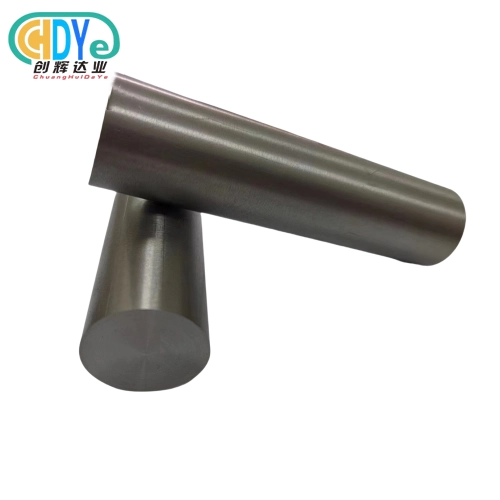
Understanding Pure Niobium Bars and Their Unique Properties
Essential Physical and Chemical Characteristics
Niobium has a melting point of about 2,477°C, which means it can be used in spaces with very high temperatures, like cold systems and vacuum uses. The material's density of 8.57 g/cm³ gives it a good strength-to-weight ratio that makers of scientific and aerospace tools. Niobium is very flexible when it is made into high-purity forms. This makes it possible to make things with complicated shapes without weakening the structure.
Niobium's amazing ability to carry electricity becomes even more important when it is cooled below 9.2 Kelvin, which is its critical temperature. When this level is reached, the material changes into a superconducting state where electrical resistance is zero. This makes it possible for energy to be sent efficiently and without any waste. Niobium is different from other conductors because of this trait, which makes it essential for precise scientific equipment.
Manufacturing Standards and Quality Control
To make high-quality niobium goods, you need to start with premium-grade raw materials and follow strict process controls. Electron beam melting technology makes sure that the quality stays the same during the whole process of making the ingot, getting rid of any flaws that might affect how well the superconductor works. Our production plant at Chuanghui Daye in Baoji, which is known as China's Titanium Capital, uses modern vacuum melting systems to keep the work area clean while the metal is being processed.
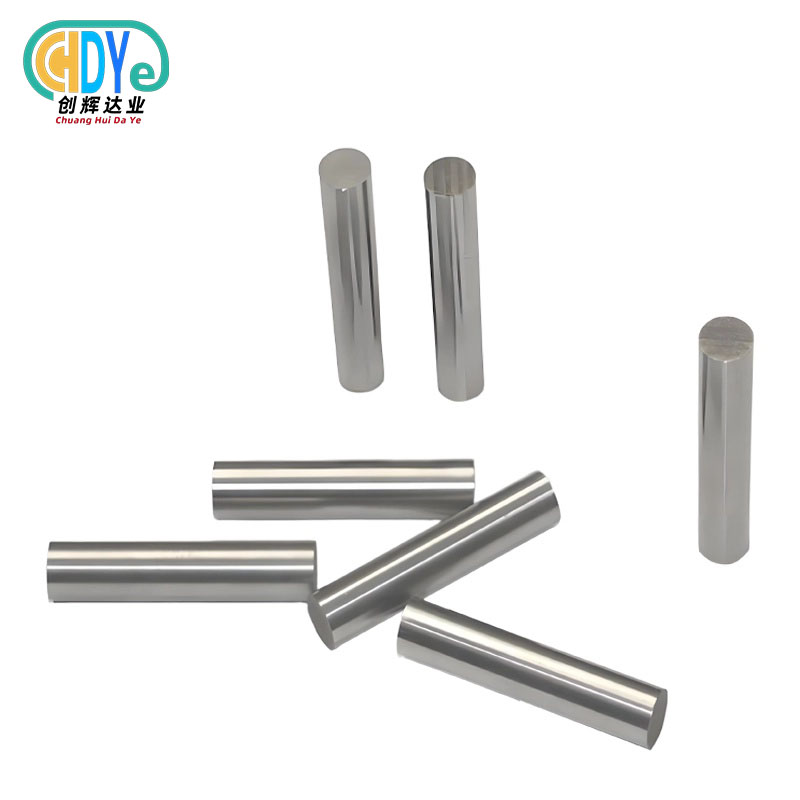
Forging and rolling processes that are controlled by temperature keep the material's solid structure while meeting exact size requirements. Our pure niobium bars come in both round and rectangular shapes, with thicknesses ranging from 5 to 350 mm and lengths that can be changed to fit the needs of the project. Before it is shipped, every batch goes through a lot of tests, such as a pure analysis, a mechanical property check, and a surface quality check. This strict method, which is approved by ISO 9001:2015 standards, ensures that it will work well in important study projects.
Why Pure Niobium Bars Are Ideal for Superconducting Research
Superconducting Performance and Critical Parameters
The temperature at which niobium starts to superconduct is a useful limit for studies that use liquid helium cooling devices. Niobium can stay at zero resistance even when cooled to very low temperatures, while other superconducting materials need more complex cooling methods. The material has a high Residual Resistance Ratio (RRR), which means it has very few impurities. This is directly linked to its better superconducting performance and lower energy loss in cavity uses.
Niobium behaves well in magnetic fields, which lets it be used to make strong superconducting magnets without the flux penetration problems that come with using lower-quality materials. For accurate field control, research sites that are making magnetic confinement devices and beam steering mechanisms depend on this property. The material's ability to hold magnetic fields in place in stable patterns helps with both experimental physics research and making useful devices.
Thermal Management and System Integration
When superconducting systems are used close to absolute zero temperatures, they need to be able to get rid of heat quickly. Niobium's great ability to conduct heat at very low temperatures makes it possible for device structures to cool evenly, avoiding hot spots that could cause quenching events. Because it is thermally stable, researchers can keep the settings of their experiments the same over long measurement rounds.
Standard cryogenic cooling systems can work with the material, which makes it easier to integrate into the current study infrastructure. Scientists don't have to come up with unique ways to cool things; they can focus on planning experiments instead. Niobium's ability to withstand sudden changes in temperature makes equipment last longer and require less upkeep, which helps university labs and industry research centers run more efficiently over the long term.
Durability in Demanding Research Environments
Niobium parts stay accurate in size and have a smooth surface for years when they are used in high-vacuum settings because they don't rust. When the material is exposed to residual gases and cleaning agents used in ultra-high vacuum systems, it doesn't change chemically. This means that it keeps important surface qualities needed for superconducting uses. This steadiness cuts down on the number of replacements needed and the costs that come with them.
Comparing Pure Niobium Bars with Other Materials for Superconducting Use
Performance Against Alternative Superconductors
When purchasing materials for superconducting uses, buying managers look at niobium-titanium alloys, niobium-tin compounds, and tantalum as some of the options. Nb-Ti metals have higher critical magnetic fields, but they are harder to work with and require more complicated production methods. Because of this, pure niobium bars are better for uses that want them to be easy to make and have low field needs.
Niobium-tin superconductors have higher critical temperatures and field strengths, but they are very fragile, which makes them harder to work with and machine. Because pure niobium is soft and malleable, it is easy to shape, join, and make changes to after it has been made. This workability helps research teams make prototypes of new hole designs or testing equipment because it lets them make changes quickly without needing special tools.
Cost-Effectiveness and Material Selection
Tantalum and niobium have some of the same chemical qualities, but because it is harder to find, it costs more. In cold uses, niobium is better at superconducting than tantalum, even though tantalum is very resistant to corrosion. When superconducting performance is very important, projects with tight budgets get more for their money when they use niobium components.
Stainless steel and titanium alloys can be used to support structures in cold systems, but they can't be used instead of niobium in superconducting materials. For active superconducting parts, the best design approach uses pure niobium. For non-critical support parts, cost-effective structural materials are used. This mixed method strikes a balance between performance needs and budget facts. This is especially useful for research institutes that have to deal with limited funds.
Procurement Considerations for Pure Niobium Bars in Superconducting Research
Purity Grades and Certification Requirements
For most superconducting uses, niobium needs to be purer than 99.9% (3N grade), and for some advanced studies, it needs to be 99.99% (4N grade) or higher. Higher amounts of purity directly lead to better Residual Resistance Ratio (RRR) numbers and better superconducting performance. The requirements for buying things should make it clear what purity grades are needed and ask for certified material test results that show the composition analysis.
Certifications for suppliers give people faith in the quality control systems and production skills. ISO 9001:2015 certification means that quality control processes have been set up and cover everything from getting the raw materials to the final review. Following the rules in ASTM B392 ensures that the sizes and qualities of the material are in line with established industry standards. Asking for proof of approval during the buyer evaluation process helps find qualified makers who can meet strict study requirements.
Supply Chain and Logistics Planning
Custom niobium parts usually have lead times of four to eight weeks, but this depends on the size, amount, and current production plans. When you order in bulk, you can get better prices and faster production times, which is helpful for big projects that know how much material they will need. Building relationships with dependable providers makes planning easier and lowers the risk of buying.
For global shipping operations to work, packing standards must be carefully followed to keep material surfaces clean and free of damage. Using vacuum-sealed packing with inert gas atmospheres keeps the surface clean, which is important for superconducting uses. To reduce transit risks, procurement teams should check with suppliers about their packing guidelines and think about getting insurance for valuable orders.
Customization and Technical Support
Custom sizes that aren't normal stock sizes can be used for unique trial setups without the need for extra machining. By giving exact lengths, diameters, and limits during purchase, you can avoid extra handling costs and the lead time delays that come with them. For special study needs, suppliers who offer a range of customization choices can be very helpful.
Technical consulting services help match the specs of a material with the needs of an application. Based on the planned use, experienced providers can suggest the best purity grades, sizes, and surface finishes. This way of working together cuts down on design mistakes and makes sure that materials bought work as expected in tough superconducting settings. Premium providers are different from commodity material distributors because they have access to expert staff who are informed.
Real-World Applications and Case Studies of Pure Niobium Bars in Superconducting Research
Particle Accelerator Infrastructure
Pure niobium bars are used in real life and in case studies in superconducting research.
Niobium is used in superconducting radio frequency (SRF) holes at some of the world's most important physics study centers to speed up beams of charged particles. The Large Hadron Collider at the European Organization for Nuclear Research (CERN) uses niobium-based holes. Keeping the superconducting conditions fixed allows for collision energies that have never been seen before. These installations show that niobium is reliable in mission-critical science equipment that has been used for decades.
Magnetic Resonance Imaging Systems
The accelerator complex at Fermilab is made up of thousands of niobium hollow parts that were made to very precise standards. The material's uniform performance over a wide range of temperatures and long periods of use shows that it was carefully chosen and that strict quality control was used during production. When deciding what they need to buy, research institutions that are planning new accelerator projects look at these examples of successful applications.
Niobium-based superconducting magnets that make stable, uniform magnetic fields are needed by medical study sites that are working to improve magnetic resonance imaging technology. Compared to other systems, these high-field magnets make it possible for better clarity and faster scan times. The superconducting qualities of the material make it possible to make small magnets that use less energy and have lower running costs.
Chemical Processing and Specialized Equipment
Niobium is used in quantum computing labs to make qubits and control electronics that need to have precise electromagnetic features. The low surface resistance and good noise properties of the material support the quantum coherence times needed for computing processes. As quantum computing moves from being used in study to being used in business, the need for high-purity niobium components keeps growing.
Beyond superconducting research, niobium's high resistance to rust is used in chemical processing equipment that has to deal with strong acids and high temperatures. This flexibility shows that the material is useful in many different industries. Niobium test pieces are used by researchers looking into how corrosion works in tough settings because they can handle rough conditions and still stay the same size.
Conclusion
Pure niobium bars are important materials that have led to major advances in superconducting studies in particle physics, quantum computing, and improved imaging technologies. The material's special mix of superconducting qualities, thermal performance, and corrosion protection meets important needs in cold study settings. When choosing a material for a difficult purpose, it's important to think about purity grades, source certifications, and the ability to customize. As research labs and industrial labs work to develop next-generation technologies, it becomes more and more important for projects to work with experienced producers who can provide uniform quality and technical support.
FAQ
Q: What purity level is required for superconducting applications?
A: For most superconducting study purposes, niobium needs to be more than 99.9% pure (3N grade). For advanced SRF cavity uses and quantum computing setups, it may be necessary to select 99.99% (4N grade) or higher to get the best Residual Resistance Ratio values and the least amount of surface resistance.
Q: How long are typical lead times for bulk orders?
A: Lead times are usually between four and eight weeks, but they can be longer or shorter based on the number, size, and customization needs. Making bulk orders with well-known providers can give you better scheduling and faster delivery times. Planning to buy things six to twelve weeks before they are needed for a job makes sure that materials will be available on time.
Q: Can niobium be machined and welded without degrading superconducting properties?
A: Niobium is soft and bendable, so it can be machined normally as long as the right cutting speeds and tools are used. Using electron beam or TIG methods, welding can be done in controlled environments. When processing causes work hardening or residual stresses, annealing after manufacturing brings back the best qualities of the material and its superconducting performance.
Partner with Chuanghui Daye for Your Niobium Material Needs
Because Shaanxi Chuanghui Daye is a reliable source of pure niobium bars, they can provide precisely designed materials for superconducting research and advanced technology uses. Our ISO 9001:2015-certified factory in Baoji's High-tech Development Zone uses cutting-edge production tools and over 30 years of experience working with rare metals to make sure that the products are always pure and the right size. We have oblong and round shapes with thicknesses ranging from 5 to 350 mm, and we can cut the lengths to fit your needs. Our expert team helps you with everything from choosing the materials to delivering them, making sure that the whole process of buying things goes smoothly. Get in touch with our experts at info@chdymetal.com to talk about your project needs and get a full quote with low factory-direct prices for your superconducting research projects.
References
1. Padamsee, H., Knobloch, J., & Hays, T. (2008). RF Superconductivity for Accelerators. Wiley-VCH Verlag.
2. Schmidt, F. (2014). Superconducting Niobium Cavities: Manufacturing and Performance Analysis. Springer Series in Materials Science.
3. Gurevich, A. (2012). Superconducting Radio-Frequency Fundamentals for Particle Accelerators. Reviews of Accelerator Science and Technology, Volume 5.
4. Tinkham, M. (2004). Introduction to Superconductivity: Second Edition. Dover Publications.
5. Wilson, M.N. (2017). Superconducting Magnets for Particle Physics Research. Oxford University Press.
6. Antoine, C.Z. (2013). Materials and Surface Aspects in the Development of SRF Niobium Cavities. EuCARD Editorial Series on Accelerator Science.


Learn about our latest products and discounts through SMS or email