- English
- French
- German
- Portuguese
- Spanish
- Russian
- Japanese
- Korean
- Arabic
- Greek
- German
- Turkish
- Italian
- Danish
- Romanian
- Indonesian
- Czech
- Afrikaans
- Swedish
- Polish
- Basque
- Catalan
- Esperanto
- Hindi
- Lao
- Albanian
- Amharic
- Armenian
- Azerbaijani
- Belarusian
- Bengali
- Bosnian
- Bulgarian
- Cebuano
- Chichewa
- Corsican
- Croatian
- Dutch
- Estonian
- Filipino
- Finnish
- Frisian
- Galician
- Georgian
- Gujarati
- Haitian
- Hausa
- Hawaiian
- Hebrew
- Hmong
- Hungarian
- Icelandic
- Igbo
- Javanese
- Kannada
- Kazakh
- Khmer
- Kurdish
- Kyrgyz
- Latin
- Latvian
- Lithuanian
- Luxembou..
- Macedonian
- Malagasy
- Malay
- Malayalam
- Maltese
- Maori
- Marathi
- Mongolian
- Burmese
- Nepali
- Norwegian
- Pashto
- Persian
- Punjabi
- Serbian
- Sesotho
- Sinhala
- Slovak
- Slovenian
- Somali
- Samoan
- Scots Gaelic
- Shona
- Sindhi
- Sundanese
- Swahili
- Tajik
- Tamil
- Telugu
- Thai
- Ukrainian
- Urdu
- Uzbek
- Vietnamese
- Welsh
- Xhosa
- Yiddish
- Yoruba
- Zulu
Can titanium alloy tube withstand high-pressure applications?
A titanium alloy tube can definitely handle uses with high pressure. Due to its high tensile strength, excellent fatigue resistance, and better corrosion protection, titanium tubing works consistently in harsh settings where pressure levels are higher than normal industrial limits. Industries like aircraft, chemical processing, oil and gas, and marine engineering rely on titanium alloy tubes to keep their structures strong, even when they are under a lot of stress. Because of its unique strength-to-weight ratio and temperature stability, this material is a good choice for mission-critical systems that must keep safety and efficiency above all else.
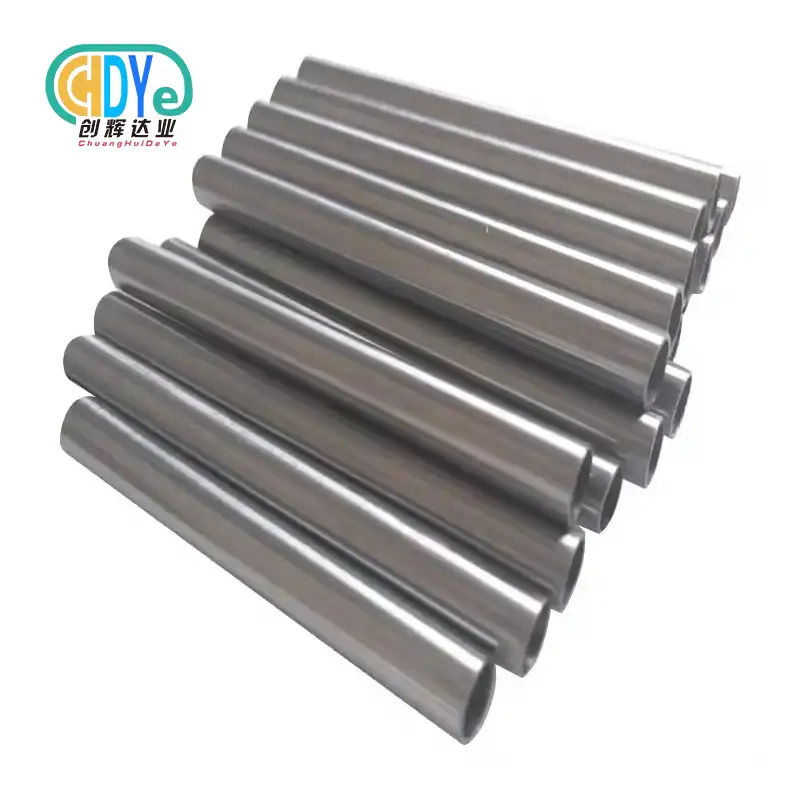
Understanding Titanium Alloy Tubes and Their Properties
Titanium alloy tubes are a group of designed tubular goods that are very strong mechanically, very light, and very resistant to harsh environments. These tubes have performance benefits that standard materials like steel or aluminum can't match because they are made from metals based on titanium.
What Are Titanium Alloy Tubes?
Titanium alloy tubes are high-performance tubes made from alloys based on titanium that have great mechanical strength, low density, and great resistance to rust. These tubes are designed to work in tough situations that need a high strength-to-weight ratio, temperature stability, and resistance to harsh conditions. The titanium alloy tubes made by Shaanxi Chuanghui Daye Metal Material Co., Ltd. are very strong because they are made using precise melting, casting, and cold-working techniques.
Common Grades and Their Characteristics
Titanium alloy tubes come in different grades that are used for different industry purposes. Commercially pure types like Gr1 and Gr2 are very flexible and easy to shape, which makes them good for heat exchanges and condensers that only need to be moderately strong. Palladium is added in small amounts to Gr7 to make it more resistant to rust in less acidic settings. Gr9 is a mid-strength alloy made up of vanadium and aluminum. It is between commercially pure metals and high-strength alloys. Gr12 is a metal alloy made of molybdenum and nickel that is very good at resisting crevice rust in chloride-filled settings.
Manufacturing Processes That Enhance Pressure Resistance
Titanium alloy tubes are made using complex techniques that have a direct effect on their ability to withstand high pressures. Extrusion methods get rid of weld seams, making walls that are all the same width and reducing the number of places where they could break. Welded tubes go through exact steps of heat treatment and checking to make sure the strength of the weld fits the strength of the base material. The nanoscale is fine-tuned by annealing processes, which make the material more flexible while keeping its tensile strength. This is an important balance for pressure users.
Key Mechanical Properties
Knowing how titanium alloy tubes work mechanically helps people who work in buying choose the right materials. Tensile strength runs from about 240 MPa for pure grades to over 900 MPa for grades that have been alloyed. Different alloys have different yield strengths, which are the levels of stress at which permanent distortion starts. Ductility lets tubes handle pressure and dynamic loads without breaking completely. Long-term dependability under cyclic pressure changes is ensured by fatigue resistance. This is a typical situation in aircraft hydraulic systems and chemical processing equipment.
Evaluating Titanium Alloy Tubes for High-Pressure Applications
In places with a lot of pressure, you need materials that can keep their shape and not break down when they are put under mechanical stress, changes in temperature, or acidic media. Titanium alloy tubes are the best in all of these measurements because they have a unique set of qualities that are hard to find in other materials.
Defining High-Pressure Environments
Operating pressures above 1,000 psi are common in high-pressure uses, but the exact limits depend on the application. Hydraulic systems in aerospace usually work at 3,000 to 5,000 psi. Chemical handling equipment may be exposed to corrosive chemicals and pressures of up to 10,000 psi. Subsea oil and gas equipment is exposed to saltwater and forces higher than 15,000 psi. Meeting foreign standards like ASME B31.3, PED (Pressure Equipment Directive), and ASTM guidelines ensures that these tough industries are safe and follow the rules.
Inherent Advantages of Titanium in Pressure Systems
Titanium's atomic structure makes a protective oxide layer that heals itself when it gets broken. This keeps the metal from corroding even when it is under a lot of stress. This passive film stays steady over a wide range of temperatures and pH levels. The material is about 40% stronger than steel in terms of its weight-to-strength ratio. This lets designers make systems lighter without lowering their load capacity, which is a big plus for aircraft and portable equipment. Because titanium alloy tubes are thermally stable up to 600°C, their mechanical traits stay the same even when the temperature or pressure of the systems changes.
Comparative Performance Analysis
Titanium alloy tubes are better than stainless steel at resisting rust in chloride conditions. They also weigh about 40% less, but the original cost of the material is higher. Aluminum alloys are less dense than titanium, but they are not as strong or good at handling high temperatures, so they can't be used in high-pressure situations. Carbon steel is strong enough and doesn't cost too much, but it needs to be coated with protective materials and maintained often because it rusts easily. Titanium's total cost of ownership is often better when you consider its longer service life, lower upkeep needs, and lack of finishing requirements.
| Property | Titanium Alloy | Stainless Steel 316 | Aluminum Alloy |
|---|---|---|---|
| Tensile Strength | 240-900 MPa | 515-620 MPa | 310-470 MPa |
| Density | 4.5 g/cm³ | 8.0 g/cm³ | 2.7 g/cm³ |
| Corrosion Resistance | Excellent | Good | Moderate |
| Max Operating Temp | 600°C | 870°C | 200°C |
Real-World Applications Showcasing Titanium Alloy Tubes Under Pressure
Titanium alloy tubes have been used in a wide range of businesses to show that they are effective in high-pressure situations. These case studies show how the choice of material has a direct effect on the performance, safety, and cost of running a system.
Aerospace Hydraulic and Fuel Systems
Aircraft hydraulic systems depend on titanium alloy tubes to keep weight down and resist pressures up to 5,000 psi. This is a key feature that affects how much fuel an airplane uses and how much it can carry. Commercial flight has strict safety limits, and titanium's resistance to fatigue means that it will work reliably after millions of pressure cycles over many years of service. Titanium alloy fuel lines don't rust when exposed to airplane fuels and the extreme temperatures that happen at high altitudes, where temps drop below -50°C while fuel pump pressures stay the same.
Marine and Chemical Processing Equipment
Pipe systems in offshore bases and chemical plants have to deal with high internal pressures, corrosive media, and harsh conditions outside at the same time. Desalination plants use titanium alloy heat exchangers to deal with high-pressure saltwater because titanium doesn't rust or pit like stainless steel does. Titanium alloy tubes keep the purity of chemical reactors that handle chlorinated substances or acidic solutions, where other materials would need to be replaced more often. In one case that has been recorded, a petroleum plant switched from stainless steel pipes to Gr12 titanium alloy tubes. This increased the service life from 5 years to over 20 years and stopped unexpected shutdowns.
Oil, Gas, and Energy Infrastructure
Underwater production systems work with very high hydraulic pressures and move toxic fluids that contain carbon dioxide and hydrogen sulfide. Titanium alloy stems and flowlines are strong enough to keep internal pressures in check and can withstand rust from seawater at depths of more than 3,000 meters. Geothermal power plants use titanium alloy tubes because they are resistant to high temperatures and rust. It is used in heat exchange systems where mineral-filled waters under high pressure would quickly break down other materials. The fact that these uses are listed shows that titanium alloy tubes can work reliably in places where failure of a material would have major safety and economic effects.
Procurement Insights for High-Pressure Titanium Alloy Tubes
To strategically source titanium alloy tubes, you need to know the specific needs of the product, the skills of the supplier, and the quality control standards. When making buying choices, it's important to think about technical performance, safety standards, and total cost.
Matching Alloy Grade to Application Requirements
Analyzing working situations is the first step in choosing the right grade. Commercially pure types like Gr2 are better for systems that deal with slightly corrosive fluids at low pressures because they are cheaper and still provide enough strength and great corrosion protection. When higher pressures or more aggressive chemicals are used, Gr7 or Gr12 should be used. This is because the better corrosion protection explains the higher cost of the material. Gr9 is usually used in aerospace applications that need the highest strength-to-weight ratio. These applications are willing to pay more for the material because it performs better.
Evaluating Supplier Credentials and Capabilities
Reliable providers keep certificates that show they are committed to quality management. With ISO 9001:2015 approval, quality control is done in a planned way throughout the whole production process. Material approvals that show it meets ASTM B338, B337, B861, or B862 standards make it possible to track the material and make sure that its chemical make-up and mechanical qualities meet the requirements. Ultrasonic and eddy current inspection are examples of non-destructive testing methods that can find problems inside a product that can't be seen with the naked eye. China's "Titanium Capital," Shaanxi Chuanghui Daye Metal Material Co., Ltd., is certified by ISO 9001:2015 and uses thorough testing methods to make sure the quality of their products.
Understanding Quality Control Protocols
Tough quality control starts with checking the raw materials using ICP-OES or similar methods for chemical analysis to confirm the alloy makeup. Tensile strength, yield strength, and extension qualities are checked by mechanical means. Leak-proof behavior at certain pressures is checked with hydrostatic or pneumatic pressure tests. Microstructure analysis makes sure that the grains are properly structured and that there are no harmful stages present. Dimensional checking makes sure that the length, outer width, and wall thickness all meet the requirements with very little error. Full traceability from the melt batch to the final review is supported by documentation. This helps with quality control and following the rules.
Balancing Cost, Quality, and Lead Time
Titanium alloy tube costs more than most metals to work with, but focusing only on the original price misses the worth over time. Strategies for buying things should look at the total fixed cost, which includes the costs of shipping, setting up, maintaining, and replacing things. Unit prices are affected by the minimum order quantity, but smaller amounts may be more cost-effective for making prototypes or for low-volume uses. Customization options let you get the best measurements and properties for your needs, which could cut down on waste and make fitting easier. Lead times depend on grade, size, and number. Standard sizes can usually be delivered within 4 to 6 weeks, while special requirements may take 8 to 12 weeks.
Tips for Maximizing Reliability of Titanium Alloy Tubes in High-Pressure Systems
Handling, installing, and maintaining titanium alloy tubes the right way can make them last longer and keep people safe in high-pressure situations. Paying attention to these practical details will get you the best return on your investment.
Heat Treatment and Surface Preparation
Annealing methods get rid of any remaining stresses from cold working and smooth out the microstructure so that the mechanical qualities are at their best. Stress-relief annealing at controlled temperatures and atmospheres keeps the dimensions of an object from distorting while preventing distortion. Finishing the surface with abrasives or chemicals gets rid of any flaws that might act as crack starters when the pressure is applied and removed over and over again. Electropolishing not only makes the surface smoother, but it also improves the passive oxide layer, which makes it more resistant to rusting in places where chemicals are present.
Installation Best Practices
The purity of the system is maintained by using the right installation methods to keep titanium alloy tubes from getting damaged during building. By not overtightening compression joints, you can keep stress from building up in one place, which could lead to cracks. Galvanic rusting can be avoided at joins by using gaskets made of materials that are compatible with each other. PTFE or graphite gaskets usually work well with titanium. Making sure there is enough space between the supports stops them from deflecting too much under internal pressure, which could cause wear failure over time. For threaded connections, following the manufacturer's torque recommendations will make sure the seal is good without hurting the threads or tube walls.
Maintenance and Inspection Protocols
Periodic inspection programs find problems before they become dangerous to the system. Visual analysis can find rust on the outside, mechanical damage, or signs of leaks at the joints. Ultrasonic thickness readings show when a wall is getting thinner because of internal corrosion or erosion. This lets you change the part before it fails. Pressure testing at intervals suggested by governing officials makes sure that the system stays intact. Keeping thorough records of inspections helps with trend analysis and planned preventative maintenance, which helps find the best time for replacements and reduces unplanned downtime.
Conclusion
In many different businesses, titanium alloy tubes have shown that they can handle high pressures very well. They are the best material for aircraft, chemical processing, marine, and energy industries where pressure needs to be higher than what regular materials can handle because they have a high tensile strength, a low density, excellent corrosion resistance, and temperature stability. Performance and dependability are improved by choosing the right grade, evaluating the provider, and following the right operating procedures. Titanium tubing gives engineers the trust they need to build mission-critical pressure systems as businesses keep pushing the limits of what they can do.
FAQ
Q: Can titanium tubes handle corrosive fluids under high pressure?
A: Of course. Titanium alloy tubes have an inactive oxide layer that is very resistant to many acidic substances, such as seawater, chlorides, and many acids, even when high internal pressures are added. In very harsh conditions, Gr7 and Gr12 types offer better corrosion protection.
Q: What certifications should I look for when sourcing titanium tubes for pressure applications?
A: For quality management, look for ISO 9001:2015 approval along with material test results that show it meets ASTM standards like B338, B337, B861, or B862. Pressure equipment approvals, such as PED or ASME compliance, give users more peace of mind in controlled settings.
Q: How does the cost compare between titanium and stainless steel tubing?
A: Titanium alloy tubes are usually three to five times more expensive than stainless steel at first. But less upkeep, longer service life, and no protective coatings often mean lower total cost of ownership over the lifespan of the equipment, especially in places that are corrosive.
Source Certified Titanium Alloy Tubes from a Trusted Manufacturer
At Shaanxi Chuanghui Daye, we are experts at making high-quality titanium alloy tubes that are designed to work in harsh environments with a lot of pressure. We sell Gr1, Gr2, Gr7, Gr9, and Gr12 types that are made to meet ASTM B338, B337, B861, and B862 standards. The sizes of our products range from OD10mm to 300mm, wall thicknesses from 0.5mm to 10mm, and lengths up to 18,000mm. We are in Baoji, China, which is known as the "Titanium Capital," and have been working with rare metals for over 30 years. Our quality control systems are ISO 9001:2015 approved. Our expert team is here to help you every step of the way, whether you need seamless tubes for hydraulic systems in spacecraft, welded tubes for tools used in chemical processing, or custom specs for a unique use. You can talk to our engineering experts about your project needs, get material certifications, or get reasonable prices as a direct titanium alloy tube source by emailing info@chdymetal.com. For your high-pressure system needs, we offer quick development, variable order sizes, and reliable shipping around the world.
References
1. Boyer, R., Welsch, G., and Collings, E.W. (1994). Materials Properties Handbook: Titanium Alloys. ASM International.
2. Donachie, M.J. (2000). Titanium: A Technical Guide, 2nd Edition. ASM International.
3. Schutz, R.W. and Watkins, H.B. (1998). "Recent Developments in Titanium Alloy Application in the Energy Industry." Materials Science and Engineering: A, 243(1-2), 305-315.
4. ASTM International (2021). ASTM B338-21: Standard Specification for Seamless and Welded Titanium and Titanium Alloy Tubes for Condensers and Heat Exchangers. West Conshohocken, PA.
5. Peters, M., Kumpfert, J., Ward, C.H., and Leyens, C. (2003). "Titanium Alloys for Aerospace Applications." Advanced Engineering Materials, 5(6), 419-427.
6. Lutjering, G. and Williams, J.C. (2007). Titanium, 2nd Edition. Berlin: Springer-Verlag.
Learn about our latest products and discounts through SMS or email