- English
- French
- German
- Portuguese
- Spanish
- Russian
- Japanese
- Korean
- Arabic
- Greek
- German
- Turkish
- Italian
- Danish
- Romanian
- Indonesian
- Czech
- Afrikaans
- Swedish
- Polish
- Basque
- Catalan
- Esperanto
- Hindi
- Lao
- Albanian
- Amharic
- Armenian
- Azerbaijani
- Belarusian
- Bengali
- Bosnian
- Bulgarian
- Cebuano
- Chichewa
- Corsican
- Croatian
- Dutch
- Estonian
- Filipino
- Finnish
- Frisian
- Galician
- Georgian
- Gujarati
- Haitian
- Hausa
- Hawaiian
- Hebrew
- Hmong
- Hungarian
- Icelandic
- Igbo
- Javanese
- Kannada
- Kazakh
- Khmer
- Kurdish
- Kyrgyz
- Latin
- Latvian
- Lithuanian
- Luxembou..
- Macedonian
- Malagasy
- Malay
- Malayalam
- Maltese
- Maori
- Marathi
- Mongolian
- Burmese
- Nepali
- Norwegian
- Pashto
- Persian
- Punjabi
- Serbian
- Sesotho
- Sinhala
- Slovak
- Slovenian
- Somali
- Samoan
- Scots Gaelic
- Shona
- Sindhi
- Sundanese
- Swahili
- Tajik
- Tamil
- Telugu
- Thai
- Ukrainian
- Urdu
- Uzbek
- Vietnamese
- Welsh
- Xhosa
- Yiddish
- Yoruba
- Zulu
Pure niobium bar physical properties and density explained
A pure niobium bar is a semi-finished refractory metal product that is known for being very pure (usually more than 99.9%) and having a unique set of physical properties. This material is very resistant to rust, very flexible, and very stable at high temperatures. Its density is 8.57 g/cm³, and its melting point is 2,468°C. Because of these qualities, niobium bars are essential for businesses that need materials that can safely work in harsh chemical environments, high temperatures, and high levels of mechanical stress.
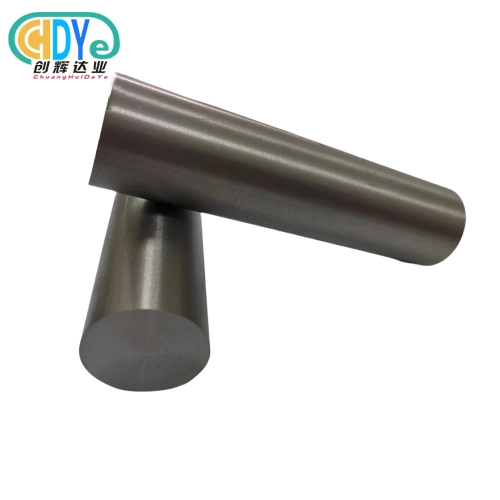
Understanding the Physical Properties of Pure Niobium Bar
How to Understand the Physical Features of a Pure Niobium Bar: Because of this, knowing the basic physical properties of niobium is important for making smart choices when looking at different materials for important commercial uses.
Density and Weight Considerations
Niobium is a good metal to use because it is neither too light for construction purposes nor too thick for refractories. Its density is 8.57 g/cm³. Engineers can use this moderate-weight profile to make parts that meet strength standards without putting too much load on them. Compared to tantalum, which has a density of 16.65 g/cm³, niobium is much lighter while still keeping its structural integrity. When building aerospace systems where every gram counts, procurement managers often like this trait.
Thermal and Mechanical Stability
Niobium's melting point of 2,468°C ensures that structures stay stable over a wide range of working temperatures. When the temperature drops below absolute zero, the material stays the same size. It can also withstand the high heat found in jet propulsion systems. This thermal robustness comes from niobium's body-centered cubic crystal structure, which doesn't get worn down by cycles of thermal expansion and contraction that wear down other materials. We at Chuanghui Daye keep these natural qualities by using controlled annealing and precise cutting procedures when we make things.
Electrical and Superconducting Properties
Niobium can be used for more than just building structures. It is also a very good conductor of electricity, and at 9.2 Kelvin, it becomes superconductive. Niobium bars are the best material for superconducting radio frequency holes in particle accelerators and magnetic resonance imaging equipment because they have the highest transition temperature among pure elements. When electron beam melting is used, a high Residual Resistance Ratio is reached. This makes sure that there is little energy loss in cold uses.
Comparative Analysis: Pure Niobium Bar vs Other Materials
Pure niobium bar vs. Other Materials: A Comparison. To choose the best material, you need to look at its performance in a number of different areas and know how niobium stacks up against other options.
Niobium vs Tantalum
Even though both hard metals are chemically similar, they are bought in different ways. While tantalum is slightly better at resisting acid, niobium is about as good at resisting rust while being about 40% less dense and costing a lot less. Niobium has strong economic benefits when working with high amounts of hot sulfuric acid, where both metals work well. Our cylindrical and round niobium bars come in thicknesses ranging from 5 mm to 350 mm, which means they can fit most equipment designs that were originally made for tantalum parts.
Niobium vs Titanium Alloys
Titanium metals are used a lot in aircraft because they are strong for their weight, but niobium is better at resisting corrosion in some situations. In some salt conditions, titanium rusts in cracks, but niobium doesn't react. Niobium is more flexible than titanium, which makes it easier to shape into complicated shapes without having to go through the melting steps that titanium does. Niobium is easy to work with during the manufacturing process, which is appreciated by manufacturers of both materials.
Performance and Cost Balance
Material choice is affected by market factors in addition to technical value. At the moment, niobium is a cheaper option to tantalum when its higher price can't be explained, and stainless steel isn't good enough at resisting corrosion. Niobium fills a useful gap for procurement teams that have to balance performance requirements with price limits. When you buy directly from manufacturers like Chuanghui Daye, you skip the markups that come from middlemen. This makes your prices even more competitive.
How Pure Niobium Bars Are Made and Quality Considerations
What goes into making pure niobium bars, and how to judge their quality. The way the material is made determines its quality, and strict quality assurance methods make sure that the quality is always the same.
Manufacturing Process Excellence
At Chuanghui Daye, the first step in the production process is getting high-quality niobium crystals from trusted sources. Electron beam melting in a high-vacuum environment gets rid of small impurities, reaching purity levels higher than 99.9% (3N grade), with 4N grades possible for specific needs. This step of polishing sets professional-grade material apart from lower-quality options that don't work as well in serious situations. The ingots are then turned into precision bars through controlled casting and rolling processes after hot and cold working.
Quality Certification and Traceability
Following the ASTM B392 guidelines (grades R04200 and R04210) makes sure that the measurements are correct and the makeup is always the same. As part of our ISO 9001:2015 certification, we have to keep detailed records of every step of the production process, from inspecting the raw materials to checking the finished product. Each pure niobium bar comes with all the paperwork needed to track it back to its source, such as chemical analysis papers, mechanical property reports, and records of measurements. This set of paperwork meets the rules in the nuclear, medical device, and aircraft industries that need to be able to show where materials came from.
Contamination Control Measures
During the final cutting process, clean rooms keep the surface from getting dirty, which could damage the superconducting properties or create places where rust can start. Temperature-controlled handling keeps the structure of the grains the same, which has a direct effect on the material's mechanical qualities and shapeability. The most up-to-date tools, like precise lathes and computer-controlled machining centers, can meet tolerance standards of just ±0.05mm, which is perfect for high-performance uses.
Practical Applications and Benefits of Pure Niobium Bars
Uses and benefits of pure niobium bars in real life. The one-of-a-kind combination of properties gives businesses in many fields real operating benefits.
Aerospace and Defense Applications
Niobium is used by jet engine makers in parts that are heated and used in exhaust systems. These parts are exposed to both temperature stress and reactive attack at the same time. The great resistance to creep keeps the dimensions stable over thousands of temperature cycles, which increases the time between services and lowers the cost of upkeep. Niobium is used in rocket propulsion systems in parts that handle liquid fuel and need to be compatible with hypergolic propellants and cold oxidizers. Niobium doesn't rust when it's hot and in sulfur-filled burning settings, which is good for gas turbines.
Chemical Processing Equipment
Niobium is used for important wet parts in reactor vessels that deal with strong acid mixes, like agitation shafts, thermowell tubes, and valve stems. Mineral acids like nitric, hydrochloric, and sulfuric can't damage the material. This means that corrosion-related problems that cause unexpected downtime and product contamination don't happen. Heat exchangers made from niobium tubes can handle toxic process streams for longer periods of time while still being thermally efficient. Our custom length specs can be used for a wide range of equipment designs, from small reactors in the lab to large production units in factories.
Superconducting and Electronics Industries
Particle accelerators use niobium bars to make superconducting RF cavity blanks. The high thermal conductivity of the material at room temperature makes it easier to cool everything evenly during cold operation. Niobium is good for nuclear studies because it has a low thermal neutron absorption cross-section. Manufacturers of electronics use ultra-pure niobium as the base material for thin-film capacitors in very reliable circuits. Niobium-titanium superconducting magnets made from wire taken from our bar stock are used in medical imaging equipment.
Buying Guide: How to Choose and Order Pure Niobium Bars
Pure niobium bars: How to Pick Out and Order Them. For procurement to go well, technical standards must be in line with what the seller can do and what the business needs.
Specification Development
Critical factors, such as purity grade, dimensional limits, surface finish standards, and mechanical property goals, are set by your application. When compared to chemical manufacturing tools, aerospace parts usually need tighter tolerances and better surface quality. For superconducting uses, the highest level of precision and a high Residual Resistance Ratio are needed. Our technical team helps buyers turn application needs into material standards that make sure performance without naming too many expensive features.
Supplier Evaluation Criteria
In addition to competitive prices, you should look at the supplier's ability to make the product, their certifications for quality systems, and their expert assistance resources. Check that the production tools can handle the sizes you need. Our rolling and machining capabilities can handle thicknesses from 5 mm to 350 mm in both rectangular and round shapes. Make sure that the material traceability paperwork meets the rules for your business. Chuanghui Daye has been handling rare metals for 30 years, so you can be sure of steady quality and on-time delivery.
Order Logistics and Customization
Minimum order amounts depend on the cross-sectional size and length requirements. Depending on how complicated the job is and how busy production is right now, standard wait times are between 4 and 8 weeks. Custom lengths work with the way you make things, so you waste less material and do fewer extra steps. Specifications for packaging make sure that deliveries are damage-free, whether they are within the United States or to other countries. Our team organizes transportation to get the best freight rates and meet the deadlines for your project.
Conclusion
Engineered options like pure niobium bars are used in demanding manufacturing settings where regular materials don't work well enough. It has a moderate density (8.57 g/cm³), is very resistant to corrosion, stays stable at high temperatures, and has special superconducting qualities that make it useful in aircraft, chemical processing, and advanced technology. When buying, workers know about these physical properties, they can choose materials that are best for both technical performance and project cost. Niobium parts can work reliably for a long time in the toughest working conditions if the right supply partnerships are made and specifications are developed.
FAQ
Q: What distinguishes pure niobium bars from niobium alloys?
A: What makes niobium alloys different from pure niobium bars? Niobium alloys are made by adding elements like titanium, zirconium, or tungsten on purpose to change certain qualities, while pure niobium bars have at least 99.9% niobium (3N grade) in them. Pure material is the best at resisting rust and working as a superconductor. When heated to high temperatures, alloys become stronger, but they also lose some of their chemical inertness. The right choice depends on the application. For example, pure grades are best for chemical processing, while alloys may be used for structural aircraft parts.
Q: How does density affect material selection decisions?
A: The density of 8.57 g/cm³ affects both the design of the structure and the funds for the weight of its parts. Niobium is a metal that is lighter than tantalum but heavier than titanium. It can be used in situations where corrosion protection and weight are both important. When the density is lower, the inertial loads on spinning machinery and space buildings are lower. During the planning phase, figure out the total mass of all the parts to make sure that niobium's density profile fits the needs of the system.
Q: Which certifications guarantee material quality?
A: Compliance with ASTM B392 ensures that rules for size and makeup are met. ISO 9001:2015 approval proves that quality management is carried out in a planned way throughout production. For each production lot, verification is given by material test results that list the chemical makeup, mechanical properties, and measurements. You may need to ask for certificates of compliance that are special to your business, such as those for aerospace (AS9100), medical devices (ISO 13485), or nuclear (ASME) standards.
Source Premium Niobium Bar from Chuanghui Daye Metal
A premiumpure niobium bar can be bought from Shaanxi Chuanghui Daye Metal. At Chuanghui Daye, we use our 30 years of experience with rare metals and advanced production skills to make sure that the confirmed pure niobium bars we provide meet all of your needs. We are located in China's Titanium Capital and are ISO 9001:2015 certified. From getting the raw materials to the final testing, we have strict quality controls. Whether you need standard sizes or unique ones, our technical team will give you personalized advice on how to match the features of the material with the needs of your application. Contact us at info@chdymetal.com to talk about your project needs, get detailed datasheets, or get reasonable prices from a pure niobium bar provider you can trust to help you succeed with on-time delivery and high quality.
References
1. Davis, J.R. (Editor). ASM Specialty Handbook: Heat-Resistant Materials. ASM International, Materials Park, Ohio, 1997.
2. Shields, J.A. Applications of Molybdenum Metal and Its Alloys. International Molybdenum Association, London, 2013.
3. Donachie, M.J. Titanium: A Technical Guide, 2nd Edition. ASM International, Materials Park, Ohio, 2000.
4. Lütjering, G. and Williams, J.C. Titanium, 2nd Edition. Springer-Verlag, Berlin, 2007.
5. Sims, C.T. and Hagel, W.C. The Superalloys: Vital High Temperature Gas Turbine Materials for Aerospace and Industrial Power. John Wiley & Sons, New York, 1972.
6. American Society for Testing and Materials. ASTM B392-20: Standard Specification for Niobium and Niobium Alloy Ingots. ASTM International, West Conshohocken, Pennsylvania, 2020.
Learn about our latest products and discounts through SMS or email