- English
- French
- German
- Portuguese
- Spanish
- Russian
- Japanese
- Korean
- Arabic
- Greek
- German
- Turkish
- Italian
- Danish
- Romanian
- Indonesian
- Czech
- Afrikaans
- Swedish
- Polish
- Basque
- Catalan
- Esperanto
- Hindi
- Lao
- Albanian
- Amharic
- Armenian
- Azerbaijani
- Belarusian
- Bengali
- Bosnian
- Bulgarian
- Cebuano
- Chichewa
- Corsican
- Croatian
- Dutch
- Estonian
- Filipino
- Finnish
- Frisian
- Galician
- Georgian
- Gujarati
- Haitian
- Hausa
- Hawaiian
- Hebrew
- Hmong
- Hungarian
- Icelandic
- Igbo
- Javanese
- Kannada
- Kazakh
- Khmer
- Kurdish
- Kyrgyz
- Latin
- Latvian
- Lithuanian
- Luxembou..
- Macedonian
- Malagasy
- Malay
- Malayalam
- Maltese
- Maori
- Marathi
- Mongolian
- Burmese
- Nepali
- Norwegian
- Pashto
- Persian
- Punjabi
- Serbian
- Sesotho
- Sinhala
- Slovak
- Slovenian
- Somali
- Samoan
- Scots Gaelic
- Shona
- Sindhi
- Sundanese
- Swahili
- Tajik
- Tamil
- Telugu
- Thai
- Ukrainian
- Urdu
- Uzbek
- Vietnamese
- Welsh
- Xhosa
- Yiddish
- Yoruba
- Zulu
Pure Niobium Bar vs Alloy Bar: Which Should You Choose?
Whether procurement asks whether you want to specify a pure niobium bar or a niobium alloy bar, the honest response is: It is contingent upon what your ultimate application requires. Pure niobium (Nb ≥99.9%) has exceptional corrosion resistance, superior ductility, and consistent electrical conductivity, making it an important material in aerospace, chemical processing, and medical device manufacture. Niobium alloy bars, by contrast, sacrifice part of that chemical inertness for better mechanical strength and high-temperature stability. Figuring out where those trade-offs land tells you which material is really right for your project.
Understanding Pure Niobium Bars and Niobium Alloy Bars
What Defines a Pure Niobium Bar?
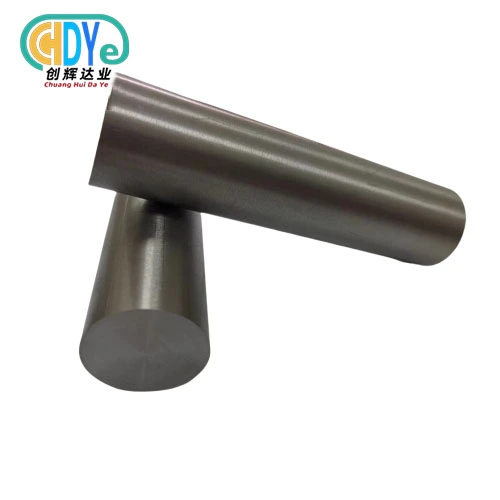
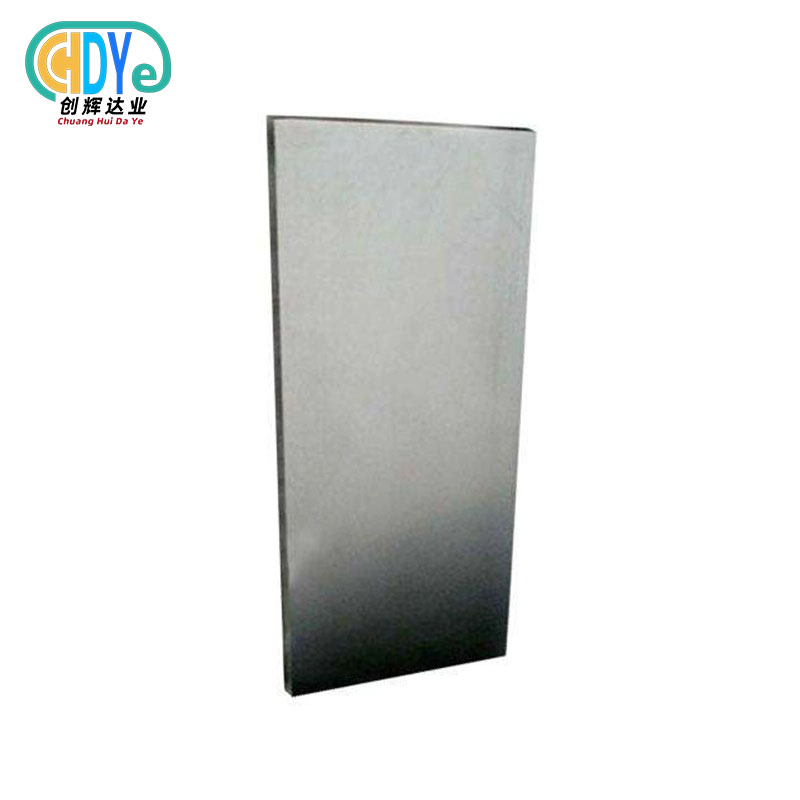
A pure niobium bar is obtained from the processing of unalloyed niobium ingots, often of purity Nb ≥99.9%. Chuanghui Daye begins with premium ingots that are melted in a state-of-the-art vacuum to remove interstitial impurities like as oxygen and nitrogen, which would otherwise reduce ductility. The resultant bar, available in rectangular or circular cross sections, thicknesses from 5 mm to 350 mm, and bespoke lengths, has a density of 8.57 g/cm³ and a melting point of 2468°C. Each bar is strictly dimensioned and chemically verified before shipping.
What Is a Niobium Alloy Bar?
Niobium alloy bars include secondary elements, such as tantalum, titanium, or zirconium, which are intentionally introduced to the melt to design certain mechanical or thermal properties. Alloying well beyond those of the pure metal increases the yield strength and creep resistance. These bars are suitable for structural applications when the overriding design requirement is sustained mechanical loads at high temperature rather than chemical passivity.
Core Differences Between Pure Niobium Bars and Niobium Alloy Bars
When the main physical properties are put side-by-side, the choice between the two materials is never a question of guessing. The differences below are derived from the official ASTM B392 and ASTM B393 data plus our own manufacturing experience.
Here are the key property differences procurement engineers depend on most:
- Pure niobium creates a self-healing passivation layer of niobium pentoxide (Nb2O5) that is resistant to attack by most organic and mineral acids below 100°C. Alloy pure niobium bars give up some of their passivity in the sake of structural performance.
- Mechanical strength: Niobium alloys, especially Nb-Ti and Nb-Ta grades, are 30-60% stronger than commercially pure niobium. This is important for load-bearing aircraft frames and high-pressure reactor components.
- Ductility and formability: Pure niobium, which has a body-centered cubic (BCC) crystal structure, is able to be deep drawn, stamped, and bent into complicated shapes at room temperature without splitting, a workability advantage that alloy bars only partly maintain.
- Electrical and superconducting properties: The superconducting transition of pure niobium occurs at 9.25 K. Its Residual Resistance Ratio (RRR) – a direct measure of electronic-grade purity – is far greater than that of other alloy compositions and so is the usual option for superconducting cavities and cryogenic electronics.
- Cost structure: Alloy bars are generally more expensive per unit due to raw material prices and narrower process windows, but a longer service life in mechanically demanding situations may decrease the overall total cost of ownership.
These differences have clear implications for procurement risk. Using the improper grade might cause premature component failure, unexpected downtime, or over-engineering that drives up project expenses. It is usually more cost-effective to make sure the material is accurate at the procurement stage than trying to fix it mid-production.
How to Choose Between Pure Niobium Bars and Alloy Bars for Your Needs
Map Your Technical Requirements First
Start with the surroundings you’re in. If your components are exposed to harsh chemicals, work in vacuum chambers, or need to be biocompatible for medical implants, the chemical inertness and hypoallergenic properties of high-purity niobium material are non-negotiable. For the specification of a niobium alloy grade if your design requires resistance to fatigue under cyclic mechanical loads or creep stability beyond 1,000°C in a structural function.
Evaluate Supplier Capability and Certification
Material performance on paper is meaningless if the provider cannot supply consistent lot-to-lot quality. Look for providers with ISO 9001:2015 certification and documented traceability of raw materials, interstitial impurities reports (C/O/N/H by inert gas fusion), and non-destructive testing records. There are no middleman mark-ups; we are a factory-direct supplier, and your quality team has direct insight into production data – crucial when tolerances are tight or regulatory audit trails are a must.
Factor in Lead Time and Custom Dimensions
Aerospace and chemical processing projects seldom fit the usual catalog dimensions. Make sure your provider can process specific cross sections and lengths without affecting surface integrity. Chuanghui Daye manufactures client-specified rectangular and circular pure niobium bars cut to length from 5 mm to 350 mm in thickness and is capable of prototype runs as well as volume production schedules.
Case Studies and Practical Applications
Aerospace: High-Purity Niobium in Turbine-Adjacent Components
After reviewing thermal stability statistics, a propulsion systems supplier required Nb ≥99.9% bars for sourcing material for high-temperature gas route hardware. The material’s melting point is 2,468°C, and it resists oxidizing combustion gases, which matched the design margin without the need for a protective coating system, thereby decreasing part count and assembly labor. Consistent purity across manufacturing batches, validated using vacuum melting records, reduced the batch-to-batch inconsistency that had plagued prior supplier partnerships.
Chemical Processing: Corrosion-Resistant Reactor Internals
A specialist organic acid chemical factory had a stainless steel heat exchanger refitted with niobium-based internals after suffering accelerated corrosion failures. The self-passivating Nb2O5 surface layer imparted immunity to the process fluid at temperatures the stainless alloy could not tolerate. The maintenance intervals were much longer, and the overall cost of the replacement cycle was lower, yet the starting material price was greater.
The two instances above illustrate a constant procurement lesson: the best return on sourcing investment comes when the material selection is aligned with the prevailing failure mode, whether it is thermal, mechanical, or chemical.
Future Trends and Innovations in Niobium Materials
The niobium market is moving beyond the conventional steel strengthener function. Additive manufacturing procedures are starting to use niobium powder feedstocks to make near-net-shape components with geometries that cannot be achieved using traditional rolling and machining methods. At the same time, progress in superconducting radio-frequency (SRF) cavity technology for particle accelerators and quantum computing infrastructure is pushing demand for reactor-grade niobium with RRR values over 300.
Sustainability demands are also changing supply chain strategy. In Europe and North America, a rising number of B2B customers are asking their metal suppliers for verified chain of custody records, conflict mineral declarations and carbon footprint statistics. As these standards go from aspirational to contractual, suppliers who invest in transparent quality management systems – and have third-party-auditable certifications – will have a competitive edge.
Conclusion
The selection between a pure niobium bar and a niobium alloy bar is governed by three controlling factors: the chemical environment, the mechanical load profile, and the purity criteria. Pure niobium is ideal for applications where corrosion resistance, biocompatibility, and superconductivity are required. Alloy grades are used in applications needing increased structural strength during thermal stress. Both categories need to have a verifiable supply chain with traceable quality documentation to provide predictable performance in production. It is much easier to decide when you are working with an experienced manufacturer that will provide your technical team access to both families of materials under one verified quality standard.
FAQ
Q1. What purity level does a standard pure niobium bar carry?
A: Our standard commercial-grade bars achieve Nb ≥99.9% purity, conforming to ASTM B392. Higher purity grades — approaching 99.95% and above — are available for superconducting and electronics applications where RRR values and interstitial impurity ceilings are tightly controlled.
Q2. Can niobium bars be welded safely?
A: Niobium absorbs oxygen and nitrogen rapidly above 200°C, causing embrittlement. All welding must be performed inside a high-vacuum electron beam chamber or an argon/helium inert-gas glove box. Open-air welding is not acceptable regardless of shielding gas flow rates.
Q3. What dimensions are available for custom orders?
A: We supply rectangular and round niobium bars with thicknesses from 5 mm to 350 mm and lengths cut to your specification. Both prototype quantities and volume production runs are accommodated through our flexible manufacturing scheduling.
Q4. How do I verify a supplier's quality documentation?
A: Request mill test reports showing chemical composition (ICP-MS or combustion analysis), mechanical test results, and dimensional inspection records for each lot. ISO 9001:2015 certification provides a structural audit trail; ask for the certificate number and verify its validity with the issuing body.
Q5. Is annealing required after heavy cold working?
A: Cold reductions exceeding approximately 90% require stress-relief or full recrystallization annealing at 1,000°C–1,200°C in a vacuum of 10⁻⁴ Torr or better. This restores ductility and eliminates residual stress concentrations that would compromise subsequent forming operations.
Partner With Chuanghui Daye — Your Trusted Pure Niobium Bar Supplier
Shaanxi Chuanghui Daye, headquartered in China's Titanium Capital — Baoji, Shaanxi — brings over 30 years of rare metal expertise and ISO 9001:2015-certified manufacturing to every order. Whether you need a pure niobium bar in standard or custom dimensions, or a specialized niobium alloy grade for demanding structural applications, our factory-direct pricing and full traceability documentation give your procurement team the confidence it needs. Contact us at info@chdymetal.com to request a quote or discuss your specifications with our engineering team today.
References
1. ASTM International. ASTM B392: Standard Specification for Niobium and Niobium Alloy Bar, Rod, and Wire. ASTM International, 2022.
2. ASTM International. ASTM B393: Standard Specification for Niobium and Niobium Alloy Strip, Sheet, and Plate. ASTM International, 2022.
3. Lide, D. R. (Ed.). CRC Handbook of Chemistry and Physics. CRC Press, 2023.
4. Sisco, F. T., & Epremian, E. (Eds.). Columbium and Tantalum. John Wiley & Sons, 1963. (Foundational reference on niobium metallurgy, widely cited in subsequent industry literature.)
5. Wurster, S., Balun, J., Glasmacher, B., & Pippan, R. "Fracture Behaviour of Tungsten and Niobium Alloys at Low Temperatures." International Journal of Refractory Metals and Hard Materials, 2010.
6. Buckman, R. W. "New Applications for Niobium Alloys and Refractory Metals." Journal of Metals (JOM), 2000.
Learn about our latest products and discounts through SMS or email