- English
- French
- German
- Portuguese
- Spanish
- Russian
- Japanese
- Korean
- Arabic
- Greek
- German
- Turkish
- Italian
- Danish
- Romanian
- Indonesian
- Czech
- Afrikaans
- Swedish
- Polish
- Basque
- Catalan
- Esperanto
- Hindi
- Lao
- Albanian
- Amharic
- Armenian
- Azerbaijani
- Belarusian
- Bengali
- Bosnian
- Bulgarian
- Cebuano
- Chichewa
- Corsican
- Croatian
- Dutch
- Estonian
- Filipino
- Finnish
- Frisian
- Galician
- Georgian
- Gujarati
- Haitian
- Hausa
- Hawaiian
- Hebrew
- Hmong
- Hungarian
- Icelandic
- Igbo
- Javanese
- Kannada
- Kazakh
- Khmer
- Kurdish
- Kyrgyz
- Latin
- Latvian
- Lithuanian
- Luxembou..
- Macedonian
- Malagasy
- Malay
- Malayalam
- Maltese
- Maori
- Marathi
- Mongolian
- Burmese
- Nepali
- Norwegian
- Pashto
- Persian
- Punjabi
- Serbian
- Sesotho
- Sinhala
- Slovak
- Slovenian
- Somali
- Samoan
- Scots Gaelic
- Shona
- Sindhi
- Sundanese
- Swahili
- Tajik
- Tamil
- Telugu
- Thai
- Ukrainian
- Urdu
- Uzbek
- Vietnamese
- Welsh
- Xhosa
- Yiddish
- Yoruba
- Zulu
Tantalum Niobium Plate Buying Guide for High-Temperature Use
If you're in aircraft, chemical processing, or semiconductor manufacturing, you know firsthand how unforgiving high-temperature conditions can be for structural materials. Another option would be a tantalum-niobium plate, which would give you the almost unparalleled corrosion resistance of a tantalum niobium plate, but with the lighter density and ductility of niobium. This book takes you through what you need to know before making a purchase decision: alloy qualities, material comparisons, selection criteria, sourcing best practices, and genuine performance advantages validated by industry statistics.
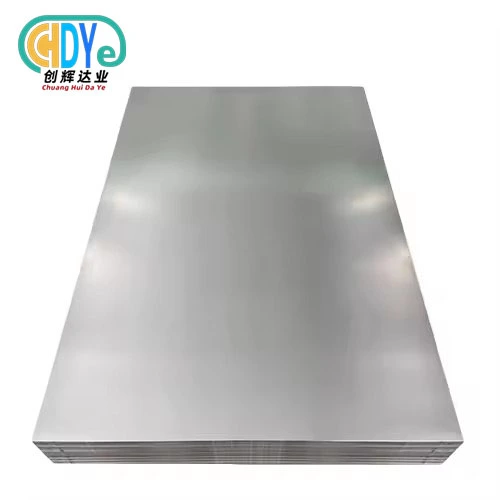
Comparing Tantalum Niobium Plates with Alternatives for High-Temp Applications
Selecting the appropriate refractory metal plate is seldom easy. Pure tantalum niobium plate has the best corrosion resistance, but it has a big cost premium and weight penalty. Pure niobium is lighter and less costly, but does not perform well in really harsh acid conditions. Titanium plates are economical and frequently utilized, although they begin to lose their structural integrity at 600 °C and do not have the acid resistance of tantalum.
A Ta-40Nb alloy plate was placed at an optimum junction. It offers corrosion resistance similar to that of pure tantalum in most strong acids, save hydrofluoric acid, at a far lower cost and weight. From a life cycle economics perspective, the bottom line of total cost of ownership frequently favors the alloy over alternatives that need more regular replacement or protective coatings.
Here’s a hands-on comparison of the major options:
- Pure Tantalum Plate: greatest corrosion resistance, greatest density (16.6 g/cm³), highest cost—justified for the harshest acid situations when no substitute is suitable.
- Ta-40Nb Alloy Plate: ~25% weight savings over pure tantalum, same corrosion resistance in most acids, reduced material cost, and good weldability to titanium and zirconium—ideal for chemical processing equipment and aircraft parts.
- Pure Niobium Plate: Lightest of the 3 ( 8.57 g/cm³). Least expensive of the refractory metals appropriate for mild corrosive conditions and superconducting applications. Not appropriate for high-concentration acid service
- Titanium Alloy Plate: Best cost-to-strength ratio for moderate temperature applications. Generally utilized in the medical and aerospace industries, but restricted to working settings below about 600°C.
These differences have direct effects on buying choices. In chemical plants handling hot sulfuric acid slurries, a tantalum-niobium alloy plate is a better investment than titanium, which would break quickly and require expensive shutdowns and replacement cycles.
How to Select the Right Tantalum Niobium Plate for Your Needs
Define Your Operating Environment First
You have to have a good idea of the requirements of your application before you can define any alloy grade. Important characteristics to consider are maximum operating temperature (continuous), the chemical media the plate will be exposed to, mechanical load and cyclic stress exposure, and vacuum compatibility (if required by the application).
For example, a semiconductor manufacturer employing refractory metal components in a sputtering target or crucible application requires high-purity material—typically 99.95% or better—with strict dimensional specifications. For a chemical factory producing a lined reactor vessel, the purity grade is less important than corrosion resistance and weldability.
Matching Specifications to Industry Segments
The different buyer categories prioritize different specifications. In the aircraft industry, OEMs often expect complete material traceability, validated test reports, and conformity with AMS or ASTM requirements. Research institutes usually need short runs of custom-sized plates, which may be supplied on an as-needed basis. For stock inventory management, distributors need consistent dimensional tolerances at competitive per-kilogram prices.
Whether it's a segment, a good procurement practice is to seek a certificate of compliance and a complete chemical composition report before committing to a significant purchase.
Procurement Considerations and Best Practices
Understanding Pricing and Lead Times
Tantalum Niobium Alloy Plates are marketed by weight in kilograms, and the price varies as per market circumstances of raw tantalum and niobium ores. Tantalum is especially sensitive, considering that over 60% of the world's supply of tantalum niobium plates is located in the Democratic Republic of Congo. Buyers that source from vertically integrated manufacturers with ISO 9001:2015 certification, from smelting through to rolling, would have better pricing consistency and shorter lead times than those who depend on spot-market middlemen.
Lead times are generally two to six weeks from known manufacturers, depending on the plate size, metal grade, and surface quality required. Samples should be requested prior to bulk purchases to defend against any unanticipated dimensional variation or purity deviations. Buyers should also make sure the supplier is comfortable with export documents, such as material safety data sheets and country-of-origin certifications, to prevent customs delays.
Buying in bulk brings significant savings on the unit cost and helps suppliers organize the manufacturing runs better, meaning better dependability in delivery and a better end price.
Benefits and Advantages of Tantalum Niobium Plates for High-Temperature Environments
The performance advantages of tantalum niobium alloy plates convert immediately into operational and budgetary advantages for industrial users. Some of the major benefits that make this material a popular option are:
- Longer Equipment Life: The alloy’s resistance to hot mineral acids is similar to that of glass lining, but with the mechanical strength of a metal structure. This greatly minimizes equipment failures due to corrosion in chemical processing facilities, reducing the number of unscheduled shutdowns.
- High-Temperature Structural Integrity: Plates retain mechanical qualities at temperatures beyond 2,000°C in inert environments, making them dependable for furnace components, high-vacuum equipment, and aircraft thermal management systems.
- Lower Total Cost of Ownership: End users get considerable savings in total cost of ownership during the service life of the equipment compared to titanium or stainless steel equivalents via reduced maintenance intervals and replacement cycles.
- Weldability and Fabrication Flexibility: Ta-40Nb plates weld cleanly to tantalum, niobium, titanium, and zirconium substrates, allowing for complicated manufactured assemblies without vulnerability to weld-zone corrosion.
These benefits come together to give compelling ROI for manufacturers and processing facilities where material dependability directly affects production continuity. Even a single unexpected acid-leak shutdown event avoided in a chemical plant more than pays for the material cost premium several times over.
Conclusion
Choosing the correct refractory metal plate for high-temperature and corrosive applications demands a balance between tantalum niobium plate and tantalum niobium alloy plates – corrosion resistance of almost pure tantalum at lower weight and cost. You may be applying your application to chemical reactors, vacuum furnace parts, or aircraft structural parts. Being aware of alloy composition, checking certificates from suppliers, and matching specifications to operating requirements can lead to better procurement results.
FAQ
Q1. What industries commonly use tantalum niobium alloy plates?
A: They serve chemical processing, aerospace and defense, semiconductor manufacturing, and research institutions. Applications include heat exchangers, vacuum furnace liners, sputtering targets, and reactor vessel cladding.
Q2. Can tantalum niobium plates be customized in thickness and dimensions?
A: Yes. Reputable manufacturers offer custom rolling to specific thicknesses, widths, and lengths. Surface finishes—including acid-washed and electropolished options—are also available to meet application-specific requirements.
Q3. What certifications should I verify when sourcing these plates?
A: Confirm ISO 9001:2015 quality management certification and request mill test reports referencing ASTM B708. For aerospace or medical applications, ask for full material traceability documentation and chemical composition analysis.
Q4. How does alloy ratio affect performance?
A: Higher tantalum content raises corrosion resistance and density while increasing cost. Ta-40Nb is the most widely used alloy grade because it balances performance and economy effectively across most industrial applications.
Q5. What is the safe operating temperature in air?
A: In air or oxidizing atmospheres, surface oxidation becomes significant above 250°C. For elevated-temperature applications, inert gas shielding or vacuum environments are required to prevent embrittlement.
Partner with Chuanghui Daye for Certified Tantalum Niobium Plate Supply
Shaanxi Chuanghui Daye is an ISO 9001:2015-certified tantalum niobium plate manufacturer based in Baoji, China's recognized rare metal hub, with over 30 years of industry expertise. We supply custom alloy plates with full traceability documentation, competitive factory-direct pricing, and flexible small-batch production. Whether you need a sample or a production-volume order, reach out to our technical team at info@chdymetal.com to discuss your specifications.
References
1. ASTM International. ASTM B708: Standard Specification for Tantalum and Tantalum Alloy Plate, Sheet, and Strip. ASTM International, 2021.
2. Cardarelli, François. Materials Handbook: A Concise Desktop Reference. Springer, 2018.
3. Klopp, W. D. Technology of Columbium (Niobium). U.S. Bureau of Mines Bulletin, 1969. Referenced in: ASM International, Metals Handbook, Vol. 2, 1990.
4. Savitzky, E. M., and Prince, A. Handbook of Precious Metals. Hemisphere Publishing, 1989.
5. Lide, David R., ed. CRC Handbook of Chemistry and Physics, 97th Edition. CRC Press, 2016.
6. Sibum, H., et al. "Titanium, Tantalum, Niobium and Their Alloys." Ullmann's Encyclopedia of Industrial Chemistry. Wiley-VCH, 2012.
Learn about our latest products and discounts through SMS or email