- English
- French
- German
- Portuguese
- Spanish
- Russian
- Japanese
- Korean
- Arabic
- Greek
- German
- Turkish
- Italian
- Danish
- Romanian
- Indonesian
- Czech
- Afrikaans
- Swedish
- Polish
- Basque
- Catalan
- Esperanto
- Hindi
- Lao
- Albanian
- Amharic
- Armenian
- Azerbaijani
- Belarusian
- Bengali
- Bosnian
- Bulgarian
- Cebuano
- Chichewa
- Corsican
- Croatian
- Dutch
- Estonian
- Filipino
- Finnish
- Frisian
- Galician
- Georgian
- Gujarati
- Haitian
- Hausa
- Hawaiian
- Hebrew
- Hmong
- Hungarian
- Icelandic
- Igbo
- Javanese
- Kannada
- Kazakh
- Khmer
- Kurdish
- Kyrgyz
- Latin
- Latvian
- Lithuanian
- Luxembou..
- Macedonian
- Malagasy
- Malay
- Malayalam
- Maltese
- Maori
- Marathi
- Mongolian
- Burmese
- Nepali
- Norwegian
- Pashto
- Persian
- Punjabi
- Serbian
- Sesotho
- Sinhala
- Slovak
- Slovenian
- Somali
- Samoan
- Scots Gaelic
- Shona
- Sindhi
- Sundanese
- Swahili
- Tajik
- Tamil
- Telugu
- Thai
- Ukrainian
- Urdu
- Uzbek
- Vietnamese
- Welsh
- Xhosa
- Yiddish
- Yoruba
- Zulu
Why Choose a niobium titanium tube for Superconducting Systems?
Every time engineers and purchasing experts look at materials for superconducting systems, the niobium titanium tube comes out on top. This alloy tube consists of niobium and titanium in regulated proportions, usually Nb-47Ti or Nb-50Ti. It has a superconducting transition temperature from 8K to 10K, zero electrical resistance at cryogenic temperatures, and good mechanical strength. Nb-Ti tubes thus provide a technically sound, cost-effective, and scalable option that many other materials cannot match, whether the end application is MRI magnets, particle accelerators, or aerospace systems.
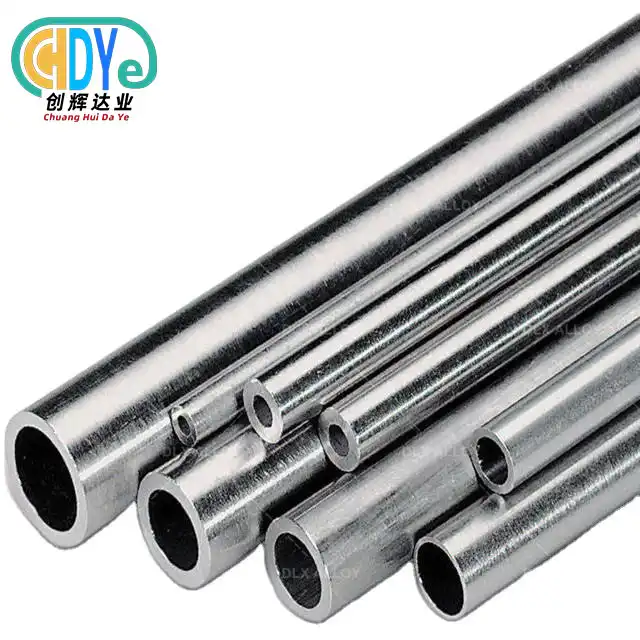
Why Niobium Titanium Tubes Are Preferred in Superconducting Systems
Procurement teams choosing materials for tough situations require proof, not just specs. Nb-Ti tubes have decades of real-world validation in the most demanding applications in research and health.
Performance in Superconducting Magnets and MRI Systems
The Large Hadron Collider at CERN uses Nb-Ti-based superconducting magnets at 1.9K to produce magnetic fields greater than 8 Tesla. Nb-Ti windings are used in medical MRI scanners all over the globe to maintain sustained current states without any loss of energy. In both situations, the niobium titanium tube form factor performs crucial structural and barrier functions throughout the billet assembly process for the manufacturing of multifilamentary wire. One of the main advantages of the material is its capacity to tolerate repeated thermal cycling between room temperature and cryogenic temperatures without fatigue – the longer the component life, the less downtime and cost of ownership for the system.
Aerospace and Chemical Processing Applications
In addition to magnets, Nb-Ti tubing is used in aircraft hydraulic lines and propulsion structural components where weight reduction and magnetic neutrality are crucial to operations. They are excellent substitutes for glass or tantalum tubes in acid recovery and hydrometallurgical extraction applications where crevice corrosion and stress corrosion cracking would cause failure of less competent alloys.
How Niobium Titanium Tubes Are Manufactured and Treated for Optimal Performance
The quality of a material is only as good as the procedure used to make it. The Nb-Ti alloy ingots are smelted in vacuum electrode arc furnaces and electron-beam furnaces at Chuanghui Daye to ensure compositional consistency and little interstitial contamination. Levels of oxygen, nitrogen, hydrogen and carbon impurities are limited to below critical levels (usually less than 150 ppm) so that embrittling effects do not occur that would reduce the structural integrity under cryogenic stress.
Seamless Tube Forming and Heat Treatment
After ingot processing, the material is subjected to precision extrusion and tube drawing to achieve dimensional tolerances as per client requirements. Controlled temperature annealing may improve the grain structure, eliminate residual stresses, and maximize ductility for downstream processing. Each tube is integrally formed, therefore eliminating weld-zone flaws and assuring equal wall thickness along the length of the tube. This is particularly important when tubes are used as diffusion barriers or as cladding sleeves in superconducting wire billet assemblies.
Quality Assurance and Certification Standards
The following basic inspection methods are performed on every Nb-Ti tube we produce:
- Chemical Composition Verification: Accurate Nb/Ti ratios are obtained using ICP-OES or GDMS analysis and interstitial impurities are verified to be within specification limits for superconducting certification.
- Ultrasonic Testing (UT): Detects internal faults, delamination or inclusions that might cause a catastrophic failure under high pressure or cryogenic loading in accordance with ASTM E213.
- Dimensional Inspection: Laser micrometer measurements confirm OD, ID, and wall thickness uniformity over the length of the whole tube, supported by Eddy Current Testing to detect surface irregularities.
- Mechanical Testing : Tensile strength, yield strength and elongation are determined at room temperature. Cryogenic testing is possible at 4.2K for certification for superconducting applications.
Together, these methods enable complete material traceability and conformity with international procurement norms. Chuanghui Daye is certified with ISO 9001:2015 for all the manufacturing processes from raw material receiving to the final packing of niobium titanium tube.
Selecting the Right Niobium Titanium Tube: Comparison and Procurement Guidance
Cost comparisons alone do not determine specialized alloy tube sourcing selections. The grade selection, dimensional tolerances, certification criteria, and supplier dependability influence the success of a purchase choice or its potential for expensive downstream interruptions.
Grade Selection and Dimensional Customization
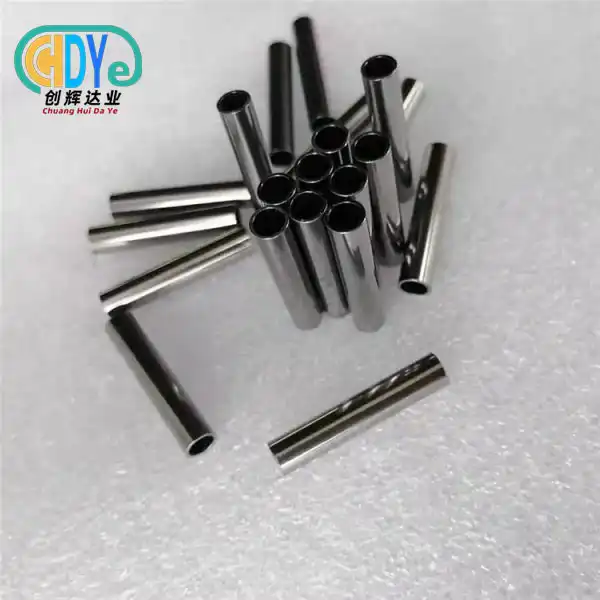
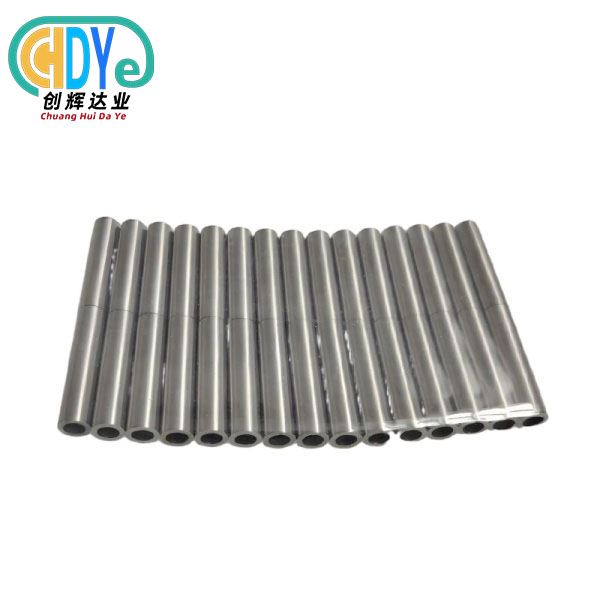
The two most often mentioned grades are Nb-47Ti and Nb-50Ti. The critical current density of Nb-47Ti is somewhat higher at lower fields, but the Nb-50Ti wire is more suitable for applications needing a higher degree of mechanical workability. Both grades are available in bespoke OD, wall thickness and length combinations. Most Nb-Ti tubes are custom manufactured, not commodity metal tubing – our range of manufacturing includes a variety of geometries from narrow-bore capillaries to larger structural pipe shapes up to 200 mm OD.
Evaluating Supplier Credibility and Supply Chain Reliability
Procurement teams must validate ISO certification, review quality documentation processes, and establish the manufacturer's ability to handle both small-batch prototypes and scalable production runs when evaluating a possible niobium titanium tube supplier. Chuanghui Daye is situated in Baoji, China’s acknowledged Titanium Capital, with cutting-edge melting, forging, rolling and machining capabilities. Our worldwide supply history includes aerospace, medical, research and chemical processing industries and our founder has over 30 years of rare metal industry expertise.
Maximizing Value: Future Trends and Innovations in Niobium Titanium Tube Applications
The market for superconducting materials is still under development. Research on improved Nb-Ti alloy compositions, for instance with trace additions of hafnium or zirconium, is pushing critical field performance beyond present day norms. The combination of Nb-Ti with copper or bronze matrices in hybrid composite architectures allows finer multifilamentary wire formations with higher current-carrying capability. Sustainability factors are now finding their way into buying practices. Specialty tube manufacturers eliminate custom-manufactured melting and use closed-loop machining methods to lessen their environmental impact. Buyers dealing with restricted project timeframes are finding supply chain resilience a differentiator, defined by flexible minimum order quantities, rapid prototype turnaround and prompt technical assistance.
Conclusion
The niobium titanium tube has an indispensable role in the design of the superconducting systems. Its combination of Type II superconductivity, mechanical workability, corrosion resistance and dimensional versatility make it the most practical and proven material choice for applications ranging from MRI systems, to infrastructure for particle physics, to aerospace components, to corrosion-resistant chemical equipment. By selecting a manufacturer with quality controls, verified manufacturing procedures and real technical experience, you will make sure this high-performance material performs to the max in every application.
FAQ
Q: What superconducting transition temperature does the Nb-Ti alloy reach?
A: The Nb-Ti alloy achieves a superconducting transition temperature between 8K and 10K. At these cryogenic temperatures, the material exhibits zero electrical resistance, enabling lossless current flow essential for superconducting magnet operation.
Q: What grades are available, and how do I choose between them?
A: Nb-47Ti and Nb-50Ti are the standard grades. Nb-47Ti delivers higher critical current density at moderate magnetic fields, while Nb-50Ti offers enhanced workability. Custom compositions with trace elemental additions are available for applications with specific performance requirements.
Q: Can Nb-Ti tubes be welded or machined?
A: Machining is feasible with carbide tooling, appropriate coolant lubrication, and controlled cutting speeds to prevent galling. Welding requires electron beam or TIG processes performed in vacuum or high-purity inert gas environments to prevent oxygen and nitrogen absorption, which causes immediate embrittlement.
Q: What makes dimensional range available?
A: Our seamless Nb-Ti tubes are produced with OD from 1 to 200 m, wall thickness from 0.2 to 10 mm, and lengths up to 3,000 mm. Custom dimensions outside standard ranges are accommodated through direct engineering consultation.
Q: What certifications support procurement confidence?
A: Production adheres to ASTM B884 for superconducting applications and is supported by ISO 9001:2015 certification covering the entire manufacturing and inspection chain.
Partner with Chuanghui Daye for Reliable Niobium Titanium Tube Supply
Shaanxi Chuanghui Daye delivers precision-engineered Nb-Ti tubes backed by ISO 9001:2015 certification, advanced electron-beam melting equipment, and over 30 years of rare metal expertise. As a trusted niobium titanium tube manufacturer serving global aerospace, medical, and research sectors, we offer factory-direct pricing, flexible batch sizes, and full traceability documentation. Contact our technical team at info@chdymetal.com or visit www.chdymetal.com to discuss your specifications and request a quote.
References
1. Larbalestier, D. C. — Science, 1986. "Niobium-Titanium Superconducting Alloys."
2. Wilson, M. N. — Superconducting Magnets, Oxford University Press, 1983.
3. Lee, P. J. — ASM Handbook, Volume 2: Properties and Selection of Nonferrous Alloys, ASM International, 1990.
4. ASTM International — ASTM B884: Standard Specification for Niobium-Titanium Alloy Bar and Billet for Superconductor Fabrication, 2019.
5. Collings, E. W. — Applied Superconductivity, Metallurgy, and Physics of Titanium Alloys, Plenum Press, 1986.
6. Glowacki, B. A. — Intermetallics, 1999. "Multifilamentary Niobium-Titanium Composites for Superconducting Applications."
Learn about our latest products and discounts through SMS or email