- English
- French
- German
- Portuguese
- Spanish
- Russian
- Japanese
- Korean
- Arabic
- Greek
- German
- Turkish
- Italian
- Danish
- Romanian
- Indonesian
- Czech
- Afrikaans
- Swedish
- Polish
- Basque
- Catalan
- Esperanto
- Hindi
- Lao
- Albanian
- Amharic
- Armenian
- Azerbaijani
- Belarusian
- Bengali
- Bosnian
- Bulgarian
- Cebuano
- Chichewa
- Corsican
- Croatian
- Dutch
- Estonian
- Filipino
- Finnish
- Frisian
- Galician
- Georgian
- Gujarati
- Haitian
- Hausa
- Hawaiian
- Hebrew
- Hmong
- Hungarian
- Icelandic
- Igbo
- Javanese
- Kannada
- Kazakh
- Khmer
- Kurdish
- Kyrgyz
- Latin
- Latvian
- Lithuanian
- Luxembou..
- Macedonian
- Malagasy
- Malay
- Malayalam
- Maltese
- Maori
- Marathi
- Mongolian
- Burmese
- Nepali
- Norwegian
- Pashto
- Persian
- Punjabi
- Serbian
- Sesotho
- Sinhala
- Slovak
- Slovenian
- Somali
- Samoan
- Scots Gaelic
- Shona
- Sindhi
- Sundanese
- Swahili
- Tajik
- Tamil
- Telugu
- Thai
- Ukrainian
- Urdu
- Uzbek
- Vietnamese
- Welsh
- Xhosa
- Yiddish
- Yoruba
- Zulu
What Industries Rely on Polished Niobium Bar Rod Solutions?
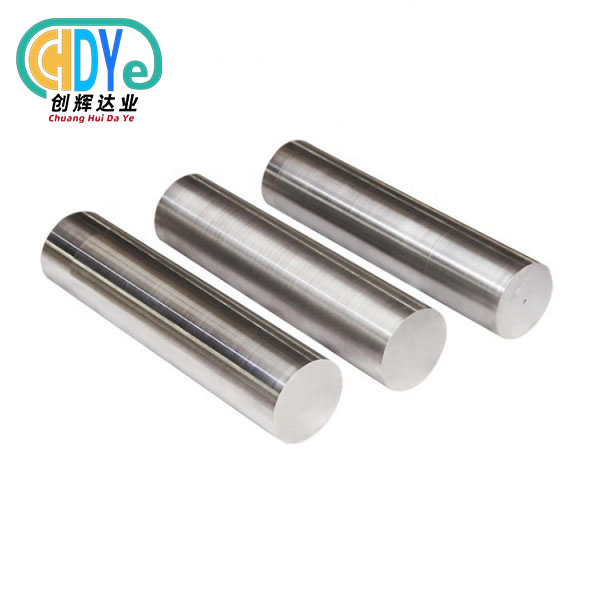
Polished niobium bar rod solutions are used in a very wide variety of sectors that need accuracy, purity, and long-term material dependability. "This unique material is designed to solve performance problems that traditional metals cannot. Polished niobium rods with purity of more than 99.9%, diameters from 1 to 50 mm, lengths up to 3 meters, and a density of 8.57 g/cm3 provide constant mechanical integrity in the most demanding operating settings.
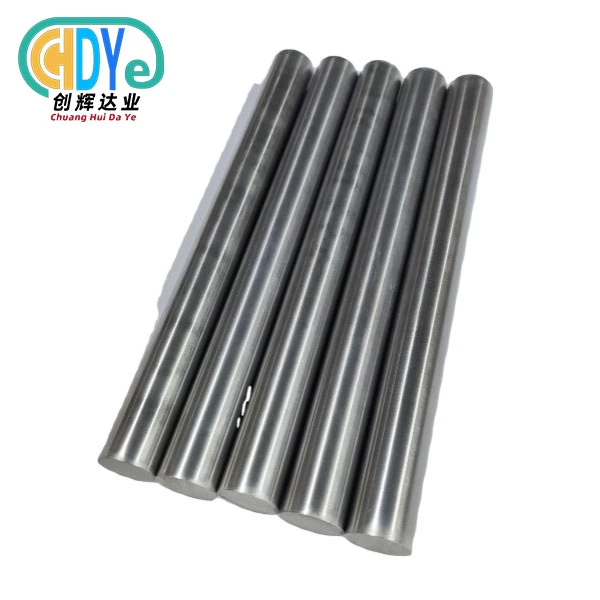
Industries That Depend on Polished Niobium Bar Rod Solutions
Procurement engineers in many high-value industries often resort to niobium rods when traditional materials fail to provide. The unique mix of superconductivity, biocompatibility, chemical inertness, and high thermal stability makes this material really flexible. Here’s a look at the industries that use it the most.
Aerospace and Defense
C-103 is one of a family of niobium-based superalloys that maintain high tensile strength at temperatures far beyond 1,300°C. These properties make them excellent for rocket thruster nozzles and jet engine parts. The low weight of niobium decreases the structural bulk without reducing the resistance to thermal shock, which is an important benefit in aeronautical design. Its resilience in chemically reactive exhaust conditions is also valued by defense makers.
Medical Device Manufacturing
Physiologically inert, niobium is an ideal option for implanted devices. It does not cause allergic responses and does not corrode in human fluids as nickel-rich alloys do. Long-term biocompatibility is a regulatory and safety requirement for pacemaker leads and orthopedic implant components made from precision-machined, polished niobium bar rods. The polished surface quality lowers the possibility of bacterial adherence in surgical applications.
Electronics and Semiconductor Fabrication
Electronics producers require high-quality, non-magnetic metals for vacuum deposition targets, sputtering components, and precision electrodes. Niobium also has the highest critical temperature of any pure element (9.25 K) and is the material of choice for superconducting RF cavities used in particle accelerators. High-purity niobium rods with polished surfaces reduce contamination for cleanroom-sensitive semiconductor processes.
Chemical and Petrochemical Processing
Chemical plant personnel are often exposed to caustic acids, high-pressure steam, and reactive chemicals. The passive oxide layer and niobium’s resistance to most acids below 200°C make it a dependable structural material for heat exchangers, reaction vessels and pipe fittings. Tantalum does a little better when the acid is concentrated and very hot, but in most industrial chemical applications, niobium is a good cost-performance compromise.
Energy and Research Institutions
High-purity niobium rods are used by universities and government labs for superconducting magnet components, cryogenic research, and nuclear energy research. The applications demand the use of reactor-grade niobium (R04210) with rigorous controls on tantalum and interstitial impurities. We provide small-batch, custom-length rods with comprehensive material traceability data to enable R&D operations that need both flexibility and verification.
These numerous applications explain why polished niobium rods have a unique place in sophisticated industrial supply chains, since no other material provides such a complete mix of qualities.
How to Select the Right Polished Niobium Bar Rod for Your Industry Needs
The choice of the proper polished niobium bar rod demands an understanding of a number of interrelated aspects. The starting point is the level of purity. Our normal grade has an Nb content of >99.9% and is appropriate for most industrial applications. Ultra-high-purity reactor grades are available for nuclear and superconducting applications. Diameter tolerance, surface finish grade, and delivery condition (annealed v cold-worked) impact downstream machining and performance results. Procurement teams should also confirm that suppliers are ISO 9001:2015 certified and can offer mill test results that meet ASTM B392 standards.
Total cost of ownership, not only tech specs, but is also very important. Niobium has excellent corrosion resistance in severe chemical conditions, resulting in fewer maintenance and component replacement cycles than stainless steel. For a five-year operating horizon, the durability benefit covers the higher upfront price per kilogram. Short lead times and flexible MOQ rules that minimize inventory holding costs are a big plus for engineering organizations operating on tight project timeframes.
Polished Niobium Bar Rod vs Other Solutions: A Rational Choice for Industry Leaders
All the competing materials have their place, but in some performance areas, polished niobium just outperforms the others. Titanium has a good strength-to-weight ratio but is not superconducting like niobium and is less effective in certain high-temperature acid conditions. Stainless steel is competitive in cost but suffers from chloride pitting corrosion, a well-known form of failure in chemical processing equipment. Unpolished niobium rods are functionally equivalent but are not equivalent in terms of surface oxides and contamination hazards, especially in semiconductor and medical applications, where polished rods are preferred.
Customization also improves Niobium’s competitive edge. We provide bespoke alloying (including niobium-titanium compositions for superconducting wire applications), several grades of polishing, and custom diameter-to-length ratios. This enables engineering teams to define accurate material characteristics rather than work around material restrictions.
Partnering with Trusted Polished Niobium Bar Rod Suppliers
It’s not just a matter of obtaining the lowest price per kilogram. Suppliers with good quality assurance procedures, complete traceability of manufacturing, and the capacity to test with third parties greatly decrease downstream risk. We are Chuanghui Daye. Our production method is ISO 9001:2015 certified and includes all stages from raw material inspection, melting, forging, precision machining, to final polishing. Each shipment includes a detailed chemical composition and dimensional inspection reports.
We are open to large orders, bespoke OEM, and small-batch flexible manufacturing for R&D customers. Our Baoji factory, the acknowledged center of China’s titanium and rare metal industry, is equipped with modern machinery such as electron beam furnaces, rolling machines, and precision lathes to provide consistent dimensional accuracy for large-volume orders. With our consistent supply capacity and rapid technical support staff, we have served several global customers in the US, Europe, and Asia.
Conclusion
Polished niobium bar rods serve industries where material failure carries significant technical, regulatory, or safety consequences. Aerospace engineers, medical device designers, chemical plant operators, semiconductor manufacturers, and research institutions all depend on the unique property set that high-purity niobium delivers. Selecting the right supplier—one with certified quality systems, full documentation, and genuine technical expertise—determines whether your procurement investment translates into long-term operational value. Chuanghui Daye brings over 30 years of rare metal industry experience to every order we fulfill.
FAQ
Q1. What industries benefit most from polished niobium rod applications?
A: Aerospace, medical device manufacturing, electronics, chemical processing, and energy research are the primary sectors. Each relies on specific properties: thermal stability in aerospace, biocompatibility in medical, chemical inertness in processing, and superconductivity in research.
Q2. How does niobium compare to tantalum in corrosion resistance?
A: Tantalum offers marginally superior resistance in extremely hot concentrated acids. Niobium performs comparably in most environments below 200°C while offering significant weight and cost advantages—density of 8.57 g/cm³ versus tantalum's 16.69 g/cm³.
Q3. Can niobium rods be machined to custom dimensions?
A: Yes. Niobium is ductile and machinable using carbide tools with proper coolant and cutting parameters. We supply rods in diameters from 1 to 50 mm and lengths up to 3000 mm, with custom configurations available on request.
Q4. What certifications should a reliable supplier hold?
A: ISO 9001:2015 certification is the baseline standard. Suppliers should also provide ASTM B392-compliant material test reports and support third-party chemical verification upon request.
Q5. Does niobium oxidize at elevated temperatures?
A: Niobium begins oxidizing above 400°C in open air. High-temperature applications require vacuum environments or protective silicide coatings to maintain structural integrity.
Request a Quote from Chuanghui Daye — Your Trusted Polished Niobium Bar Rod Supplier
Our team at Shaanxi Chuanghui Daye is ready to support your sourcing needs with factory-direct pricing, ISO 9001:2015-certified quality, and full material traceability. Whether you need standard stock or a custom-configured polished niobium bar rod for a demanding application, we deliver with precision and reliability. Contact us at info@chdymetal.com to request a sample, technical datasheet, or competitive quote today.
References
1. Hebda, J. (2001). Niobium Alloys and High-Temperature Applications. CBMM/TIC Niobium Science & Technology.
2. ASTM International. (2022). ASTM B392: Standard Specification for Niobium and Niobium Alloy Bar, Rod, and Wire. ASTM International.
3. Siciliano, F. (2017). The Role of Niobium in Modern Steel and Superalloy Development. Metals and Materials International, 23(4).
4. Eisenbarth, E., et al. (2004). Biocompatibility of Beta-Stabilizing Elements in Titanium and Niobium Alloys. Biomaterials, 25(26), 5705–5713.
5. Padamsee, H. (2009). RF Superconductivity: Science, Technology, and Applications. Wiley-VCH.
6. Schulson, E. M., & Teghtsoonian, E. (1969). The Deformation and Fracture of Niobium at Low Temperatures. Philosophical Magazine, 19(161), 489–507.
Learn about our latest products and discounts through SMS or email