- English
- French
- German
- Portuguese
- Spanish
- Russian
- Japanese
- Korean
- Arabic
- Greek
- German
- Turkish
- Italian
- Danish
- Romanian
- Indonesian
- Czech
- Afrikaans
- Swedish
- Polish
- Basque
- Catalan
- Esperanto
- Hindi
- Lao
- Albanian
- Amharic
- Armenian
- Azerbaijani
- Belarusian
- Bengali
- Bosnian
- Bulgarian
- Cebuano
- Chichewa
- Corsican
- Croatian
- Dutch
- Estonian
- Filipino
- Finnish
- Frisian
- Galician
- Georgian
- Gujarati
- Haitian
- Hausa
- Hawaiian
- Hebrew
- Hmong
- Hungarian
- Icelandic
- Igbo
- Javanese
- Kannada
- Kazakh
- Khmer
- Kurdish
- Kyrgyz
- Latin
- Latvian
- Lithuanian
- Luxembou..
- Macedonian
- Malagasy
- Malay
- Malayalam
- Maltese
- Maori
- Marathi
- Mongolian
- Burmese
- Nepali
- Norwegian
- Pashto
- Persian
- Punjabi
- Serbian
- Sesotho
- Sinhala
- Slovak
- Slovenian
- Somali
- Samoan
- Scots Gaelic
- Shona
- Sindhi
- Sundanese
- Swahili
- Tajik
- Tamil
- Telugu
- Thai
- Ukrainian
- Urdu
- Uzbek
- Vietnamese
- Welsh
- Xhosa
- Yiddish
- Yoruba
- Zulu
Tantalum Round Bar vs Titanium: Which Is Better for Corrosion?
When selecting materials for highly corrosive industrial environments, the choice often narrows to tantalum and titanium. Both metals deliver outstanding corrosion resistance, yet tantalum consistently outperforms titanium in extreme acidic and chemical conditions. The Tantalum Round Bar, manufactured to ASTM B365 standards in grades R05200 and R05400, offers exceptional chemical inertness due to its stable oxide layer that remains intact even when exposed to aggressive acids like sulfuric, nitric, and hydrochloric acid—environments where titanium may falter without additional alloying or protective measures.
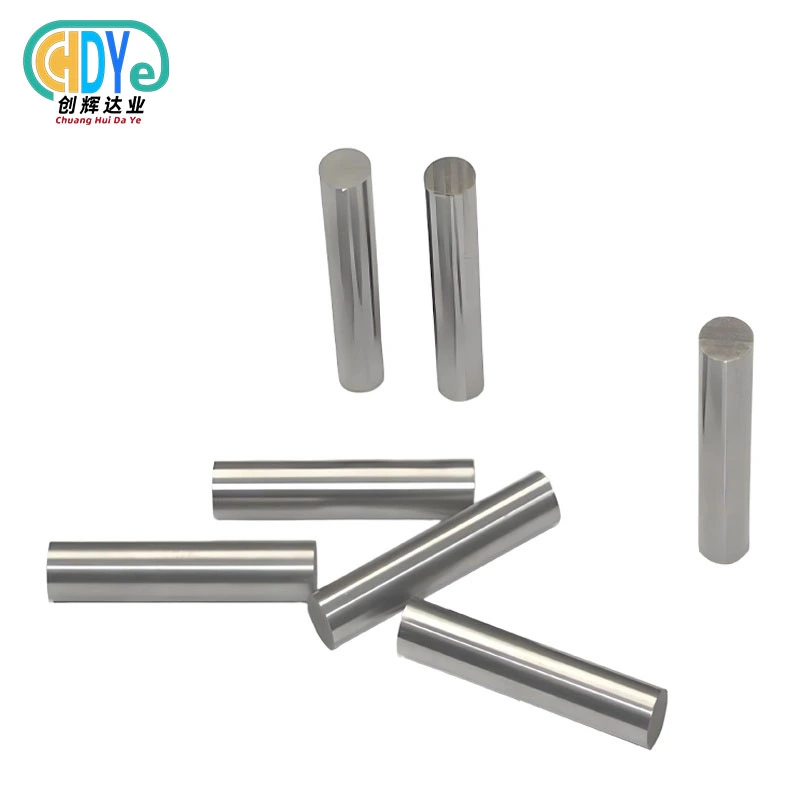
Material Properties of Tantalum vs Titanium Round Bars
What makes a metal work well under stress and acidic attack depends on its chemical and physical make-up. The choice of material and the form of the part are both based on how dense, strong, and how they respond to heat something is.
Tantalum Material Characteristics
The density of Tantalum Round Bars is 16.6 g/cm³, and their melting point is more than 2996°C. They are made from chunks of very pure metal that are carefully formed and heated. This metal doesn't soften or corrode at temperatures where titanium would, so it stays physically stable. Titanium is the best material for reaction tanks because it doesn't react with other chemicals and can handle acids that fume and corrosive organic solvents. It's easy to work with and can be shaped into complicated shapes without any special tools, even though the material is dense.
Titanium Material Characteristics
Titanium is only 4.5 g/cm³ dense, which is about 70% less than tantalum. This metal is also very strong for how light it is, which makes it useful in medical and space applications. Up to 600°C of air doesn't rust the metal. It also works well in seawater, chlorine gas, and most organic acids. There are different types of metal that make different things better. Like Grade 2 is very resistant to rust in general, and Grade 5 (Ti-6Al-4V) makes it stronger when it's hot. On the other hand, titanium doesn't work as well in places with fluoride ions or very strong acids.
Mechanical Performance Comparison
When stretched, tantalum can hold up to 345 MPa, but this depends on how it was made in the past. It's also very bendable, which lets it be made without heat. Titanium is stronger and can reach 240 to 550 MPa for industrial types. It can be used to build things that need to hold a lot of weight. Both metals are strong and don't wear down easily, but tantalum is less useful when it needs to be light. Following ASTM B365 guidelines, we make Tantalum Round Bars with diameters between 2 and 100 mm. Because of this, the sizes will always be the same, which is important for CNC work.
Comparative Analysis: Tantalum Round Bar vs Titanium Round Bar for Corrosion
The way a material works in real life is what separates its academic traits from buying decisions in the real world. The study's goal is to find out how well each metal works in harsh manufacturing settings.
Performance in Acidic Environments
It is very important to know that tantalum is very resistant to sulfuric acid at all temperatures and amounts below 175°C because it is used to make acids and process petrochemicals. Organic acids, hydrochloric acid, and phosphoric acid can't break down the metal at a rate that can be tracked. Titanium does well in weak acids and oxidizing conditions, but it breaks down quickly in hydrochloric acid above 70°C and in any quantity of hydrofluoric acid. And then the process changes in a way that wasn't expected; equipment could be exposed to acid amounts that aren't what's expected. This would damage titanium parts.
Chloride and Saline Resistance
Pitting caused by chloride is a typical way for titanium to break, especially when it's hot or still. Tantalum doesn't react with chloride, so passive films stay in place even in salty solutions that are very hot. This is a big plus for equipment that is used for farming, oil drilling, and making drugs, since chlorine solutions are used to clean it. Many times, the extra cost of tantalum parts is worth it because they last longer and don't need to be kept up as often.
Maintenance and Lifecycle Considerations
How long something lasts has a direct effect on how much it costs to run a business. It doesn't need the regular checks, protected layers, and cathodic protection systems that metals that aren't as stable do because common industrial poisons can't really hurt it. Tantalum-made tools and machines usually don't need to be replaced for decades. On the other hand, titanium parts might need to be changed every 5 to 15 years, depending on how often they are used. In order to help with lifecycle planning, we keep track of all the materials that are used and make sure they meet factory standards. This helps asset managers figure out exactly when things need to be changed. Tantalum parts keep their shape and surface finish for as long as they are useful. If you use titanium in hard situations, the surface can get rough or even scale over time. On the other hand, this can make heat movement less effective in exchanges and raise the risk of contamination in processes that use semiconductors or drugs. Since Tantalum's performance is stable, it's easier to keep an eye on processes, and less proof is needed in businesses that are being watched.
Procurement Insights for Selecting Tantalum or Titanium Round Bars
The dependability of the supply chain is managed by strategic sourcing, which also keeps the prices of materials in line with the total costs of ownership. In different ways, getting both metals can be hard, which can change the time and cost of a job.
Cost and Market Availability
Tantalum is hard to get and has to be taken out of coltan ores, so it costs 15 to 30 times more per kilogram than titanium used in everyday life. But experts need to check how well the material works. Because tantalum doesn't rust, it is often possible to use thinner wall sections and smaller safety factors. This means that less material is needed overall. Titanium prices stay fixed, and wait times are short because there are many manufacturers and established global supply lines. A lot of different sizes of Tantalum Round Bar are kept in stock, so we can ship quickly (within one to three days) for urgent needs and finish custom orders in fifteen business days.
Quality Certifications and Standards
Certifications for materials make sure that the chemistry, mechanical properties, and ways of making them are correct. The standards for tantalum goods are set by ASTM B365. It says what the composition limits are for grades R05200 (electron-beam or vacuum-arc melted) and R05400 (powder metallurgy mixed). If a company is approved by ISO 9001:2015, quality control will stay the same during production. When our clients' quality systems need it, we give them full mill test results, material certifications, and proof from a third party. This makes it easier to keep track of everything from the raw materials to the end check.
Supplier Evaluation Criteria
To show that they can meet your needs, reliable providers show that they have the technical know-how, production capacity, and customer service skills to do so. The company Shaanxi Chuanghui Daye Metal Material Co., Ltd. is based in Baoji, which is known as China's Titanium Capital. The people in the area are good at working with metals that don't easily melt, which helps them. Our building has electron beam ovens, precision rolling tools, and CNC machining centers so that we can meet different needs. When buying something, people should make sure that the company can meet their needs in terms of minimum order quantities, sizing options, and fast shipping choices that work with their project plans and inventory needs.
Selecting the Right Material for Your Application
To pick the right materials, you need to think about how they will be used, how well they need to perform, and your budget. The structure below helps people decide what to do:
Strong acids, low-temperature conditions, high purity standards, or temperatures that are too high for titanium are all things that can be used to make tantalum work best. Tantalum is used to keep tools for chemical synthesis, drug labs, and semiconductor wet processing clean and the same from one batch to the next. Medical implants use tantalum because it is biocompatible and can be seen by X-rays in orthopedic settings. Titanium is good for situations where some rust protection is enough, less weight is good for the system, or refractory metals are too expensive to use. Titanium is used in offshore platforms, heat exchangers that work with seawater, and aerospace fasteners because it is strong for its weight. It is safe to use oxidizing acids, chlorine, and most organic chemicals on this material as long as the working conditions don't go beyond what has been set. Because we've been in this business for 30 years, we can look at the process conditions and equipment designs and tell customers which grades will work best. This engaging method cuts down on waste, speeds up the project, and makes sure that the requirements meet standards from other countries.
Conclusion
In tough chemical conditions, Tantalum Round Bars don't rust as easily as other metals. Their high cost is justified by the fact that they don't need to be maintained often and last a long time. Titanium works well in places where it will rust and in uses that care about weight. Its flaws are still easy to work around. Prices of materials are not enough to decide what to buy. It is also important to think about the working conditions, the prices over the product's life, and how reliable the supply chain is. Tin Round Bars from Shaanxi Chuanghui Daye Metal Material Co., Ltd. are made to meet ASTM B365 standards. Their sizes range from 2 to 100 mm, and the grades are R05200 and R05400. They can quickly ship them from stock or make them to order.
FAQ
Q: Does tantalum always outperform titanium in corrosive environments?
A: Titanium's metal layer breaks down in reducing acids, mixed acids, and high-temperature chemical processes, but tantalum doesn't seem to mind these things as much. Titanium, on the other hand, is much cheaper and works well in situations that are acidic, in seawater, and with organic chemicals at normal temperatures. What kind of material is used depends on the corrosive medium, how strong it is, how hot it is, and how long it lasts.
Q: What are typical lead times and minimum order quantities for tantalum round bars?
A: Most diameters are always in stock, which means that standard sizes can be sent out within one to three days. Because of the custom specs, it takes about 15 business days to make. If you want to know the exact minimum order quantity for a diameter and grade, please call our technical team. Without having to set too high a minimum order size, small-batch production helps research labs and the creation of prototypes.
Q: Can tantalum round bars be customized for specific applications?
A: Because tantalum is so easy to work with, it can be given any diameter, length, or end finish to suit the job. We offer precise turning, thread cutting, and surface finishing based on the models our clients give us. In controlled industries like making semiconductors, drugs, and airplanes, material certifications are included with all packages. These help with keeping track of things.
Partner with Chuanghui Daye for Premium Tantalum Round Bar Supply
To make sure you always have Tantalum Round Bar, you need to work with companies that have a lot of knowledge with hard metals. Shaanxi Chuanghui Daye Metal Material Co., Ltd. has state-of-the-art production facilities with precision rolling tools and electron beam furnaces. This company also has quality management that is ISO 9001:2015 approved. This means that the goods they offer always meet ASTM B365 standards. Because we are in Baoji, we can use well-established supply networks and experts in metalworking. We can get stock sizes in one to three days or custom specs for a certain use at factory-direct prices that don't lower the quality for your project. You can email our expert team at info@chdymetal.com to talk about the corrosion-resistant materials you need and to get detailed quotes based on when you need to buy them and how well they need to work.
References
1. Davis, J. R. (2000). Corrosion: Understanding the Basics. ASM International, Materials Park, Ohio.
2. Schweitzer, P. A. (2010). Fundamentals of Metallic Corrosion: Atmospheric and Media Corrosion of Metals. CRC Press, Boca Raton, Florida.
3. ASTM International (2021). ASTM B365-12: Standard Specification for Tantalum and Tantalum Alloy Rod and Wire. West Conshohocken, Pennsylvania.
4. Revie, R. W., & Uhlig, H. H. (2008). Corrosion and Corrosion Control: An Introduction to Corrosion Science and Engineering. Fourth Edition, John Wiley & Sons, Hoboken, New Jersey.
5. Schutz, R. W., & Thomas, D. E. (1987). "Corrosion of Titanium and Titanium Alloys." Metals Handbook, Volume 13: Corrosion, ASM International, pp. 669-706.
6. Cardarelli, F. (2008). Materials Handbook: A Concise Desktop Reference. Second Edition, Springer-Verlag, London.
 Sputtering Target_1785915604108.webp)
Learn about our latest products and discounts through SMS or email