- English
- French
- German
- Portuguese
- Spanish
- Russian
- Japanese
- Korean
- Arabic
- Greek
- German
- Turkish
- Italian
- Danish
- Romanian
- Indonesian
- Czech
- Afrikaans
- Swedish
- Polish
- Basque
- Catalan
- Esperanto
- Hindi
- Lao
- Albanian
- Amharic
- Armenian
- Azerbaijani
- Belarusian
- Bengali
- Bosnian
- Bulgarian
- Cebuano
- Chichewa
- Corsican
- Croatian
- Dutch
- Estonian
- Filipino
- Finnish
- Frisian
- Galician
- Georgian
- Gujarati
- Haitian
- Hausa
- Hawaiian
- Hebrew
- Hmong
- Hungarian
- Icelandic
- Igbo
- Javanese
- Kannada
- Kazakh
- Khmer
- Kurdish
- Kyrgyz
- Latin
- Latvian
- Lithuanian
- Luxembou..
- Macedonian
- Malagasy
- Malay
- Malayalam
- Maltese
- Maori
- Marathi
- Mongolian
- Burmese
- Nepali
- Norwegian
- Pashto
- Persian
- Punjabi
- Serbian
- Sesotho
- Sinhala
- Slovak
- Slovenian
- Somali
- Samoan
- Scots Gaelic
- Shona
- Sindhi
- Sundanese
- Swahili
- Tajik
- Tamil
- Telugu
- Thai
- Ukrainian
- Urdu
- Uzbek
- Vietnamese
- Welsh
- Xhosa
- Yiddish
- Yoruba
- Zulu
Titanium Filler Wire Applications in the Chemical Industry
Titanium filler wire has become an essential welding consumable in the chemical processing industry, where harsh conditions, high temperatures, and strict safety rules all come together to create big problems. This material was designed to join titanium and its alloys using Gas Tungsten Arc Welding (GTAW/TIG) or Gas Metal Arc Welding (GMAW/MIG). It keeps the high level of corrosion protection and mechanical integrity needed by the chemical industry. Titanium filler wire makes sure that weld areas stay as strong as the base metal when making reactors, heat exchangers, or pipe systems that will be exposed to strong acids and chlorides. This keeps equipment from breaking down too soon.
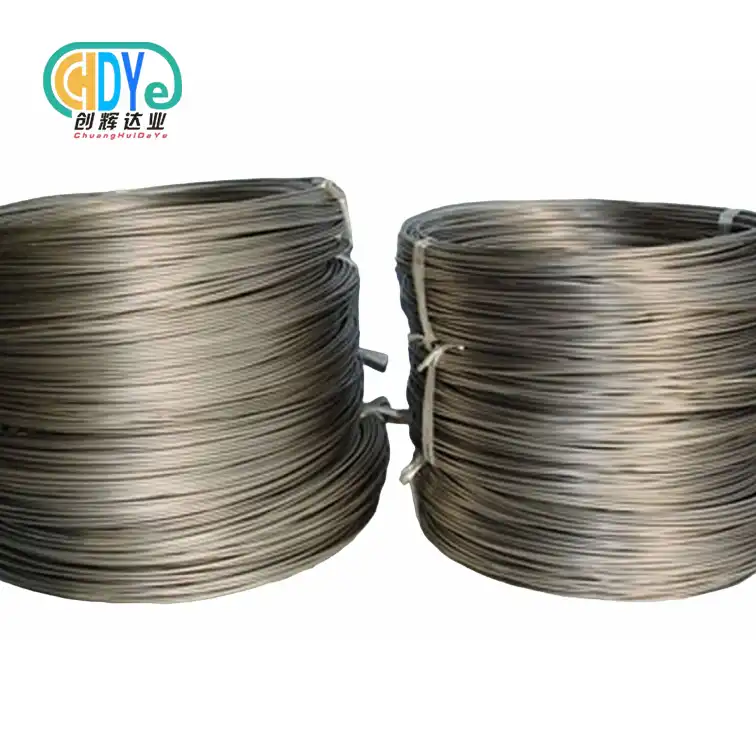
Understanding Titanium Filler Wire and Its Benefits in Chemical Industry Welding
The chemical processing environment presents unique metallurgical challenges that demand specialized welding solutions. Standard welding consumables often fail when exposed to concentrated acids, alkaline solutions, or halogen-rich atmospheres that define daily operations in petrochemical plants and chlor-alkali facilities.
Technical Specifications and Grade Selection
Titanium filler wire meets widely recognised standards, mostly AWS A5.16 and ASTM B863, which spell out the limits of its chemical composition and the requirements for its mechanical properties. In chemical uses, common grades are used for different things. Grade 1 (Commercially Pure) is the most corrosion-resistant and moderately strong. It is perfect for welding storage tanks that hold mixtures of hydrochloric acid or sodium hypochlorite. Grade 2, the workhorse of titanium welding, is strong and resistant to rust, so it can be used to make a wide range of chemical equipment. Grade 4 is the strongest of the commercially pure types, and it is used in structural applications where mechanical loads and corrosive exposure come together. Grade 5 (Ti-6Al-4V), an alpha-beta alloy, is used for high-pressure vessels and pumps in tough petrochemical processes because it is strong and doesn't wear down easily.
Corrosion Resistance in Aggressive Environments
The chemical business works with a lot of substances that break down normal materials very quickly. Titanium's passive oxide layer forms and heals itself when it is oxidised, making it very resistant to nitric acid (at all concentrations and temperatures), sulphuric acid (up to 10% concentration), hydrochloric acid (below 5% at room temperature), chlorine gas, chlorinated organic compounds, seawater, or brines. When welding titanium parts together, the filler wire needs to be able to handle rust just as well. When controlled interstitial elements like oxygen, nitrogen, hydrogen, and carbon are used to make high-quality products, they avoid "alpha case" formation, which weakens both mechanical qualities and corrosion resistance in the weld zone.
Applications of Titanium Filler Wire in the Chemical Industry
The versatility of titanium welding consumables extends across numerous critical Titanium filler wire applications where equipment integrity directly impacts operational safety and profitability.
Storage Tanks and Pressure Vessels
In chemical processing plants, raw materials and finished goods are kept in tanks that have to be able to handle the corrosiveness of the medium being held as well as changes in pressure. In the pulp and paper industry, titanium tanks that hold chlorine, chlorine dioxide, and cleaning agents depend on well-done welds to keep them from leaking and causing safety and environmental problems. In the same way, pharmaceutical companies use titanium tanks to make active ingredients, and equipment that corrodes would make the product less pure if it got dirty. When making a vessel, rolled plates are usually joined together using longitudinal and circumferential gaps. Filler wire that matches the grade of the base metal ensures that the corrosion resistance is the same everywhere.
Heat Exchangers and Condensers
Heat transfer equipment works in situations where temperatures change quickly, and chemicals are used, which makes materials that aren't very strong fail faster. Titanium tube-to-tubesheet welding in shell-and-tube exchanges requires a lot of skill because the joint has to stay leak-tight through thousands of thermal cycles. Chemical plants that use brackish or polluted water for cooling prefer titanium tubing that is soldered with Grade 2 filler wire. This is because copper-nickel or stainless steel tubes need to be replaced more often. The initial investment premium is paid back by a longer service life—often more than 20 years without any tube-side problems.
Comparing Titanium Filler Wire with Other Filler Wires for Chemical Industry Use
Material selection decisions carry long-term consequences in chemical processing, where premature equipment failure impacts both safety and profitability. Understanding relative performance helps procurement teams make informed choices aligned with operational requirements and budget constraints.
Performance Against Stainless Steel Alternatives
Austenitic stainless steel filler wires (308L, 316L) are the most common option that is considered for chemical uses. Even though stainless steel works well in mildly corrosive environments and costs less at first, it has basic flaws that titanium gets around. Chloride stress corrosion cracking happens to stainless steel in places with more than 100 ppm of chlorides, especially when the temperature is above 60°C, which is common in chemical processing. Pitting rust starts in small holes in the passive film and works its way through the equipment walls. Titanium doesn't crack or split when exposed to chloride at almost any concentration, so these failure modes don't happen. Titanium has a good strength-to-weight ratio, which lets walls be smaller. This lowers the overall system weight and the need for a support structure.
Nickel Alloy Comparisons
Nickel-based filler wires, like Inconel and Hastelloy grades, are very resistant to corrosion in reducing acids and high-temperature oxidising conditions. They can also be used in places where titanium isn't appropriate. Nickel metals work well in hydrochloric and sulphuric acids that are stronger than titanium, especially when the temperatures are high. The difference in price is big—nickel alloy filler wire usually costs three to five times more than titanium types that are the same, while base metal prices show similar price increases. Nickel alloys make procurement more difficult because they have longer wait times and fewer suppliers, which can throw off project schedules. Titanium is easier to get and has been used for a long time, so it can be used for both regular maintenance and emergency repairs.
How to Choose and Procure the Right Titanium Filler Wire for Your Chemical Industry Needs
Successful procurement balances technical requirements with Titanium filler wire commercial considerations, ensuring delivered products meet specifications while maintaining project timelines and budgets.
Quality Standards and Certifications
Suppliers with a good reputation give a lot of paperwork that proves the materials are compliant and can be tracked. Important certifications include mill test reports that confirm the chemical composition through spectroscopic analysis, mechanical property verification through tensile and bend testing according to ASTM E8, records of dimensional inspections, and lot traceability that lets finished products and source ingots be linked. While ISO 9001:2015 certification shows that a supplier uses systematic quality management, it doesn't mean that the products they make are of high quality. Before placing big orders, you should check out how they make the products and ask for samples to be tested. Tolerances in chemical makeup are especially important because high interstitial content makes it harder to weld and less resistant to corrosion. Grade 2 wire should have an oxygen level of less than 0.25% to be as flexible as possible and free of contaminants that can cause porosity.
Supplier Evaluation Criteria
The relationship with the provider goes beyond just buying things. It also includes technical support, reliable delivery, and long-term partnership value. Use more than one dimension to evaluate possible partners. Technical competence is shown by their ability to suggest the right grades for different uses, give advice on how to weld, and fix problems with quality. How well suppliers can meet both regular replenishment orders and emergency needs without having to wait for long lead times depends on their production ability and inventory depth. Being close to manufacturing hubs like Baoji, Shaanxi Province, where integrated titanium production centers cut costs and lead times, is helpful for logistics. Referrals from current customers who use similar chemical processes can help you understand how well the product or service works in real life.
Best Practices and Tips: Optimizing Titanium Filler Wire Welding Performance in Chemical Applications
Maximizing weld quality requires systematic attention to equipment setup, procedural controls, and ongoing verification—areas where many fabricators inadvertently introduce defects that compromise equipment integrity.
Equipment Configuration and Parameter Control
For welding, power sources should have a steady DC output, titanium filler wire, and accurate current control. This is especially important for thin-wall tubes, where changes in current can lead to burn-through or no fusion. Choosing the right electrode is very important. 2% thoriated tungsten electrodes used to be the standard for titanium welding, but worries about radioactive thorium have led to the use of cerium or lanthanated electrodes that work just as well. The standoff distance, electrode diameter, and tip shape all affect how stable the arc is and how the heat is distributed. Gas flow rates need to be calibrated—not enough flow lets pollution into the atmosphere, and too much flow causes turbulence that pulls air into the protected zone. We suggest 15 to 20 cubic feet per hour for torch shielding and 10 to 15 CFH for the following shields. These numbers should be changed depending on the draft and the way the joints are set up.
Contamination Prevention Protocols
Titanium's reactivity demands obsessive cleanliness throughout fabrication. Dedicate welding stations exclusively to titanium work, preventing cross-contamination from steel or aluminum particles. Store filler wire in sealed containers with desiccant, as moisture absorption introduces hydrogen that causes porosity. Clean base metal immediately before welding using acetone or methanol, followed by stainless steel wire brushing, removing any surface oxides formed during storage. Welders should wear clean gloves and avoid touching weld zones with bare hands—skin oils contain compounds that decompose during welding, releasing contaminants. Inspect completed welds for discoloration indicating oxidation—acceptable welds show silver to light straw color, while blue, gray, or white oxides signal inadequate shielding requiring repair.
Emerging Technology Developments
Additive manufacturing using titanium wire feedstock represents an emerging application area, building complex geometries layer-by-layer through controlled metal deposition. Automated orbital and robotic welding systems increasingly handle repetitive pipe and tube welding tasks, delivering consistency superior to manual techniques while reducing labor costs. Advanced shielding systems incorporating multi-zone gas coverage and real-time monitoring improve weld quality and reduce defect rates. These innovations position titanium welding technology for continued advancement, offering chemical processors enhanced reliability and efficiency.
Conclusion
Titanium filler wire addresses the chemical industry's most demanding welding challenges, delivering unmatched corrosion resistance, mechanical reliability, and long-term value in environments where equipment failure carries severe consequences. Proper material selection, procurement from qualified suppliers, and adherence to best-practice welding procedures ensure chemical processing equipment achieves design life expectations while maintaining safety and operational integrity. As chemical manufacturers pursue operational excellence and asset reliability, partnering with experienced materials suppliers who understand both metallurgical requirements and industry applications becomes increasingly critical. The technical insights and practical guidance presented here empower procurement teams and engineering personnel to make informed decisions that optimize both immediate project needs and lifecycle performance.
FAQ
1. Why does titanium filler wire outperform stainless steel in chemical environments?
Titanium forms a stable, self-healing passive oxide layer that resists chloride-induced stress corrosion cracking and pitting—failure modes that commonly afflict stainless steel in chemical processing. This immunity extends across virtually all chloride concentrations and temperatures relevant to industrial operations, eliminating premature equipment failures that interrupt production.
2. How do I select the appropriate wire grade for my specific application?
Match filler wire grade to base metal composition and service conditions. Grade 2 handles most general chemical equipment applications, Grade 1 maximizes corrosion resistance for highly aggressive media, Grade 4 provides enhanced strength for structural applications, and Grade 5 (Ti-6Al-4V) serves high-pressure, high-temperature services. Consult with materials engineers and experienced suppliers who understand your specific chemical exposures.
3. Where can I find certified suppliers offering bulk purchasing options?
Established manufacturers in recognized titanium production centers like Baoji, China, maintain quality certifications and production capacity for substantial orders. Verify ISO 9001:2015 certification, request customer references from similar industries, and evaluate technical support capabilities before committing to supplier relationships. Bulk purchasing typically qualifies for volume discounts while ensuring material availability aligns with project schedules.
Partner with Chuanghui Daye for Premium Titanium Filler Wire Solutions
Shaanxi Chuanghui Daye Metal Material Co., Ltd. stands ready to support your chemical industry welding projects with certified, high-purity titanium filler wire backed by over 30 years of rare metal expertise. Our ISO 9001:2015 certified Titanium filler wire manufacturing facility in Baoji delivers consistent quality through rigorous raw material inspection, precision processing, and comprehensive testing protocols. Whether you require standard Grade 2 wire for routine fabrication or custom compositions for specialized applications, our technical team provides expert consultation tailored to your corrosive environment challenges. We serve chemical processors across North America and Europe with reliable logistics, competitive factory-direct pricing, and responsive after-sales support. Contact our specialists at info@chdymetal.com to discuss your requirements, request detailed specifications, or obtain quotations for bulk titanium filler wire supply. As a trusted titanium filler wire manufacturer, we transform your equipment reliability challenges into lasting solutions.
References
1. American Welding Society. (2014). Specification for Titanium and Titanium-Alloy Welding Electrodes and Rods (AWS A5.16/A5.16M). Miami: American Welding Society.
2. ASTM International. (2018). Standard Specification for Titanium and Titanium Alloy Wire (ASTM B863-18). West Conshohocken: ASTM International.
3. Donachie, M.J. (2000). Titanium: A Technical Guide (2nd Edition). Materials Park: ASM International.
4. Schutz, R.W. & Watkins, H.B. (1998). Recent developments in the application of the chemical process industry. Materials Science and Engineering: A, 243(1-2), 305-315.
5. Peters, M., Kumpfert, J., Ward, C.H., & Leyens, C. (2003). Titanium alloys for aerospace applications. Advanced Engineering Materials, 5(6), 419-427.
6. Boyer, R., Welsch, G., & Collings, E.W. (1994). Materials Properties Handbook: Titanium Alloys. Materials Park: ASM International.
Learn about our latest products and discounts through SMS or email