- English
- French
- German
- Portuguese
- Spanish
- Russian
- Japanese
- Korean
- Arabic
- Greek
- German
- Turkish
- Italian
- Danish
- Romanian
- Indonesian
- Czech
- Afrikaans
- Swedish
- Polish
- Basque
- Catalan
- Esperanto
- Hindi
- Lao
- Albanian
- Amharic
- Armenian
- Azerbaijani
- Belarusian
- Bengali
- Bosnian
- Bulgarian
- Cebuano
- Chichewa
- Corsican
- Croatian
- Dutch
- Estonian
- Filipino
- Finnish
- Frisian
- Galician
- Georgian
- Gujarati
- Haitian
- Hausa
- Hawaiian
- Hebrew
- Hmong
- Hungarian
- Icelandic
- Igbo
- Javanese
- Kannada
- Kazakh
- Khmer
- Kurdish
- Kyrgyz
- Latin
- Latvian
- Lithuanian
- Luxembou..
- Macedonian
- Malagasy
- Malay
- Malayalam
- Maltese
- Maori
- Marathi
- Mongolian
- Burmese
- Nepali
- Norwegian
- Pashto
- Persian
- Punjabi
- Serbian
- Sesotho
- Sinhala
- Slovak
- Slovenian
- Somali
- Samoan
- Scots Gaelic
- Shona
- Sindhi
- Sundanese
- Swahili
- Tajik
- Tamil
- Telugu
- Thai
- Ukrainian
- Urdu
- Uzbek
- Vietnamese
- Welsh
- Xhosa
- Yiddish
- Yoruba
- Zulu
How to Select a Reliable Titanium Filler Wire Supplier?
Choosing a trustworthy provider for titanium welding supplies, such as titanium filler wire, has a direct effect on the quality of your important welds used in medical, aerospace, and chemical processing settings. A reliable titanium filler wire supplier must strictly follow AWS A5.16 and ASTM B863 standards, keep up-to-date quality traceability systems, and offer consistent purity levels that stop interstitial embrittlement and porosity, which are the two most common ways that titanium welding fails. In addition to certifications, the right partner offers technical advice on choosing the right wires, the ability to easily increase or decrease the volume, and clear pricing that shows the real value of the product instead of market speculation.
Understanding Titanium Filler Wire and Its Market Needs
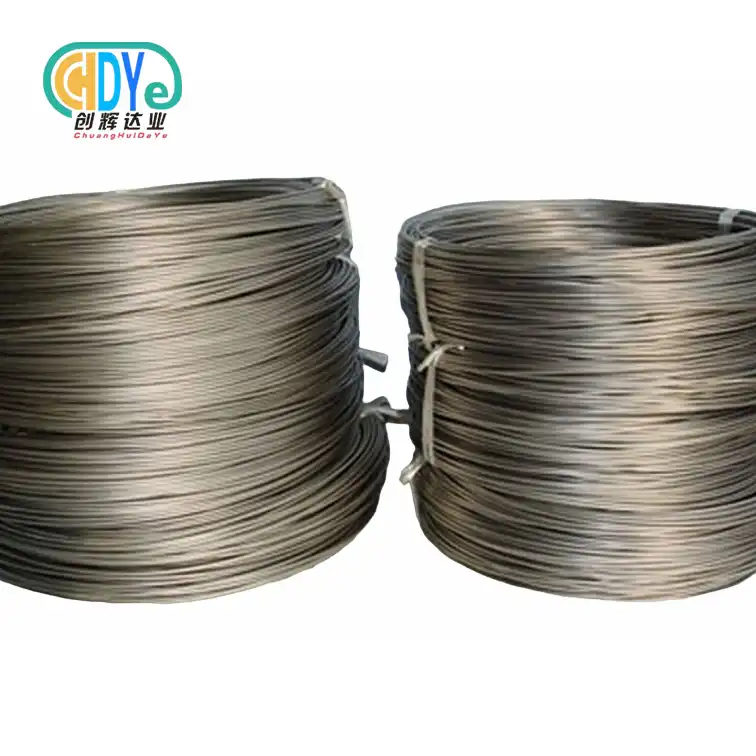
In my early days working with welding supplies, I quickly learned that titanium filler wire has a special place in the factory world. This unique welding consumable is used as the metallurgical bridge in Gas Tungsten Arc Welding (GTAW/TIG) and Gas Metal Arc Welding (GMAW/MIG) processes. It was designed to join titanium and titanium alloy parts without changing their unique qualities.
What Makes Titanium Welding Consumables Critical?
Titanium's reactive nature at elevated temperatures creates specific challenges during welding operations. Above 400°C, the metal readily absorbs oxygen, nitrogen, and hydrogen, leading to a phenomenon called alpha case formation. This contamination layer embrittles the weld zone, causing premature failure under stress. High-quality welding wire addresses this vulnerability through ultra-low interstitial element content and meticulous surface preparation, typically achieved through acid pickling or precision shaving processes.
Core Industrial Applications and Standards Compliance
The aircraft industry is the biggest user of titanium welding supplies because they are so important for keeping structures strong. Welds that keep the strength-to-weight ratio of the base metal while enduring extreme thermal cycling are needed for aircraft frame sections, engine parts, and landing gear systems. Companies that make medical devices have the same high standards for implantable parts, which are very important for biocompatibility and wear resistance. Titanium is used a lot in corrosive settings, like in chemical processing plants, to make tanks, heat exchangers, and piping systems that can stand up to strong acids and chlorides that cause stress corrosion cracking. Titanium doesn't rust in saltwater, and titanium filler wire, which is useful in marine uses like desalination plants and structures that are out at sea.
Key Criteria for Evaluating Titanium Filler Wire Suppliers
Evaluating potential suppliers requires a systematic approach that goes beyond initial price comparisons. During my three decades in the rare metal industry, I've witnessed how thorough supplier assessment prevents costly production failures and supply chain disruptions.
Certifications and Quality Management Systems
ISO 9001:2015 approval is the very least that should be taken seriously. This quality control standard makes sure that every step of the production process is governed by written procedures, from checking the raw materials to packaging them up at the end. For each production lot, suppliers should easily give mill test papers that list the chemical make-up, tensile strength, and elongation values. Compliance with ASTM B863 means that the welding wire meets the requirements for materials used in North America, and classification with AWS A5.16 means that it is suitable for certain welding tasks. It is common for European manufacturers to have extra EN certifications that show they also meet foreign standards. Suppliers that work with aircraft companies usually have AS9100 certification, which shows that they know the quality and traceability standards of the aviation industry.
Product Range Flexibility and Customisation Capabilities
A wide range of products shows that the company has a lot of production experience and technical knowledge. Reliable providers offer a range of wire diameters, from 0.8 mm to 4.0 mm, to meet the needs of different welding amperages and joint configurations. Grades should include commercially pure types (Grade 1, 2, and 4) as well as popular alloys like Ti-6Al-4V (Grade 5), which is used in high-strength situations. Customisation is what sets exceptional providers apart from average ones. Specialised compositions, non-standard diameters, or application-specific surface finishes can be made, which solves specific technical problems. Distributors who buy from many manufacturers can't always meet custom orders as quickly as suppliers who have their own melting and drawing equipment.
How to Match Supplier Offerings to Your Procurement Needs
Aligning supplier capabilities with your specific operational requirements maximises value and minimises procurement risks. This matching process requires a clear internal needs assessment before external supplier evaluation begins.
Segmenting Requirements by Application and Volume
Because weld failures can have such terrible effects, aerospace makers put complete traceability and batch-to-batch consistency ahead of price. Medical device makers stress the importance of biocompatibility documentation and small-batch flexibility to serve a wide range of product lines. Chemical processing plants have to balance the requirements for corrosion protection with the costs of doing a lot of maintenance work over time. Quantity needs have a direct effect on the factors used to choose a supplier. People who buy a lot of products gain from going directly to the factory because they don't have to pay markups to distributors, and production gets priority when materials are short. Suppliers that are comfortable with small orders and ready to offer technical advice without a minimum order requirement are needed by research institutions and prototyping operations.
Technical Support and After-Sales Service Evaluation
Outstanding sellers are more like technical partners than just suppliers of goods. Before buying, you should talk to someone about developing a welding method, choosing a shielding gas, and getting advice on how to heat treat the metal after the welding process. Having access to metallurgical experts can help you figure out problems that come up out of the blue, like discolouration patterns that show poor inert gas coverage or changes in mechanical properties that point to contamination. Failure analysis services are part of after-sales help when welds don't work right, even though the right steps were followed. Suppliers who use an electron microscope can find the root causes of problems, whether they are with the materials or the process parameters, so they can be fixed quickly. Technical teams that are responsive answer questions quickly because they know that titanium filler wire delays in production cost a lot of money.
Comparing Titanium Filler Wire Suppliers: What Sets Reliable Partners Apart?
Supplier comparison requires balancing multiple factors rather than optimising any single variable. The lowest-cost provider frequently proves most expensive when accounting for quality inconsistencies, technical support deficiencies, and supply disruptions.
Established Brands Versus Specialised Manufacturers
Major multinational brands like Lincoln Electric and ESAB offer extensive product portfolios, global distribution networks, and substantial R&D resources that drive welding technology advancement. Their premium pricing reflects comprehensive technical support, established quality systems, and a brand reputation that satisfies risk-averse procurement policies in regulated industries. Specialised manufacturers focused exclusively on reactive metals bring deep domain expertise and manufacturing flexibility. Companies located in titanium production clusters, such as Shaanxi Province's "Titanium Capital" region, benefit from integrated supply chains and concentrated technical talent. These suppliers often provide superior value for customers requiring customisation or seeking direct factory relationships.
Risk Reduction Through Certification and Innovation
Certified suppliers mitigate multiple procurement risks simultaneously. Quality system certifications reduce incoming inspection requirements and material rejection rates. Industry-specific accreditations (aerospace, medical, pressure vessel) indicate familiarity with application-specific testing protocols and documentation standards. Innovation distinguishes forward-looking suppliers from those merely maintaining status quo operations. Development of improved surface cleaning processes, enhanced purity levels, or novel alloy compositions positions suppliers as long-term partners capable of supporting evolving product designs and performance requirements.
Best Practices for Purchasing and Storing Titanium Filler Wire
Proper procurement and handling procedures protect your material investment and ensure consistent titanium filler wire welding performance. Contamination prevention and inventory management directly influence weld quality outcomes.
Securing Optimal Purchasing Terms
By asking for samples of the material before placing a large order, you can check that the seller is telling the truth about its purity, surface quality, and mechanical properties. Sample welds made using your specific methods show that they are compatible with tools and processes that are already in use. Tests should include looking at it with the naked eye, taking X-rays, and tensile tests to make sure the mechanical properties are correct. When negotiating prices, you should talk about volume discounts, payment terms, and how the contract protects you against high market volatility. Long-term supply deals with price reviews on a regular basis help budgets stay on track and encourage suppliers to invest in relationship-specific skills. Misunderstandings about grade, diameter, surface condition, and packaging needs can be avoided by writing clear specifications in buy orders.
Storage Methods to Preserve Material Integrity
Titanium welding wire needs to be kept away from water, oils, and other contaminants while it is being stored. Individual spools should stay in their sealed packaging until they are ready to be used, so they don't get too much contact with air. The humidity level in storage places must be low, and there must be no cutting fluids, lubricants, or chemical vapours that could leave marks on the surface. Following the first-in, first-out rule for inventory movement keeps things from being stored for too long, which raises the risk of contamination. Clear labels with heat numbers and receipt dates make it easier to track items and keep track of stock. Titanium products are kept separate from ferrous materials in dedicated storage. This keeps them from getting contaminated with iron particles while they are being handled.
Conclusion
Selecting a reliable supplier for titanium welding consumables, including titanium filler wire, fundamentally determines weld quality, production efficiency, and long-term project success. The evaluation process demands a thorough assessment of quality certifications, technical capabilities, supply chain stability, and partnership potential rather than price-focused decision-making. Suppliers demonstrating ISO 9001:2015 compliance, comprehensive material traceability, flexible customisation, and responsive technical support deliver superior value across aerospace, medical, chemical processing, and research applications. Proper procurement practices—including sample testing, clear specification documentation, and optimised storage procedures—protect material integrity and ensure consistent welding performance throughout your operations.
FAQ
1. How Can I Verify a Supplier's ISO Certification Authenticity?
Request the complete ISO 9001:2015 certificate, including the issuing body name, registration number, and scope of certification. Legitimate certificates can be verified through the issuing certification body's public registry. Accredited registrars operate under International Accreditation Forum (IAF) guidelines, ensuring audit rigour and international recognition of certification validity.
2. What Distinguishes Titanium Filler Wire from Titanium Electrodes?
These terms describe the same product category—consumable welding materials for titanium joining. "Filler wire" typically refers to continuous wire forms used in TIG and MIG welding processes, while "electrode" sometimes describes arc welding consumables generally. Both must meet identical purity and surface cleanliness standards to produce sound welds free from contamination and porosity defects.
3. Why Do Prices Vary Significantly Between Different Titanium Wire Suppliers?
Price variations reflect differences in raw material sourcing costs, manufacturing process sophistication, quality control rigour, and business model structures. Direct manufacturers with vertically integrated sponge-to-wire operations achieve lower costs than distributors purchasing from third parties. Premium pricing often correlates with superior surface preparation, tighter chemical composition tolerances, and comprehensive technical support services that reduce your total cost of ownership despite higher unit prices.
Partner with Chuanghui Daye for Your Titanium Filler Wire Requirements
Shaanxi Chuanghui Daye Metal Material Co., Ltd. brings over three decades of titanium filler wire specialised expertise in titanium and rare metal production directly to your procurement operations. Located in Baoji's renowned Titanium Capital industrial cluster, our ISO 9001:2015 certified facilities produce high-purity titanium filler wire meeting AWS A5.16 and ASTM B863 specifications for aerospace, medical, chemical processing, and research applications. Our vertically integrated manufacturing capabilities—from electron beam melting through precision drawing—ensure consistent quality and competitive factory-direct pricing. We support both large-volume production requirements and small-batch research projects with flexible minimums and rapid prototyping services. Contact our technical team at info@chdymetal.com to request material certifications, discuss custom specifications, or receive a detailed quote from a trusted titanium filler wire manufacturer committed to your project success.
References
1. American Welding Society (2018). Specification for Titanium and Titanium-Alloy Welding Electrodes and Rods (AWS A5.16/A5.16M). Miami: AWS Publications.
2. ASTM International (2020). Standard Specification for Titanium and Titanium Alloy Wire (ASTM B863). West Conshohocken: ASTM Standards.
3. Donachie, M.J. (2000). Titanium: A Technical Guide, 2nd Edition. Materials Park: ASM International.
4. Leyens, C. and Peters, M. (2003). Titanium and Titanium Alloys: Fundamentals and Applications. Weinheim: Wiley-VCH.
5. Liu, S. and Olson, D.L. (2015). Welding Metallurgy and Weldability of Titanium Alloys. In Welding Fundamentals and Processes, Volume 6A. Materials Park: ASM Handbook.
6. Schutz, R.W. and Watkins, H.B. (1998). Recent Developments in Titanium Alloy Application in the Energy Industry. Materials Science and Engineering: A, 243(1-2), 305-315.
Learn about our latest products and discounts through SMS or email