- English
- French
- German
- Portuguese
- Spanish
- Russian
- Japanese
- Korean
- Arabic
- Greek
- German
- Turkish
- Italian
- Danish
- Romanian
- Indonesian
- Czech
- Afrikaans
- Swedish
- Polish
- Basque
- Catalan
- Esperanto
- Hindi
- Lao
- Albanian
- Amharic
- Armenian
- Azerbaijani
- Belarusian
- Bengali
- Bosnian
- Bulgarian
- Cebuano
- Chichewa
- Corsican
- Croatian
- Dutch
- Estonian
- Filipino
- Finnish
- Frisian
- Galician
- Georgian
- Gujarati
- Haitian
- Hausa
- Hawaiian
- Hebrew
- Hmong
- Hungarian
- Icelandic
- Igbo
- Javanese
- Kannada
- Kazakh
- Khmer
- Kurdish
- Kyrgyz
- Latin
- Latvian
- Lithuanian
- Luxembou..
- Macedonian
- Malagasy
- Malay
- Malayalam
- Maltese
- Maori
- Marathi
- Mongolian
- Burmese
- Nepali
- Norwegian
- Pashto
- Persian
- Punjabi
- Serbian
- Sesotho
- Sinhala
- Slovak
- Slovenian
- Somali
- Samoan
- Scots Gaelic
- Shona
- Sindhi
- Sundanese
- Swahili
- Tajik
- Tamil
- Telugu
- Thai
- Ukrainian
- Urdu
- Uzbek
- Vietnamese
- Welsh
- Xhosa
- Yiddish
- Yoruba
- Zulu
Titanium Rod Price Guide: What Affects the Cost?
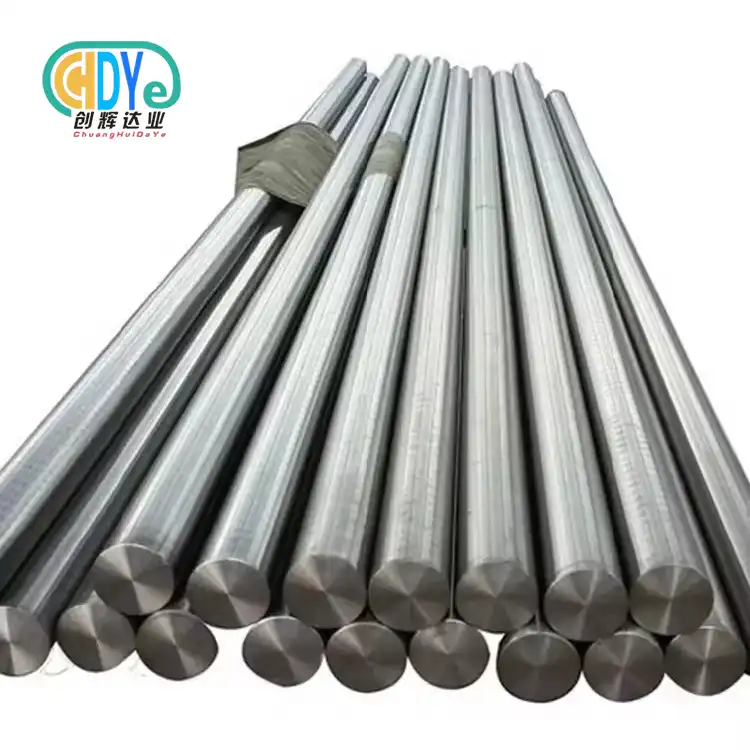
Professionals in buying who have to match quality with budget need to know how much a titanium rod costs. The price of a titanium rod depends on the type of material used, how it is made, its size, and the state of the world market. Commercially pure grades like Grade 1 and Grade 2 usually cost less than aircraft metals like Ti-6Al-4V (Grade 5), which need tighter quality controls and checks on the chemical makeup. The end price is also affected by production methods, such as casting, rolling, or extrusion, as well as the seller's skills, order volume, and foreign shipping processes. This guide breaks down these factors so you can make smart buying choices.
Understanding Titanium Rod Basics to Contextualize Pricing
What Defines a Titanium Rod?
Forging, rolling, or drawing methods are used to make a titanium rod, which is a solid circular mill product made from commercially pure titanium or titanium alloys. These pieces are the basic raw materials that are used to machine important parts for the defense, aircraft, medical, and chemical processing industries. The material solves three major problems in the industry: the weight-strength paradox (it has the tensile strength of steel but is about 45% less dense); corrosion fatigue failures that happen a lot in marine and chemical environments thanks to its passive oxide film (TiO₂); and biocompatibility requirements in medical implants, where non-toxic and non-magnetic properties stop the immune system from rejecting the implant.
Common Grades and Their Pricing Implications
The grade of the material has a direct impact on the price. Commercially pure titanium Grade 1 and Grade 2 are suitable for chemical processing equipment because they are less expensive and have good rust protection and shapeability. Grade 5 (Ti-6Al-4V), which is the most common titanium metal, costs more because it is stronger and has aircraft approvals. Medical-grade materials, such as Ti-6Al-4V ELI (Extra Low Interstitial), are cleaned even more to get the oxygen level below 0.13%. This makes the production process much more expensive but gives the materials better flexibility and crack hardness that are needed for surgical implants. At our plant in Baoji, China's titanium capital, we keep a stock of different types so that we can suggest cost-effective options that meet your performance needs without charging extra for extra materials.
Manufacturing Processes That Affect Cost
The method of production significantly affects the final price. Forged rods have better mechanical qualities and better control over the grain structure, but they cost more to make because they need to be heated more than once and need special tools. Hot-rolled rods are great for normal uses because they are reasonably priced and have good size uniformity. Cold-drawn bars have better surface finish and tighter standards, but they need more steps to be processed. Our factory uses modern equipment for melting, casting, rolling, and cutting. For example, we use electron beam ovens and precise lathes for melting. With this built-in feature, we can find the best production routes based on your needs, combining speed needs with budget concerns, all the while keeping ISO 9001:2015 quality standards throughout the whole process.
Key Factors Influencing Titanium Rod Price
Material Grade and Mechanical Properties
Because of strict chemical rules and licensing standards, premium titanium rod grades for aerospace and medical applications cost more. The minimum tensile strength of Grade 5 titanium alloy is 860 MPa, and the minimum yield strength is 795 MPa. It is made up of 5.5 to 6.5% aluminum and 3.5 to 4.5% vanadium. For these exact metal ratios, the raw materials must be carefully chosen, and the melting process must be carefully managed. Medical-grade ELI types limit oxygen to ≤0.13% and iron to ≤0.25%. This means that they need extra cleaning steps that add 15–25% to the cost of production. Because we've been in the rare metals business for 30 years, we know how to find high-purity raw materials quickly and keep tight chemical standards. We pass these supply chain benefits on to our customers through low factory-direct prices.
Chemical Composition and Purity Standards
The amount of impurities and alloying elements has a direct effect on both the function and cost of a material. To achieve higher purity grades, you need expensive titanium sponge material and more than one vacuum melting cycle to get rid of intermediate elements. The cost of raw materials can go up by 8–12% for every 0.05% drop in oxygen level below the limit. Trace elements like hydrogen, carbon, and nitrogen need to be kept at certain amounts based on the purpose. To constantly meet goal ratios, we check all of our raw materials carefully and use high-tech processing equipment. With our knowledge of process control, we can give materials that meet foreign standards like ASTM B348, AMS 4928, and ISO 5832. At the same time, we can keep costs low by adjusting the production factors.
Size, Weight, and Order Volume Considerations
The physical measurements have a big effect on how prices are calculated. Larger diameter bars need more severe cutting decreases and more processing time, which drives up the cost per kilogram. The length of the rod affects how much material is used and how much trash is cut. Standard widths are more cost-effective than unique measurements. Prices are based on weight, depending on the needs. The amount of an order has a big effect on the price per unit. Buying in bulk of 500 kilograms or more can cut costs by 18 to 30 percent by making production schedules and finding materials more efficiently. Our manufacturing capacity is flexible enough to handle both small-batch R&D orders and large-scale production runs. This lets buying teams make the best purchases based on project deadlines and budgets.
Global Market Dynamics and Supply Chain Factors
Sometimes, limited titanium ore supply from ilmenite and rutile sources changes the price of ore around the world. Supply can change because of government issues in Australia, South Africa, and Canada, which are all big production areas. The price of titanium sponge varies globally based on energy costs, chlorine availability, and demand from aircraft makers. The exchange rate between the US dollar and the Chinese yuan also affects the prices that Chinese companies charge for exports. We are close to local makers of titanium sponge and have good logistics networks because we are in the Baoji High-Tech Development Zone, which has great transportation infrastructure. Because we're in a good location and have good relationships with our suppliers, we can keep our prices stable and our delivery times reliable even when the market changes. This keeps our customers safe from supply chain problems.
Comparing Titanium Rods with Alternative Materials — Cost and Value Insights
Cost-Performance Analysis Against Traditional Metals
When buying, teams look at different material choices; the first price per kilogram is just one of many things that they consider. Stainless steel costs $3 to $8 a kilogram, but it weighs almost twice as much as a titanium rod for the same strong use. This makes structures heavier and uses more fuel in aircraft applications. Aluminum has a lower density and costs $2 to $5 per kilogram, but it needs bigger cross-sections to be as strong, which could cancel out any material savings. Nickel metals are as resistant to rust as titanium in some situations, but they cost $15 to $35 per kilogram and are 75% denser. Lifecycle analysis shows the real value: titanium rod parts often cut down on expensive upkeep, increase service life by 300–50%, and lighten up systems, which makes the higher initial cost worth it by lowering the total cost of ownership.
Titanium Rods Versus Titanium Bars
"Rod" and "bar" are sometimes used equally in business language, but there are some small differences between the two. Rods are usually smaller diameter goods (less than 75 mm) that are made by hot rolling or drawing, while bars are typically bigger pieces that are made by forging. This difference in production impacts the price, the technical qualities, and the finish on the surface. Rods usually have tighter limits for size and smoother areas that are suitable for straight cutting. Bars make cross-sections more uniform and have strong qualities that are beneficial for building parts. As a result, the ways that rods and bars are priced are different. Rods are priced by length or weight, with extra charges for precise standards, while bars are priced mostly by weight, with extra charges for complicated forging. We have products in both groups, and the specifications are easy to understand. This lets customers choose the best form factor for their machining needs and price.
Procurement Considerations and How to Optimize Cost Effectively
Supplier Selection and Quality Assurance
Picking reliable providers has a direct effect on the quality of the materials, the dependability of shipping, and the long-term cost-effectiveness. Professionals in charge of buying things should judge sellers based on their ISO 9001:2015 certification, their output skills, their quality record systems, and their expert help resources. Established manufacturers keep full records of everything from raw materials to finished products. These records include mill test certificates, chemical analysis results, and evidence of mechanical properties. We make sure the quality is high at every step of the production process. Our heating and electron beam ovens check the raw materials; our CNC lathes make sure the parts are precisely machined; and we do a full final review before packing. This methodical approach makes sure that materials always work the same way and gets rid of expensive rejects or application failures that push back project deadlines.
Custom Manufacturing and Lead Time Planning
Standard standards are the most cost-effective and have faster delivery times—usually three to five weeks for popular grades and sizes. Custom requirements, like specific chemical formulas, non-standard lengths, or special surface processes, need more planning and processing time. This makes wait times 6–10 weeks longer and costs 15–35% more than the base price. Early on in the development process, design engineers should talk to suppliers to find ways to standardize specifications without lowering performance. Our expert team works with customers to suggest the best grades and sizes of materials based on their needs and the ease of production. This consultative method has helped medical device makers and research centers cut the cost of prototyping by 20 to 40 percent while keeping the performance traits that were needed by choosing the right materials.
Logistics and Import Considerations
For a titanium rod, international shipping, customs processing, and import taxes can add 8 to 18% to the total cost of the goods, depending on the destination and size of the shipment. Shipping costs depend on the size and weight of the package, as well as the method of transport. For example, air freight is faster than ocean shipping, but it costs 4 to 6 times more. Import taxes in the US on titanium mill goods are currently between 3.7 and 6.5% when trade is going smoothly. Combining packages lowers the cost of shipping per unit, which makes combined buying for multiple projects a good financial idea. We keep skilled export operations that take care of paperwork, packing standards, and coordinating shipping to make doing business across borders easier. Our location in Shaanxi Province gives us easy access to major transportation hubs. This lets us quickly ship goods to places around the world at competitive freight rates, which helps buying teams lower the total cost of acquisitions above and beyond the price of the materials themselves.
Case Studies and Practical Tips for Cost Management
Aerospace Sector Quality Investment
A defense contractor making parts for airplane structures needed Grade 5 titanium rods that met the requirements of AMS 4928 and came with full paperwork for tracking them. Even though luxury grades cost 40% more than industrial grades, the investment was worthwhile. The minimum tensile strength of the material was 860 MPa, which meant that it was lighter than steel options and saved 1,200 pounds per airframe. This saved $850,000 in fuel over the life of the airplane. Certification fees and thorough testing added $12,000 to the initial $65,000 cost of materials, but that was still less than 2% of the total cost of making the parts. The case shows that top grades are worth the extra money in situations where performance is important and a failure of the material could have terrible results. When choosing titanium specs, procurement teams shouldn't just look at the unit price of the material; they should also do a lifetime cost study.
Industrial Manufacturing Volume Strategy
A company that makes tools for chemical handling and makes heat exchangers that don't rust cuts costs by buying in bulk. Instead of buying grade 2 titanium rods every three months in 150-kilogram batches at $38 per kilogram, they switched to buying 800 kilos every six months and negotiated the price down to $29 per kilogram, a 24% drop. The company spent money on proper storage facilities with temperature control to keep surfaces clean during long periods of inventory. This approach for combining orders cut the cost of materials by $54,000 a year and gave producers more control over their schedules. The maker also agreed to use fewer rod sizes than normal, even though this meant some small cutting errors. This was done to get more bulk savings. These real-world changes show how rationalizing specifications and planning purchases can save a lot of money without lowering the quality of materials or the performance of applications.
Strategic Timing and Supplier Relationships
The time of the market affects the costs of buying. Titanium prices tend to follow regular trends, with higher demand in Q2 and Q3 when aircraft production plans are busiest. Purchasing managers can save 8–15% by planning non-urgent purchases for times when demand is lower, like in Q4 and Q1. Long-term relationships with suppliers create value above and beyond transactional price. Preferred customers get priority placement during supply limits, faster processing for pressing needs, and joint technical support for new applications. We see ties with our customers as long-term relationships, not one-time deals. Without charging extra, our tech team helps you choose the right materials, fix problems with your applications, and make your processes run more smoothly. This consultative method has helped many clients lower their total buying costs by making better decisions about specifications and planning projects more efficiently.
Conclusion
Titanium rod prices depend on many things that are related to each other, such as the grade of the material, its chemical makeup, how it is made, its size, the number of orders it receives, and how the market is changing. Premium aircraft and medical grades cost more than market versions, but a good cost study must look at the total value, which includes performance traits, term reliability, and the needs of the specific application. Strategies for optimizing procurement, such as combining volumes, standardizing specifications, planning smart time, and building partnerships with suppliers, can save a lot of money without lowering quality. By knowing about these price factors, you can make smart buying choices that meet the performance goals of materials in flight, medicine, chemicals, and industrial manufacturing while staying within your budget.
FAQ
Q: How do I verify I'm getting quality material at fair pricing?
A: Ask for a lot of paperwork, like mill test papers, chemistry analysis reports, and test results for mechanical properties. Check that the seller has industry-specific skills and certifications like ISO 9001:2015. Compare prices from several approved providers, making sure that the specs are the same in all of the bids. Reputable makers allow third parties to check their products and provide full tracking. Extremely low prices often mean that the quality has been lowered, the makeup isn't standard, or the testing wasn't done properly. These are all things that cause problems later on that are more expensive than the initial savings.
Q: Can smaller orders achieve competitive pricing?
A: Volume has a big effect on unit prices, but good providers can handle orders of all sizes. Small-batch purchases for R&D or prototyping usually cost 20–40% more than production amounts. Some makers sell normal stock sizes at lower prices than special sizes. Combining needs from several projects or making purchases over a longer period of time can help smaller buyers get better prices while still meeting the quality and approval standards for the materials they need.
Partner with Chuanghui Daye for Reliable Titanium Rod Supply
We at Shaanxi Chuanghui Daye have been working with rare metals for 30 years and are ISO 9001:2015 qualified. This lets us offer high-quality titanium rods at low factory-direct prices. Our location in Baoji, China's Titanium Capital, gives us benefits in the supply chain and good technical infrastructure, which means we can depend on the quality of our materials and keep our delivery dates. We keep a large stockpile of both commercial and military grades, can support unique specs with fast prototyping, and provide full traceability paperwork that meets international standards. You can get materials from our expert team in small batches for study purposes or in large quantities for production projects. They can help you choose the best materials and make the best purchases. Get in touch with our knowledgeable titanium rod supply team at info@chdymetal.com to talk about your unique needs and get quotes that are tailored to your purpose and budget.
References
1. American Society for Testing and Materials. (2021). "ASTM B348: Standard Specification for Titanium and Titanium Alloy Bars and Billets." ASTM International, West Conshohocken, PA.
2. Boyer, R., Welsch, G., & Collings, E.W. (2019). "Materials Properties Handbook: Titanium Alloys." ASM International, Materials Park, Ohio.
3. Donachie, M.J. (2020). "Titanium: A Technical Guide, 2nd Edition." ASM International, Materials Park, Ohio.
4. International Organization for Standardization. (2020). ISO 5832-3: Implants for Surgery — Metallic Materials — Part 3: Wrought Titanium 6-Aluminum 4-Vanadium Alloy. "Geneva, Switzerland.
5. Lutjering, G. & Williams, J.C. (2018). "Titanium: Engineering Materials and Processes, 2nd Edition." Springer-Verlag, Berlin.
6. United States Geological Survey. (2023). "Mineral Commodity Summaries: Titanium and Titanium Dioxide." U.S. Department of the Interior, Reston, Virginia.
Learn about our latest products and discounts through SMS or email