- English
- French
- German
- Portuguese
- Spanish
- Russian
- Japanese
- Korean
- Arabic
- Greek
- German
- Turkish
- Italian
- Danish
- Romanian
- Indonesian
- Czech
- Afrikaans
- Swedish
- Polish
- Basque
- Catalan
- Esperanto
- Hindi
- Lao
- Albanian
- Amharic
- Armenian
- Azerbaijani
- Belarusian
- Bengali
- Bosnian
- Bulgarian
- Cebuano
- Chichewa
- Corsican
- Croatian
- Dutch
- Estonian
- Filipino
- Finnish
- Frisian
- Galician
- Georgian
- Gujarati
- Haitian
- Hausa
- Hawaiian
- Hebrew
- Hmong
- Hungarian
- Icelandic
- Igbo
- Javanese
- Kannada
- Kazakh
- Khmer
- Kurdish
- Kyrgyz
- Latin
- Latvian
- Lithuanian
- Luxembou..
- Macedonian
- Malagasy
- Malay
- Malayalam
- Maltese
- Maori
- Marathi
- Mongolian
- Burmese
- Nepali
- Norwegian
- Pashto
- Persian
- Punjabi
- Serbian
- Sesotho
- Sinhala
- Slovak
- Slovenian
- Somali
- Samoan
- Scots Gaelic
- Shona
- Sindhi
- Sundanese
- Swahili
- Tajik
- Tamil
- Telugu
- Thai
- Ukrainian
- Urdu
- Uzbek
- Vietnamese
- Welsh
- Xhosa
- Yiddish
- Yoruba
- Zulu
How Strong Is Anodized Titanium Wire Under Load?
It is very strong and can hold a lot of weight. Anodized titanium wire keeps the mechanical integrity of the base metal and makes the surface last longer. A stable oxide layer of 30 to 200 nanometers is added during the anodization process. You can see that the process gives the structure color without making it weaker. Depending on the grade of titanium used (Grade 1, 2, or 5), the wire can hold a pressure of 240 MPa to over 900 MPa. This better surface doesn't rust or gall, so it lasts longer in places like airplanes, hospitals, and chemical plants where loads are applied, whether they are static or moving.
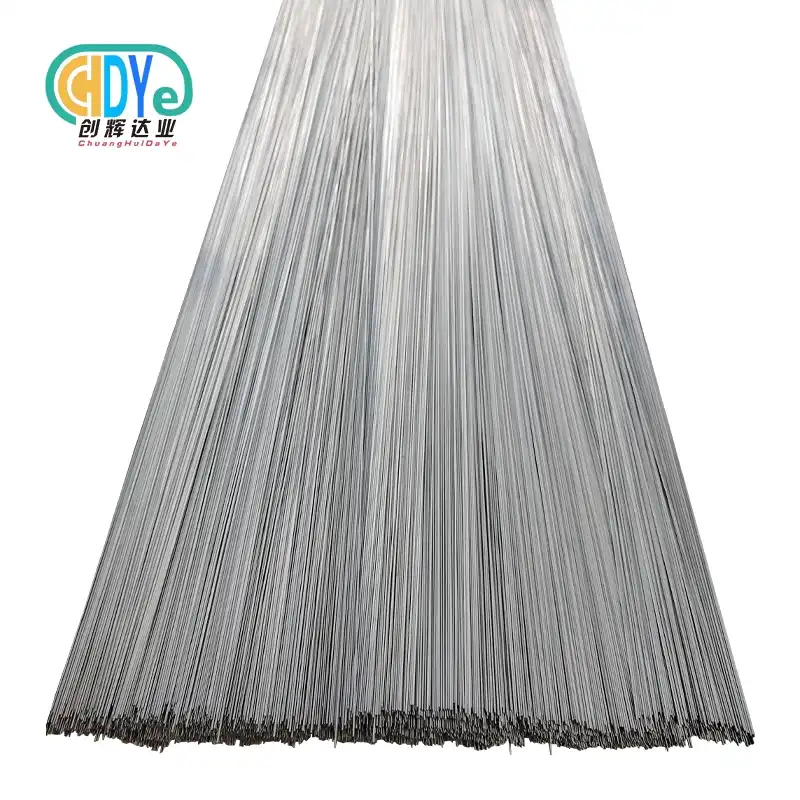
Understanding Anodized Titanium Wire and Its Strength Properties
What Makes Anodized Titanium Wire Different?
Anodized titanium wire is different from wires that have been painted or treated because it goes through an electrical passivation process that makes the oxide layer on the surface thicker. There is no change in the wire's core mechanical properties because this change takes place at the molecular level. The colors you see are not made with dyes; they are made by light scattering. The colors range from brown to blue, pink, and green. It's like how oil on water changes the color. This difference is important when performance or sterility is at risk, and dangerous dye movement could happen. The anodized surfaces don't gall and meet the biocompatibility conditions of ISO and AMS 2488. Thus, they can be used for things like medical tools and airplane nuts that need to be reliable.
Core Mechanical Properties Across Titanium Grades
The primary factor determining the strength of anodized titanium wire is the type of base metal used to make it. The tensile strength of grade 1 titanium wire is about 240 MPa, and it is effortless to shape. This makes it great for tasks that require tight turns without breaking. A tensile strength of about 345 MPa is found in Grade 2, which is the most common industrial grade. This alloy is a good mix of strength and rust protection in chemical processing settings. It is also known as Ti-6Al-4V. Grade 5 titanium metal can pull apart more than 900 MPa. Because of these properties, it is the best material for medical devices that have to hold a lot of weight and spaceship structure parts.
The anodizing process changes the size of the metal very little—usually by less than 0.2 microns. This means that even after surface treatment, precision-made wire keeps its tight bounds. The yield strength and stretch rates don't change because of the base material. Engineers can use open datasheets to find safety factors and load limits.
How Anodization Affects Long-Term Durability?
Some tests show that anodizing doesn't make the material stronger, but it does make the surface much harder and less likely to break. Outside damage is stopped by the titanium dioxide layer, which also stops localized rust that could cause stress cracks when the material is loaded and removed many times. The wire stays strong even after years of use in salty or acidic environments that are common in oil equipment because of this safety feature. It also works as a natural lube, which keeps threaded joints from rubbing together and stops cold welding, which can rust and freeze titanium surfaces when they are loaded.
Load-Bearing Performance: How Strong Is Anodized Titanium Wire Under Different Loads?
Static Load Resistance in Structural Applications
When put under steady stress loads, anodized titanium wire works the same as wire that has not been anodized, of the same grade and thickness. When engineering teams build support systems for chemical reactors or hold parts in flight assemblies, they can use standard safety factors based on material data that is open to the public. When a steady load of 800 N is put on a 2 mm diameter Grade 2 wire, it works well within its yield strength level and doesn't change shape permanently. The anodized surface makes it more reliable by keeping acidic substances away from the base. These substances could weaken the structure over time by causing stress concentrations.
When used for safety wiring on key bolts, anodized titanium wire can still hold its full load capacity even after 10,000 flight hours, during which time it was subject to temperature changes from -55°C to 120°C. Titanium does not oxidize at high temperatures because of the thermal stability of the oxide layer. This can happen if titanium is not protected in high-temperature exhaust systems.
Dynamic and Fatigue Load Tolerance
It is very important for wire to have good wear resistance when it is loaded and unloaded many times, like in machinery that shakes a lot or medical tools that move back and forth. Anodized titanium wire lasts a very long time because the oxide surface is even and smooth. This means that there aren't many flaws on the surface that could cause breaks. Following the testing rules set by ASTM, Grade 5 anodized wire can be pulled through more than a million rounds at 60% of its full tensile strength without breaking. For the same use, this makes it stronger than a lot of stainless steel choices.
Anodization's ability to stop galling is especially useful for things that will be moving around a lot. When wire meets metal objects that are moving, the oxide layer stops the wire from wearing away and materials from moving. This keeps the load spread the same over the part's whole life.
Corrosion Resistance and Load Preservation
Anodized titanium wire is unaffected by chlorides, sulfuric acid, and organic acids that are common in chemical plants. We often send anodized wire from Chuanghui Daye to companies that make heat exchanges that don't rust. In rough places, the wire keeps the groups of tubes together. The better oxide layer makes sure that the load-bearing ability stays the same, even after years of everyday use. This means that fixes don't have to be done as often, which means that there is less time when the business can't run.
Comparing Anodized Titanium Wire Strength to Other Common Wire Materials
Anodized Titanium Versus Stainless Steel Wire
316 grade stainless steel wire doesn't rust and is as strong when pulled apart as grade 2 titanium. But when weight is important, the change in density is important. Anodized titanium wire is not as dense as stainless steel (4.5 g/cm³ vs. 8.0 g/cm³), so it is just as strong as stainless steel wire but not nearly as heavy. That way, moving parts are less likely to stop, and planes use less fuel. Titanium is better at working with living things because its surface has been polished. All of this makes it the only choice for permanent devices, where nickel in stainless steel could cause an allergy.
Performance Against Copper and Aluminum Wires
Copper wire is great for moving power, but it's not strong enough or doesn't rust well enough to be used for building structures. Even though aluminum wire is light, it doesn't do well when attached to metals that aren't the same. It wears out quickly and rusts. Anodized titanium wire fills in these holes and protects against electricity, which can be useful for some sensor uses. It can also hold its weight in acidic environments where metal would break. Teams that buy things for water plants or remote platforms think that titanium wire is worth the extra cost because it lasts longer than copper or aluminum wire.
Advantages Over Coated or Painted Titanium
Anodized titanium wire that has been painted or covered with a material is sold by some companies instead of being anodized. When mechanical stress is put on these covers, they can chip or peel off. This lets rust form on the base and weakens the load integrity. The anodized layer is built into the metal, so it won't peel or come off. This makes sure safety will always be there. It is important for medical devices that are cleaned over and over again that the coating works properly. If it doesn't, particles could get into clean areas, or key stress points on the wire could become weak.
Selecting the Right Anodized Titanium Wire for Your Load-Bearing Needs
Matching Wire Diameter to Load Requirements
How much force an anodized titanium wire can handle before it breaks is shown by its cross-sectional area. The load capacity is based on the wire's width. A Grade 2 metal wire that is 1 mm thick can hold up to 270 N. It is good for light-duty tasks like making color-coded surgical marks. For tough jobs like locking the inside of a nuclear tank, you need wire that is at least 4 mm thick and can hold several kilonewtons of force. The teams that buy things have to figure out what forces are expected, use the right safety factors (3:1 to 5:1 for important uses), and then set the width. Unique sizes from 0.5 mm to 6 mm can be made by Chuanghui Daye.
Understanding Anodized Color and Functional Performance
Color changes when the oxide layer changes, but strength stays the same across the range. When made at about 25 to 30 volts, blue anodized wire has the same tensile strength as gold wire made at 10 to 15 volts. Both wires are the same grade and thickness. People usually choose colors to help them remember things (for example, different shades of red help doctors tell the difference between sizes right away) or to make things look better in stores. If it's important that the color stays the same between runs of production, buyers should ask for control samples or mention voltage factors. Small changes in power can make hues look a little different.
Importance of Quality Certifications and Material Traceability
With a good image, suppliers keep their ISO 9001:2015 certification up to date and provide full material tracking records, such as mill test results, chemical composition analyses, and mechanical property inspections for anodized titanium wire. This documentation allows engineers to confirm that the wire they receive meets required safety and design standards. ASTM standards, especially B863 for titanium wire, set strict requirements for diameter tolerance, tensile strength, and surface finish quality. When evaluating suppliers for medical or aerospace applications, it is essential to ensure they maintain batch traceability and conduct regular third-party testing.
Maintenance and Handling to Preserve Strength Under Load
Proper Cleaning Without Surface Damage
To keep the structure of the anodized layer, cleaning methods need to be gentle. Scrubs and mild soaps won't hurt the oxide surface when they remove dirt and grime. Rust can happen on the base metal if you use rough tools, steel wool, or strong acids like hydrofluoric acid on anodized titanium wire. These can remove the anodized layer. Standard autoclave sterilization methods shouldn't harm medical wire tools because the oxide layer stays solid at 134°C, which is the temperature used for sterilization. Chemical work areas might need to be rinsed with deionized water on a regular basis to keep deposits from building up and forming rust cells in one spot.
Avoiding Handling and Storage Mistakes
Improper storage of wire can lead to mechanical damage. Other mistakes that weaken its strength are mixing it with other metals, which can cause galvanic rust, and bending it too much, which makes it hard and weak. Keep wire on nonmetallic spools in dry places so that the surface doesn't wear down from being wet. When you coil wire for shipping or storage, make sure the bend radius is greater than the minimum needed for the wire thickness. If it is not, stress concentrations will form. If you don't want oil or salt from your skin to get on the wire, it's best to wear clean gloves.
Smart Procurement Practices for Quality Verification
Ask for test pieces that will be thrown away before you agree to big sales. Ensure that the tensile strength meets the requirements, examine the surface smoothness using a lens, and place samples in critical locations for the job to prevent rusting. Early on in the buying process, talk about how much you need to order and how long you will have to wait. To avoid delays, make sure there are easy ways for people to talk about things like the limits on measurements, the paperwork that needs to be turned in for approval, and the shipping process.
Conclusion
Because it protects the surface better and holds more weight, anodized titanium wire is strong enough to hold a lot of weight. Anodizing metal keeps its functional properties while adding biocompatibility, rust protection, and anti-galling properties that help it last longer in harsh environments. Choose the right wire type, thickness, and source to make sure that flight systems, medical devices, and chemical processing equipment always work well. If you handle and take care of the wire the right way, it will last longer. For a long time, this makes it useful and dependable in tough conditions.
FAQ
Q: Does anodizing reduce the tensile strength of titanium wire?
A: Not at all. Anodizing doesn't make it harder to pull apart. An oxide layer only 30 to 200 nanometers thick forms on the wire's surface during the process. This is very thin when compared to the width of the wire. Normal grade specs are good for engineers who are making load-bearing uses because the substrate metal of anodized titanium wire keeps its original mechanical properties, like its tensile strength, yield strength, and stretch rates.
Q: Can anodized titanium wire be welded without losing strength?
A: It is not safe to weld over the anodized layer because the oxide can add oxygen to the weld pool and make the joint weaker. To get the best results, the rust should be removed by hand at the weld points before the fusion welding. The metal should be re-anodized if it needs to be protected on the outside after the weld. Because of this, the wire's mechanical strength and the protective coated layer are still present in places where it isn't bonded.
Q: How does anodized titanium wire perform in high-temperature applications?
A: Titanium wire that has been anodized stays strong at high temperatures, which are popular in the military and in business. A layer of oxide stays firm up to about 400°C. This stops any more oxidation that could damage the material. More surface oxidation may happen above this point, but the mechanical properties of the base metal will stay the same until temperatures rise above titanium's service limits, which for most grades are around 600°C.
Q: What factors cause color variation between batches of anodized wire?
A: It depends on what the liquid is made of, how well the power is handled, and how long the process takes to make the color stay the same. If these things change just a little, the oxide layer width can move by a few nanometers. This changes the way light interferes and the color that is made. Don't rely on color names like "blue" or "gold," which don't always mean the same thing. Instead, give makers goal numbers or reference samples to make sure that every batch is the same.
Partner with Chuanghui Daye for High-Performance Anodized Titanium Wire Solutions
Shaanxi Chuanghui Daye worked with rare metals for more than 30 years before he started selling anodized titanium wire. We are in China's "Titanium Capital," which means we have full control over the whole production chain, from cutting with an electron beam to anodizing and melting. This makes sure the quality stays the same and lets you keep track of everything. Because we are ISO 9001:2015 certified, we check every step of the way. We can also do fast development and flexible small-batch orders for R&D projects because we have the skills in-house. Send us an email at info@chdymetal.com to tell us what you need and get samples to make sure they're right.
References
1. American Society for Testing and Materials. (2021). ASTM B863: Standard Specification for Titanium and Titanium Alloy Wire. ASTM International.
2. SAE International. (2019). AMS 2488: Anodic Treatment of Titanium and Titanium Alloys with Solution pH 13 or Higher. SAE Aerospace Material Specification.
3. Lutjering, G., & Williams, J.C. (2007). Titanium: Engineering Materials and Processes (2nd ed.). Springer-Verlag Berlin Heidelberg.
4. International Organization for Standardization. (2018). ISO 10993: Biological Evaluation of Medical Devices. ISO Standards Catalogue.
5. Donachie, M.J. (2000). Titanium: A Technical Guide (2nd ed.). ASM International.
6. Boyer, R., Welsch, G., & Collings, E.W. (1994). Materials Properties Handbook: Titanium Alloys. ASM International Materials Park.
Learn about our latest products and discounts through SMS or email