- English
- French
- German
- Portuguese
- Spanish
- Russian
- Japanese
- Korean
- Arabic
- Greek
- German
- Turkish
- Italian
- Danish
- Romanian
- Indonesian
- Czech
- Afrikaans
- Swedish
- Polish
- Basque
- Catalan
- Esperanto
- Hindi
- Lao
- Albanian
- Amharic
- Armenian
- Azerbaijani
- Belarusian
- Bengali
- Bosnian
- Bulgarian
- Cebuano
- Chichewa
- Corsican
- Croatian
- Dutch
- Estonian
- Filipino
- Finnish
- Frisian
- Galician
- Georgian
- Gujarati
- Haitian
- Hausa
- Hawaiian
- Hebrew
- Hmong
- Hungarian
- Icelandic
- Igbo
- Javanese
- Kannada
- Kazakh
- Khmer
- Kurdish
- Kyrgyz
- Latin
- Latvian
- Lithuanian
- Luxembou..
- Macedonian
- Malagasy
- Malay
- Malayalam
- Maltese
- Maori
- Marathi
- Mongolian
- Burmese
- Nepali
- Norwegian
- Pashto
- Persian
- Punjabi
- Serbian
- Sesotho
- Sinhala
- Slovak
- Slovenian
- Somali
- Samoan
- Scots Gaelic
- Shona
- Sindhi
- Sundanese
- Swahili
- Tajik
- Tamil
- Telugu
- Thai
- Ukrainian
- Urdu
- Uzbek
- Vietnamese
- Welsh
- Xhosa
- Yiddish
- Yoruba
- Zulu
titanium welding rod certification standards and quality checks
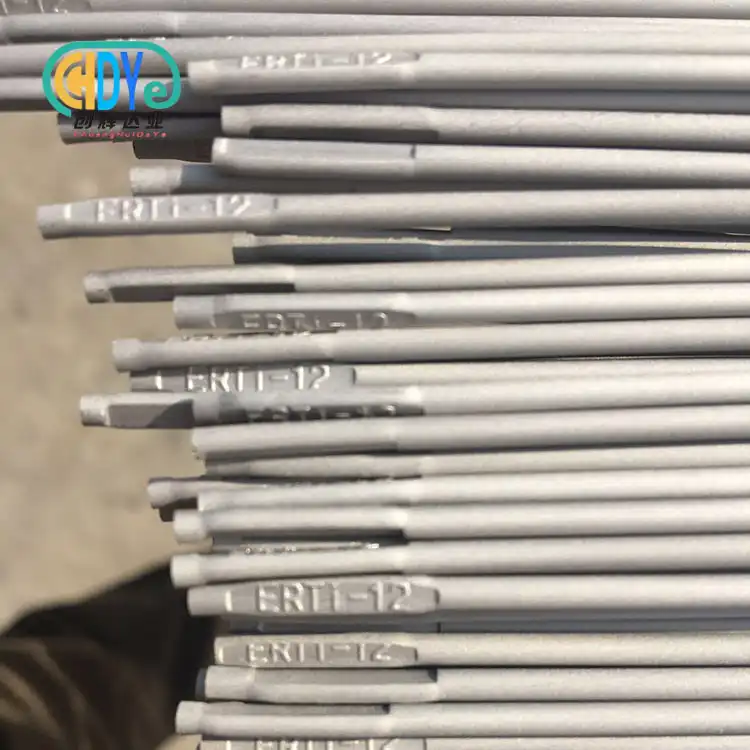
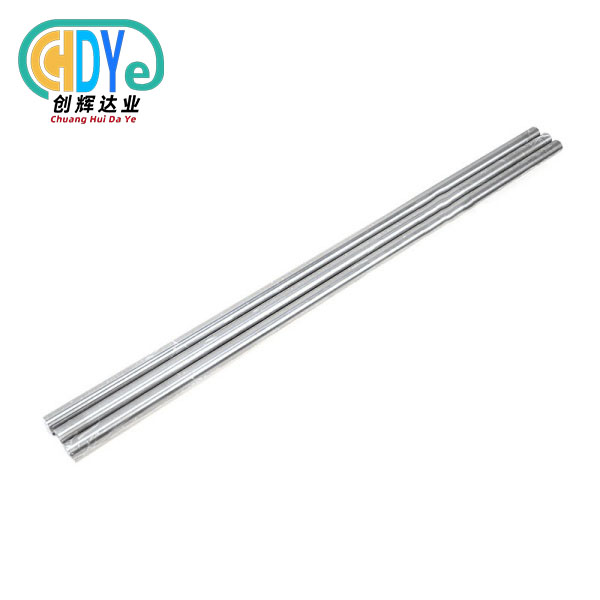
It is very important to know about approval standards and quality checks when you are looking for a titanium welding rod for important projects. These filler metals have to meet strict requirements so they don't fail badly in harsh settings like medical implants, chemical processing equipment, and aircraft structures. Certification makes sure that every stick keeps its exact chemical makeup, well-controlled intermediate elements, and high-quality mechanical qualities. Quality checks make sure that the dimensions are correct, the surface is intact, and the item can be welded. This keeps your activities safe and prevents expensive rework or accidents. We at Chuanghui Daye make pure titanium welding rods (diameter 1.0–3.2mm, normal 1000mm length) that meet international standards. These rods are very resistant to corrosion and can be bent easily for TIG and MIG welding uses in many different industries around the world.
Understanding Titanium Welding Rod Certification Standards
Certification standards are the basis for trust in buying and safety in operations. To make sure stability and traceability, producers must follow globally known standards for how they make, test, and record titanium filler metals.
AWS A5.16 Classification System
The A5.16 guideline from the American Welding Society is still the most commonly used standard in North America. This framework sorts rods by grade and make-up. For example, ERTi-2 is for using widely pure titanium, and ERTi-5 is for using Ti-6Al-4V alloys. Each category sets the highest amounts of oxygen, nitrogen, hydrogen, iron, and carbon that are allowed. These are the elements that directly affect how strong and flexible the weld is. At Chuanghui Daye, our pure titanium rods meet the requirements of ERTi-2, which means that your welds will stay strong against rust in chloride settings and harsh chemical media.
ISO and EN Standards Compliance
European markets often need compliance with ISO 24034, which is similar to AWS requirements but uses a different set of names. EN standards add regional rules for paperwork and being able to track down materials. When you buy approved rods, the company that makes them has to give you mill test certificates (MTCs) that show the chemical analysis results, tensile strength data, and heat treatment records are real. These papers make a trackable chain of custody from where the raw materials come from to how they are packaged at the end. This is very important for aerospace companies that have to go through AS9100 audits or medical device makers that have to meet FDA 21 CFR Part 820 standards.
ASME and Industry-Specific Certifications
The American Society of Mechanical Engineers puts out ASME SB-348 and SB-863 standards for titanium welding rod goods that are used to build pressure vessels. For sour gas service, chemical production plants that weld heat exchangers or reactor vessels usually list these standards along with NACE MR0175. Our factory in Baoji, which is known as China's Titanium Capital, is ISO 9001:2015 certified and follows these rules during all stages of production. Inspection of the raw materials, control of the melting process, precision rolling, and final testing are all done under well-documented quality management systems that meet the needs of global buyers.
Quality Checks and Inspection Protocols for Titanium Welding Rods
Thorough checking stops the main types of failure that happen when titanium is welded: porosity from contamination, alpha case embrittlement from oxygen absorption, and hydrogen-induced cold cracking.
Incoming Material Verification
Quality control starts before any work is done. By using optical emission spectroscopy (OES) or X-ray fluorescence (XRF), spectrometric research can prove that titanium is pure and find elements like aluminum, vanadium, and palladium in alloyed grades. A lot of attention is paid to the oxygen content—levels above 0.25% in commercially pure types make the material less flexible and tough. Visual analysis finds flaws, scratches, or changes in color on the surface that show oxide contamination. Precision micrometers are used to check that the width tolerances are within ±0.05mm along the whole length of the stick. Our 1000mm standard-length rods are inspected in climate-controlled rooms to keep hydrogen from picking up from wetness.
In-Process Quality Controls
Process tracking stops mistakes from happening during production. To get the right grain structure without too much decomposition, rolling temperatures stay within small ranges. Our vacuum furnaces use annealing processes to get rid of any remaining stress while keeping the bright metallic shine that shows it has been properly protected from the atmosphere. Acid pickling or mechanical cleaning are used to get rid of any hydrocarbon films on the surface. Handling oils can evaporate during welding and leave holes in the solid metal. At regular times, samples are taken from groups, and test models are taken out for destructive testing to make sure their mechanical features meet the standards for certification.
Post-Production Verification and Traceability
Final approval testing is done on every production lot. For ERTi-2 grades, tensile specimens cut from trial lengths must show a strength of at least 50 ksi. Testing for flexibility without surface breaking shows that it is flexible. Each package comes with a chemical certificate made from spectroscopic analysis. This is the proof your quality department needs in writing. When aerospace customers want to know the history of materials used to make mission-critical parts, they need to be able to find them by stamping heat numbers on the package. Rods are shipped internationally in sealed cases with desiccants to keep them safe. They will arrive at your site in the same perfect condition they left ours.
Types and Specifications of Titanium Welding Rods and Their Certification Implications
Different types are better for different uses, and knowing the differences between them will help you choose the best filler metal for your job.
Commercially Pure Grades (ERTi-1, ERTi-2)
Commercially pure titanium bars are the strongest and most resistant to rust. ERTi-1 has the least amount of oxygen (up to 0.18% maximum) and is very flexible, making it easy to make complicated weld shapes. ERTi-2 lets a little more oxygen (up to 0.25% maximum), which makes it stronger while keeping its great chemical resistance. These types work great in places where pitting and crevice corrosion would destroy stainless steel options, like chemical processing equipment, desalination plants, and marine uses. Some examples of this are our pure titanium welding rods, which work very well in places with wet chlorine, nitric acid, or hot saltwater. The diameter range of 1.0mm to 3.2mm can fit several different joint designs, from thin-wall tubes to solid plate assemblies.
Alloyed Grades (ERTi-5, ERTi-23)
The aircraft industry's main alloy is Ti-6Al-4V, which is what ERTi-5 stands for. The additions of aluminum and vanadium make the tensile strength and performance at high temperatures much better than with commercially pure grades. It's now necessary to do more tests for beta stabilizer content, and certification standards are stricter. Chemical control limits are also tightened. Extra-low interstitial (ELI) versions are called ERTi-23. They are used in cryogenic service, where normal grades become brittle at temperatures of liquid nitrogen or hydrogen. We focus on pure titanium rods for uses that need to be resistant to corrosion. Knowing about these other options helps you match filler metals to base materials properly, which stops metallurgical mismatch that makes joints weak or likely to crack.
Process-Specific Considerations for TIG and MIG Welding
When you use our rods for Gas Tungsten Arc Welding (GTAW/TIG), you need DCEN voltage and full protection. Because molten titanium is reactive, it needs more than just torch gas covering to keep the metal above 800°F from getting contaminated by air. This includes the following screens and rear purging. For hydrogen not to be absorbed by moisture, the quality of the argon must be higher than 99.995%, and the dew point must be below -60°F. Gas Metal Arc Welding (GMAW/MIG) with titanium wire feeds adds new challenges: the wire surface needs to be very clean, and the materials used for the contact tips can't have copper on them. Certified sellers keep titanium goods in separate storage areas from steel or metal processing areas so that they don't get contaminated. Our factory has special production lines for working with titanium, so you can be sure that the result is as pure as you need it to be.
Best Practices for Maintaining Certified Titanium Welding Rod Quality
If you don't handle or store rods properly, they can lose their useful qualities, which can lead to expensive waste and project delays.
Storage Environment and Contamination Prevention
Because titanium is reactive, storage methods can't be changed. Rods must stay in dry, sealed cases until they are ready to be used. If the humidity is above 50%, surface wetness can be absorbed, which lets hydrogen in during welding. Hydrogen is what causes underbead cracks in thick-section joints. Changing the temperature causes condensation. To avoid this problem, keep the storage temperature fixed between 60°F and 75°F. Surface cleanliness is maintained by storing things in areas that aren't near grinding dust, machine chips, or chemical smells. Lint-free gloves must be worn when handling because skin oils contain salts and organics that evaporate and leave behind flaws. Through porosity rejection, these small sources of contamination have ruined military parts worth hundreds of thousands of dollars.
Shelf Life Management and Inventory Rotation
Titanium rods don't go bad in the traditional sense like steel electrodes do, but there are useful shelf life issues to think about. Over the years, even in sealed packages, the oxide layers on the surface get thicker. Using first-in, first-out (FIFO) rules to rotate your inventory makes sure that you always work with the cleanest materials. Before using, check the rods for staining. Any color change beyond light straw means they've been exposed to air and need to be removed through fresh pickling. Documentation tools that keep track of heat numbers and receipt dates help quality managers check the state of materials. Our package has production date stamps and "best before" dates that are based on real studies of accelerated aging, not just made-up shelf-life promises.
Pre-Weld Preparation and Handling Procedures
In your welding bay is where the last quality check happens. Using wire brushes made of stainless steel for mechanical cleaning gets rid of light surface films without introducing contamination. When metal surfaces are discolored, cleaning them with nitric-hydrofluoric acid liquids brings them back to their original state. Importantly, only prepare the length of rod you'll need for one shift. Handling the rods over and over again wears down the surface. Using titanium-specific tools keeps them from getting dirty from being used on steel or aluminum. Welders need to know that, unlike ferrous metals, titanium doesn't show obvious signs of pollution until porosity shows up on an X-ray. It's better to avoid problems by following the procedures exactly than to find them and have to pay a lot of money for tests and repairs.
How to Evaluate and Select Certified Titanium Welding Rod Suppliers
It's not enough to just compare prices per kilogram when looking for a supplier. You also need to think about the total cost of ownership, which includes consistent quality, professional help, and long-term availability.
Certification Verification and Audit Readiness
Get copies of the supplier's ISO 9001:2015 certificate for titanium welding rod and look over it to see what it covers. Does it specifically cover making titanium products, or does it cover selling metals in general? Check that sample mill test records have all the information you need, such as chemistry results for all the elements you asked for, mechanical test data with specimen identification, and the ability to track back to specific heats and lots. Companies with a good reputation give this information to customers before they ask for it. Process maturity is shown by how ready a process is for an audit. Suppliers should be open to facility inspections and keep calibration records for testing tools that can be tracked back to national standards bodies. Shaanxi Chuanghui Daye Metal Material Co., Ltd. has over 30 years of experience in the rare metal business in China's Titanium Capital, which helps them keep full paperwork systems and production tracking.
Technical Support and Application Expertise
Genuine value-added suppliers offer more than just materials; they also offer advice on how to weld, help with fixing problems, and advise on material choice. When difficult tasks come up, can your source tell you what the best rod diameter is for your joint geometry? Do they know what kind of protective gas you need for your welding job? Technical teams that know about metallurgy can help you escape costly experiments that you have to repeat over and over again. Our engineering staff helps customers find commercially pure titanium rods that are right for their rust environment. They also advise on welding currents and, if necessary, heat treatments after the welding process. This ability to help sets manufacturing partners apart from simple suppliers of goods.
Supply Reliability and Global Logistics
Important jobs can't wait for shipping delays or not having enough materials. Check to see how much your sellers can produce and how much stock they have. Can they meet immediate orders or can they only make deliveries on time? The site of a factory affects lead times. Our Baoji facility is close to where titanium sponges are made, and it has a well-established export infrastructure that makes foreign shipping quick and easy. Terms of payment, minimum order amounts, and the ability to make items in any size are also important. We can make small batches for study centers or large orders for aerospace companies. Our diameters range from 1.0 mm to 3.2 mm, and we can make lengths that are longer than 1000 mm upon request. This gives buying teams more control over inventory prices while keeping production going.
Conclusion
To find certified titanium welding rods, you have to find a balance between technical specs, quality paperwork, and the supplier's skills. For uniform material values, certification standards like AWS A5.16, ISO 24034, and ASME specifications are used. Full quality checks are also done at every stage of the production process, from inspecting the materials as they come in to checking them afterward to make sure they are free of contamination and flaws that could weaken the weld. Knowing the changes between grades, the right way to store things, and how to judge a seller gives you more power when making purchases. Certified pure titanium rods from experienced makers give your operations the peace of mind they need when they need to work reliably in corrosive environments or for important structural purposes.
FAQ
Q: What certifications should I request when purchasing titanium welding rods?
A: Ask for mill test certificates (MTCs) that show full chemistry analysis, heat numbers, and mechanical qualities. Check that the seller has ISO 9001:2015 certification and that they meet AWS A5.16 or ISO 24034 guidelines. Compliance with ASME SB-348 is important for pressure tank users. The paperwork should show that the material can be tracked back to its original melt batches and that it meets the standards for intermediate elements, especially oxygen, nitrogen, and hydrogen content, which keep the material from becoming weak and porous.
Q: How do I know if my welding rods have been contaminated?
A: When looked at closely, the coloring ranges from straw yellow to blue, purple, or white, which means that the oxygen exposure has been building up over time. Rods that are contaminated may have residue on the surface or a different structure. The most reliable sign of pollution shows up during welding: radiographic inspections that show holes or weak, discolored weld beads. The best way to keep things clean is to store them in sealed cases with desiccants and handle them with clean hands.
Q: Can I use a Grade 2 filler rod for all titanium welding applications?
A: Commercially pure Grade 2 rods (ERTi-2) are great for uses that need to be resistant to corrosion in chemical processing, marine, and other related settings. If you use them on alloyed base metals like Ti-6Al-4V, the weld will become the weak point of the structure. Match the chemical of the replacement metal to the base material. For Grade 5 parts, use ERTi-5 to keep the strength consistent across joints.
Partner with Chuanghui Daye for Certified Titanium Welding Rod Supply
The titanium welding rod provider you choose will have long-lasting effects on the result of your project. For thirty years, Shaanxi Chuanghui Daye has been working with rare metals and now has modern production tools and strict quality control methods. Our pure titanium welding rods have the corrosion resistance and flexibility that your tough uses need. They also come with full certification paperwork and quick technical support. We are located in Baoji, which is a well-known hub for titanium manufacturing. We can keep up with both small sample orders and large volume orders, and our sizes range from 1.0mm to 3.2mm to meet the TIG and MIG welding needs of customers in the aerospace, chemical, medical, and industrial sectors. Email our team at info@chdymetal.com to talk about your needs and get full approvals for the materials you're interested in. Working with a company that is ISO 9001:2015 approved and puts quality and customer satisfaction first will give you peace of mind.
References
1. American Welding Society. (2013). Specification for Titanium and Titanium Alloy Welding Electrodes and Rods (AWS A5.16/A5.16M:2013). Miami: American Welding Society.
2. International Organization for Standardization. (2020). Welding Consumables — Wire Electrodes, Wires and Rods for Welding of Titanium and Titanium Alloys — Classification (ISO 24034:2020). Geneva: ISO.
3. American Society of Mechanical Engineers. (2019). Specification for Titanium and Titanium Alloy Strips, Sheets, and Plates (ASME SB-265-2019). New York: ASME.
4. Donachie, Matthew J. (2000). Titanium: A Technical Guide, 2nd Edition. Materials Park: ASM International.
5. Leyens, Christoph und Peters, Manfred. (2003). Titanium and Titanium Alloys: Fundamentals and Applications. Weinheim: Wiley-VCH.
6. Schutz, R.W. and Watkins, H.B. (1998). "Recent developments in titanium alloy application in the energy industry." Materials Science and Engineering: A, 243(1-2), 305-315.
Learn about our latest products and discounts through SMS or email