- English
- French
- German
- Portuguese
- Spanish
- Russian
- Japanese
- Korean
- Arabic
- Greek
- German
- Turkish
- Italian
- Danish
- Romanian
- Indonesian
- Czech
- Afrikaans
- Swedish
- Polish
- Basque
- Catalan
- Esperanto
- Hindi
- Lao
- Albanian
- Amharic
- Armenian
- Azerbaijani
- Belarusian
- Bengali
- Bosnian
- Bulgarian
- Cebuano
- Chichewa
- Corsican
- Croatian
- Dutch
- Estonian
- Filipino
- Finnish
- Frisian
- Galician
- Georgian
- Gujarati
- Haitian
- Hausa
- Hawaiian
- Hebrew
- Hmong
- Hungarian
- Icelandic
- Igbo
- Javanese
- Kannada
- Kazakh
- Khmer
- Kurdish
- Kyrgyz
- Latin
- Latvian
- Lithuanian
- Luxembou..
- Macedonian
- Malagasy
- Malay
- Malayalam
- Maltese
- Maori
- Marathi
- Mongolian
- Burmese
- Nepali
- Norwegian
- Pashto
- Persian
- Punjabi
- Serbian
- Sesotho
- Sinhala
- Slovak
- Slovenian
- Somali
- Samoan
- Scots Gaelic
- Shona
- Sindhi
- Sundanese
- Swahili
- Tajik
- Tamil
- Telugu
- Thai
- Ukrainian
- Urdu
- Uzbek
- Vietnamese
- Welsh
- Xhosa
- Yiddish
- Yoruba
- Zulu
Titanium sheets uses in marine and chemical industries
Titanium sheets are very useful in the chemical and naval industries because they don't rust and work well even in tough conditions. These flat-rolled titanium mill goods, which come in thicknesses starting at 2 mm, can stand up to harsh saltwater, chloride-rich environments, and chemicals that break down regular metals like aluminum or stainless steel quickly. Titanium sheets are used in chemical processing plants for reactors, storage tanks, and pipe systems that are constantly exposed to oxidizing acids and high temperatures. Titanium is also used in ships for hulls, heat exchanges, and offshore structural parts. A stable layer of titanium dioxide (TiO2) forms on its own, protecting it from pitting and stress corrosion cracking. This means that it lasts longer and needs less upkeep.
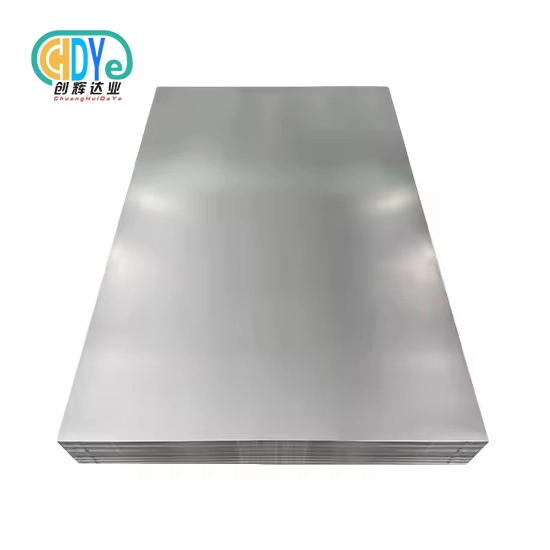
Understanding Titanium Sheets in Marine and Chemical Applications
Why Corrosion Resistance Matters in Harsh Environments
Metals are very easily damaged in chemical and marine settings. Chloride ions in saltwater can get through the inactive layers of most metal and start localized pitting and crevice corrosion. At high temperatures, sulfuric acid, hydrochloric acid, and alkaline solutions come into contact with tools used in chemical processes. Titanium's protective oxide film grows back right away when it gets broken, so it can keep protecting things even when stainless steel grades fail catastrophically. This feature gets rid of costly replacement rounds and unexpected downtime, which saves money over the life of the equipment.
Comparing Titanium Grades: Grade 2 versus Grade 5
The best choice for chemical tanks, heat exchangers, and deep-drawn naval parts is Grade 2 commercially pure titanium, which is very easy to shape and doesn't rust at all. The limited amount of alloying elements in this grade makes it very flexible for cold forming. Its tensile strength is about 345 MPa, which is strong enough for modest loads on structures. Grade 5 (Ti-6Al-4V) is an alpha-beta alloy with yield strengths of more than 828 MPa. It is good for high-stress aircraft frames and naval structural elements that hold weight. The additions of aluminum and vanadium make the metal stronger, but they also make it harder to shape at room temperature, so it needs to be made using special methods.
Material Performance Advantages Over Traditional Metals
Titanium sheets work better than stainless steel and aluminum in a number of technical tests. The density of about 4.51 g/cm³ makes the structure 40% lighter than steel while keeping the same level of strength. This weight benefit reduces the cost of shipping, makes ships use less fuel, and makes installation easier. Titanium can keep its shape in fire zones and high-temperature chemical processes where aluminum alloys would soften or break because its melting point is 1668°C. When temperatures change, equipment that has low thermal expansion factors is less likely to be thermally stressed, which lowers the risk of bending or joint failure.
Common Applications of Titanium Sheets in Marine and Chemical Industries
Shipbuilding and Offshore Platform Construction
Titanium sheets are used more and more in modern construction for parts that are constantly exposed to seawater. Titanium's high strength-to-weight ratio and lack of magnetic qualities make submarine bodies more stealthy. For the best rust protection, Grade 2 sheets with a thickness of 2 mm are used for ballast water systems, propeller shafts, and saltwater cooling circuits. Titanium is used for deck structures, riser systems, and fire-resistant barriers in processing units on offshore oil and gas sites. For these works to work, the materials must be able to survive waves as strong as hurricanes, extreme temperatures, and constant salt spray without breaking down.
Chemical Processing Equipment Manufacturing
Chemical plants need materials that can stand up to strong chemicals while still being structurally stable. Titanium sheets shaped into reactor tanks make chlor-alkali. Other metals would quickly rust in places where chlorine gas and sodium hydroxide are present. For chromium, nickel, and zinc plating, electroplating plants use titanium cathodes and anode baskets. Titanium is used to make clean processing tools by pharmaceutical companies because it is biocompatible and easy to sterilize. Heat exchangers made from 2 mm thick sheets easily move heat in sulfuric acid concentrators and nitric acid coolers, and they don't need to be maintained for decades.
Real-World Performance Data
A big offshore platform operator said that titanium heat exchangers could be used for 15 years, while copper-nickel units could only be used for 3 years. This meant that the total cost of ownership was 60% less. Chemical processing data shows that titanium pipe systems kept their wall thickness tolerances after 20 years of use in hydrochloric acid service, and in pharmaceutical synthesis, titanium-clad tanks got rid of problems with contamination. These case studies show that choosing titanium sheets is a good business move, even though they cost more at first.
How to Select the Right Titanium Sheet Grade and Specifications
Matching Grade Properties to Application Requirements
Material qualities must be matched with practical pressures and environmental risks by procurement teams. Grade 1 is the most flexible and can be used for difficult shaping tasks, but it is also the weakest. It is the workhorse of the industry. Grade 2 is easy to shape and has good enough mechanical qualities for basic marine and chemical uses. Grade 3 has an average level of strength, making it good for pressure pipes that are mildly stressed. Grade 4 is very strong in its commercially pure form, but it needs to be annealed to get its flexibility back after being cold worked. Grade 5 alloy sheets are good for aircraft structural uses that need the most strength and resistance to wear. Our factory makes Grade 2 and Grade 5 sheets that come in a range of sizes (2mm), widths (500–2000mm), and lengths (1000–3000mm) to meet a wide range of construction needs.
Critical Sourcing Criteria for Quality Assurance
Reliable sources give full material certifications that show the chemical makeup, mechanical test results, and the ability to track back to the original melt batches. Compliance with ASTM B265 guarantees accurate measurements and consistent properties. With ISO 9001:2015 approval, quality control is done in a planned way throughout the whole production process. Ask for mill test results that prove the interstitial content of oxygen and nitrogen, which has a big impact on the material's ability to bend and join. Specifications for the surface finish should meet the needs of the application. For example, descaled and pickled finishes are good for chemical equipment, while bright annealed surfaces are better for medical devices.
Evaluating Sheet Thickness and Dimensional Tolerances
Choosing the right sheet thickness means finding a balance between the needs of the structure and the costs and difficulties of making it. It is best to use 2mm sheets because they are easy to shape into rolled cylinders, dished heads, and complex forms. They can also handle enough pressure for most chemical tanks. Large flat panels are less likely to buckle when the sheets are thicker, but they are harder to weld and need stronger making tools. When nesting and cutting, the efficiency of using materials is affected by their width and length. Standard sheet widths keep waste to a minimum, but special shapes may be better for making certain parts.
Cutting, Fabrication, and Installation Best Practices
Recommended Cutting Technologies and Methods
Plasma arc cutting can quickly work with titanium sheets, but it leaves behind large areas of heat damage that need to be ground down after the cut. Waterjet cutting keeps the material's qualities and doesn't change them when it gets hot. This makes it perfect for making precise parts and complex shapes. Straight cuts can be made in sheets up to 3 mm thick with shearing tools. Laser cutting makes very sharp edges and tight standards, but it needs an inert gas cover to keep the metal from oxidizing. Our building has high-tech sawing and shearing equipment that can cut sheets to your exact specs, which cuts down on the time needed for fabrication on-site.
Welding and Forming Techniques for Marine Equipment
To keep titanium from becoming weak, welding needs strict pollution control. Gas tungsten arc welding (GTAW/TIG) with argon shielding can join sheets as thin as 2 mm together in a good way. During cooling, trailing screens and backing gas systems keep the weld zone clean from contaminants in the air. Electron beam welding is good for making a lot of things with little damage. Titanium has a smaller amount of elasticity than steel, which means that it springs back more when it is cold shaped. Over-bend angles are built into the designs of tools, and hot forming at 650–800°C makes it easier to shape complex shapes.
Handling Guidelines for Procurement Managers
To keep the surface from getting damaged during shipping and storage, it's important to carefully plan the details of large orders. To prevent scratching, titanium sheets should be packed in secure interleaving. To keep things from getting stained by water, storage spaces must keep things dry. Requesting samples lets you check the properties and finish of the material before agreeing to large sales. Setting up vendor-managed inventory plans makes sure that materials are available for important projects and makes the best use of working capital. Our expert team helps procurement workers choose the best grades and sizes for certain equipment designs by providing application engineering support.
Sourcing Titanium Sheets: Suppliers, Pricing, and Logistics Guide
Global Supply Landscape and Manufacturing Centers
China's Baoji area, which is known as the "Titanium Capital," has facilities that heat, roll, and shape titanium to make sheets that are competitively priced for markets around the world. Suppliers in the United States focus on aerospace-grade products that come with strict quality records. European makers focus on chemical processing uses and making special alloys. Shaanxi Chuanghui Daye Metal Material Co., Ltd. is in the Baoji High-tech Development Zone. They have been working with rare metals for 30 years and use ISO 9001:2015-approved production methods. They sell Grade 2 and Grade 5 sheets directly from the plant at low prices.
Pricing Trends and Cost Optimization Strategies
The price of titanium sheets is based on the cost of the raw materials, which is affected by the Kroll extraction process that uses a lot of energy, the difficulty of rolling the sheets, and demand from the aircraft and industry sectors. Costs per unit go down when you buy in bulk because of economies of scale. Contracts that are renewed every year and include price adjustment terms protect against changes in the market and guarantee supply. When you look at the total cost of ownership, you should include things like longer service life, lower upkeep costs, and no more breakdowns caused by corrosion. Warranty coverage and technical support services make the product more valuable than the price it was bought for.
Streamlined Inquiry and Sample Request Process
Communication of exact specifications, such as grade needs, tolerances for dimensions, amount, delivery schedule, and certification needs, is the first step in effective buying. Reliable suppliers reply with formal quotes, dates for when materials will be available, and samples of mill test reports. Sample sheets let you look at the product physically, try it on a bench, and make it before you place a full order.
Conclusion
Titanium sheets work better than any other material in chemical and naval uses that need corrosion protection, strength-to-weight ratio, and long-term dependability. When procurement teams know the differences between Grade 2 and Grade 5 titanium, they can make sure that the standards are best for each job. Titanium solutions can only be used successfully if they are made using the right methods, have quality certifications, and have relationships with suppliers. Titanium materials cost more up front, but they pay for themselves many times over through longer machine life, lower upkeep costs, and safer operations. Titanium sheets are important for project goals for procurement workers looking for reliable materials for tough environments.
FAQ
Q: What advantages does titanium offer over stainless steel in marine environments?
A: When stainless steel is exposed to warm saltwater, chloride-induced stress corrosion cracking happens, but titanium doesn't do that. Titanium's passive oxide layer stays steady over a wide range of temperatures and pH levels, which stops the pitting erosion that happens in stainless grades. Titanium keeps its mechanical qualities in seawater for decades without losing any thickness, but stainless steel needs to be checked and replaced all the time. The weight savings of about 40% lowers the loads on the structure and make the vessel work better. Because of these things, titanium is a better material for important naval parts, even though it costs more.
Q: How do I select the correct grade for chemical processing equipment?
A: Grade 2 commercially pure titanium works well in most chemical processing tasks that involve acids, chlorides, and alkaline solutions that oxidize. It can be easily shaped into tanks, pipes, and heat exchanges, and it's not expensive. Because it costs more and is harder to work with, Grade 5 metal should only be used when mechanical loads are higher than what Grade 2 can handle. Use material compatibility guides to look at the unique chemical environment, working temperature, and stress levels. By talking to expert providers, you can make sure that the grade you choose fits your application needs and your budget.
Q: Can I order custom-cut, certified sheets with international shipping?
A: Trustworthy titanium sheet providers offer custom cutting services to meet your exact size needs. This cuts down on the amount of manufacturing work that needs to be done on-site and the waste of materials. Full packages for material approval come with mill test results that list the chemical makeup, mechanical properties, and heat treatment settings. International shipping plans take care of the paperwork for exporting goods, the practicalities of moving the goods, and coordinating delivery to your location. Before making big orders, ask for samples to make sure of the quality of the materials and the supplier's abilities. Long-term purchasing ties are supported by sellers that have been in business for a while and have quality systems that make sure that all shipments are the same.
Partner with Chuanghui Daye for Certified Titanium Sheet Supply
People who work in the chemical and marine industries need reliable providers of titanium sheets who can provide regular quality and technical know-how. The Shaanxi Chuanghui Daye Metal Material Co., Ltd. makes Grade 2 and Grade 5 sheets and is certified by ISO 9001:2015. They have been in the rare metal business for over 30 years. We can make unique sizes starting at 2 mm thick, with widths between 500 and 2000 mm and lengths between 1000 and 3000 mm. All of our products come with full traceability paperwork that meets ASTM B265 standards. Email our technical team at info@chdymetal.com to get certified examples, talk about your unique application needs, and get cheap bulk quotes. We help with everything, from choosing the right materials to making sure they get to you on time. This way, you can be sure that your projects get the best titanium sheets for sale at factory-direct prices.
References
1. American Society for Testing and Materials. "ASTM B265-20: Standard Specification for Titanium and Titanium Alloy Strip, Sheet, and Plate." ASTM International, 2020.
2. Boyer, R., Welsch, G., and Collings, E.W. "Materials Properties Handbook: Titanium Alloys." ASM International, 1994.
3. Schutz, R.W. and Watkins, H.B. "Recent Developments in Titanium Alloy Applications in the Chemical Process Industry." Materials Science and Engineering A, Vol. 243, 1998.
4. Donachie, Matthew J. "Titanium: A Technical Guide, 2nd Edition." ASM International, 2000.
5. Peters, M., Kumpfert, J., Ward, C.H., and Leyens, C. "Titanium Alloys for Aerospace Applications." Advanced Engineering Materials, Vol. 5, 2003.
6. Craig, Bruce D. and Anderson, David S. "Handbook of Corrosion Data for Marine and Offshore Environments." ASM International, 1995.
Learn about our latest products and discounts through SMS or email