- English
- French
- German
- Portuguese
- Spanish
- Russian
- Japanese
- Korean
- Arabic
- Greek
- German
- Turkish
- Italian
- Danish
- Romanian
- Indonesian
- Czech
- Afrikaans
- Swedish
- Polish
- Basque
- Catalan
- Esperanto
- Hindi
- Lao
- Albanian
- Amharic
- Armenian
- Azerbaijani
- Belarusian
- Bengali
- Bosnian
- Bulgarian
- Cebuano
- Chichewa
- Corsican
- Croatian
- Dutch
- Estonian
- Filipino
- Finnish
- Frisian
- Galician
- Georgian
- Gujarati
- Haitian
- Hausa
- Hawaiian
- Hebrew
- Hmong
- Hungarian
- Icelandic
- Igbo
- Javanese
- Kannada
- Kazakh
- Khmer
- Kurdish
- Kyrgyz
- Latin
- Latvian
- Lithuanian
- Luxembou..
- Macedonian
- Malagasy
- Malay
- Malayalam
- Maltese
- Maori
- Marathi
- Mongolian
- Burmese
- Nepali
- Norwegian
- Pashto
- Persian
- Punjabi
- Serbian
- Sesotho
- Sinhala
- Slovak
- Slovenian
- Somali
- Samoan
- Scots Gaelic
- Shona
- Sindhi
- Sundanese
- Swahili
- Tajik
- Tamil
- Telugu
- Thai
- Ukrainian
- Urdu
- Uzbek
- Vietnamese
- Welsh
- Xhosa
- Yiddish
- Yoruba
- Zulu
Titanium Wire Sales – Corrosion‑Resistant Metal Wire
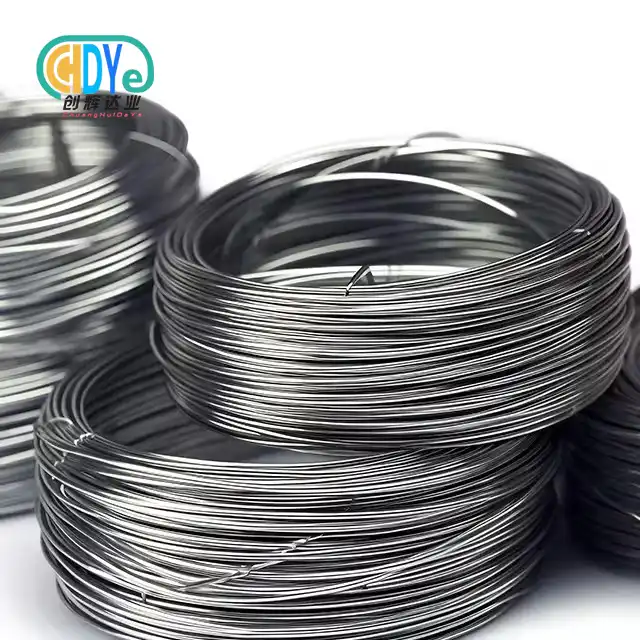
For people who want high-quality materials that perform well in challenging situations, titanium wire for sale is currently the best corrosion-resistant metal choice. The fact that titanium wire doesn't rust makes it an important material. Because of this, it is very important in many areas, such as modern manufacturing, chemical processing, medical devices, and airplanes. Find out why titanium wire is better than other metals in this in-depth guide. It talks about important things like types, traits, industry comparisons, buying strategies, and judging sellers. This summary is made for people who work in global business-to-business procurement. It helps you make smart choices by focusing on market usefulness and useful insights that lead to business greatness.
Understanding Titanium Wire – Properties and Applications
Core Properties and Composition
Titanium wire is great for tough industrial settings because it is very strong and doesn't rust or get damaged by heat. The wire is mostly made up of titanium metal, with set amounts of oxygen, nitrogen, carbon, and hydrogen added to make it work in certain ways. This substance is made in a way that makes its mass about 45% lower than that of steel. However, it is still just as strong.
It is very hard for titanium to rust because when it comes in touch with air, it can form a stable, protective metal layer. It is safe from ocean, acidic environments, and alkaline conditions that usually break down metals because of this natural shield. Tin wire stays strong at temperatures up to 600°C, so it can be used in industrial settings with a lot of heat where other materials would fail.
Industrial Applications Across Sectors
Titanium wire is used to solve tough engineering problems by companies in a lot of different areas. The metal is used as a filler metal for welding in airplane structural parts, where it's important to keep the weight low and stop rusting. The wire is biocompatible, which means it can work with the body for a long time. This makes it an important part of making medical devices, especially tools for surgery and implants.
There are chemical plants that use titanium wire for sale to make heat exchangers and pipe systems that don't rust. A lot of strong chemicals would quickly break down stainless steel, but this material can handle it. People who make electronics can use titanium wire in places where precision and cleanliness are very important, like vacuums and high temperatures.
Types and Grades of Titanium Wire – A Comparative Overview
Commercially Pure Titanium Grades
You can choose the right titanium wire for the job if you know how the different types are different. It is easy to form and bend Grade 1 titanium, which has a compressive strength of about 240 MPa. This makes it great for making things that are hard to shape. Grade 2 has the best balance of strength and workability. This is the grade that is most often used in business.
Three and four grades are stronger than two-grade wood, but it is still easy to bend. These are good for uses that need better mechanical properties without giving up qualities that are good for making things. To meet different scientific goals, each type has a different amount of strength-to-weight ratio. All of them are very resistant to corrosion, though.
Titanium Alloy Options
Titanium metal that is most often used is Grade 5 (Ti-6Al-4V) titanium wire. For example, its tensile strength is over 895 MPa, which is very high. Adding both aluminum and vanadium to this metal makes it work better mechanically for uses in medicine and airplanes. Palladium is added to Grade 7 to make it less likely to rust in places that aren't as acidic.
A small amount of alloying in Grade 9 (Ti-3Al-2.5V) makes it tougher while still making it easy to weld. Molybdenum and nickel have been added to Grade 12 to make it less likely to rust. Because of this, it works great in places where chemicals are processed. Titanium's main benefits are kept in different types of alloys so that they can meet different performance goals.
Titanium Wire vs Alternatives – Making Informed Choices
Performance Comparison with Conventional Materials
The performance of the titanium wire for sale is much better than that of rival goods, which makes the initial investment costs worthwhile. Rust doesn't stick to titanium wire as well as it sticks to stainless steel wire, especially in salty environments where stainless steel gets pitting and cavity corrosion. It is very useful in airplanes and cars because it is lighter than steel (about 45% less).
While aluminum wire is lighter than titanium wire, it is not as strong and will rust in hard situations. Nickel metals work well at high temperatures, but they are more dense and cost a lot more to make. When the temperature changes, the titanium wire keeps its properties the same. It is also safe in a way that most other materials are not.
Cost-Benefit Analysis for Long-Term Applications
Titanium wire costs more than other materials at first, but it is a better investment over time because it lasts longer and needs less maintenance. As the material doesn't rust, it saves money on the costs of fixing old lines that have been broken in hard conditions. When used in flying, less weight saves fuel, and when used in medical gadgets, less weight makes them work better.
Some benefits of efficient production are stable measurements throughout the whole building process and good weldability, which doesn't need much cleaning after the weld. It takes less time and better quality to make things with these features than with materials that need a lot of extra work or need to be changed often because they rust.
Procurement Guide – How to Buy Titanium Wire for Your Business
Supplier Evaluation and Certification Requirements
To find providers you can trust, you should carefully look at their quality standards and how well they make things. When you get ISO 9001:2015 approval, you can be sure that your quality control systems will stay the same during the whole construction process. ASTM, AMS, and AWS compliance tests make sure that materials meet well-known industry standards so they can be used in medical, commercial, and aircraft settings.
It's very important where the plant is located so that the supply chain works well and costs are kept low. Suppliers based in places like Baoji, China's "Titanium Valley," which are known for making titanium, can benefit from expert technical knowledge and linked supply chains. Most of the time, these places have high-tech tools for melting, casting, and drawing that are needed to keep the quality of the wire stable.
Ordering Considerations and Customization Options
People who work in buying need to look at minimum order amounts, delivery dates, and the supplier's flexibility when they evaluate them. Most wires are between 0.5 mm and 6 mm wide, but custom sizes can be made to fit your needs. Based on what it will be used for, the surface finish can be pickled, polished, or bright-drawn.
To accommodate different ways of making things, different types of wrapping can hold both coiled and straight wire forms. For medical and aviation uses, being able to track something is important, and good paperwork, like material test certificates, measurement inspection records, and chemical studies, can help with that. Lead times range from two to six weeks, depending on the grade, quantity, and level of customization that is needed.
How to Weld and Work with Titanium Wire – Best Practices
Advanced Welding Techniques and Preparation
There are certain ways to weld titanium wire for sale that will give you the best quality and performance from your joints. During TIG welding, which is the most common method, argon gas is used to keep the metal clean from air. As long as the gas covering goes past the weld zone, air can't get into the hot titanium and weaken it.
Before the bond, the area is cleaned well to get rid of any dirt or other things that could weaken the joint. Oxide layers and organic waste are removed when the right acids are used for chemical cleaning. Keeping wire in a clean, dry place keeps it from getting dirty, which could hurt the quality of the weld and the way it's used.
Handling and Storage Best Practices
By following the right steps for handling, the standard of titanium wire is kept high throughout the whole process. Low humidity should be kept in storage areas to keep things from absorbing water and polluting the hydrogen. Protect wire loops from mechanical damage that could leave flaws on the surface that make it harder to work with them further.
Keeping an eye on the temperature of the material while it is being moved and kept stops thermal stress that could change its form. Material is checked over and over again for damage or contamination before it is used in production. Because these steps are taken ahead of time, performance stays the same, and failure rates go down during production.
Conclusion
Titanium wire is a great choice for businesses that need to protect against rust, have high strength-to-weight performance, and be biocompatible. The fact that the material can be used in health, planes, chemicals, and technology shows how well it can solve tough building problems. They can get the most titanium wire for the least amount of money by learning about changes in grade, skills of suppliers, and the right way to handle it. Good titanium wire for sale will save you money in the long run because it doesn't need as much maintenance, lasts longer, and works better than other choices. The key to success is working with suppliers who have been in business for a long time and have both technical know-how and solid quality control methods.
FAQ
Q: What makes titanium wire superior to stainless steel for corrosion resistance?
A: Titanium wire is protected from salt rust by a layer of oxide that stays the same thickness all the way through. Stainless steel, on the other hand, rusts in salt water through small holes and cracks. With this natural safety, you don't need covers, and the item will last a lot longer.
Q: Which titanium grade should I choose for my specific application?
A: You pick the grade based on the temperature and how strong you need it to be. In general, Grade 2 is good for business, and Grade 5 (Ti-6Al-4V) is the best grade for use in airplanes. Most medical forms show Grade 1 or Grade 23 for biocompatibility standards.
Q: Can I order small quantities of titanium wire for sale for prototyping?
A: Most service providers can handle small orders, but there may be a minimum order number. This is because of research and development needs. Custom processing lets you make samples while still being able to boost output for bigger sales.
Q: What quality certifications should I expect from titanium wire suppliers?
A: People you can trust will give you paperwork from ASTM, AMS, or AWS that says they are ISO 9001:2015 compliant and have been approved. Making sure that important uses can be tracked and quality is kept up is done with material test records, chemical analysis reports, and data from dimensional checks.
Contact Chuanghui Daye for Premium Titanium Wire Solutions
We at Chuanghui Daye are ready to help you buy titanium wire because we know a lot about how to make things and how to put them together. Our factory, which is located in Baoji's well-known "Titanium Valley," employs cutting-edge production methods and more than 30 years of experience in the field to produce titanium wire for sale that satisfies all safety standards. Everything we do in the factory is ISO 9001:2015-certified, so the standard is the same for all grades, from Gr1 to Gr12. All sorts of things can be done with this, from welding in spaceships to making medical tools. Contact our technical experts at info@chdymetal.com to talk about your specific needs and find out how our skills as a producer of titanium wire can help your supply chain work better.
References
1. Lutjering, Gerd, and James C. Williams. "Titanium: Engineering Materials and Processes." Springer-Verlag Berlin Heidelberg, 2003.
2. Donachie, Matthew J. "Titanium: A Technical Guide, 2nd Edition." ASM International Materials Park, Ohio, 2000.
3. ASTM International. "ASTM B863-14 Standard Specification for Titanium and Titanium Alloy Wire." ASTM International, West Conshohocken, PA, 2014.
4. Boyer, Rodney, Gerhard Welsch, and E.W. Collings. "Materials Properties Handbook: Titanium Alloys." ASM International, 1994.
5. Peters, M., A. Hemptenmacher, J. Kumpfert und C. Ward. "Titanium Alloys for Aerospace Applications." Advanced Engineering Materials, Volume 5, Issue 6, 2003.
6. Schutz, R.W. and D.E. Thomas. "Corrosion of Titanium and Titanium Alloys." Metals Handbook Volume 13: Corrosion, ASM International, 1987.
Learn about our latest products and discounts through SMS or email