- English
- French
- German
- Portuguese
- Spanish
- Russian
- Japanese
- Korean
- Arabic
- Greek
- German
- Turkish
- Italian
- Danish
- Romanian
- Indonesian
- Czech
- Afrikaans
- Swedish
- Polish
- Basque
- Catalan
- Esperanto
- Hindi
- Lao
- Albanian
- Amharic
- Armenian
- Azerbaijani
- Belarusian
- Bengali
- Bosnian
- Bulgarian
- Cebuano
- Chichewa
- Corsican
- Croatian
- Dutch
- Estonian
- Filipino
- Finnish
- Frisian
- Galician
- Georgian
- Gujarati
- Haitian
- Hausa
- Hawaiian
- Hebrew
- Hmong
- Hungarian
- Icelandic
- Igbo
- Javanese
- Kannada
- Kazakh
- Khmer
- Kurdish
- Kyrgyz
- Latin
- Latvian
- Lithuanian
- Luxembou..
- Macedonian
- Malagasy
- Malay
- Malayalam
- Maltese
- Maori
- Marathi
- Mongolian
- Burmese
- Nepali
- Norwegian
- Pashto
- Persian
- Punjabi
- Serbian
- Sesotho
- Sinhala
- Slovak
- Slovenian
- Somali
- Samoan
- Scots Gaelic
- Shona
- Sindhi
- Sundanese
- Swahili
- Tajik
- Tamil
- Telugu
- Thai
- Ukrainian
- Urdu
- Uzbek
- Vietnamese
- Welsh
- Xhosa
- Yiddish
- Yoruba
- Zulu
How Strong Is Titanium Filler Wire in Critical Applications?
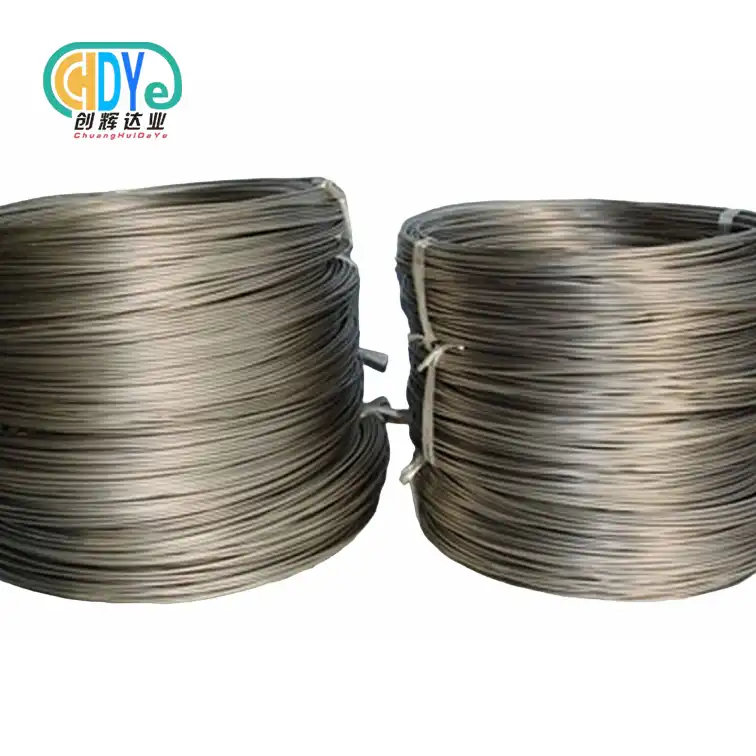
Titanium filler wire demonstrates exceptional strength in critical applications, delivering tensile strengths exceeding 895 MPa when properly applied. This specialized welding consumable, manufactured to AWS A5.16 and ASTM B863 standards, provides superior mechanical properties including high strength-to-weight ratios, outstanding corrosion resistance, and thermal stability up to 1660°C. Its ultra-low interstitial element content prevents weld zone embrittlement, making it indispensable for aerospace components, chemical processing equipment, and medical implants where failure is not an option.
Understanding Titanium Filler Wire: Properties and Specifications
Understanding the fundamental properties of titanium welding wire helps procurement professionals make informed decisions for their critical applications. This specialized material represents a significant advancement over conventional welding consumables, offering unique characteristics that address specific industry challenges.
Chemical Composition and Purity Grades
Titanium welding wire comes in various grades, each engineered for specific applications. Commercially pure grades like ERTi-1 and ERTi-2 contain over 99% titanium with strictly controlled interstitial elements. The hydrogen content remains below 0.015% to prevent delayed cold cracking, while oxygen levels stay under 0.25% to maintain ductility.
Alloy grades such as ERTi-5 (Ti-6Al-4V) incorporate 6% aluminum and 4% vanadium, achieving tensile strengths that surpass 895 MPa. These additions enhance the material's strength while preserving its corrosion resistance. The precise chemical balance ensures compatibility with parent materials and maintains weld integrity under extreme conditions.
Physical Properties and Specifications
The density of titanium welding consumables measures approximately 4.51 g/cm³, providing an exceptional strength-to-weight ratio that aerospace engineers value highly. With a melting point of 1660°C (3020°F), these materials require precise heat input control during welding operations.
Surface preparation plays a crucial role in achieving optimal results. Premium wires undergo acid pickling or vacuum annealing processes, resulting in a bright, oxide-free surface that facilitates smooth wire feeding and stable arc characteristics. This super clean surface technology eliminates drawing lubricants and oxides that could compromise weld quality.
Applications Across Critical Industries
Critical applications span multiple sectors where performance demands exceed conventional material capabilities. Aerospace manufacturers utilize these welding consumables for jet engine components, turbine blades, and airframe structures that must withstand high cyclic loading and extreme temperature fluctuations without fatigue failure.
Chemical processing facilities depend on these materials for fabricating heat exchangers, reactor vessels, and piping systems handling aggressive media. The inherent resistance to chlorides, oxidizing acids, and salt spray makes titanium welding wire essential for desalination plants and offshore installations. Medical device manufacturers rely on biocompatible grades for surgical instruments and implants, where zero toxicity and seamless tissue integration are paramount.
How Titanium Filler Wire Performs Compared to Alternatives
Comparative analysis reveals significant performance advantages when titanium welding materials are evaluated against conventional alternatives. These differences become particularly pronounced in demanding applications where material failure carries severe consequences.
Strength and Durability Comparison
Titanium filler wire exhibits superior performance characteristics compared to stainless steel and aluminum alternatives. While 316 stainless steel offers good corrosion resistance, it lacks titanium's exceptional strength-to-weight ratio and can suffer from chloride stress corrosion cracking in marine environments. Aluminum welding wire, though lighter, cannot match titanium's high-temperature performance or corrosion resistance in aggressive chemical environments.
The tensile strength of titanium alloy grades significantly exceeds that of aluminum and many stainless steel variants. Ti-6Al-4V welded joints maintain their mechanical properties at temperatures where aluminum begins to soften and lose structural integrity. This thermal stability proves essential in aerospace applications where components experience extreme temperature cycles.
Corrosion Resistance Analysis
Titanium's passive oxide layer provides unmatched protection against various corrosive media. Unlike stainless steel, which can experience pitting corrosion in chloride environments, titanium maintains its integrity in seawater, wet chlorine gas, and hot nitric acid. This immunity to pitting and crevice corrosion translates into extended equipment lifecycles and reduced maintenance costs.
The galvanic compatibility between titanium welding wire and base materials prevents preferential corrosion at weld joints. This electrochemical balance ensures uniform corrosion resistance across the entire welded assembly, eliminating weak points that could lead to premature failure.
Welding Process Compatibility
Gas Tungsten Arc Welding (GTAW/TIG) and Gas Metal Arc Welding (GMAW/MIG) processes accommodate titanium welding materials effectively. However, these materials require specialized techniques and protective atmospheres to prevent contamination. Proper shielding gas coverage and controlled cooling rates ensure optimal joint properties and stop the formation of alpha cases.
The welding characteristics of titanium differ significantly from those of steel or aluminum. The material's high reactivity to atmospheric gases necessitates extended shielding gas coverage and careful heat input management. Skilled welders can achieve exceptional joint quality with proper technique and equipment setup.
Titanium Filler Wire Welding Process and Best Practices
Achieving optimal strength and reliability in titanium welding requires adherence to specific procedures and quality control measures. The reactive nature of titanium at elevated temperatures demands careful attention to environmental conditions and welding parameters.
Preparation and Setup Requirements
Successful titanium welding begins with meticulous preparation. Base materials require thorough cleaning to remove all traces of contamination, including oils, fingerprints, and oxide layers. Chemical etching or mechanical cleaning followed by solvent degreasing ensures pristine surface conditions.
The welding environment must provide complete protection from atmospheric contamination. Argon purging of the weld zone, root side protection, and trailing shielding prevent oxygen and nitrogen pickup that could embrittle the weld metal. Many fabricators construct temporary enclosures to maintain controlled atmospheres during critical welding operations.
Welding Techniques and Parameters
Controlling the amount of heat that goes into titanium is essential for keeping its mechanical qualities. When you add too much heat, the grains can grow, and the joint can become weaker. When you add too little heat, flaws form. Welders have to find a balance between these different needs by carefully choosing the parameters, using the right titanium filler wire, and improving their techniques.
The welding process changes how leftover stress is distributed and how distortion is controlled. The right joint design, with the right root holes and curves, makes it easier for the roots to penetrate completely without putting in too much heat. Controlled cooling rates and back-stepping methods help handle thermal stresses in complicated systems.
Quality Control and Inspection
Quality assurance rules make sure that the results are the same from one production run to the next. Visual analysis finds flaws on the surface and makes sure the weld profile shape is correct. Radiographic testing finds cracks inside things, and liquid penetrant screening finds flaws that break the surface.
The strength and flexibility of joints made with titanium filler wire are confirmed by mechanical tests. Tensile samples taken from production welds show that the required strength is met. Bend tests check how flexible something is and show any possible problems with embrittlement. These quality measures give you peace of mind about the performance of important applications.
Procurement Guide: Selecting and Buying High-Quality Titanium Filler Wire
Procurement professionals face unique challenges when sourcing titanium welding materials. The specialized nature of these products demands careful supplier evaluation and quality verification processes.
Supplier Certification and Standards
Identifying certified manufacturers requires verification of relevant industry certifications and quality management systems. ISO 9001:2015 certification shows that quality control procedures have been formed, while AS9100 certification shows that the aerospace business is following the rules. Specifications like AWS A5.16, ASTM B863, and AMS 4951 should be used in material approvals.
For important uses, traceability paperwork is now a must. Identifying heat lots, chemistry analysis records, and mechanical property data are all things that are needed for quality assurance. Suppliers should keep detailed records that connect raw materials to finished goods. This way, the whole supply chain can be tracked.
Order Specifications and Logistics
When buying in bulk, things to think about are the minimum order amounts, the types of packaging that can be used, and the shipping schedules that work with the production needs. A lot of makers let you choose your own width and make changes to the chemistry to fit your needs. Lead times depend on the grade, the amount, and the handling needs.
Storage and handling rules keep the quality of materials safe while they are being moved and stored. Titanium soldering wire needs to be stored in a dry place so that it doesn't absorb water and lose its shine. Using the right wrapping keeps the surface clean and stops damage from happening during shipping.
Cost Factors and Value Analysis
The way prices are set depends on the cost of raw materials, how hard the process is, and how many orders are placed. Titanium welding tools and titanium filler wire are more expensive than steel options, but their better performance often makes up for the extra cost by saving money on repairs and making the equipment last longer.
When you figure out the total cost of ownership, you should include the prices of materials, labor for welding, quality control, and the benefits of long-term performance. Because titanium joints are so strong and don't rust, they often have lower lifetime costs, even though they cost more to make at first.
Benefits and Long-Term Value of Using Titanium Filler Wire in Critical Applications
Investment in premium titanium welding materials delivers substantial long-term value through enhanced performance, reduced maintenance requirements, and extended service life. These benefits become particularly significant in critical applications where downtime costs are substantial.
Performance Advantages
The combination of high strength, great resistance to corrosion, and temperature stability creates something that is truly valuable for challenging uses. Titanium-welded parts keep their structural integrity in situations where other materials would break down. This dependability is very important in industries like aircraft, chemical processing, and marine, where a broken part could have terrible results.
Because it is biocompatible, titanium welding wire is essential for making medical devices. The non-toxic nature of the material and its ability to prevent corrosion by body fluids make sure that implants and surgical tools are safe and last a long time. There are no other materials that can match these qualities in living settings.
Economic Benefits
Over longer service times, lower upkeep costs more than make up for higher starting material costs. The exceptional corrosion resistance of titanium welded joints eliminates the need for protective coatings and repair processes that are common with steel parts. Chemical processing plants say that titanium equipment that is properly bonded will last for decades.
Titanium's light weight makes it useful in aerospace uses where energy economy is important. Cutting down on weight directly leads to better performance in airplanes and vehicles, and less fuel use. The benefits of the strength-to-weight ratio make up for the higher cost of the materials by making operations more efficient.
Market Trends and Innovation
The growing demand for titanium filler wire reflects expanding applications across multiple industries. Aerospace companies are always pushing the limits of performance, so they need materials that can handle more and more harsh working conditions. New developments in additive manufacturing open up new ways to use titanium welding in repair and complicated shapes.
Corrosion-resistant materials are used more in chemical processes and marine uses because they are required by environmental laws. Titanium is environmentally friendly because it lasts a long time and can be recycled. It also has great scientific performance. These patterns show that the need for titanium welding materials will continue to rise.
Conclusion
Titanium filler wire delivers exceptional strength and reliability in critical applications through its unique combination of mechanical properties, corrosion resistance, and thermal stability. The material's superior performance compared to conventional alternatives justifies investment costs through extended service life and reduced maintenance requirements. Proper welding techniques and quality control measures ensure optimal joint properties that meet demanding application requirements. Procurement professionals benefit from understanding supplier certification requirements and total cost of ownership calculations when evaluating titanium welding materials. The growing market demand across aerospace, chemical processing, and medical sectors indicates continued expansion of titanium welding applications.
FAQ
Q: Why does titanium filler wire exhibit superior strength compared to alternatives?
A: Titanium filler wire achieves superior strength through its crystalline structure and alloying elements. The hexagonal close-packed crystal structure provides inherent strength, while controlled interstitial element content prevents embrittlement. Alloy grades incorporate aluminum and vanadium additions that enhance strength without compromising ductility or corrosion resistance.
Q: What welding processes are compatible with titanium filler wire?
A: Gas Tungsten Arc Welding (GTAW/TIG) and Gas Metal Arc Welding (GMAW/MIG) processes work effectively with titanium welding materials. GTAW provides superior control for critical applications, while GMAW offers higher deposition rates for production welding. Both processes need controlled atmospheres and covering with inert gases to keep things from getting dirty.
Q: How can buyers verify compliance with industry standards?
A: Verification requires reviewing material test papers that list relevant standards like AWS A5.16, ASTM B863, and the aircraft standard AMS 4951. Reports on chemical analyses, data on material properties, and measurement checks show that compliance has been met. When needed, independent confirmation comes from third-party testing labs.
Q: What factors affect titanium filler wire pricing?
A: Prices are set by factors like the cost of raw materials, the difficulty of handling, the number of items ordered, and the grade requirements. Most of the time, commercially pure grades are cheaper than complicated alloys that need careful chemistry control. There are often savings for placing larger orders, but custom specs may come with extra costs.
Contact Chuanghui Daye for Premium Titanium Filler Wire Solutions
Shaanxi Chuanghui Daye Metal Material Co., Ltd. stands ready to support your critical welding projects with certified, high-quality titanium filler wire manufactured in China's Titanium Capital. Our ISO 9001:2015-certified factory makes products that meet AWS A5.16 and ASTM B863 standards, ensuring consistent quality for aerospace, chemical processing, and medicine. As your reliable source for titanium filler wire, you can email our team at info@chdymetal.com to talk about your unique needs, ask for samples of the material, or get special quotes. We offer reliable supply chains and expert support to help you get the most out of your welding activities. We have more than 30 years of experience in the field.
References
1. American Welding Society. "Specification for Titanium and Titanium Alloy Bare Welding Rods and Electrodes." AWS A5.16/A5.16M, 2017.
2. ASTM International. "Standard Specification for Titanium and Titanium Alloy Wire." ASTM B863-22, 2022.
3. Boyer, Rodney, Gerhard Welsch, and E.W. Collings. "Materials Properties Handbook: Titanium Alloys." ASM International, 1994.
4. Donachie, Matthew J. "Titanium: A Technical Guide, 2nd Edition." ASM International, 2000.
5. Leyens, Christoph und Manfred Peters. "Titanium and Titanium Alloys: Fundamentals and Applications." Wiley-VCH, 2003.
6. Lütjering, Gerd and James C. Williams. "Titanium: Engineering Materials and Processes, 2nd Edition." Springer-Verlag, 2007.
Learn about our latest products and discounts through SMS or email