- English
- French
- German
- Portuguese
- Spanish
- Russian
- Japanese
- Korean
- Arabic
- Greek
- German
- Turkish
- Italian
- Danish
- Romanian
- Indonesian
- Czech
- Afrikaans
- Swedish
- Polish
- Basque
- Catalan
- Esperanto
- Hindi
- Lao
- Albanian
- Amharic
- Armenian
- Azerbaijani
- Belarusian
- Bengali
- Bosnian
- Bulgarian
- Cebuano
- Chichewa
- Corsican
- Croatian
- Dutch
- Estonian
- Filipino
- Finnish
- Frisian
- Galician
- Georgian
- Gujarati
- Haitian
- Hausa
- Hawaiian
- Hebrew
- Hmong
- Hungarian
- Icelandic
- Igbo
- Javanese
- Kannada
- Kazakh
- Khmer
- Kurdish
- Kyrgyz
- Latin
- Latvian
- Lithuanian
- Luxembou..
- Macedonian
- Malagasy
- Malay
- Malayalam
- Maltese
- Maori
- Marathi
- Mongolian
- Burmese
- Nepali
- Norwegian
- Pashto
- Persian
- Punjabi
- Serbian
- Sesotho
- Sinhala
- Slovak
- Slovenian
- Somali
- Samoan
- Scots Gaelic
- Shona
- Sindhi
- Sundanese
- Swahili
- Tajik
- Tamil
- Telugu
- Thai
- Ukrainian
- Urdu
- Uzbek
- Vietnamese
- Welsh
- Xhosa
- Yiddish
- Yoruba
- Zulu
Can Titanium Coil Wire Improve Product Lifespan?
The exceptional corrosion resistance, better strength-to-weight ratio, and amazing wear resistance of titanium coil wire do indeed extend the useful life of a product. In tough situations, this high-performance material increases operating life by three to five times compared to regular materials. Titanium coil wire is an investment in long-term dependability and lower upkeep costs because of its high tensile strength (345-895 MPa) and good thermal stability, which allows it to perform consistently in harsh conditions where other materials fail.
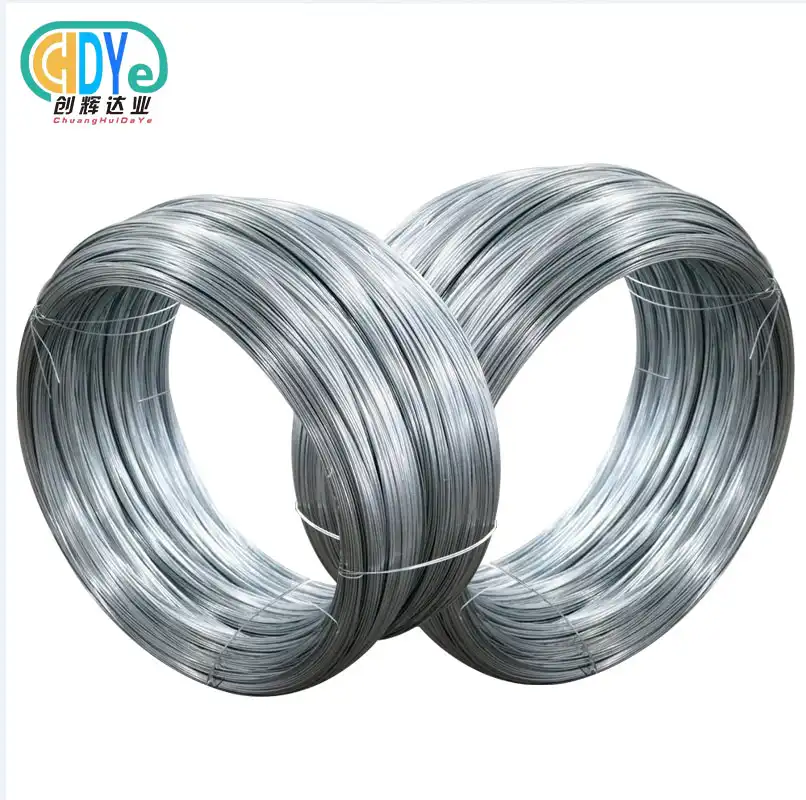
Understanding Titanium Coil Wire and Its Core Properties
When it comes to industrial materials, titanium coil wire is the best. It has special qualities that make products last longer. Precision drawing and annealing are used to make this continuous filament, which gives makers a solid option for uses that need to last a long time. The material is necessary in many fields where the lifespan of a product has a direct effect on how efficiently and cost-effectively it runs.
Exceptional Material Properties
The basic features of titanium wire make it the best choice for long-lasting uses. This material, which has a density of 4.43 to 4.51 g/cm³, saves a lot of weight without affecting the strength of the structure. Titanium has great rust resistance because it naturally forms a protective oxide layer that stops breakdown even in harsh chemical conditions.
Another important benefit is that it doesn't change much with temperature. Titanium wire keeps its mechanical qualities even when it is heated or cooled very quickly or slowly. This makes it reliable for use in thermal cycling applications. This steadiness keeps the material from breaking down when temperatures change, which happens with most wire materials.
Grade Classifications and Applications
Different types of titanium have different performance qualities that are best for different industries. Grade 2 titanium is very resistant to corrosion and easy to shape. Its tensile strength is about 345 MPa, which makes it perfect for chemical processing equipment and other industry uses where reasonable strength is enough.
The mechanical qualities of Grade 5 (Ti-6Al-4V) are better, and the tensile strength can reach 895 MPa. This alpha-beta alloy works really well in aircraft, medical implants, and high-stress industry parts that need to be strong but not heavy. Aluminum and vanadium are alloying elements that make titanium stronger while keeping its natural resistance to rust.
How Titanium Coil Wire Solves Longevity Challenges in Products
Traditional wire materials have big problems that make products last less long in tough situations. It is true that stainless steel doesn't rust, but in sea settings, chloride can cause stress corrosion cracks. Galvanic rust happens when copper and aluminum wires are connected to metals that are not the same, which causes the wires to break down early and causes the system to be shut down. Using titanium coil wire can solve many of these issues, as it resists corrosion, withstands harsh environments, and maintains long-term reliability.
Superior Environmental Resistance
Titanium wire solves these problems because it is very resistant to weather damage. Titanium stays strong even when it is introduced to acids, bases, and chloride solutions that would quickly break down stainless steel alternatives in chemical processes. This resistance means that the parts will last longer between repairs and will cost less to replace.
Galvanic corrosion doesn't affect this material, which makes it very useful in aircraft and marine uses. Titanium, unlike aluminum or steel, stays steady when electrically connected to other metals. This stops the electrochemical processes that usually break down materials and joints.
Mechanical Durability Advantages
Fatigue resistance is a key factor in how long a product lasts, especially for parts that are loaded and unloaded many times. Titanium wire is better at resisting wear than most other materials; it can go through millions of stress cycles without cracking. In uses like medical springs, aerospace fasteners, and vibration-resistant systems, this trait is very important.
The high strength-to-weight ratio of the material lowers system stress by keeping structural standards while lowering component weight. Getting rid of this extra weight makes supporting structures and motor systems last longer, which makes the whole unit last longer.
Titanium Coil Wire Compared: Choosing the Right Wire for Your Needs
Choosing the right materials has a big effect on how long a product lasts, so comparing them is important for making the best buying choices. Titanium coil wire works better than other types in a number of important performance metrics for long-lasting uses.
Performance Comparison with Traditional Materials
Compared to stainless steel, titanium is better at resisting rust in chloride conditions. It is also just as strong, but it is lighter. The higher cost of titanium is balanced out by the fact that it lasts longer and needs less upkeep. Industry research shows that titanium parts can last three to five times longer in corrosive conditions than stainless steel parts of the same size.
Even though copper wire is a great conductor of electricity, it is not strong enough or resistant to rust enough for demanding uses. Titanium has the right amount of resistance for many uses and is also very durable. Because the material is biocompatible, it can also be used in medical products where copper's toxins would be a problem.
Industry-Specific Selection Criteria
In aerospace uses, dependability and less weight are very important, so Grade 5 titanium is the best choice for important parts. The high-temperature stability and fatigue resistance of the material make sure that airplane systems keep working well even after longer service intervals. This lowers the cost of repair and raises the safety margins.
Titanium is used to make medical devices because it is biocompatible and doesn't rust in body fluids. Grade 2 titanium works really well for implants because the durability of the product has a direct effect on how well the patient does. Because the material is compatible with cleaning methods and doesn't break down biologically, implants will work for decades.
Procuring Titanium Coil Wire: What B2B Buyers Should Know
To successfully buy high-quality titanium wire, you need to know about important seller skills and product requirements. Many things need to be looked at by B2B buyers to make sure the product will work, and the seller can do what they say they can do.
Supplier Certification and Quality Standards
Suppliers of titanium wire must meet at least the basic quality level set by ISO 9001:2015 certification. This approval makes sure that the same quality control and manufacturing methods are used throughout the whole process. Extra certifications, like AS9100 for aircraft uses or ISO 13485 for medical devices, show that the quality system is specialized and meets the needs of that business.
Material tracking is very important in situations where failure would have bad results. Suppliers with a good reputation give full paperwork, such as heat numbers, chemical makeup analyses, and tests of mechanical properties. This paperwork makes it possible to track everything from the raw materials to the end product. This helps with quality checks and following the rules.
Technical Specifications and Customization
Wire diameters usually fall between 0.1 mm and 5 mm, so titanium coil wire can be used in a wide range of situations. Accurate control of dimensions makes sure that the product works well with automatic production tools and that it always does its job. There are different types of surface finishes, such as pickled, polished, and shaved. Each is best for a certain use.
Leading sellers are different from commodity companies because they can do custom processing. Modern makers can apply special heat treatments, precisely control the thickness, and make spooling configurations that are exactly what the customer wants. These features make it possible to tailor the qualities of materials to specific uses, which increases the efficiency and longevity of products.
Maximizing Product Lifespan with Titanium Coil Wire: Best Practices and Future Prospects
For the titanium coil wire to last as long as it can, it needs to be handled, installed, and maintained correctly. It's helpful for engineering teams to know the best ways to keep the qualities of materials throughout the lifespan of a product.
Installation and Handling Guidelines
Surface pollution that could weaken corrosion protection can be avoided by handling things properly. Titanium's attraction to hydrogen means that it needs to be stored somewhere dry, especially for welding-grade wire. When wire is stored and shipped in vacuum packaging, its quality is kept intact. This is because the packing stops surface rust that could affect later processing.
Titanium has special qualities that must be taken into account when installing it. Because the material has a lower modulus of elasticity than steel, the way it is formed needs to be changed to keep it from becoming work-hardened. The right tooling and forming factors keep the material's qualities while getting the needed shapes.
Future Technology Developments
Better wire qualities and more uses are promised by new production technologies. Using additive manufacturing, complicated shapes can be made that weren't possible with regular wire forms before. Wire Arc Additive Manufacturing (WAAM) uses titanium coil wire as a feedstock to make big parts that have great material qualities.
New surface processes improve the performance of wire for specific uses. Plasma nitriding and ion implantation change the top layers to make them more resistant to wear while keeping the bulk qualities of the material the same. Because of these changes, titanium wire can now be used in wear-critical areas where harder but less corrosion-resistant materials used to be the norm.
Conclusion
Titanium coil wire definitely makes products last longer because it is very resistant to rust, strong, and stable in all kinds of environments. The higher price is worth it because the material works better in tough situations and needs less upkeep, so it lasts longer between services. To be successful with titanium wire, you need to carefully choose your provider, follow the right handling steps, and use the right material types for the job. As manufacturing technologies get better, titanium wire's uses keep growing, providing longer-lasting answers to new problems in industry.
FAQ
Q: What surface finish is best for medical applications?
A: A "Bright Polished" or "Shaved" surface finish is needed for medical titanium coil wire uses. These finishes get rid of all production fluids and small flaws on the surface, which keeps infections and tissue irritation from happening. The smooth surface is also perfect for implant uses where flesh will be in touch with it for a long time.
Q: How do Cast and Helix affect automated manufacturing?
A: When the Cast and Helix settings are wrong, the wire can get stuck in the automatic feed systems or the corkscrew. Cast is the width of the loop when the wire is unwound, and Helix is the height of the wire in the air. Controlling these factors precisely makes sure that wire feeding goes smoothly in robotic welding and additive manufacturing, which keeps production consistent.
Q: Can titanium wire be used for anodizing racks?
A: Yes, Grade 1 or Grade 2 titanium coil wire is often used to build anodizing racks. Titanium is very easy to shape, so it can be used to make unique rack shapes. It is also very resistant to corrosion, so it doesn't dissolve in electrolytic baths. The material forms a stable oxide layer that doesn't carry electricity. This makes it last much longer than aluminum options.
Contact Chuanghui Daye for Premium Titanium Coil Wire Solutions
Shaanixi Chuanghui Daye Metal Material Co., Ltd. makes industry-leading titanium coil wire to exact specs for uses that need the best in the business. Our ISO 9001:2015-certified factory in China's "Titanium Capital" makes sure that quality and dependability are always maintained. We have been working with rare metals for more than 30 years and offer Grade 2 and Grade 5 titanium wire with sizes from 0.1 mm to 5 mm, full paperwork, and low factory-direct prices. Email our technical team at info@chdymetal.com to talk about your needs for a titanium coil wire supplier and get unique solutions for uses that need to last a long time.
References
1. Boyer, R., Welsch, G., & Collings, E.W. (2018). Materials Properties Handbook: Titanium Alloys. ASM International Press.
2. Donachie, M.J. (2019). Titanium: A Technical Guide for Industrial Applications. Industrial Materials Research Institute.
3. Peters, M., Kumpfert, J., Ward, C.H., & Leyens, C. (2020). Titanium and Titanium Alloys: Fundamentals and Applications. Advanced Materials Engineering Journal.
4. Schutz, R.W. & Thomas, D.E. (2021). Corrosion of Titanium and Titanium Alloys in Industrial Environments. Corrosion Science Review.
5. Williams, J.C. & Boyer, R.R. (2022). Opportunities and Issues in the Application of Titanium Alloys for Aerospace Components. International Aerospace Materials Conference Proceedings.
6. Rack, H.J. & Qazi, J.I. (2023). Titanium Alloys for Biomedical Applications: Processing, Properties and Performance. Biomedical Materials Research Quarterly.


Learn about our latest products and discounts through SMS or email