- English
- French
- German
- Portuguese
- Spanish
- Russian
- Japanese
- Korean
- Arabic
- Greek
- German
- Turkish
- Italian
- Danish
- Romanian
- Indonesian
- Czech
- Afrikaans
- Swedish
- Polish
- Basque
- Catalan
- Esperanto
- Hindi
- Lao
- Albanian
- Amharic
- Armenian
- Azerbaijani
- Belarusian
- Bengali
- Bosnian
- Bulgarian
- Cebuano
- Chichewa
- Corsican
- Croatian
- Dutch
- Estonian
- Filipino
- Finnish
- Frisian
- Galician
- Georgian
- Gujarati
- Haitian
- Hausa
- Hawaiian
- Hebrew
- Hmong
- Hungarian
- Icelandic
- Igbo
- Javanese
- Kannada
- Kazakh
- Khmer
- Kurdish
- Kyrgyz
- Latin
- Latvian
- Lithuanian
- Luxembou..
- Macedonian
- Malagasy
- Malay
- Malayalam
- Maltese
- Maori
- Marathi
- Mongolian
- Burmese
- Nepali
- Norwegian
- Pashto
- Persian
- Punjabi
- Serbian
- Sesotho
- Sinhala
- Slovak
- Slovenian
- Somali
- Samoan
- Scots Gaelic
- Shona
- Sindhi
- Sundanese
- Swahili
- Tajik
- Tamil
- Telugu
- Thai
- Ukrainian
- Urdu
- Uzbek
- Vietnamese
- Welsh
- Xhosa
- Yiddish
- Yoruba
- Zulu
Top Hexagonal titanium screws Factory for Custom Fasteners
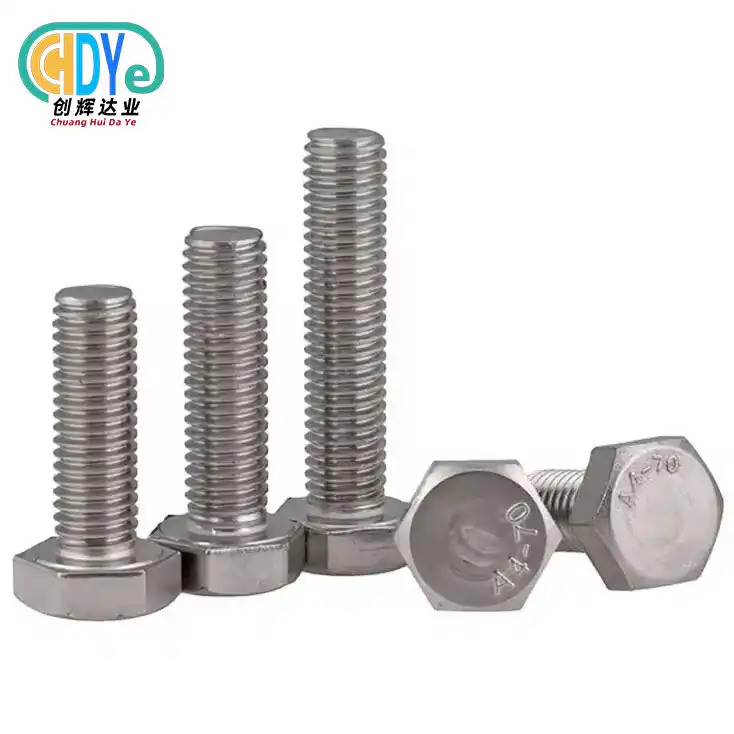
When searching for a top hexagonal titanium screws factory for custom fasteners, procurement professionals demand exceptional quality, consistent supply, and technical expertise. These precision-engineered hex head fasteners combine titanium's inherent advantages—superior corrosion resistance, high specific strength, and lightweight design—with the functional benefits of a six-sided head that ensures optimal torque application. Shaanxi Chuanghui Daye Metal Material Co., Ltd., strategically located in China's renowned "Titanium Capital" of Baoji, delivers exactly this combination through three decades of specialized rare metal manufacturing experience and ISO 9001:2015 certified production processes. Our comprehensive inventory spans multiple titanium grades and sizes, enabling rapid fulfillment for aerospace, medical device, chemical processing, and electronics applications where reliability is non-negotiable.
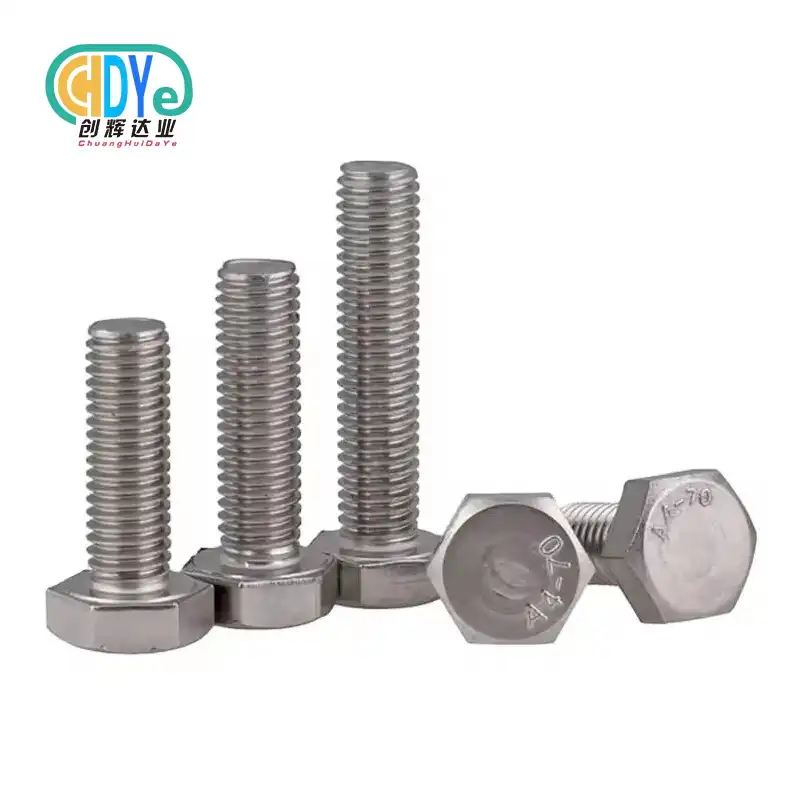
Understanding Hexagonal Titanium Screws: Material, Properties, and Applications
Hexagonal titanium screws are better for engineering because of advances in both material science and design. Unlike most fasteners, these parts combine a six-sided head shape with titanium alloys, which offer superior mechanical performance that is rarely matched by alternatives made of stainless steel or aluminium.
Material Grades and Their Performance Characteristics
As the name suggests, grade 2 titanium is a commercially pure material that is very easy to shape and doesn't rust in acidic or marine environments. This grade works well in places like plating tanks, offshore platforms, and chemical processing equipment that is constantly exposed to corrosive media. Grade 5 titanium alloy (Ti-6Al-4V) has about twice the tensile strength of Grade 2. It is the standard for load-bearing aircraft structures, high-performance car parts, and medical implants that need to be strong mechanically and biocompatible. Adding aluminium and vanadium makes the metal stronger while keeping its non-magnetic and non-toxic qualities, which are important for medical and precision electronics uses.
Critical Properties That Define Performance
Hexagonal titanium screws are 40% lighter than steel fasteners with the same load capacity. This means that they use less fuel in aircraft uses and extend the life of batteries in portable electronics. The low thermal conductivity of the material stops heat from moving, which could damage temperature-sensitive parts. Its thermal expansion rate is very close to that of carbon fibre composites, so there are no galvanic corrosion issues with the aluminium bolts in CFRP structures. Titanium, on the other hand, forms a stable passive oxide layer that heals itself when scratched. This means that it doesn't need surface coatings that can chip or wear off over time to protect against corrosion.
Industry Applications Requiring Hex Head Fasteners
Manufacturers of aerospace parts use hexagonal titanium screws in fuselage panels, engine mounts, and landing gear sections because they are mission-critical for their ability to fight vibration and high-cycle wear. These fasteners are used by companies that make medical devices in orthopaedic implants, surgery tool kits, and external fixation devices where biocompatibility meets the strict FDA standards. Hexagonal titanium screws are used in chemical plants for connections on valve systems, pump housings, and reactor vessels that are in contact with strong acids and high-temperature process streams. These screws are used by electronics companies to make smartphone cases, laptop frames, and equipment for making semiconductors. Because they are nonmagnetic, they don't interact with sensitive electronic parts or equipment that creates magnetic fields.
How to Choose the Best Hexagonal Titanium Screws for Your Custom Fastening Needs
To choose the right hex head titanium fasteners, you need to carefully compare their technical specs to your operational needs. When purchasing things, teams have to think about the total cost of ownership, the ability of the supplier, the choice of material grade, and the accuracy of the measurements.
Defining Your Technical Requirements
Specifications for the thread have a direct effect on how well it installs and how well it works in the long term. Metric M3, M4, and M5 sizes are most common in technology and medicine. Larger M6 through M12 sizes are used in aircraft and chemical processing. Fit traits are based on thread tolerance classes. For example, Class 6g has a normal clearance that works for most uses, while Class 4h has tighter specs that are needed for precision Swiss machining and automatic assembly equipment. Length-to-diameter ratios affect clamp load distribution and grip strength. Longer screws need to be carefully torqued to avoid thread galling during installation.
Matching Alloy Grades to Application Demands
Grade 2 titanium is cheaper and easier to shape, making it a good choice for non-structural uses that value rust protection over mechanical strength. Even though it costs more, Grade 5 metal is required for structural parts that have to withstand constant vibration, shock loading, or high torque requirements. Specifications for aerospace often call for Grade 23 (Ti-6Al-4V ELI), which goes through extra steps to lower the amount of interstitial elements it contains. This makes it stronger when it breaks, which is important for safety applications. By knowing these differences, you can avoid expensive material mismatches that hurt performance or raise the cost of parts for no reason.
Evaluating Supplier Capabilities and Certifications
Quality management certifications are objective proof that the manufacturing process is being controlled. The ISO 9001:2015 certification shows that quality control is carried out in a planned way, from inspecting the raw materials to packing them up at the end. ASTM F468 compliance means that the chemical makeup limits and mechanical property standards for surgical implants and aircraft screws have been met. AS9100 certification means that an aircraft quality control system has been put in place that goes above and beyond what is required by ISO. Suppliers who keep these certifications do thorough checks on incoming materials using X-ray fluorescence spectroscopy to find fake materials. They also test the mechanical strength of representative sample lots and provide full material traceability documentation that connects finished fasteners to the original mill certifications.
The Benefits of Partnering with a Top Hexagonal Titanium Screws Factory
Working with a well-known titanium fastener manufacturer will give you strategic benefits that go beyond just buying parts. Integrated production, expert support, and a reliable supply chain build value that can't be copied by generic wholesalers.
Customization Flexibility and Engineering Support
At Chuanghui Daye, we have in-house machining centers with precision lathes, CNC machines, and electron beam melting systems that let us make screws that are exactly what the customer wants. Non-standard thread pitches, custom head sizes, specialised drive configurations, and proprietary surface treatments can all be easily handled without having to pay extra for the tools, which would make small-batch customisation too expensive with other providers. Our engineering team, which is led by people who have worked with rare metals for more than 30 years, gives expert advice on choosing materials, installing them, and making the best use of the assembly. Customers can avoid common problems like galling during installation, hydrogen embrittlement in high-strength grades, and galvanic rusting when putting together materials that are not the same.
Quality Assurance Through Vertical Integration
Controlling the whole production chain of Hexagonal titanium screws, from melting the raw materials to doing the final inspection, ensures a level of consistency that distributors who buy fasteners from a lot of different places can't match. We use optical emission spectrometry to check the alloy's chemical makeup, tensile tests on representative samples to prove its mechanical qualities, and thread metrology with calibrated Go/No-Go gauges to make sure the dimensions are correct. Our annealing ovens carefully manage the heat treatment cycles that create the best balance of strength and ductility. Our pickling and passivation processes create smooth surfaces that make the metal more resistant to rust. Every production lot comes with full paperwork that shows the history of the material from the first melt chemistry to the final check of its dimensions.
Inventory Management and Delivery Reliability
Keeping a lot of common sizes and grades in stock lets you fill orders quickly, which helps you meet tight project deadlines. Being close to Baoji's integrated titanium production area helps our supply chain by shortening wait times for custom orders and making sure we have materials on hand when the market runs out. Established logistics partnerships make international shipping more efficient by making sure that the threads are protected during transit and that the right paperwork is provided to help with customs clearance for medical and aerospace applications that need to prove compliance with regulations.
Comparing Hexagonal Titanium Screws Suppliers: What B2B Buyers Should Know
Choosing the right supplier affects the quality of the product, the reliability of the supply chain, and the total cost of buying things over long-term production plans. Systematic evaluation across key performance dimensions lets people make smart decisions that lower long-term risk.
Technical Capability Assessment
How well providers can meet rising demand and changes in volume without affecting delivery times depends on their production ability. When manufacturers use specific titanium working lines, they avoid the risks of cross-contamination that come with using facilities that handle more than one material. In-house testing labs with hardness testers, tension tools, and metallographic equipment let you check the quality right away, without having to wait for tests to be done by a third party. Modern techniques like vacuum melting, hot isostatic pressing, and surface coating application make it possible to use a wider range of specialised screws in tough situations.
Transparency and Traceability Documentation
Reputable makers give full material certificates for every production lot that list the chemicals used, the mechanical properties, and the settings for the heat treatment. Mill test reports that can be traced back to the original titanium sponge makers prove that the material is real and allow failure analysis if quality problems happen during service. Process paperwork, such as forging parameters, machining specs, and inspection records, shows that production control is in place and can be used for FDA submissions and aerospace AS9100 checks. Customer reviews and application case studies show that setups have worked well in similar working conditions, which boosts trust in the supplier's abilities.
Pricing Structure and Value Analysis
Unit prices change a lot depending on the type of material, the size, and the number of pieces ordered, but the total cost of ownership is more than just piece-part prices. For procurement programs that need shipments to happen in stages, minimum order amounts affect the cost of keeping goods and the flow of cash. When lead times are consistent, it affects how flexible production schedules can be and how much safety stock is needed. Engineers spend less time solving installation problems or questions about material choices when they have access to technical support. When you buy from makers like Chuanghui Daye directly, you avoid the markups that distributors add on top of the prices, and you can also make changes that aren't possible with catalogues of common fasteners.
Comprehensive Guide to Ordering Hexagonal Titanium Screws Online and Wholesale
Efficient procurement routines make the shopping process faster and easier, and they also make sure that specifications are followed and that there is paperwork to support quality control systems.
Specification Development and Quote Requests
Misunderstandings that cause deliveries to be late and rework costs to rise can be avoided by giving clear purchase specifications for Hexagonal titanium screws. Full details include theoretical thread sizes, length measurements, head style and sizes, thread length if partially threaded, material grade name, surface finish needs, and any relevant standards like DIN, ISO, or ASTM. For custom designs, drawings that show the unique features go along with written instructions. Quantity requirements, ranging from minimum order quantities to estimates of annual volume, help suppliers come up with the best pricing and delivery schedules. Giving detailed details of the application helps providers suggest the right types and treatments based on the working area.
Documentation and Compliance Requirements
For international trade to happen, the right export paperwork is needed. This includes business bills, packing lists, certificates of origin, and material certifications. For aerospace uses, finished fasteners need to be able to be tracked back to certifications of the raw materials, records of the heat treatment process, and inspection reports. Medical device rules need statements that prove biocompatibility testing and regulatory approvals were done. Chemical processing installations may give specific corrosion test results or exposure performance data to help with choosing materials. Setting documentation standards during the initial quote request keeps shipments from being held up while extra paperwork is gathered.
Logistics and Quality Verification
When shipped internationally, precision threads are kept safe from damage by being properly packed. Using compartmented boxes or foam inserts to separate each component keeps thread galling from happening when components touch each other. Marine shipping settings are safe from corrosion because of moisture shield packing. Before accepting shipments and releasing payment, receiving inspection procedures should use calibrated measuring tools to check the accuracy of the dimensions, confirm the material grade markings or colour coding, and make sure that all certification paperwork is complete.
Conclusion
Selecting a qualified hexagonal titanium screws manufacturer requires thorough evaluation of technical capabilities, quality systems, and supply chain reliability. The decision impacts product performance, regulatory compliance, and total ownership costs throughout multi-year production programs. Chuanghui Daye's three-decade specialization in rare metal processing, strategic location in China's titanium production hub, and comprehensive ISO 9001:2015 certified quality systems provide the foundation for successful long-term partnerships. Our extensive inventory, custom manufacturing flexibility, and technical support capabilities address the complete spectrum of requirements from aerospace structural assemblies through medical implant components, ensuring your critical applications receive fasteners matching exact performance specifications.
FAQ
Q: What grade should I select for my application?
A: Grade 2 commercially pure titanium is good for applications that need to resist corrosion and have moderate mechanical loads. Examples of these are chemical processing equipment and marine hardware. The Grade 5 (Ti-6Al-4V) metal has about twice the tensile strength needed for structural parts in spacecraft, high-performance auto assemblies, and medical equipment that carry weight. Grade 23 has better fracture hardness for important aircraft uses where failure would have very bad results.
Q: How do I prevent galling during installation?
A: Because titanium tends to cold weld, it needs to be installed in a certain way. Before putting the parts together, use a nickel-based anti-seize lube on the threads, lower the installation torque to 70–80% of the estimated values, and keep the tightening speeds under control so that the parts don't rotate too quickly and create too much friction heat. Surface treatments like anodisation or physical vapour deposition coatings make it much less likely for assemblies that need to be taken apart and put back together again to gall.
Q: Are custom sizes available beyond standard catalog offerings?
A: When a manufacturer has integrated machining capabilities, they can easily make parts with non-standard sizes, thread pitches, and head shapes. For custom production, exact measurements must be shown on engineering drawings, minimum order amounts must be met to cover the cost of setting up tools, and wait times must be stretched to accommodate production schedules. Talk to technical sales reps about your specific needs and get opinions on whether they are possible.
Partner with Chuanghui Daye as Your Trusted Hexagonal Titanium Screws Supplier
Shaanxi Chuanghui Daye can help you with your hexagonal titanium screws needs because they have the best technical knowledge and manufacturing skills. Our large stock collection of different grades and sizes lets us ship right away for urgent projects, and our custom production skills let us make solutions that are perfectly engineered to meet the needs of each application. We are part of Baoji's integrated titanium production cluster and are certified to ISO 9001:2015. We can give your important applications the quality assurance, technical support, and supply chain stability they need. You can email our engineering team at info@chdymetal.com to talk about your unique fastener needs, get material certifications, or get bulk prices for sales of hexagonal titanium screws. Let us show you how our 30 years of experience specialising in rare metals can help your business get better goods and more value from our relationship.
References
1. Boyer, R., Welsch, G., and Collings, E.W. (1994). Materials Properties Handbook: Titanium Alloys. ASM International.
2. Donachie, M.J. (2000). Titanium: A Technical Guide, 2nd Edition. ASM International.
3. Schutz, R.W. and Watkins, H.B. (1998). "Recent Developments in Titanium Alloy Application in the Energy Industry." Materials Science and Engineering A, 243(1-2), 305-315.
4. Peters, M., Kumpfert, J., Ward, C.H., and Leyens, C. (2003). "Titanium Alloys for Aerospace Applications." Advanced Engineering Materials, 5(6), 419-427.
5. ASTM International (2020). ASTM F468-20: Standard Specification for Nonferrous Bolts, Hex Cap Screws, and Studs for General Use. West Conshohocken, PA.
6. Veiga, C., Davim, J.P., and Loureiro, A.J.R. (2012). "Properties and Applications of Titanium Alloys: A Brief Review." Reviews on Advanced Materials Science, 32(2), 133-148.
Learn about our latest products and discounts through SMS or email