- English
- French
- German
- Portuguese
- Spanish
- Russian
- Japanese
- Korean
- Arabic
- Greek
- German
- Turkish
- Italian
- Danish
- Romanian
- Indonesian
- Czech
- Afrikaans
- Swedish
- Polish
- Basque
- Catalan
- Esperanto
- Hindi
- Lao
- Albanian
- Amharic
- Armenian
- Azerbaijani
- Belarusian
- Bengali
- Bosnian
- Bulgarian
- Cebuano
- Chichewa
- Corsican
- Croatian
- Dutch
- Estonian
- Filipino
- Finnish
- Frisian
- Galician
- Georgian
- Gujarati
- Haitian
- Hausa
- Hawaiian
- Hebrew
- Hmong
- Hungarian
- Icelandic
- Igbo
- Javanese
- Kannada
- Kazakh
- Khmer
- Kurdish
- Kyrgyz
- Latin
- Latvian
- Lithuanian
- Luxembou..
- Macedonian
- Malagasy
- Malay
- Malayalam
- Maltese
- Maori
- Marathi
- Mongolian
- Burmese
- Nepali
- Norwegian
- Pashto
- Persian
- Punjabi
- Serbian
- Sesotho
- Sinhala
- Slovak
- Slovenian
- Somali
- Samoan
- Scots Gaelic
- Shona
- Sindhi
- Sundanese
- Swahili
- Tajik
- Tamil
- Telugu
- Thai
- Ukrainian
- Urdu
- Uzbek
- Vietnamese
- Welsh
- Xhosa
- Yiddish
- Yoruba
- Zulu
Is Grade 2 titanium round bar Better Than Stainless Steel Bar?
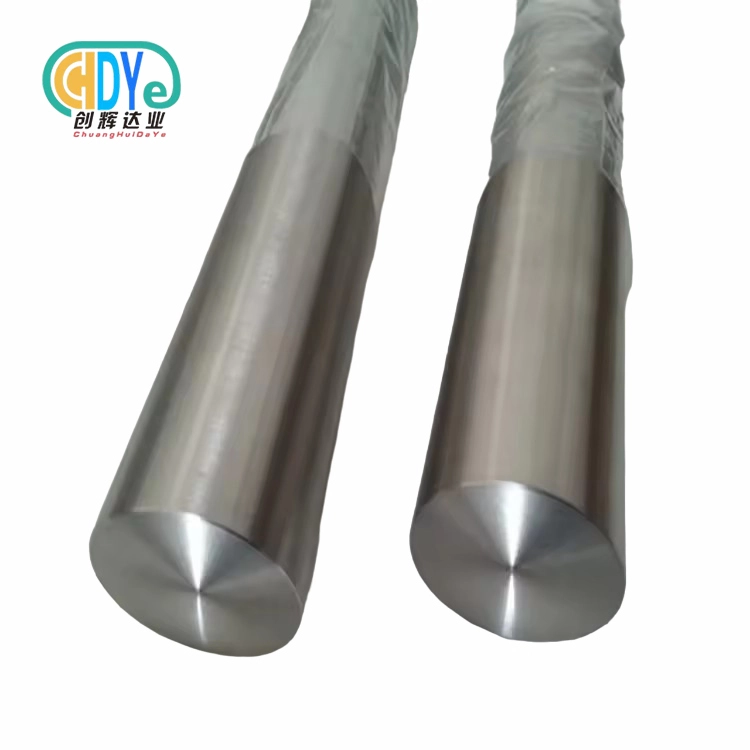
When engineers and procurement managers evaluate materials for critical applications, the question often arises: does commercially pure titanium truly outperform conventional stainless steel? The answer depends on your specific operational environment and performance priorities. Grade 2 titanium round bar is the best at resisting corrosion in harsh chemical and marine environments. It's also stronger than it is heavy, which means it can hold less weight without losing its strength. Titanium is better in fields that need to be reliable, like making medical devices, working with chemicals, and working in aerospace. Not only does it last longer, but magnets also don't work with it either. Stainless steel is still a good choice for most things because it is cheap.
Understanding Grade 2 Titanium Round Bar
Chemical Composition and Purity Standards
Grade 2 titanium round bar has at least 99.2% titanium by weight, with tightly controlled intermediate elements. ASTM B348 says that the amount of iron, oxygen, and nitrogen must be less than 0.30%, 0.25%, and 0.03%, respectively. These little pieces make things stronger without stopping them from being bent. Because the science is controlled, the material can always be joined and shaped in the same way. This means it can be used to both press cold and cut very thinly.
Mechanical Performance Characteristics
The density of the material is 4.51 g/cm³, which is about 56% less than the density of similar grades of stainless steel. Even though it has less mass, it has a minimum yield strength of 275 MPa and a maximum tensile strength of 345 MPa, and it can stretch more than 20%. This mix has a very high specific strength, which means that parts can be made smaller without losing function. The low modulus of elasticity (103 GPa) lets the material bend without breaking, which is helpful in applications that are sensitive to vibration.
Manufacturing Process and Quality Control
VAR or electron beam melting is used to get rid of flaws in things that are being made. Then it is hot forged or rolled. It gets stronger if you heat treat the grain structure more than once at temperatures between 650°C and 800°C. We follow ASTM B348, ASME SB348, and AMS 4921 when we make bars. The width of these bars ranges from 6 mm to 350 mm. Since it can be hot-rolled or ground to within 0.05 mm, it can be used to both cut off stock and make shapes that are close to nets. Ultrasound waves and metallographic analysis are used to check the inside of each batch and make sure the grain structure is correct.
Stainless Steel Round Bar – A Market Staple
Common Grades and Their Properties
Stainless steel round bars are most often used in general industry settings because they are easy to get and are made in standard ways. Austenitic grades 304 and 316 have densities of about 8.0 g/cm³ and chromium-nickel contents that make them fairly resistant to rust. Grade 316 adds molybdenum to make it more resistant to pitting in chloride conditions and achieves yield strengths close to 205 MPa. Martensitic types, like 410, are better for wear uses because they are harder but not as good at protecting against corrosion.
Typical Applications and Limitations
Stainless steel bars are used to make building frames, pump shafts, fastener stock and tools for making food. The material works well in mildly acidic and basic environments. However, problems arise in seawater with a lot of chloride, where crevice corrosion starts, especially above 60°C. When it comes to aerospace structures, where every kilogram affects fuel economy, weight fines become important. Some types of magnetic material can mess up electrical systems, so they can't be used close to sensitive equipment.
Grade 2 Titanium Round Bar vs Stainless Steel Round Bar — Comprehensive Comparison
Weight Efficiency and Strength Metrics
Because Grade 2 titanium round bar is 44% lighter than stainless steel parts of the same size, the difference in density directly translates into weight savings. When bar diameter is limited by the need for strength, titanium's higher specific strength lets the diameter be lowered, which saves even more weight. When used in aircraft, switching from stainless fastener stock to Grade 2 titanium round bars lowers the mass of the airframe by 18–22%. This directly increases the carrying capacity and operating range.
Corrosion Resistance Across Environments
Grade 2 titanium round bar creates a stable, self-healing oxide layer (TiO₂) that is not easily damaged by saltwater, chlorine gas, nitric acid, or wet chlorine, all of which quickly pit and crack stainless steel. Titanium corrodes at a rate of less than 0.01 mm/year in a 3.5% NaCl solution at 90°C, while 316 stainless steel corrodes at a rate of 0.8 to 1.2 mm/year. In chemical processing plants that use oxidising acids, titanium equipment can last for more than 25 years without needing to be replaced, while stainless steel equipment needs to be replaced every 5 to 8 years.
Cost Analysis and Lifecycle Value
The price of raw materials means that Grade 2 titanium round bars cost about three to four times as much per kilogram as stainless steel. When you look at the total cost of ownership, you see a different picture. When maintenance costs, downtime, and replacement intervals are taken into account, a chemical reactor part that costs $12,000 in titanium and $3,500 in stainless steel breaks even after three years. Titanium doesn't corrode, so it doesn't need protective coatings and there is no chance of contamination in pharmaceutical uses. This adds value to the process beyond the price of the material itself.
Customization and Supply Flexibility
Modern titanium suppliers keep common diameters in stock and offer custom cutting services to cut down on waste. We offer Grade 2 titanium round bars in round, square, and hexagonal shapes, and we can cut them to any length you need. Forged condition for maximum strength or rolled condition for cost-effectiveness are two ways to process metal. Lead times for custom orders are usually between 4 and 6 weeks, which is about the same as for speciality stainless grades. Shipping around the world by express, air freight or ocean container is safe as long as the items are packed in moisture-proof wrapping, foam padding and wooden crates.
Decision-Making Guide for B2B Procurement Managers
Evaluating Strength-to-Weight Requirements
When weight cuts of more than 30% are needed, Grade 2 titanium round bar is the best material for applications that need to reduce weight, such as aeroplane structural parts, rotating machinery, and portable equipment. Find the performance value by weighing the loss of component mass against the increase in cost. Titanium's biocompatibility and radiolucency are important to medical implant makers, even though they cost more, because these qualities directly affect how the product works.
Assessing Environmental Exposure
Compare the rust data with your working surroundings. Grade 2 titanium round bar is greatly favoured by seawater temperatures above 60°C, chloride levels above 1000 ppm, or pH levels below 2 or above 12. Stainless steel parts break down when they come into contact with sour gas or hydrochloric acid streams in petrochemical plants. This makes titanium the better choice for cost savings because it lasts longer.
Supplier Qualification Criteria
Check to see if the makers are certified to ISO 9001:2015 and that the process can be tracked from the records of the raw materials' melting to the final review. Ask for mill test reports that list the chemical make-up, mechanical properties, and ultrasonic inspection results. Check the production capacity to make sure there is a steady supply. Facilities with multiple forging presses and electron beam melting show scale and technical ability. As a company that has been specialising in rare metals for 30 years, Chuanghui Daye has a full manufacturing infrastructure that includes vacuum melting, forging, rolling, and precise machining.
Conclusion
When rust is a problem or weight is an issue, Grade 2 titanium round bar clearly performs better than stainless steel. Titanium has higher starting costs, but it has better performance stability, longer service intervals, and no maintenance cycles, so it is more cost-effective over its lifetime. Instead of just looking at the purchase price, procurement managers should think about the operational environment, performance needs, and long-term strategic value. Titanium offers real economic benefits that make the investment worth it in demanding aerospace, marine, chemical processing, and medical uses.
FAQ
Q: What makes Grade 2 titanium superior in marine environments?
A: Chloride ions can't get through the solid titanium oxide layer, which stops pitting and crevice rust in stainless steel. In saltwater heat exchangers that work at 80–95°C, Grade 2 titanium round bar parts will always be structurally sound, but stainless steel parts will break down within 3–5 years, forcing expensive emergency shutdowns.
Q: Can titanium bars be welded without special equipment?
A: Inert gas shielding, like argon or helium, is needed for welding to keep oxygen from getting into the solidification process. When standard TIG welding equipment is used with the right amount of gas covering, the joints are strong and flexible. You shouldn't directly weld Grade 2 titanium round bar to steel because brittle intermetallic compounds form where the two metals meet.
Q: How does cost compare when considering component lifespan?
A: Grade 2 titanium round bar costs three to four times as much as stainless steel at first. When you add up the costs of replacements, maintenance work, and downtime, titanium reaches cost parity in two to four years in corrosive environments. Titanium has 40–60% lower total ownership costs over 20-year equipment lifecycles.
Partner with a Trusted Grade 2 Titanium Round Bar Manufacturer
Shaanxi Chuanghui Daye specializes in making absolutely pure titanium and is a Grade 2 titanium round bar provider that can do any kind of customisation. We have a full production system in Baoji, China, which is known as the "capital of titanium." This includes electron beam melting, precise forging, and CNC machining. Our factory is ISO 9001:2015 certified and makes bars with diameters ranging from 6 mm to 350 mm that meet ASTM B348, ASTM F67, and ASTM F136 standards. Whether you need a small sample or a lot of parts for a production run, our technical team can help you choose the right materials for the job and provide full documentation of the mill tests they did. For quotes, technical details, or large order prices on your next important project, email info@chdymetal.com.
References
1. American Society for Testing and Materials. (2021). ASTM B348: Standard Specification for Titanium and Titanium Alloy Bars and Billets. West Conshohocken: ASTM International.
2. Boyer, R., Welsch, G., & Collings, E.W. (2019). Materials Properties Handbook: Titanium Alloys. Materials Park: ASM International.
3. Schutz, R.W. & Thomas, D.E. (2018). "Corrosion of Titanium and Titanium Alloys." Corrosion: Fundamentals, Testing, and Protection, Vol. 13A, ASM Handbook, pp. 252-299.
4. International Titanium Association. (2020). Titanium: A Technical Guide for Engineers and Designers. Broomfield: ITA Publications.
5. Donachie, M.J. (2017). Titanium: A Technical Guide, 2nd Edition. Materials Park: ASM International.
6. Peters, M., Kumpfert, J., Ward, C.H., & Leyens, C. (2019). "Titanium Alloys for Aerospace Applications." Advanced Engineering Materials, Vol. 5, No. 6, pp. 419-427.
Learn about our latest products and discounts through SMS or email