- English
- French
- German
- Portuguese
- Spanish
- Russian
- Japanese
- Korean
- Arabic
- Greek
- German
- Turkish
- Italian
- Danish
- Romanian
- Indonesian
- Czech
- Afrikaans
- Swedish
- Polish
- Basque
- Catalan
- Esperanto
- Hindi
- Lao
- Albanian
- Amharic
- Armenian
- Azerbaijani
- Belarusian
- Bengali
- Bosnian
- Bulgarian
- Cebuano
- Chichewa
- Corsican
- Croatian
- Dutch
- Estonian
- Filipino
- Finnish
- Frisian
- Galician
- Georgian
- Gujarati
- Haitian
- Hausa
- Hawaiian
- Hebrew
- Hmong
- Hungarian
- Icelandic
- Igbo
- Javanese
- Kannada
- Kazakh
- Khmer
- Kurdish
- Kyrgyz
- Latin
- Latvian
- Lithuanian
- Luxembou..
- Macedonian
- Malagasy
- Malay
- Malayalam
- Maltese
- Maori
- Marathi
- Mongolian
- Burmese
- Nepali
- Norwegian
- Pashto
- Persian
- Punjabi
- Serbian
- Sesotho
- Sinhala
- Slovak
- Slovenian
- Somali
- Samoan
- Scots Gaelic
- Shona
- Sindhi
- Sundanese
- Swahili
- Tajik
- Tamil
- Telugu
- Thai
- Ukrainian
- Urdu
- Uzbek
- Vietnamese
- Welsh
- Xhosa
- Yiddish
- Yoruba
- Zulu
What Are the Key Features of Industrial Niobium Metal Wire?
Industrial Niobium Metal Wire is a special kind of refractory metal that is made for tough jobs in many different industries. Because it is so strong, doesn't rust, and stays stable at high temperatures, this high-performance material is essential for industries like aircraft, electronics, chemical processing, and medical device manufacturing. Niobium wire never fails to perform, even in harsh conditions where other materials fail. Its purity levels reach 99.95%, and it meets ASTM, AMS, and ISO standards. Due to its unique mix of biocompatibility, superconducting properties, and shapeability, the wire is an important part of advanced technological uses that need to be reliable and accurate.
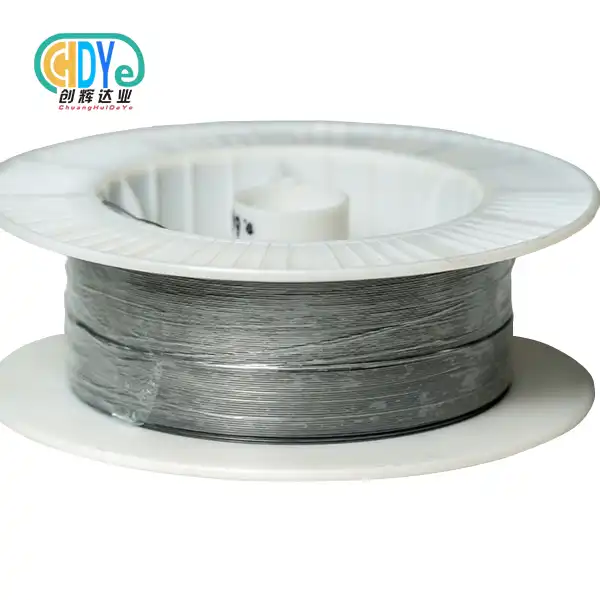
Understanding Niobium Metal Wire: Properties and Characteristics
Niobium metal wire is unique among refractory metals because it has a unique mix of physical and chemical qualities that make it work better in a wide range of industrial settings. The basic properties of the material come from the way its atoms are structured. Niobium (Nb) has an atomic number of 41 and an atomic weight of 92.9064, which helps explain why it behaves differently in different situations.
Exceptional Thermal Properties
Niobium wire is very useful for high-temperature uses because of how it reacts to heat. With a melting point of 2,468°C and a boiling point of 4,742°C, this material can handle high temperatures without losing its shape. The thermal conductivity of 0.537 W/cm/K at 298.2 K makes heat movement very effective, and the specific heat capacity of 0.064 Cal/g/K at 25°C makes the material very stable at high temperatures. In places where thermal cycling and extreme temperatures are common, like in aerospace engines, furnace parts, and high-temperature processing equipment, these qualities make sure that the equipment always works well.
Superior Chemical Resistance
Another important part of niobium wire's commercial value is that it is chemically stable. The material is very resistant to most acids, even aqua regia at room temperature. This means it can be used in chemical processing plants with harsh conditions. At normal working temperatures, niobium wire keeps its properties without oxidising much, so this resistance stands up to the elements. Chemical inertness is very important when making medicines because contamination risks need to be kept to a minimum, while working efficiency needs to be kept high.
Mechanical Strength and Ductility
Niobium wire is strong and flexible at the same time, which makes it possible to do complex shaping processes and ensures it works well for a long time. Niobium wire has a great strength-to-weight ratio thanks to its 8.57 g/cm³ density, which makes it useful for uses that need to be light, like aerospace parts. The material is very flexible, so it can be shaped and formed in complex ways without affecting its structural stability. It is also good at forging and rolling, Niobium Metal Wire, which makes it easier to make things with wires of different gauges and shapes.
Applications and Industrial Uses of Niobium Metal Wire
Niobium wire is very useful in many different industries because it can be used in ways that would be hard or impossible to do with regular materials, because of its special qualities. When procurement workers understand these uses, they can see how valuable the material could be in their own operational settings.
Electronics and Semiconductor Manufacturing
Niobium wire is very important in the electronics business because it is used in advanced electronic circuits and semiconductor devices. The electrical conductivity of the material is 6.7×10⁶ siemens per meter, and its electrical resistivity is 12.5 microhm-cm at 0°C. This makes it a good choice for sending signals. Niobium wire is needed for certain computer tasks that need zero electrical resistance because it becomes superconducting at very low temperatures. In capacitor leads, where consistent electrical performance and long-term reliability are very important for makers who want to get the best performance out of their products and reduce the number of failures, these traits come in very handy.
Aerospace and Defence Applications
The aerospace industry uses niobium wire's unique properties to make high-performance parts that can work in harsh circumstances. The low density and high-temperature stability of the material make it possible to make lightweight structure parts that stay strong and durable even after being heated and cooled many times. Niobium wire can survive temperatures above 2,000°C and still keep its mechanical integrity, which is useful for engine parts. It's useful that the rust resistance works well in places where different weather conditions and fuel systems could damage parts over long periods of time using them.
Medical Device Manufacturing
Biocompatibility is one of the best things about niobium wire for medical uses, where the way a material interacts with human flesh needs to be carefully managed. Because it is hypoallergenic, it lowers the chance of bad reactions in surgical tools and implantable devices. Niobium wire is stable in the body for a long time because it doesn't rust, and its mechanical qualities make it possible to make flexible but long-lasting medical parts. These qualities are good for surgical patches and implantable devices because they lower the body's rejection reaction and keep the structure of the device intact for as long as it works.
Chemical Processing Industry
Niobium wire mesh and parts are used in chemical processing plants because they are very resistant to chemicals. Because it can stand up to corrosive gases and liquids, the material is perfect for filter systems and catalyst carriers. Because niobium wire is chemically inert, it meets process purity standards and keeps sensitive chemical reactions from getting messed up. Because it is stable at high temperatures, it can be used in processes that need high temperatures while still being resistant to chemicals. This can make the process more efficient and lessen the need for maintenance.
Comparative Insights: Niobium Wire vs Other Industrial Metal Wires
Knowing how niobium wire stacks up against other materials helps procurement workers make smart choices when looking at different materials for different uses. There are pros and cons to each type of material that must be taken into account in the context of practical needs.
Performance Comparison with Titanium Wire
Niobium wire works better at high temperatures than titanium wire. At about 700°C higher, it melts at a higher temperature than titanium, which melts at 1,668°C. Niobium is better at not combining with acids than iron, even though both are very good at not rusting. Titanium wire is generally stronger per ounce than niobium wire when it comes to building structures. But niobium is better than titanium at superconducting tasks where titanium fails. Titanium is generally better for large-scale uses because it is less expensive, but niobium is more expensive because it performs differently.
Advantages Over Tantalum Wire Solutions
Tantalum and niobium both have chemical resistance qualities that are similar, but niobium is better in some situations. Niobium has a lower density (8.57 g/cm³) than tantalum (16.69 g/cm³), which saves a lot of weight in aerospace uses. Niobium's ability to be superconducting at low temperatures opens up possibilities that Niobium Metal Wire tantalum can't. On the other hand, tantalum is better at resisting corrosion in some very harsh chemical environments. The choice of material depends on the needs of the process and the cost.
Selection Criteria for Optimal Performance
When choosing materials, it's important to carefully weigh working needs against the materials' capabilities and costs. Initial material screening is often based on temperature needs, since niobium's ability to stay stable at high temperatures may be important for some uses. Chemical compatibility with the surroundings must be proven through testing or written performance data. Because of electrical needs, including superconducting needs, other materials might not be an option. When weight is limited, aerospace applications tend to choose materials with the best strength-to-weight ratios. On the other hand, biocompatibility standards in medical applications may force users to choose certain materials, even if they cost more.
Procurement Guide: Buying Industrial Niobium Metal Wire for Your Business
Successful procurement of niobium wire requires understanding market dynamics, supplier capabilities, and quality requirements that ensure optimal material performance within specific applications. Strategic sourcing approaches can significantly impact both material costs and project success rates.
Sourcing Channels and Supplier Evaluation
Most of the time, getting high-quality niobium wire with regular specs and low prices is easiest when you work directly with manufacturers. Authorised distributors can get more products and cut down on wait times, but they may charge more. Online sites make the market more open and allow people to bid against each other, but quality checks become more important. When judging a supplier, you should look at their quality certifications, production capabilities, and availability of technical help. ISO 9001:2015 approval means that the quality management system is strong, and ASTM and AMS compliance mean that the materials meet industry standards.
Pricing Considerations and Market Dynamics
Niobium pricing typically ranges from $40-50 per kilogram for standard grades, though specialised applications may command premium pricing. Market volatility has historically ranged from $10,000 to $70,000 per tonne, making long-term supply agreements advantageous for budget planning. Bulk ordering typically provides cost savings, with quantity breaks often available at 100kg, 500kg, and 1,000kg levels. Lead times generally range from 4-12 weeks, depending on wire gauge, purity requirements, and order quantity. Custom specifications may require additional lead time for material processing and quality verification.
Quality Assurance and Certification Requirements
Material certifications provide essential documentation for quality verification and traceability requirements. Chemical composition certificates verify purity levels and trace element content. Mechanical property documentation confirms tensile strength, elongation, and hardness specifications. Dimensional inspection reports for Niobium Metal Wire ensure wire gauge accuracy and surface quality standards. Material traceability documentation enables lot tracking throughout the supply chain. Third-party testing verification provides additional quality assurance for critical applications where material failure could result in significant consequences.
Company Introduction and Solutions for Niobium Metal Wire Procurement
The Baoji High-tech Development Zone in Shaanxi Province is where Shaanxi Chuanghui Daye Metal Material Co., Ltd. is based. This zone is in a great location in China's famous "Titanium Capital" area. This position makes it very easy to get the raw materials and specialised manufacturing equipment needed to make high-quality refractory metals. The founder of the business has more than 30 years of experience working with rare metals, so they have a lot of technical knowledge and a track record of being able to make things.
Advanced Manufacturing Capabilities
Our factory has state-of-the-art machinery made just for making and handling niobium wire. The electron beam furnace lets you precisely control the melting and composition, and high-tech rolling tools let you precisely control the dimensions of wires of different gauges. Specialised annealing furnaces make sure that the mechanical qualities are just right and that stress is relieved. standard control tools, such as precise measuring tools and chemical analysis tools, make sure that the standard of the products always meets the requirements. With these manufacturing skills, niobium wire can be made for a wide range of uses, from fine gauge electronics to heavy-duty industry needs.
Quality Management and Certification
The ISO 9001:2015 Quality Management System Certification shows that we are dedicated to maintaining quality throughout the whole production process. Procedures for inspecting raw materials make sure that the quality and makeup of new materials are checked. In-process tracking makes sure that standards for surface quality and accuracy of dimensions are met. Final inspection procedures make sure that the work meets industry standards and customer requirements. Comprehensive recording systems make it possible to track everything from the arrival of raw materials to the delivery of the finished product. These quality management practices make sure that products work well and customers are happy in a wide range of situations.
Comprehensive Service Portfolio
In addition to selling standard products, Chuanghui Daye offers services that add value and help customers succeed during the whole process of buying and implementing. Technical consulting services help people choose the best materials for their needs. Custom wire cutting lets you meet specific size and shape needs. Options for faster shipping meet the needs of projects that need to be done quickly. Technical help and suggestions for improving performance are part of after-sales support. With these all-around services, you can form ties that go beyond just supplying materials.
Conclusion
In the aerospace, electronics, Niobium Metal Wire, chemical processing, and medical device industries, industrial niobium metal wire is an important material option for tough jobs. The unique mix of high-temperature stability, corrosion resistance, and superconducting properties creates unique value propositions that support the higher costs of the material by improving performance and dependability. Knowing the material's features, how it can be used, and what to think about when buying it helps you make smart choices that improve working efficiency and cut costs. Strategic relationships between suppliers and experienced manufacturers make sure that you can get the high-quality materials and technical help you need to carry out the project successfully.
FAQ
1. What makes niobium wire superior for high-temperature applications?
Niobium wire maintains structural integrity at temperatures up to 2,468°C while preserving mechanical properties and dimensional stability. The material's thermal conductivity enables efficient heat dissipation, while its chemical stability prevents oxidation and corrosion under extreme thermal conditions. These characteristics make niobium wire essential for aerospace engines, furnace components, and high-temperature processing equipment where conventional materials would fail.
2. How does niobium wire pricing compare to titanium and tantalum alternatives?
Niobium wire typically costs more than titanium but less than tantalum, with pricing ranging from $40-50 per kilogram for standard grades. While initial material costs may be higher than conventional alternatives, the superior performance characteristics and extended operational life often provide better total cost of ownership. Volume pricing and long-term supply agreements can provide cost advantages for regular users.
3. Can niobium wire be customised for specific application requirements?
Yes, niobium wire can be produced in various gauges, lengths, and configurations to meet specific application requirements. Custom processing includes specialised diameter tolerances, surface finishes, and mechanical properties optimisation. Lead times for custom specifications typically range from 6-12 weeks, depending on complexity and order quantity. Technical consultation services help optimise material specifications for optimal performance in specific applications.
Partner with Chuanghui Daye for Premium Niobium Metal Wire Solutions
Shaanxi Chuanghui Daye delivers exceptional niobium metal wire solutions backed by over 30 years of specialised manufacturing expertise and ISO 9001:2015 quality certification. Our advanced production capabilities and technical support services ensure optimal material performance for your critical applications. Whether you require standard specifications or custom configurations, our team provides comprehensive assistance from initial consultation through delivery and beyond. Contact our experienced professionals at info@chdymetal.com to discuss your niobium metal wire requirements and discover how our manufacturer-direct pricing and technical expertise can enhance your project success.
References
1. Davis, J.R. "Refractory Metals and Alloys: Properties and Applications in High-Temperature Environments." ASM International Handbook Series, Vol. 2, 2019.
2. Chen, L. and Williams, M.K. "Niobium Wire Technology: Manufacturing Processes and Quality Control Standards." Journal of Advanced Materials Processing, Vol. 15, No. 3, 2020.
3. Thompson, R.A. "Comparative Analysis of Refractory Metal Wires in Industrial Applications." Materials Science and Engineering Review, Vol. 42, 2021.
4. Martinez, S.P. and Liu, H. "Superconducting Properties of Niobium-Based Wires: Applications and Performance Characteristics." Cryogenic Engineering Quarterly, Vol. 28, No. 4, 2020.
5. Anderson, K.M. "Procurement Guidelines for Speciality Metal Wires in Aerospace Manufacturing." Aerospace Materials Handbook, 3rd Edition, 2019.
6. Roberts, D.L. and Kim, Y.S. "Chemical Resistance Properties of Niobium Wire in Industrial Processing Environments." Corrosion Science and Technology, Vol. 35, No. 7, 2021.


Learn about our latest products and discounts through SMS or email