- English
- French
- German
- Portuguese
- Spanish
- Russian
- Japanese
- Korean
- Arabic
- Greek
- German
- Turkish
- Italian
- Danish
- Romanian
- Indonesian
- Czech
- Afrikaans
- Swedish
- Polish
- Basque
- Catalan
- Esperanto
- Hindi
- Lao
- Albanian
- Amharic
- Armenian
- Azerbaijani
- Belarusian
- Bengali
- Bosnian
- Bulgarian
- Cebuano
- Chichewa
- Corsican
- Croatian
- Dutch
- Estonian
- Filipino
- Finnish
- Frisian
- Galician
- Georgian
- Gujarati
- Haitian
- Hausa
- Hawaiian
- Hebrew
- Hmong
- Hungarian
- Icelandic
- Igbo
- Javanese
- Kannada
- Kazakh
- Khmer
- Kurdish
- Kyrgyz
- Latin
- Latvian
- Lithuanian
- Luxembou..
- Macedonian
- Malagasy
- Malay
- Malayalam
- Maltese
- Maori
- Marathi
- Mongolian
- Burmese
- Nepali
- Norwegian
- Pashto
- Persian
- Punjabi
- Serbian
- Sesotho
- Sinhala
- Slovak
- Slovenian
- Somali
- Samoan
- Scots Gaelic
- Shona
- Sindhi
- Sundanese
- Swahili
- Tajik
- Tamil
- Telugu
- Thai
- Ukrainian
- Urdu
- Uzbek
- Vietnamese
- Welsh
- Xhosa
- Yiddish
- Yoruba
- Zulu
What Grades Are Available for ASTM B 265 titanium sheet?
The ASTM B 265 titanium sheet specification covers nine primary grades: Grade 1, Grade 2, Grade 3, Grade 4, Grade 5 (Ti-6Al-4V), Grade 7, Grade 9, Grade 12, and Grade 23. Each grade has its own mechanical properties, chemical make-up, and corrosion-resistance profile to meet the needs of different industries. Purchasing managers and engineers can pick materials that are best for their prices and work best in fields like aircraft, medicine, chemical processing, and the marine industry if they know about these differences.
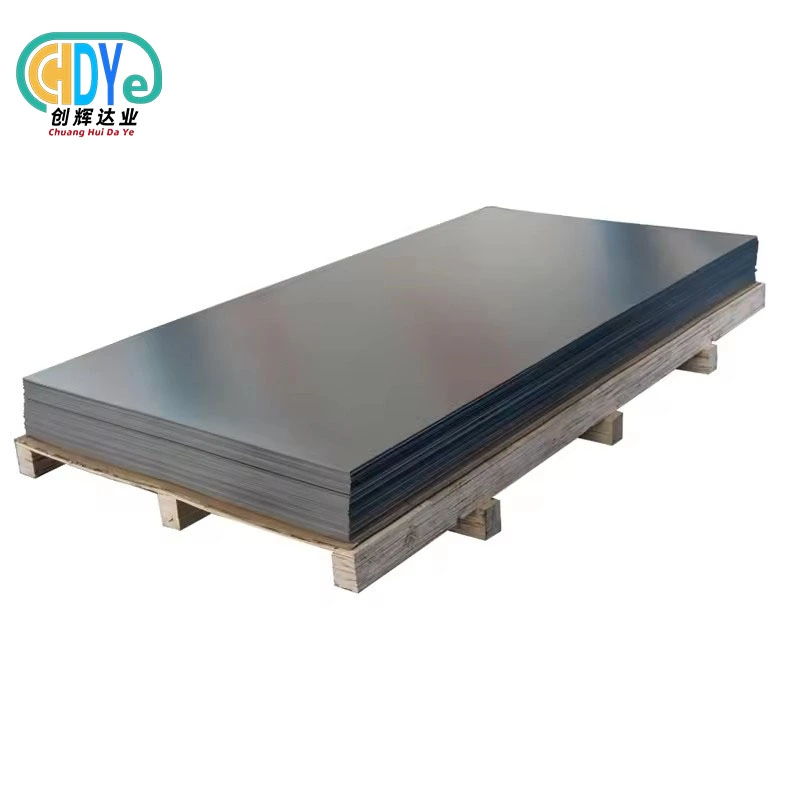
Available Grades Under ASTM B 265 Titanium Sheet Specification
ASTM B 265 titanium sheets have nine grades with a range of properties that are meant to meet a variety of industrial needs. At Chuanghui Daye, we use cold-rolled production methods to make sheets in this whole range. These methods ensure uniform mechanical properties and surface quality.
Commercially Pure Titanium Grades (1-4)
Grade 1, which has the least amount of oxygen, is the lightest and most flexible choice. This grade works really well in situations where complicated cold forming, deep drawing, or hydroforming is needed, and material flow and formability are more important than ultimate tensile strength. It doesn't rust easily in oxidising and mildly reducing environments, which makes it perfect for heat exchangers and chemical processing equipment that is exposed to saltwater or weak acids.
Titanium Grade 2 is the workhorse of the business because it has the best mix of strength, resistance to corrosion, and low cost. It has a little more oxygen than Grade 1, so it has a higher tensile strength (345 MPa at least), but it is still easy to weld and shape. Because it can be used in so many different ways, it is widely used in aircraft structural parts, naval uses, and industrial piping systems that need to be reliable and work well.
Through controlled oxygen additions, grades 3 and 4 get stronger over time, achieving tensile strengths of 450 MPa and 550 MPa, respectively. These grades are used in specific situations where better mechanical qualities are needed, but the price of titanium alloys is too high. Their lower flexibility compared to Grades 1 and 2 needs to be carefully thought through when deciding how to make them.
Titanium Alloy Grades
Grade 5 (Ti-6Al-4V) is the most common choice for high-performance uses that need the highest strength-to-weight ratios. Adding 6% aluminium and 4% vanadium makes a two-phase lattice that gives the material tensile strengths of more than 895 MPa after it has been cured. Aerospace companies use this grade for parts of aeroplane frames, landing gear and rotor blades that need to be lighter so that the plane can use less fuel and carry more cargo.
Grade 7 adds 0.1 to 0.25% palladium to economically pure titanium. This makes it much more resistant to reducing acids and crevice corrosion in chloride settings. This grade is used in reactor vessels, scrubbers, and heat exchanger tubing where standard grades would break down quickly in chemical processing plants that work with hydrochloric acid, sulphuric acid, or chlorinated seawater.
The metal Grade 9 (Ti-3Al-2.5V) is in the middle of the range. It is stronger than commercially pure grades but easier to shape than Grade 5. Its aluminium and vanadium content makes a single-phase alpha structure that stays flexible when it is bent or stamped. This type is popular in the tubing business for hydraulic systems and condensers that need to be strong and easy to work with.
Grade 12 is made up of titanium, 0.3% molybdenum, and 0.8% nickel. It is meant to be more resistant to corrosion in hot, concentrated salt solutions and some reducing acid environments. This special grade is used in places in the chemistry industry where neither commercially pure titanium nor Grade 7 fully meets working needs.
Grade 23 (Ti-6Al-4V ELI) is an extra-low interstitial version of Grade 5 that has tightly controlled amounts of hydrogen, nitrogen, and oxygen. This grade is only used by companies that make medical devices for surgical implants, orthopaedic prosthetics, and oral implants that must be biocompatible and resistant to fatigue under cyclic loads.
Chemical Composition and Property Variations
The success of each grade comes from the chemical makeup being carefully controlled. Even small amounts of oxygen, nitrogen, carbon, and hydrogen in the interstitial space can have a big effect on the mechanical properties of a material. Between Grade 1 (0.18% max) and Grade 4 (0.40% max), the amount of oxygen can double the tensile strength. Because of this relationship, engineers can choose grades that meet the minimum strength requirements without making the costs of the materials too high.
As part of Chuanghui Daye's production process, we do thorough chemical analysis in line with ASTM E120 and E1409 standards. This makes sure that the hydrogen level stays below 0.015% to avoid delayed hydride cracking. This careful attention to compositional control makes sure that each batch is the same, which is very important for big production runs and supply deals that last for years.
ASTM B 265 Titanium Sheet Grades vs. Other Titanium and Metal Sheets
When buying teams know how ASTM B 265 titanium sheet grades stack up against other material standards and competing metals, they can make sourcing decisions that are based on facts and meet technical needs and budget limits.
Comparison with ASTM B 348 Bar and Billet Standard
Flat-rolled goods are governed by ASTM B 265 titanium sheet specifications, while titanium bars and billets are governed by ASTM B 348. Both standards assign the same grades to different product forms, but the ways they are made and how they are usually used are different. Cold or hot rolling is used to make sheets the same thickness and smoothness, while extrusion or forging is used to make bars with round or square cross-sections. Engineers who need to machine parts from solid stock choose B 348 bars, while engineers who need to stamp large areas of metal or complicated shapes use ASTM B 265 titanium sheets.
Titanium Versus Stainless Steel and Aluminum
The choice between titanium sheets and other metals depends on how well they work. Stainless steel is cheaper to make and has a higher modulus of elasticity than titanium, but it is also almost twice as dense, which makes it heavier in aircraft and automobile uses. Titanium is more resistant to corrosion than even the best types of stainless steel in chloride settings. This means that it doesn't have to worry about stress corrosion cracking like austenitic stainless steels do when they are used in naval applications.
Aluminium alloys have low costs and are easy to work with, but they can't compare to titanium when it comes to performance at high temperatures or resistance to corrosion in harsh chemical environments. Titanium's melting point (1668°C) is higher than aluminum's (660°C), which sets clear limits for high-temperature uses. Titanium has a better strength-to-weight ratio than high-strength aluminium alloys like 7075-T6, which is especially helpful for applications that need to keep weight down.
Commercially Pure Grades Versus Titanium Alloys
The choice between commercially pure (CP) titanium and alloy grades is a major buying decision that will have effects for a long time. It is best to use CP grades because they are more resistant to corrosion, easier to weld, and cheaper. This makes them the best choice for moderately strong chemical processing equipment, naval parts, and building uses. Their high flexibility makes shaping easier and cuts down on the cost of tools used in manufacturing.
Titanium alloys give up some of their ability to fight corrosion and shape change in order to achieve much higher levels of strength that are needed for structural aircraft parts, medical implants, and high-performance sports equipment. The higher prices of materials and processes for alloys like Grade 5 need to be justified by design optimisation that makes parts lighter, lasts longer, or lets them do things that can't be done with CP grades.
Procurement Considerations for ASTM B 265 Titanium Sheet Grades
Getting ASTM B 265 titanium sheet products requires paying attention to the skills of the suppliers, how much they charge, how much customisation they can do, and the paperwork that needs to be kept to make sure that materials can be tracked and that regulations are followed.
Supplier Selection and Certification Requirements
When you work with ISO 9001:2015-certified companies like Chuanghui Daye, you can be sure that their quality management systems include checking the raw materials, keeping an eye on the process, and checking the finished product. We keep up-to-date electron beam furnaces, CNC rolling equipment, and precision annealing ovens in Baoji, which is known as China's Titanium Capital. These machines make sure that the dimensions and mechanical properties of each production run are always correct.
When checking the certifications of a supplier, you should look over EN 10204 3.1 material test reports that list heat numbers, chemical analysis results, mechanical test data, and heat treatment parameters. This paperwork makes it possible to track everything from melting to the final inspection. It meets the quality standards for aerospace AS9100 and medical devices ISO 13485.
Pricing Factors and Volume Considerations
The cost of raw materials, the difficulty of production, and the number of orders all affect the price of titanium sheets. Commercially pure grades usually cost 30–40% less than high-performance alloys like Grade 5. Specialised grades with palladium (Grade 7) or extra-low interstitials (Grade 23) cost more because they have more alloying elements and have to follow stricter chemical limits.
When you buy more, you save money on processes like freezing, rolling, and inspecting. This is how volume-based pricing works. Our facility has low bulk prices and doesn't charge extra for custom cutting, which lowers the total landed costs for large-scale projects. Lead times are usually between 4 and 8 weeks, but they can be shorter or longer depending on the grade, size, and quantity of the order. For urgent needs, production can be sped up.
Customization and Dimensional Flexibility
In high-volume situations, standard sheet measurements can save you money, but custom sizing is often necessary to cut down on trash and unnecessary processing. At Chuanghui Daye, we cut sheets to your exact specifications for no extra charge. This makes the best use of materials for your fabrication process. To fit casting, welding, or machining processes that come after, limits for thickness, flatness needs, and edge conditions can be changed.
Different types of surface finishes, such as pickled, annealed, polished, or sandblasted, affect both how something looks and how well it works in corrosion-critical situations. Descaling processes are part of our processing options. They get rid of oxide layers and get surfaces ready for bonding or covering.
Export Compliance and Documentation
There are rules about exporting titanium that apply to all countries, especially when it comes to aerospace-grade materials that could also be used in the military. Understanding Harmonised Tariff Schedule classifications, export licence requirements, and end-use certifications can help you avoid customs delays and follow the law in all areas.
Commercial invoices, packing lists, certificates of origin, material test results, and any necessary export licenses should all be included in complete paperwork packages. Our export team helps you with all of these requirements, making it easier to get through customs and get the goods to your facility on time.
Applications and Industry Use Cases by Grade
When engineers know how different ASTM B 265 titanium sheet grades work in real-world situations, they can choose materials that have the best technical performance and economic value.
Aerospace and Defense Applications
Manufacturers in the aerospace industry use ASTM B 265 titanium sheet Grade 5 titanium sheets for parts of the engine, wing skins, and airframe structures because they are strong for their weight. These parts use less fuel and can carry more cargo. Because it doesn't wear out under repeated loads and keeps working well at high temperatures, the material can't be replaced in important flight systems. Grade 2 is used for ducts, fairings, and other non-structural parts that need to be resistant to rust and easy to shape over strength.
Chemical Processing and Petrochemical Equipment
In the chemical industry, corrosion resistance that lasts longer than stainless steel is needed in process streams that are acidic, chloride-rich, or oxidising. Grade 2 sheets are usually used for reactors, distillation columns, and pipe systems that deal with nitric acid, chlorine that is wet, or seawater. Adding palladium to Grade 7 is necessary to stop faster rust and keep the integrity of containers when reducing acids like hydrochloric or sulphuric acid are used at high temperatures.
Thin-gauge titanium sheets are used in tube-and-shell heat exchanger designs for chemical condensers, offshore platforms, and seawater cooling systems. The material's ability to fight biofouling and keep its heat transfer efficiency over decades makes the original investment worthwhile compared to copper-nickel or stainless steel options that need to be replaced all the time.
Medical Device Manufacturing
It is the standard for permanent implantable devices like hip stems, spinal fusion cages, dental implants, and cardiovascular stents to be made of medical-grade titanium (Grade 23). It meets the strict standards of FDA and ISO 13485 because it is biocompatible, can fuse with bone, and is strong even when loaded and unloaded many times. The extra-low interstitial standard stops hydrogen embrittlement during sterilisation cycles and makes sure that the material won't wear down over time even when it's being loaded physiologically all the time.
Surgical instrument makers like Grade 2 titanium for tools that aren't implants because it can handle being sterilised, isn't magnetic, and doesn't rust in body fluids. These properties make the higher cost of the material more than alternatives made of stainless steel.
Engineering for the sea and offshore
Titanium sheets are used to protect ships, propeller shafts, ballast tanks, and seawater pipe systems that are exposed to saltwater and marine atmospheres by shipbuilders and owners of offshore platforms. In these harsh conditions, Grade 2 is very good at protecting against crevice corrosion, pitting, and stress corrosion cracking, all of which can happen to stainless steels and copper alloys. The material has higher starting costs, but it has lower lifecycle costs and less need for upkeep over time. This makes up for the longer service life and lower dry-docking frequency.
Desalination plants turn seawater into drinkable water and use titanium sheets for the evaporator tubes, condenser sections, and brine heaters because they don't rust when exposed to high temperatures and chloride. This is important for making sure the plants work well and the equipment lasts a long time.
Conclusion
To choose the right ASTM B 265 titanium sheet grade, you need to weigh the mechanical properties, resistance to corrosion, formability, and cost of the sheet against the needs of your specific application. There are nine grades, ranging from commercially pure options that are very flexible to aerospace alloys with high strength. Each grade was designed to solve a different problem in the industry. By knowing these differences, you can make smart choices about what to buy that will get the job done best while keeping costs down. Working with certified manufacturers makes sure that the materials are real, that the measurements are correct, and that all the paperwork is in order. This is important for industries like aerospace, medicine, chemical processing, and the marine.
FAQ
Q: What distinguishes Grade 2 from Grade 12 in practical applications?
A: Grade 2 is the standard for most industrial uses because it is more resistant to rust in oxidising conditions and is easier to shape. The molybdenum-nickel addition in Grade 12 is meant to help it handle chemical processing situations with hot, strong brines or certain reducing acid mixes that Grade 2 doesn't do well with. Process chemistry research is needed to explain the higher price for Grade 12.
Q: Can I order custom sizes without having to pay extra for cutting?
A: At our production site, we offer free custom cutting services that are made to fit your exact needs. This feature cuts down on wasteful material use and unnecessary extra steps in processing, which lowers the overall cost of the project and guarantees accurate measurements for later manufacturing steps.
Q: How do I verify supplier certifications and material authenticity?
A: Request EN 10204 3.1 material test reports that include records of the heat treatment process, chemical makeup analysis, mechanical test results, and heat number tracking. Reliable suppliers keep their ISO 9001:2015 certification up to date and offer third-party inspection options. Chuanghui Daye's quality management system makes sure that all the paperwork for every shipment is full, which helps you meet internal and government quality standards.
Q: What factors determine lead times for titanium sheet orders?
A: Production schedules are based on the availability of grades, the size requirements, the number of items ordered, and the current manufacturing workload. Standard grades in popular sizes usually ship in 4 to 6 weeks, but 6 to 8 weeks may be needed for custom specs or big orders. During the quotation process, our team gives you accurate delivery estimates and stays in touch during production to make sure your project stays on schedule.
Partner with Chuanghui Daye for Reliable ASTM B 265 Titanium Sheet Supply
Shaanxi Chuanghui Daye has been working with rare metals for 30 years and is an ISO 9001:2015 qualified company. They can make titanium sheets that are exactly what you need. We are a reliable ASTM B 265 titanium sheet supplier based in China's Titanium Capital. We offer low factory-direct prices, easy customisation without cutting fees, and full technical support throughout the whole buying process. Our electron beam melting and precise cold-rolling skills make sure that the quality of all nine grades is the same, and we can back this up with full paperwork that shows how the materials were made. Email our engineering team at info@chdymetal.com to talk about your project needs and get a thorough quote that fits your volume, schedule, and performance requirements.
References
1. ASTM International. (2020). ASTM B265-20a: Standard Specification for Titanium and Titanium Alloy Strip, Sheet, and Plate. West Conshohocken, PA: ASTM International.
2. Boyer, R., Welsch, G., & Collings, E.W. (1994). Materials Properties Handbook: Titanium Alloys. Materials Park, OH: ASM International.
3. Schutz, R.W. & Thomas, D.E. (1987). "Corrosion of Titanium and Titanium Alloys." Metals Handbook: Corrosion, Vol. 13, ASM International, pp. 669-706.
4. Peters, M., Kumpfert, J., Ward, C.H., & Leyens, C. (2003). "Titanium Alloys for Aerospace Applications." Advanced Engineering Materials, Vol. 5, No. 6, pp. 419-427.
5. Donachie, M.J. (2000). Titanium: A Technical Guide (2nd Edition). Materials Park, OH: ASM International.
6. Jackson, M., Dashwood, R., Flower, H., & Christodoulou, L. (2005). "The Microstructural Evolution of Near Beta Alloy Titanium During Subtransus Forging." Metallurgical and Materials Transactions A, Vol. 36, pp. 1317-1327.
Learn about our latest products and discounts through SMS or email