- English
- French
- German
- Portuguese
- Spanish
- Russian
- Japanese
- Korean
- Arabic
- Greek
- German
- Turkish
- Italian
- Danish
- Romanian
- Indonesian
- Czech
- Afrikaans
- Swedish
- Polish
- Basque
- Catalan
- Esperanto
- Hindi
- Lao
- Albanian
- Amharic
- Armenian
- Azerbaijani
- Belarusian
- Bengali
- Bosnian
- Bulgarian
- Cebuano
- Chichewa
- Corsican
- Croatian
- Dutch
- Estonian
- Filipino
- Finnish
- Frisian
- Galician
- Georgian
- Gujarati
- Haitian
- Hausa
- Hawaiian
- Hebrew
- Hmong
- Hungarian
- Icelandic
- Igbo
- Javanese
- Kannada
- Kazakh
- Khmer
- Kurdish
- Kyrgyz
- Latin
- Latvian
- Lithuanian
- Luxembou..
- Macedonian
- Malagasy
- Malay
- Malayalam
- Maltese
- Maori
- Marathi
- Mongolian
- Burmese
- Nepali
- Norwegian
- Pashto
- Persian
- Punjabi
- Serbian
- Sesotho
- Sinhala
- Slovak
- Slovenian
- Somali
- Samoan
- Scots Gaelic
- Shona
- Sindhi
- Sundanese
- Swahili
- Tajik
- Tamil
- Telugu
- Thai
- Ukrainian
- Urdu
- Uzbek
- Vietnamese
- Welsh
- Xhosa
- Yiddish
- Yoruba
- Zulu
Why is pure titanium sheet Ideal for Heat Exchanger Equipment?
When selecting materials for heat exchanger equipment, engineers face a critical challenge: finding a solution that withstands aggressive chemical environments while delivering long-term reliability. Pure titanium sheet has emerged as the preferred choice across chemical processing, desalination, and power generation sectors due to its exceptional corrosion resistance, superior mechanical properties, and cost-effectiveness over extended operational periods. This commercially pure material forms an instantaneous passive oxide layer that protects against chloride attack, reducing acid corrosion, and high-temperature brine exposure—conditions where stainless steel and copper alloys typically fail within months.
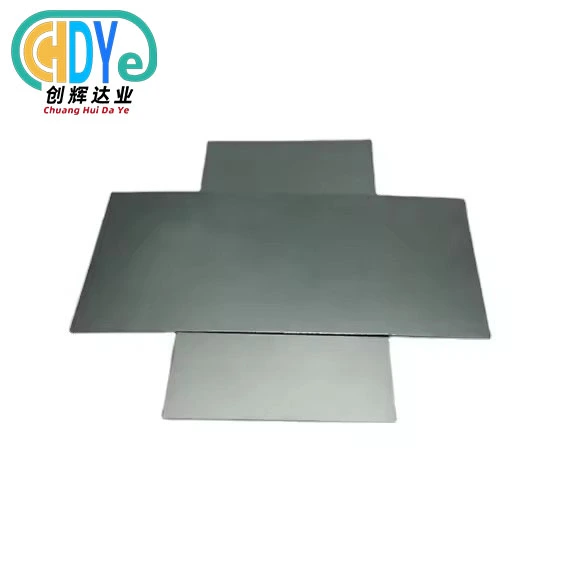
Understanding Pure Titanium Sheet: Properties and Standards
According to ASTM B265 standards, commercially pure titanium sheets are divided into four different grades, each of which is best for a certain type of industrial use. We offer Grades 1, 2, 3, and 4, and we keep enough in stock so that we can send them out quickly, within 1 to 5 days.
Material Classification and Composition
Grade 2 is mostly used to make heat exchangers, which account for about 70% of all CP titanium used in the world. It is a working grade that has more than 99% titanium and managed interstitial elements, such as oxygen levels below 0.25%, iron levels below 0.30%, and small amounts of nitrogen and carbon. These exact limits on composition determine how strong something is mechanically while keeping its flexibility. With 24% stretch, Grade 1 is the most flexible and perfect for complicated plate heat exchanger shapes that need to be deep drawn. Controlled oxygen enrichment gives Grade 4 a tensile strength close to 550 MPa, making it ideal for high-pressure shell-and-tube designs.
Physical and Thermal Characteristics
The density of the material is 4.51 g/cm³, which is about 60% of steel. This means that offshore platforms and mobile tools can be made lighter. At room temperature, thermal conductivity is 17 W/m³K, which is enough for most industrial heat transfer tasks. The melting point goes up to 1668°C, which gives a lot of safety in case of thermal runaway. The low elastic modulus of 105 GPa means that careful springback calculations are needed during cold forming operations. Our technical team handles this by using special bending protocols that they have developed over 30 years of experience in the fabrication industry.
Quality Verification Protocols
To make sure the integrity of the materials, buyers must follow strict inspection procedures. ICP-OES chemical analysis checks the levels of oxygen and iron, which keeps things from becoming brittle from too much oxygen or less resistant to corrosion from iron contamination. The yield strength, maximum tensile strength, and elongation numbers have all been confirmed by ASTM E8 tensile tests. Formability is checked by bending it; Grade 2 must be able to handle a 4T-5T bend radius without breaking. Following the AMS 2631 Class A1 standards for ultrasonic testing finds internal laminations or inclusions that could cause failure under repeated thermal loads.
Why Pure Titanium Sheet Excels in Heat Exchanger Applications
More and more, heat exchanger makers are choosing titanium sheets to fix problems that keep happening with other materials. The special electrochemical properties of the material solve important operational problems in many fields.
Unmatched Corrosion Resistance
The main benefit of pure titanium sheet is that a self-healing titanium dioxide passive film forms instantly when oxygen hits it. This protective layer stays in place in pH ranges of 3 to 12 and temperatures of up to 130°C, which are common in chlor-alkali electrolysis cells and flash evaporators for desalination. Within 18 to 24 months, seawater causes crevice rust and pitting in stainless steel types 304 and 316L, which means they need to be replaced, which is an expensive process. Ultrasonic thickness monitoring programs have shown that titanium installations in North Sea oil platforms have had no corrosion after 25 years of continuous exposure to seawater.
Chemical manufacturing equipment is exposed to hot caustic solutions, concentrated hydrochloric acid, and wet chlorine gas. These are all conditions where almost all other metals quickly rust. Titanium doesn't crack when exposed to salt, so it doesn't have the catastrophic breakdowns that happen with stainless steel heat exchangers in bleaching pulp and making refrigerants. This resistance to corrosion directly leads to longer equipment lifecycles, which lowers the total cost of ownership by 40–60% compared to nickel alloys, even though the materials cost more at first.
Mechanical Performance Advantages
Titanium's strength-to-weight ratio puts it between aluminium and steel, so it can hold its shape with little mass. Grade 2 has a yield strength of 275 MPa and a tensile strength of 345 MPa, which is strong enough for working pressures up to 20 bar in tubular shapes. Because of this strength, the wall sections can be thinner—usually between 0.5 and 1 mm for plate heat exchangers. This makes heat movement more efficient by lowering thermal resistance and lowering the weight of the whole system by 30 to 40 per cent.
The ability to shape well supports complicated shapes that are needed for modern heat exchanger designs. The material can be cold worked, stamped, and hydroformed without having to go through any intermediate annealing cycles. This lowers the cost of making the product. Welding that works with both TIG and plasma arc methods can make joints that last with little damage to the heat-affected zone as long as the right shielding procedures are followed to keep air from getting in.
Biocompatibility and Purity Requirements
When making medicines or cooking food, you need materials that don't release metallic ions or speed up processes you don't want. Titanium is bio-inert, so it meets FDA and European Pharmacopoeia standards for surfaces that come into contact with products. Nickel, chromium, and molybdenum are elements that are found in stainless steels and can get into process streams. In sterile production settings, this means that there is no chance of contamination. Titanium heat exchangers are used in ultrapure water cooling systems for semiconductor fabrication. Even a few parts per billion of metallic contamination can lower wafer yields.
Procurement Considerations: Choosing the Best Pure Titanium Sheet for Heat Exchangers
To choose the right material, you need to make sure that the grade requirements match the working conditions and that the seller can guarantee quality and deliver on time. Our ISO 9001:2015 certification shows that we are committed to managing quality in a planned way during the whole production and delivery process.
Grade Selection by Application Sector
Desalination plants with multiple-stage flash evaporators use Grade 1 or Grade 2 sheets for making tube bundles because they are the most flexible and make tube-to-tubesheet expansion joints easier. Power plants that use ocean cooling systems choose Grade 2 for their condenser tube sheets because it is a good balance between strength and cost. When working with concentrated acids above 60°C, chemical processing equipment usually needs Grade 4, where the higher strength makes up for the aggressive attack on the passive film stability margins.
When aerospace companies buy heat exchangers for weather control systems, they look for ones that are strong and light. Grade 4 is the best choice, even though it costs more. Sterilisation equipment for medical devices works with saturated steam at 134°C, where Grade 2 works well enough for a reasonable price. These choices based on the application keep you from over-specifying while still making sure there are enough safety factors.
Cost-Benefit Analysis and Lifecycle Economics
Pure titanium sheet costs between $25 and $45 per kilogram to buy at first, depending on the grade and the size of the order. This is three to five times the price of stainless steel. This up-front premium needs to be justified by a lifetime study that looks at costs for things like repairs, replacements, and downtime. Titanium heat exchangers in offshore platforms avoid 8–12 planned repair tasks over their 20-year service lives. This keeps production going without interruptions worth $500–2,000,000 per shutdown event.
Chemical cleaning processes, sacrificial anode replacements, and rust tracking programs that are needed for stainless steel systems can be cut out, which lowers the cost of maintenance. Improvements in energy efficiency through thinner wall building lower the amount of power needed for pumps by 15–25%. This saves money that pays for the higher material costs within 5–7 years in most industrial settings.
Supplier Evaluation Criteria
For reliable procurement, suppliers' production skills and quality systems must be checked. We keep standard thicknesses in stock ranging from 0.5mm to 10mm in widths up to 1500mm. This lets us deliver prototypes quickly, within one week. Our electron beam melting facilities and CNC rolling equipment make sure that the microstructure is uniform and that the dimensions are within exact ranges. This is very important to avoid fit-up issues when putting the heat exchanger together.
Every shipment comes with paperwork that can be used to track it. This includes material test results with chemical makeup analyses, mechanical test data, and records of surface inspections. This documentation chain helps with regulatory compliance in nuclear, pharmaceutical, and aerospace settings where it is necessary to check the material's pedigree. Custom cutting, surface finishing, and edge preparation services cut down on the number of steps customers have to take to make something, which speeds up project schedules for installations that need to be done quickly.
Installation and Maintenance Best Practices for Titanium Heat Exchangers
Using the right methods for fabrication and operation will protect the integrity of the materials and improve the performance of heat exchangers for many years to come.
Fabrication and Welding Guidelines
To avoid work hardening and galling when milling titanium sheets, you need to use certain tools and follow certain rules. The best surface finishes are made by carbide cutting tools with positive rake angles and cutting speeds of 40 to 60 meters per minute. Using coolant gets rid of heat and stops chips from sticking together, which hurts the quality of the surface. For customers who don't want to spend a lot of money on trial-and-error development, our technical support team gives them detailed machining specifications that are based on their equipment's capabilities.
Inert gas protection must be used on both the join face and the root sides during welding to stop oxygen and nitrogen from entering and making the alpha-case layers weak. When you purge with argon and the oxygen level drops below 50 parts per million, the ductile joint metal qualities match the performance of the base material. Automated welding systems that use preset shield gas following keep things safe during cooling cycles, so most setups don't need to be heated up after the welding process.
Quality Assurance Verification
Portable X-ray fluorescence analysers that find alloying elements and interstitial content are used for pre-installation inspections to make sure the material is real and meets the grade requirements. Positive material identification stops the substitution of titanium alloys or the wrong CP grades by accident, which would lower the resistance to corrosion. Using coordinate measuring machines to check the dimensions makes sure that the flatness tolerances are within 0.5 mm per metre. This keeps the assembly from having gaps that can lead to crevice corrosion.
Before the machine is put into service, it is tested for weld flaws and mechanical assembly mistakes using hydrostatic pressure at 1.5 times the design pressure. Helium leak tests can pick up leaks as small as 1×10⁻⁹ mbar·L/s, which is perfect for vacuum service uses that need to be sure there are no leaks at all.
Long-Term Maintenance Protocols
Titanium heat exchangers don't need as much care as heat exchangers made of other materials, but they do work better when they are inspected on a regular basis. Every year, a visual inspection finds fouling deposits that make heat transfer less effective. These deposits are usually calcium carbonate scale in cooling water systems or polymer residues in chemical processing equipment. Soft brushes or low-pressure water sprays can be used for mechanical cleaning to get rid of deposits without hurting passive oxide films.
Ultrasonic thickness measurements taken every three to five years show how fast rust is happening, and in well-designed systems, they usually show no penetration. This information backs up predictions about how long the service will last and helps with regulatory compliance paperwork. Long-term integrity is maintained in all working conditions by avoiding contact with hydrofluoric acid and stopping galvanic coupling to less noble metals.
Case Studies and Industry Applications
Real-world performance data shows titanium's value proposition in a wide range of industries that have to deal with tough working conditions.
Desalination Plant Performance Data
In 2008, a multi-stage flash desalination plant in the Middle East replaced copper-nickel tube bundles with pure titanium sheet Grade 2 titanium sheets because the old ones had failed after 18 months of use due to erosion and rust. The titanium system has been running nonstop for 16 years without any tube replacements, and the heat transfer coefficients have stayed within 5% of their original design values. The cost of yearly maintenance went down from $380,000 to $45,000, mostly made up of routinely cleaning out the fouling. Plant managers reported 99.2% availability, up from 87% with the old materials. This meant that they could make more money because they could make more.
Chemical Processing Equipment Success
In 2012, a chlor-alkali company switched electrolysis cell heat exchangers from steel with graphite lining to Grade 2 titanium constructions. The titanium units got rid of thermal cycling failures that needed replacing the graphite liner every six months, which cost $125,000 per intervention. The accuracy of temperature control went up from ±5°C to ±1.5°C. This increased current efficiency by 3.2% and decreased the amount of energy needed to make 1 tonne of chlorine by 47 kWh. The installation paid for itself in 4.3 years, thanks to lower maintenance costs and higher efficiency.
Emerging Market Trends
The need for titanium heat exchangers increases by 8.5% every year. This is because of rising desalination capacity, tougher environmental rules that make chemical treatment of cooling water harder, and the growth of the pharmaceutical industry that needs handling that is free of pollution. When power plants switch from once-through cooling to closed-loop systems, they need titanium more and more to deal with changes in the chemistry of the flowing water. Because of these trends, titanium is becoming an important material for businesses that want to meet their sustainability goals while also lowering the practical risks that come with equipment breakdowns.
Conclusion
When it comes to corrosion protection, mechanical performance, and lifecycle economics, choosing pure titanium sheet for heat exchanger equipment gives you real benefits in a wide range of demanding industrial settings. The passive oxide layer of the material protects it better than any other material in high-purity, chemical processing, and seawater environments where other alloys break down quickly. Initial costs are higher than alternatives made of stainless steel, but a full lifecycle analysis shows that total costs will be 40–60% lower because of less maintenance, longer service life, and better energy efficiency. Our thirty years of experience in making things out of titanium, along with our ISO 9001:2015-certified quality systems and fast delivery times, help buyers make choices that need technical trust and supply chain reliability.
FAQ
Q: How does titanium compare to stainless steel for corrosion resistance in seawater?
A: Titanium forms a stable passive film that is not affected by chloride attack. This stops the pitting and crevice corrosion that only lasts 18 to 36 months in seawater applications for stainless steel. Documented placements show that after 25 years or more of constant sea exposure, there was no corrosion.
Q: What are typical lead times and minimum order quantities?
A: We keep standard grades and thicknesses in stock, so we can deliver orders starting at 10 kilograms within 1 to 5 days. Custom sizes take two to three weeks to make. Samples for checking the quality of materials are sent out for free within 48 hours.
Q: Can titanium sheets be customized for specific heat exchanger designs?
A: We use CNC shears and water jet cutting for our precision cutting services, which can handle complicated shapes. With a range of ±0.05mm, the thickness is between 0.5mm and 10mm. You can finish the surface in a pickled, sanded, or polished way, depending on the roughness level needed for your application.
Partner with a Trusted Pure Titanium Sheet Supplier
Shaanxi Chuanghui Daye combines decades of experience in metalworking with cutting-edge manufacturing skills to produce commercially pure titanium sheets that are certified and meet the strict requirements of heat exchanger applications. We are in Baoji, China, which is known as the "Titanium Capital," and we use our extensive infrastructure and technical know-how to offer Grades 1, 2, 3, and 4 materials that come with full traceability documentation and ISO 9001:2015 quality assurance. Our electron beam melting and precision rolling tools make sure that the microstructure and dimensions are always the same, which is important for the efficiency of heat exchangers. Whether you need a prototype quickly, custom fabrication services, or large quantities of production, our team is ready to help you reach your goals by offering competitive factory-direct prices and technical advice. Email us at info@chdymetal.com to talk about your needs for pure titanium sheet and get a thorough quote that fits the needs of your heat exchanger project.
References
1. ASTM International. (2021). ASTM B265-20a: Standard Specification for Titanium and Titanium Alloy Strip, Sheet, and Plate. West Conshohocken, PA: ASTM International.
2. ASM International Handbook Committee. (2015). Properties and Selection: Nonferrous Alloys and Special-Purpose Materials, ASM Handbook Volume 2. Materials Park, OH: ASM International.
3. Schutz, R.W. & Watkins, H.B. (1998). Recent developments in titanium alloy application in the energy industry. Materials Science and Engineering: A, 243(1-2), 305-315.
4. Boyer, R., Welsch, G., & Collings, E.W. (1994). Materials Properties Handbook: Titanium Alloys. Materials Park, OH: ASM International.
5. Francis, R. & Byrne, G. (2021). Corrosion of Titanium and Titanium Alloys in Marine and Industrial Environments. Houston, TX: NACE International.
6. Peters, M., Kumpfert, J., Ward, C.H., & Leyens, C. (2003). Titanium alloys for aerospace applications. Advanced Engineering Materials, 5(6), 419-427.
Learn about our latest products and discounts through SMS or email