- English
- French
- German
- Portuguese
- Spanish
- Russian
- Japanese
- Korean
- Arabic
- Greek
- German
- Turkish
- Italian
- Danish
- Romanian
- Indonesian
- Czech
- Afrikaans
- Swedish
- Polish
- Basque
- Catalan
- Esperanto
- Hindi
- Lao
- Albanian
- Amharic
- Armenian
- Azerbaijani
- Belarusian
- Bengali
- Bosnian
- Bulgarian
- Cebuano
- Chichewa
- Corsican
- Croatian
- Dutch
- Estonian
- Filipino
- Finnish
- Frisian
- Galician
- Georgian
- Gujarati
- Haitian
- Hausa
- Hawaiian
- Hebrew
- Hmong
- Hungarian
- Icelandic
- Igbo
- Javanese
- Kannada
- Kazakh
- Khmer
- Kurdish
- Kyrgyz
- Latin
- Latvian
- Lithuanian
- Luxembou..
- Macedonian
- Malagasy
- Malay
- Malayalam
- Maltese
- Maori
- Marathi
- Mongolian
- Burmese
- Nepali
- Norwegian
- Pashto
- Persian
- Punjabi
- Serbian
- Sesotho
- Sinhala
- Slovak
- Slovenian
- Somali
- Samoan
- Scots Gaelic
- Shona
- Sindhi
- Sundanese
- Swahili
- Tajik
- Tamil
- Telugu
- Thai
- Ukrainian
- Urdu
- Uzbek
- Vietnamese
- Welsh
- Xhosa
- Yiddish
- Yoruba
- Zulu
What Grades of Titanium Filler Wire Are Available?
People usually buy ERTi-1 (commercially pure), ERTi-2 (commercially pure with better weldability), ERTi-5 (Ti-6Al-4V alloy), ERTi-7 (with palladium added), and ERTi-23 (Ti-6Al-4V-ELI) titanium filler wire for very low interstitial uses. Each type is used for a different set of industrial tasks, from airplane parts that need to be strong yet light to chemical processing equipment that needs to be resistant to corrosion. These welding supplies meet the requirements of AWS A5.16 and ASTM B863, which means they are compatible with base materials and keep joints very strong in important industrial areas.
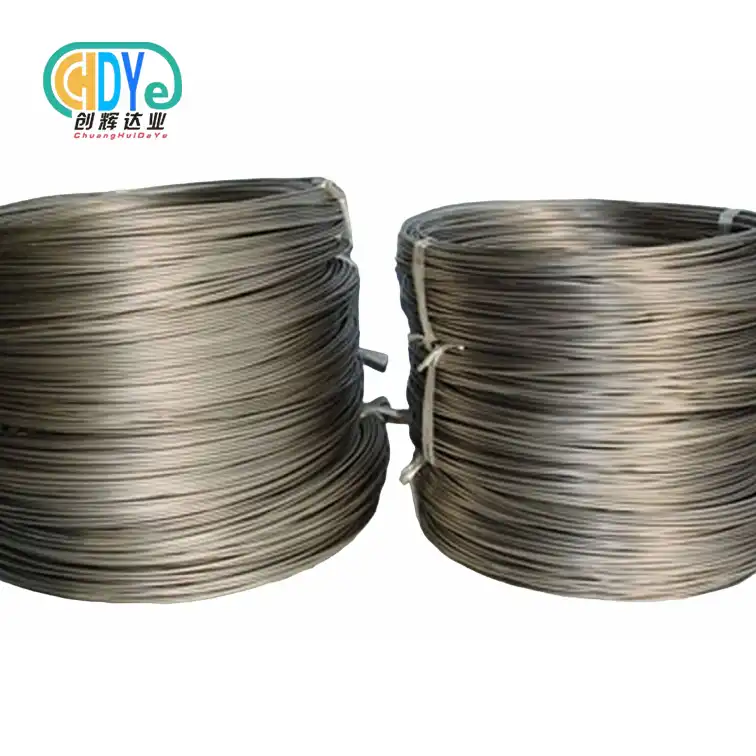
Overview of Titanium Filler Wire Grades
To understand the different types of titanium welding supplies, you need to look at their different chemical makeups and technical features. Each group deals with a different problem in the business while keeping the unique properties of titanium that make it essential for high-performance uses.
Grade 1 and Grade 2 Commercially Pure Options
ERTi-1 is the best form of titanium material for welding. It has the fewest alloy additions and can be shaped the most. This grade is very resistant to rust and is biocompatible, which makes it perfect for making medical implants and food processing equipment. While maintaining a tensile strength of about 240 MPa, the material is very flexible and can be shaped into many different shapes.
Based on Grade 1, ERTi-2 is stronger than Grade 1 because it has a slightly higher oxygen level. Its strength has been improved and now stands at 345 MPa. Chemical processing plants often use this type for building heat exchangers and pipes that are exposed to hostile media. Because ERTi-2 is easier to solder, there is less chance that pores will form during construction. This means that the quality of the joints will stay the same over long production runs.
Ti-6Al-4V Alloy Designations (ERTi-5 and ERTi-23)
ERTi-5 is the workhorse of aircraft manufacturing. It is made up of 6% aluminum and 4% vanadium, which gives it great strength-to-weight ratios. This grade has tensile values higher than 895 MPa and great wear resistance when loaded and unloaded many times. ERTi-5 is used in important load-bearing uses in jet engine parts, structural airframe parts, and high-performance car parts.
ERTi-23 has an extra-low interstitial (ELI) makeup for uses that need the highest levels of flexibility and fracture toughness. The lower levels of oxygen, nitrogen, and carbon make the material better able to handle being hit, heated, and cooled many times. This special grade is very tough, which makes it useful for making pressure vessels and using it in cold environments.
Specialized Grades for Extreme Environments
ERTi-7 titanium filler wire has palladium added to it to make it more resistant to rust in settings with less acid. This grade works great in chemical processing tasks where other grades of titanium might be more easily damaged. The palladium presence makes the electrical potential more noble, which stops corrosion from starting in tough working conditions.
Comparing Titanium Filler Wire Grades — Making Informed Decisions
To choose the right welding consumable, you need to know the small changes between grades and how they affect the performance of the end product. Each specification takes into account different operating needs while keeping costs and technical skills in mind.
Composition and Weldability Characteristics
The alloying elements in each grade have a big effect on how the joints bond and how they behave. For commercial use, pure grades are easy to weld and don't need much heat, but alloy grades need careful temperature control to keep them from becoming weak. Due to the aluminum and vanadium content in ERTi-5, it is important to pay close attention to controlling the temperature between passes and the heat treatment after the welding process.
Choosing the right wire thickness affects how heat is distributed and how it gets into things. For precise tasks, smaller diameters are easier to control, while for production welding, bigger diameters increase the rate of deposition. Custom sizing choices can be used to fit unique joint setups and access issues that often come up in complex systems.
Cost Analysis and Procurement Strategies
Knowing the differences in prices between grades helps you make smart purchasing choices that improve both performance and budget planning. Here are the main things that affect the prices of titanium welding supplies:
- Content of raw materials: Alloy types are more expensive because they have extra aluminum and vanadium in them.
- Processing difficulty: ELI grades need extra steps for processing, which raises the cost of production.
- Concerns about volume: Buying in bulk cuts per-unit costs by a large amount.
- Customization needs: Prices are affected by non-standard sizes and package combinations
These changes in prices make it possible to lower costs by working with key suppliers and managing supplies in a smart way. Long-term contracts with certified makers can help keep prices stable while also making sure quality and supply are always the same.
How to Choose the Right Titanium Filler Wire Grade for Your Needs
Systematic selection technique makes sure that the project works well and costs as little as possible. The decision-making process is based on the needs of the industry, with each area putting more weight on different performance traits.
Industry-Specific Requirements Analysis
Strength-to-weight optimization and wear resistance are very important in aerospace uses, which is why ERTi-5 is the most popular choice for structural parts. Titanium is being used more and more in vehicle exhaust systems and performance parts. This requires a careful balance between the material's mechanical qualities and the cost of making it. Biocompatibility and corrosion protection are important to companies that make medical devices, and commercially pure types are best for implant uses.
Chemical processing plants check how resistant something is to rusting against certain media while also thinking about how much upkeep it will need over time. In the naval business, it's important to be resistant to corrosion caused by chloride while also keeping the structure's stability under changing loads.
Mechanical Performance and Quality Metrics
In addition to basic strength values, evaluation factors include things like wear life, fracture toughness, and resistance to the environment. The choice of titanium filler wire has a direct effect on the qualities of the welded metal and the performance of the joint as a whole. Knowing these connections helps you make smart choices that improve the dependability and service life of parts.
Different industries have different certification needs. For example, aircraft uses need full-quality paperwork and traceability. With ISO 9001:2015 certification, you can be sure that the manufacturing methods and quality control systems will always be the same. Audits of suppliers and procedures for checking materials make sure that they meet project requirements and industry standards.
Welding with Different Titanium Filler Wire Grades — Best Practices and Guides
To get consistent weld quality, you need to learn grade-specific methods and understand the special problems that come up when welding titanium. When planning and action are done correctly, common mistakes are avoided, and team performance is maximized.
Heat Input Control and Contamination Prevention
Titanium reacts badly with gases in the air, so it needs to be kept clean and with strict protective gas control. Argon with a purity level higher than 99.99% keeps it from getting contaminated, which would weaken it and make it less flexible. Back purging needs depend on the thickness of the wall and the shape of the joint. For important uses, oxygen levels must be below 20 ppm.
Controlling the temperature during the interpass stops grain growth and keeps the texture in good shape. Maximum interpass temperatures are usually between 150°C and 200°C, but this can change based on the grade and the length of the part. Using calibrated tools to check the temperature ensures that the temperature is managed consistently throughout the welding process.
Grade-Specific Advantages and Applications
Each grade has its own benefits that are based on the needs of the program. Here are some of the main advantages of grade-specific selection:
- ERTi-1/ERTi-2: Better shapeability and biocompatibility for use in the food industry and medicine
- ERTi-5: High strength-to-weight ratio and great resistance to wear for aircraft structures.
- ERTi-7: Better protection against corrosion in less acidic conditions for chemical processing
- ERTi-23: For pressure tank and cryogenic uses, ERTi-23 has the highest levels of hardness and ductility.
Because of these benefits, parts made using titanium filler wire are more reliable and last longer, even in harsh working conditions. The right choice of grade stops failure modes from happening too soon and improves both the speed and standard of production.
Procuring Titanium Filler Wire: Suppliers, Pricing, and Logistics
Decisions about strategic buying affect both the short-term success of a project and the long-term dependability of the supply chain. When you know how the market works and what your suppliers can do, you can make smart purchasing decisions that combine cost, quality, and shipping needs.
Supplier Certification and Quality Compliance
Reputable manufacturers keep thorough quality control systems that make sure products always work the same way and can be tracked. AWS certification proves that welding consumables meet industry standards, and aircraft approvals show that they are safe for use in serious situations. Titanium filler wire providers must show they can do what they say they can do by having documented quality processes and doing regular checks.
Material test results confirm that each production lot has the right chemical makeup and mechanical qualities. Chain of custody paperwork makes it possible to track materials all the way from where they were made to where they are delivered, which helps with quality investigations and meeting legal requirements.
Minimum Order Quantities and Customization Options
Minimum order requirements are affected by the cost of production. Specialized grades and custom specs usually need bigger quantities. Standard diameters and packing options make it easier to meet smaller volume needs, but for special sizes, you may need to place a minimum order of 100 to 500 pounds, based on how complicated the specifications are.
Buying in bulk can save you money by taking advantage of big deals and keeping your inventory costs low. Just-in-time shipping plans lower the amount of operating capital that is needed while still making sure that materials are available on time for production schedules. Titanium filler wire procurement benefits from collaborative planning that aligns supplier capabilities with project deadlines and quality standards, which makes it easier to buy titanium filler wire.
Conclusion
The selection of appropriate titanium filler wire grades requires careful consideration of application-specific requirements, industry standards, and cost optimization strategies. From commercially pure ERTi-1 and ERTi-2 grades offering excellent biocompatibility to high-strength ERTi-5 alloys providing aerospace-grade performance, each classification serves distinct manufacturing needs. Understanding the technical specifications, welding characteristics, and procurement considerations enables informed decision-making that balances performance requirements with budget constraints. Success in titanium welding applications depends on partnering with certified suppliers who uphold strict quality standards while providing reliable delivery and technical support capabilities.
FAQ
Q: What is the most commonly used grade of titanium welding wire?
A: Most of the time, ERTi-2 is used because it has the best mix of mechanical qualities, weldability, and corrosion protection. This commercially pure grade provides reliable performance across diverse industrial applications while maintaining cost-effectiveness compared to alloy grades.
Q: How do I determine the correct wire diameter for my application?
A: Wire diameter selection depends on material thickness, joint configuration, and welding position requirements. Thinner sections typically use 0.035" to 1/16" diameter wires, while heavy sections may require 3/32" to 1/8" diameters. Consult welding procedure specifications and conduct qualification testing to optimize selection.
Q: What quality certifications should I look for in titanium filler wire suppliers?
A: Essential certifications include AWS A5.16 compliance, ISO 9001:2015 quality management certification, and aerospace approvals such as AMS specifications where applicable. Full traceability paperwork and material test results show that the product meets the needs of the project and the standards set by the industry.
Partner with Chuanghui Daye for Premium Titanium Filler Wire Solutions
Shaanxi Chuanghui Daye delivers exceptional titanium filler wire quality backed by over 30 years of rare metal industry expertise and ISO 9001:2015 certification. Located in China's renowned "Titanium Capital" of Baoji, our advanced manufacturing facilities produce precision welding consumables that meet the strict needs of aircraft, chemical processing, and medical device uses. Our comprehensive grade selection includes ERTi-1, ERTi-2, ERTi-5, and special mixes. They are all made following strict quality control procedures and come with full paperwork for tracking. As a reputable titanium filler wire provider, we can help you with your important welding projects by providing you with reasonable factory-direct prices, flexible minimum order quantities, and reliable global delivery.
Contact our technical team at info@chdymetal.com to talk about your particular needs and get expert advice on how to choose grades and make purchases.
References
1. American Welding Society. "Specification for Titanium and Titanium Alloy Welding Electrodes and Rods." AWS A5.16/A5.16M, 2018.
2. ASTM International. "Standard Specification for Titanium and Titanium Alloy Wire." ASTM B863-20, Annual Book of ASTM Standards, 2020.
3. Aerospace Material Specification. "Welding Wire, Titanium Alloy Ti-6Al-4V." AMS 4951G, SAE International, 2019.
4. Lütjering, Gerd, and James C. Williams. "Titanium: Engineering Materials and Processes." 2nd Edition, Springer-Verlag, Berlin, 2007.
5. Boyer, Rodney R., and Harold L. Collings. "Materials Properties Handbook: Titanium Alloys." ASM International, Materials Park, Ohio, 1994.
6. International Organization for Standardization. "Titanium and Titanium Alloys - Bars and Wire for General Purposes." ISO 9598:2010, Geneva, Switzerland, 2010.

Learn about our latest products and discounts through SMS or email