- English
- French
- German
- Portuguese
- Spanish
- Russian
- Japanese
- Korean
- Arabic
- Greek
- German
- Turkish
- Italian
- Danish
- Romanian
- Indonesian
- Czech
- Afrikaans
- Swedish
- Polish
- Basque
- Catalan
- Esperanto
- Hindi
- Lao
- Albanian
- Amharic
- Armenian
- Azerbaijani
- Belarusian
- Bengali
- Bosnian
- Bulgarian
- Cebuano
- Chichewa
- Corsican
- Croatian
- Dutch
- Estonian
- Filipino
- Finnish
- Frisian
- Galician
- Georgian
- Gujarati
- Haitian
- Hausa
- Hawaiian
- Hebrew
- Hmong
- Hungarian
- Icelandic
- Igbo
- Javanese
- Kannada
- Kazakh
- Khmer
- Kurdish
- Kyrgyz
- Latin
- Latvian
- Lithuanian
- Luxembou..
- Macedonian
- Malagasy
- Malay
- Malayalam
- Maltese
- Maori
- Marathi
- Mongolian
- Burmese
- Nepali
- Norwegian
- Pashto
- Persian
- Punjabi
- Serbian
- Sesotho
- Sinhala
- Slovak
- Slovenian
- Somali
- Samoan
- Scots Gaelic
- Shona
- Sindhi
- Sundanese
- Swahili
- Tajik
- Tamil
- Telugu
- Thai
- Ukrainian
- Urdu
- Uzbek
- Vietnamese
- Welsh
- Xhosa
- Yiddish
- Yoruba
- Zulu
ASTM B863 Titanium Wire for Lightweight Structural Designs
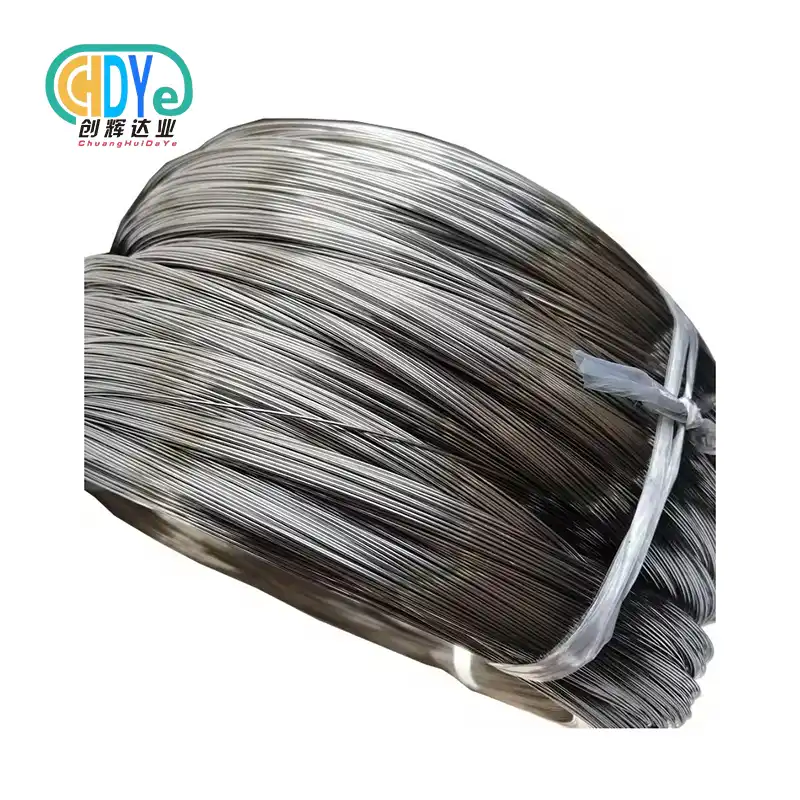
ASTM B863 titanium wire is the gold standard for lightweight structural uses. It has an amazing strength-to-weight ratio that changes the way engineers create things today. This specific wire specification meets important industry needs for materials that work better while lowering total component weight by a large amount. ASTM B863 titanium wire is used by engineers and purchasing managers to make big steps forward in areas like aerospace frameworks, automotive parts, and high-performance industrial applications. This is because it is durable, doesn't rust, and is light. Traditional materials can't compare.
Understanding ASTM B863 Titanium Wire Specifications and Properties
Chemical Composition and Grade Classifications
The ASTM B863 standard covers different grades of titanium, each designed to meet particular performance needs in structural uses. With an oxygen level of less than 0.18%, Grade 1 titanium wire is very flexible and perfect for complicated shaping tasks. Grade 2 is the best combination of strength and workability. It has limited amounts of iron (0.30% max) and oxygen (0.25% max) that improve its mechanical qualities without changing how it can be fabricated.
Grade 5 (Ti-6Al-4V) is the most common type of titanium used in structural applications. It has tensile strengths of over 895 MPa and is made up of 5.5 to 6.75% aluminum and 3.5 to 4.5% vanadium. This alpha-beta alloy structure has great fatigue strength, which is important for settings with changing loads in the aircraft and automobile industries.
Mechanical Properties and Performance Characteristics
The mechanical qualities of ASTM B863 titanium wire are truly amazing, and they immediately lead to better structural performance. The material stays strong at a lot of different temperatures. At 300°C, Grade 5 wire still has over 80% of its room-temperature strength. Young's modulus of about 114 GPa gives the best stiffness while still being much lower than steel, which lowers stress concentrations in composite structures.
Under spinning beam conditions, the wire's fatigue endurance limit hits 60% of its ultimate tensile strength, which is a lot higher than options made of steel or aluminum. For example, this quality is very useful in situations where the load changes quickly, like in airplane control lines and car suspension parts.
Corrosion Resistance and Surface Properties
Titanium dioxide makes an inactive film on metal surfaces on its own, making them very resistant to chloride environments, organic acids, and oxidizing conditions. In most cases, this natural security means that protective coats are not needed, which lowers the cost of ownership and the amount of upkeep that needs to be done. When the film's surface is damaged, it heals itself right away, making sure that rust protection stays the same throughout the service life.
Comparing ASTM B863 Titanium Wire with Alternative Materials and Standards
Performance Comparison with Steel and Aluminum Alternatives
When compared to common building materials, ASTM B863 titanium wire clearly has clear benefits in situations where weight is important. There is no doubt that steel wire is stronger than titanium wire, but it is 75% denser. Aluminum wire saves weight, but it can't handle high temperatures or fatigue, which limits its use in structural applications.
Titanium is stronger than high-strength steel and aluminum alloys, with specific strengths of 200 kN/kg for Grade 5 titanium wire and 130 kN/kg for high-strength steel and 180 kN/kg for aluminum alloys. This advantage compounds in large structures where weight reduction creates cascading benefits throughout the design.
Standards Comparison and Industry Applications
ASTM B863 is different from similar standards like ASTM F136 (medical implant grade) and AWS A5.16 (welding filler wire) because it focuses on making structures and parts. Extra-low interstitial content in F136 makes it more biocompatible, while B863 makes the dynamic qualities better for engineering loads.
Grade 5 wire is best for making fasteners and cable systems in the aerospace industry. Grades 1 and 2 wire are used in chemical processing plants to make corrosion-resistant mesh and filter parts. Grade 9 (Ti-3Al-2.5V) wire is being used more and more in automotive uses for exhaust systems and suspension parts because it is lighter and better for gas mileage.
Procurement Guide: Sourcing ASTM B863 Titanium Wire Efficiently
Quality Assurance and Certification Requirements
To successfully buy ASTM B863 titanium wire, you must pay close attention to quality documents and the credentials of the seller. Mill test papers must show that the chemical composition is within the limits of the standard and that the mechanical properties are as specified by tensile testing. The paperwork for traceability should show how the material was made, from the raw titanium sponge to the finished wire drawing steps.
Certification in ISO 9001:2015 ensures that quality management systems are uniform, and certification in EN 10204 3.1 confirms the features of materials in a way that is not controlled by the company. Suppliers should keep detailed records that include the parameters of the heat treatment, accounts of dimensional inspections, and ratings of the surface quality.
Supplier Evaluation and Global Sourcing Strategies
When evaluating a provider, it's more important to look at their manufacturing skills, quality processes, and shipping reliability than just where they are located. Vacuum melting facilities, precision wire drawing tools, and controlled atmosphere annealing ovens are some of the most important things that are looked at when judging. For width control, suppliers should show that they can consistently achieve measurement tolerances of within ±0.002 inches.
When figuring out production ability, both standard and fast shipping needs must be taken into account. Leading providers keep smart amounts of inventory on hand and let customers order in a range of sizes, from small batches for prototypes to large production runs. Transportation arrangements are very important for keeping materials intact during foreign shipping, and longer wire lengths need special packaging.
Cost Optimization and Order Management
Using strategic ways to buy things can cut the cost of ASTM B863 titanium wire by a large amount while still meeting quality standards. By combining a lot of work into a few big projects, you can save money by using economies of scale. Long-term supply deals keep prices stable and give delivery priority. Custom sizes aren't always easier to find or cost less than standard circle specs.
Planning for lead times is still very important, since production processes for specialized grades usually last between 8 and 12 weeks. Forward-thinking procurement teams set up framework deals that let call-off orders be made based on production plans. This keeps inventory costs low while still making sure materials are available.
Advantages and Applications of ASTM B863 Titanium Wire in Lightweight Structural Designs
Weight Reduction Benefits and Performance Gains
An important benefit of ASTM B863 titanium wire in construction uses is that it has very high specific strengths. In flight, every kilogram of weight loss can save tens of thousands of dollars a year on fuel costs. Titanium wire allows structures to be 40–50% lighter without sacrificing safety.
In addition to saving weight, titanium's resistance to stress makes parts last a lot longer. Manufacturers of aircraft say that titanium wire bundles don't need to be inspected as often as steel ones do. This lowers upkeep costs and makes the aircraft more available.
Industry-Specific Applications and Case Studies
Aerospace companies use Grade 5 titanium wire to make control cable systems for business airplanes. This cuts down on weight, which saves fuel and meets strict safety standards. The wire's resistance to stress corrosion cracking keeps it from breaking too soon in sea settings with a lot of stress.
Titanium wire's ability to stay stable at high temperatures and prevent corrosion makes it useful in automotive uses like exhaust system parts and suspension parts. Especially in racing, lowering the weight of rotating parts can help the car move more quickly and smoothly.
ASTM B863 titanium wire, specifically Grades 1 and 2, is widely used in chemical processing plants for demister pads and filter media in chlor-alkali plants. Because it does not corrode when exposed to chloride environments, ASTM B863 titanium wire can last for decades in conditions where stainless steel would quickly deteriorate.
How ASTM B863 Titanium Wire Is Manufactured
Production Process and Quality Control
The process starts with vacuum arc remelting a high-purity titanium sponge to make the chemicals in it uniform and get rid of any spots. Before going into the wire drawing process, the bars are hot-forged and rolled into rods of different sizes.
Precision wire drawing includes several reduction passes through dies that get smaller and smaller, with annealing processes in between to keep the wire's flexibility. Controlled oxygen annealing keeps the surface from getting dirty, which could lower the resistance to rust or wear. Finishing processes on the surface get rid of drawing oils and meet certain standards for surface quality.
Each output lot goes through a lot of tests, such as checking the tensile strength, doing a chemistry analysis, and checking the dimensions. Ultrasonic checking and other advanced testing methods can find internal breaks in wires that could affect how well they work in serious situations.
Advanced Manufacturing Techniques
Electron beam melting is used in modern factories to make specific types that need to be very pure. This technology gets rid of small amounts of contaminants that could slow down high-stress situations, such as in semiconductor processing equipment.
With precise drawing methods, diameter tolerances can be kept to within ±0.001 inches, and the wire's mechanical traits stay the same all the way along its length. Computer-controlled annealing processes make the grain structure work best for each application, whether flexibility is needed for shaping or strength is needed for loads.
Conclusion
ASTM B863 titanium wire continues to revolutionize lightweight structural design across multiple industries through its unique combination of high strength, low weight, and exceptional corrosion resistance. The material enables engineers to achieve weight reductions of 40–50% compared to traditional steel alternatives while maintaining or improving structural performance. From aerospace control cables to chemical processing filtration systems, this versatile material addresses critical performance requirements that conventional materials cannot meet. Understanding the specifications, procurement strategies, and manufacturing processes ensures successful implementation in demanding structural applications.
FAQ
Q: What diameter ranges are available for ASTM B863 titanium wire?
A: ASTM B863 titanium wire comes in sizes from 0.15mm to 7mm, so it can be used for a wide range of construction tasks, from making fine mesh to making heavy-duty fasteners. Standard diameters come in both metric and imperial sizes, and for accurate uses, margins are usually kept to within ±0.002 inches.
Q: How does ASTM B863 titanium wire compare to stainless steel in corrosion resistance?
A: Titanium wire is better at resisting rust than stainless steel, especially in chloride conditions where stainless steel gets pitting corrosion. The inactive titanium dioxide film protects against seawater, wet chlorine, and most organic acids, so it doesn't need any extra coats.
Q: What grades of ASTM B863 titanium wire are best for aerospace applications?
A: Grade 5 (Ti-6Al-4V) represents the preferred choice for aerospace structural applications due to its high strength-to-weight ratio and great fatigue resistance. Grade 9 (Ti-3Al-2.5V) has similar performance but is better at being cold shaped into complex forms. Grades 1 and 2 are better for non-structural uses that need the most flexibility.
Q: What quality certifications should I expect from ASTM B863 titanium wire suppliers?
A: Reputable suppliers will give you both EN 10204 3.1 certificates and mill test certificates that prove the material's chemical makeup and mechanical qualities. For reliable production methods, ISO 9001:2015 quality management approval is needed. For aircraft uses, AMS standards may be needed.
Partner with Chuanghui Daye for Premium ASTM B863 Titanium Wire Solutions
Shaanxi Chuanghui Daye stands as your trusted ASTM B863 titanium wire supplier, delivering precision-engineered materials from China's Titanium Capital in Baoji, Shaanxi Province. Our ISO 9001:2015-certified factory makes wire with a width of 0.1mm to 7mm that can be ordered straight, coiled, or on a roll. The wire we make meets the standards set by AWS A5.16, ASTM B863, and ASTM F136. With more than 30 years of experience in the field and modern vacuum melting equipment, we can guarantee steady quality and low factory-direct prices. Get in touch with our technical team at info@chdymetal.com to talk about your unique needs and see why aerospace, chemical processing, and medical device makers around the world trust us for their most important projects.
References
1. ASTM International. "Standard Specification for Titanium and Titanium Alloy Wire." ASTM B863-17, West Conshohocken, PA, 2017.
2. Boyer, R., Welsch, G., and Collings, E.W. "Materials Properties Handbook: Titanium Alloys." ASM International, Materials Park, OH, 1994.
3. Donachie, Matthew J. "Titanium: A Technical Guide, 2nd Edition." ASM International, Materials Park, OH, 2000.
4. Lutjering, Gerd and Williams, James C. "Titanium: Engineering Materials and Processes." Springer-Verlag, Berlin, 2003.
5. Peters, M., Kumpfert, J., Ward, C.H., and Leyens, C. "Titanium Alloys for Aerospace Applications." Advanced Engineering Materials, Vol. 5, 2003.
6. Rack, H.J. and Qazi, J.I. "Titanium Alloys for Biomedical Applications." Materials Science and Engineering C, Vol. 26, 2006.

Learn about our latest products and discounts through SMS or email