- English
- French
- German
- Portuguese
- Spanish
- Russian
- Japanese
- Korean
- Arabic
- Greek
- German
- Turkish
- Italian
- Danish
- Romanian
- Indonesian
- Czech
- Afrikaans
- Swedish
- Polish
- Basque
- Catalan
- Esperanto
- Hindi
- Lao
- Albanian
- Amharic
- Armenian
- Azerbaijani
- Belarusian
- Bengali
- Bosnian
- Bulgarian
- Cebuano
- Chichewa
- Corsican
- Croatian
- Dutch
- Estonian
- Filipino
- Finnish
- Frisian
- Galician
- Georgian
- Gujarati
- Haitian
- Hausa
- Hawaiian
- Hebrew
- Hmong
- Hungarian
- Icelandic
- Igbo
- Javanese
- Kannada
- Kazakh
- Khmer
- Kurdish
- Kyrgyz
- Latin
- Latvian
- Lithuanian
- Luxembou..
- Macedonian
- Malagasy
- Malay
- Malayalam
- Maltese
- Maori
- Marathi
- Mongolian
- Burmese
- Nepali
- Norwegian
- Pashto
- Persian
- Punjabi
- Serbian
- Sesotho
- Sinhala
- Slovak
- Slovenian
- Somali
- Samoan
- Scots Gaelic
- Shona
- Sindhi
- Sundanese
- Swahili
- Tajik
- Tamil
- Telugu
- Thai
- Ukrainian
- Urdu
- Uzbek
- Vietnamese
- Welsh
- Xhosa
- Yiddish
- Yoruba
- Zulu
What Is a Polished Niobium Bar Rod Used For?
A polished niobium bar rod is a high-purity niobium product, usually Nb >99.9%, that has been precisely finished to a smooth, reflective surface. This finishing technique does much more than enhance looks. It greatly improves corrosion resistance, biocompatibility, and fatigue life, making these rods vital to the manufacture of medical devices, electronics, aerospace, and chemical processes. They are available with diameters of 1–50 mm and a length of 3,000 mm, with a density of 8.57 g/cm³ and tensile strength of 200–350 MPa, meeting the most stringent industrial requirements.
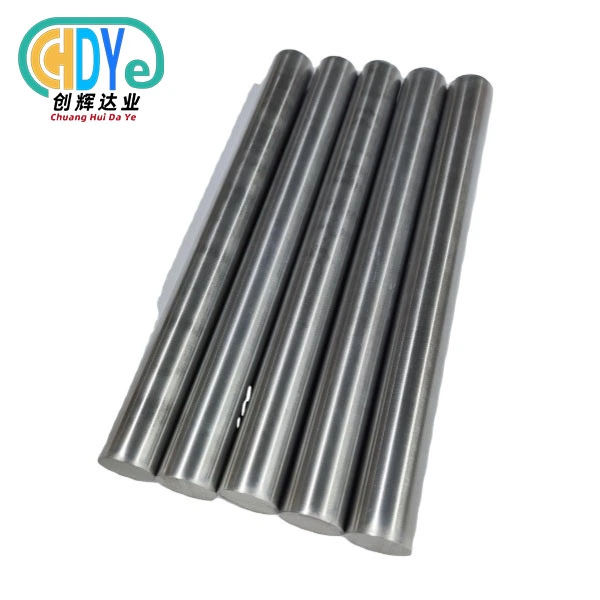
Understanding Polished Niobium Bar Rods
Niobium is a member of the same family of elements as tantalum and vanadium, with similar extraordinary chemical inertness. Polished niobium rods are identical to unpolished rods except for their surface quality. Polishing eliminates micro-scale surface imperfections. Pits, oxide inclusions, and machining striations function as stress-concentration sites. This results in a component with a much longer fatigue life under cyclic loadings.
How Polishing Affects Mechanical and Chemical Performance
Niobium naturally produces a passive oxide coating of Nb 2 O 5, which is resistant to most organic and inorganic acids. This effect is more pronounced on a polished surface, which guarantees a homogeneous oxide layer without gaps produced by surface defects. Each rod is precisely machined and polished in a controlled sequence at our facility, yielding a surface roughness (Ra) that is suitable for medical-grade and semiconductor-grade cleanliness standards.
How Niobium Compares to Tantalum and Titanium
In extremely hot, concentrated settings, tantalum has a little advantage in acid resistance, although tantalum's density of 16.69 g/cm³ is roughly twice that of niobium at 8.57 g/cm³. That weight penalty is a big deal in aeronautical and medical applications. Titanium is lighter but does not have the superconducting qualities of niobium and does not function as well above 400°C in chemically hostile conditions. Polished niobium bar rod is a good compromise for procurement engineers who are considering cost, weight, and performance.
Industrial Applications of Polished Niobium Bar Rods
The high-gloss finish opens up many applications where surface cleanliness is not just a choice, but a non-negotiable condition. Here are some of the key sectors and particular use cases where niobium rods provide significant value:
- 9.3.2 Medical Devices and Implants: Niobium is a good choice for pacemaker leads, orthopedic implant components, and surgical tools because of its physiological inertness. It is resistant to corrosion from bodily fluids and does not produce an allergic reaction — an important benefit over nickel-bearing alloys. The polish removes small cracks that might harbor bacterial biofilm.
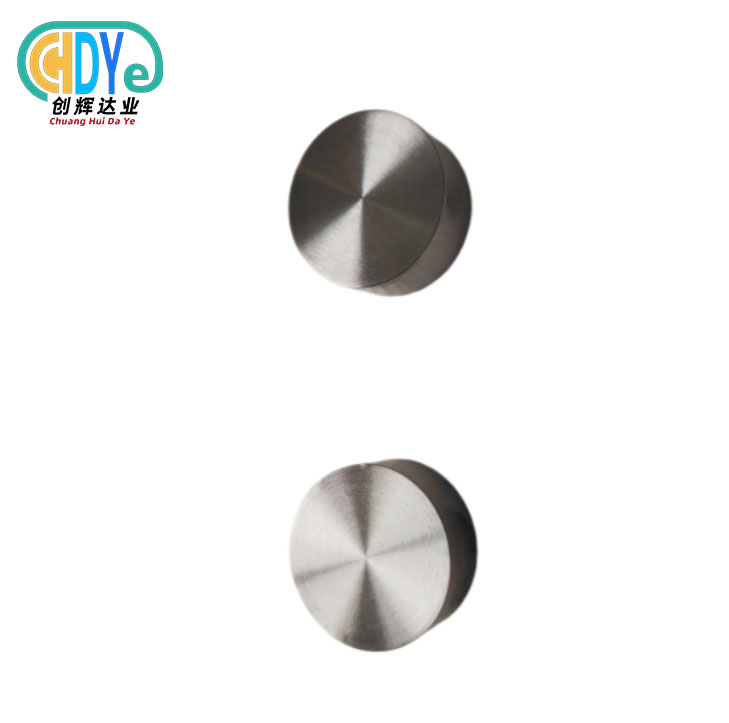
- Electronics and Semiconductor Manufacturing: High-purity niobium rods are used as sputtering targets, electrode components, and substrate materials in thin-film deposition techniques. The polished surface avoids particle contamination that would otherwise impair the integrity of the circuit in vacuum and high-temperature settings.
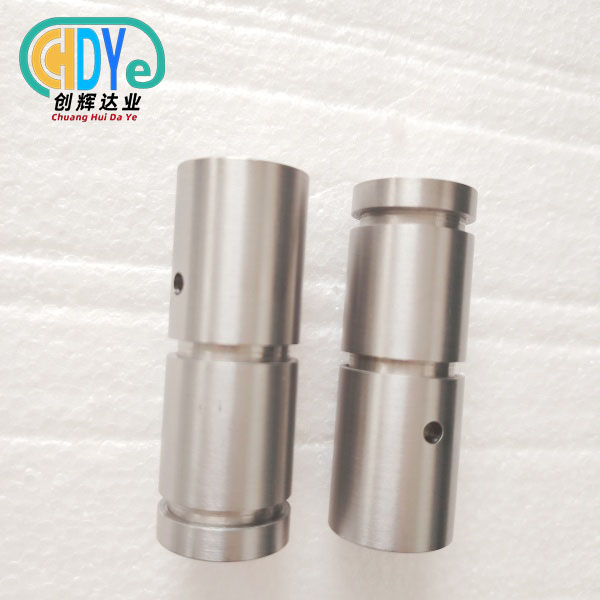
- Aerospace and Rocket Propulsion: Niobium alloys like C-103 maintain strong tensile strength at over 1,300°C and are used for thruster nozzles and turbine parts in jet engines. The polished rod shape enables it to be precision machined into completed aerospace parts with stringent dimensional tolerances.
- Superconducting RF Cavities: Niobium is a superconductor at 9.25 K: the highest critical temperature of any pure element. Rods of high purity provide the raw material for accelerator cavities for research in particle physics where residual resistivity and surface cleanliness are important factors.
- Chemical and Petrochemical Equipment: Reactor internals, heat exchanger parts, and pump shafts exposed to corrosive acid streams are machined from niobium rod stock. Resistant to most mineral and organic acids at temperatures below 200°C. Cost-efficient substitute for tantalum in moderate temperature usage.
All these applications have one thing in common: any surface imperfection or contamination leads to immediate component failure or process interruption. So the polished finish is not an attractive enhancement, but a practical standard.
Key Factors When Choosing Polished Niobium Bar Rods
To choose the correct niobium rod, you need to look at three different things: the purity of the grade, the condition of the surface, and how reliable the source of polished niobium bar rod is.
Grade Purity and Its Effect on Performance
ASTM B392 has two main grades. Reactor Grade (R04210) has strict limitations on the concentration of tantalum as well as interstitial impurities required for nuclear and superconducting applications. Commercial Grade (R04200) is for ordinary industrial applications where very low tantalum concentration is not required. Choosing the incorrect grade might mean paying too much for unneeded purity or using an underspecified material in a safety-critical application.
Evaluating Supplier Credentials
A supplier with ISO 9001:2015 certification has documented control over each step of the manufacturing process, from the examination of the raw materials to the final packing. Procurement teams should also demand comprehensive material traceability data, including melt certificates and dimensional inspection reports. Suppliers inside a well-established industrial cluster, with melting and machining in-house, often have faster lead times and stricter quality consistency than trade middlemen.
Procurement Guide for Polished Niobium Bar Rods
If we know volumes, lead times, and logistics, sourcing of niobium rods is efficient. Direct manufacturers provide the best value proposition for medium-to-large volume orders: factory-direct price, quicker communication on special specs, and direct responsibility for quality. Vetted B2B platforms provide access to large numbers of suppliers but create an extra layer of verification that procurement teams must deal with.
Typical minimum order quantities for custom-dimensioned polished niobium bar rod are in the region of 1 kg for R&D scale orders and multi-hundred-kilogram batches for production contracts. Lead time will vary with diameter and length. Standard sizes ship quicker than requests for unusual diameters, which need specialist machining setups. Niobium rod price is premium to molybdenum due to decreased global mine output but stays much below tantalum on a cost-per-kilogram basis. Import restrictions in the United States categorize niobium by HTS codes that are typically clear, with no current Section 301 duties applicable to raw niobium bar forms. Buyers should verify the current classification with a registered customs broker to ensure that duties are calculated correctly.”
Maximizing Value with Polished Niobium Bar Rods
Getting maximum benefit from a niobium rod investment begins with correct management. The passive oxide layer offers good corrosion resistance in ambient conditions but may be compromised by storage in humid conditions or by exposure to cleaning chemicals containing halides. Rods should be kept in dry circumstances covered in clean polyethylene film and handled with clean cotton gloves to avoid surface contamination.
Niobium oxidizes quickly in air over 400 °C. High-temperature processing must be carried out in vacuum or in an inert argon environment. Welding is carried out by electron beam or TIG procedures in an argon-purged chamber. The weld is immediately embrittled by exposure to air oxygen during welding. Niobium is quite ductile and may be cold worked to complicated geometries. However, if substantial cold reduction is used (more than around 90%), vacuum annealing at 1100-1300°C is necessary to recover ductility. These processing realities have direct bearing on the whole life cycle cost and should be addressed with a technically competent supplier before specifications are finalized.
Conclusion
Polished niobium bar rods have a place of their own in contemporary production, and a premium one at that. Their combination of superior purity, regulated surface polish, corrosion resistance, biocompatibility, and superconducting potential solves actual technical issues in the medical, electronics, aerospace, and chemical sectors. The practical stages that turn a material specification into a dependable manufacturing output are: choosing the proper grade, checking supplier credentials, and knowing the handling needs. Procurement experts who engage technically knowledgeable suppliers early routinely realize faster certification processes and reduced total cost of ownership.
FAQ
Q: Which industries benefit most from high-purity niobium rods?
A: Medical device manufacturers, semiconductor producers, aerospace contractors, and chemical equipment fabricators represent the highest-demand segments. Research institutions also purchase small-batch quantities for superconducting and materials science programs.
Q: Does polishing affect tensile strength?
A: Polishing does not reduce tensile strength, which ranges from 200 to 350 MPa depending on temper condition. It improves fatigue strength by eliminating surface stress concentrators, which is especially relevant in cyclically loaded medical and aerospace components.
Q: What are typical lead times for bulk orders?
A: Standard diameter rods in common lengths typically ship within 2–4 weeks. Custom diameters or lengths beyond 2,000 mm may require 4–6 weeks depending on production scheduling.
Q: Can niobium rod be machined in-house?
A: Yes, but its gummy, ductile character requires carbide tooling, water-soluble coolants, and careful rake angle selection to prevent galling. Many buyers prefer to receive near-net-shape machined parts directly from the manufacturer.
Q: Is niobium rod compatible with HF acid environments?
A: No. Hydrofluoric acid aggressively attacks niobium and must be excluded from any application or cleaning protocol involving these rods.
Partner with Chuanghui Daye for Your Next Niobium Project
Shaanxi Chuanghui Daye manufactures polished niobium bar rods to ASTM B392 standards, with Nb >99.9% purity, diameters from 1–50 mm, and lengths to 3,000 mm. As an ISO 9001:2015-certified polished niobium bar rod supplier backed by over 30 years of rare metal expertise, we offer full traceability documentation, competitive factory-direct pricing, and flexible batch sizes. Reach our technical team at info@chdymetal.com or visit www.chdymetal.com to request a quote tailored to your specifications.
References
1. ASM International — ASM Handbook, Volume 2: Properties and Selection: Nonferrous Alloys and Special-Purpose Materials, 1990.
2. ASTM International — ASTM B392: Standard Specification for Niobium and Niobium Alloy Bar, Rod, and Wire, 2023.
3. Cardarelli, F. — Materials Handbook: A Concise Desktop Reference, Springer, 2008.
4. Donachie, M. J. — Titanium: A Technical Guide, ASM International, 2000.
5. Hemley, R. J. et al. — "Superconductivity in Elemental Niobium Under Pressure," Physical Review Letters, 2001.
6. Mordike, B. L. & Ebert, T. — "Titanium: Properties, Applications, Potential," Materials Science and Engineering: A, 2001.
Learn about our latest products and discounts through SMS or email