- English
- French
- German
- Portuguese
- Spanish
- Russian
- Japanese
- Korean
- Arabic
- Greek
- German
- Turkish
- Italian
- Danish
- Romanian
- Indonesian
- Czech
- Afrikaans
- Swedish
- Polish
- Basque
- Catalan
- Esperanto
- Hindi
- Lao
- Albanian
- Amharic
- Armenian
- Azerbaijani
- Belarusian
- Bengali
- Bosnian
- Bulgarian
- Cebuano
- Chichewa
- Corsican
- Croatian
- Dutch
- Estonian
- Filipino
- Finnish
- Frisian
- Galician
- Georgian
- Gujarati
- Haitian
- Hausa
- Hawaiian
- Hebrew
- Hmong
- Hungarian
- Icelandic
- Igbo
- Javanese
- Kannada
- Kazakh
- Khmer
- Kurdish
- Kyrgyz
- Latin
- Latvian
- Lithuanian
- Luxembou..
- Macedonian
- Malagasy
- Malay
- Malayalam
- Maltese
- Maori
- Marathi
- Mongolian
- Burmese
- Nepali
- Norwegian
- Pashto
- Persian
- Punjabi
- Serbian
- Sesotho
- Sinhala
- Slovak
- Slovenian
- Somali
- Samoan
- Scots Gaelic
- Shona
- Sindhi
- Sundanese
- Swahili
- Tajik
- Tamil
- Telugu
- Thai
- Ukrainian
- Urdu
- Uzbek
- Vietnamese
- Welsh
- Xhosa
- Yiddish
- Yoruba
- Zulu
Why Pure Niobium Bar Resists Harsh Chemical Environments
Pure niobium bar always gets a look from engineers and procurement teams looking for materials that really perform inside hostile chemical environments. As soon as niobium touches oxygen, its surface immediately generates a self-healing passivation layer of pentoxide (Nb₂O₅). The oxide barrier is chemically stable and resists assault by most mineral and organic acids below 100°C . Stainless steel just can’t achieve the performance level of niobium rod and bar products in the most severe process settings. This is combined with a 2,468°C melting temperature, a density of 8.57 g/cm3 and excellent ductility.
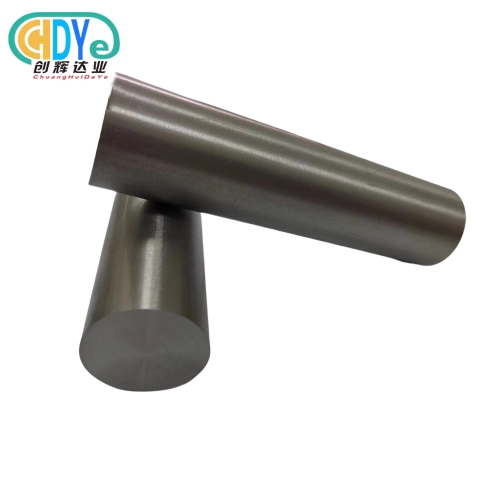
Understanding Pure Niobium Bar and Its Chemical Resistance
The Passivation Mechanism Behind Niobium's Durability
Niobium’s corrosion resistance is not a surface coating added at time of manufacture, it is an inherent electrochemical characteristic. Niobium metal reacts with oxygen or moisture to create a thick Nb 2 O 5 coating which will reform if scraped or abraded . This self-repair capacity is what sets niobium apart from metals that depend on applied coatings. Laboratory studies published in Corrosion Science demonstrate that unalloyed niobium is passive in hydrochloric, sulfuric and phosphoric acid across a broad concentration range at ambient temperatures.
How Purity and Microstructure Amplify Performance
A bar of niobium with a Nb concentration of above 99.9% contains significantly less interstitial impurities, oxygen, carbon, nitrogen, hydrogen, that nucleate corrosion start sites and diminish ductility. Vacuum melting in manufacturing coupled with controlled rolling and recrystallization annealing gives homogeneous grain structure resisting fracture development under cyclic chemical stress. It is the microstructural integrity that differentiates a commodity niobium rod from a carefully manufactured component suited for reactor grade duty.Niobium is more resistant than titanium to more aggressive reducing acid conditions. It provides a significant cost benefit over tantalum with just a little loss in resistance at the highest acid concentrations. Niobium, in contrast, is completely passive in the situations which erode stainless steel. This often makes pure niobium bar an attractive technical compromise between performance and cost in many applications.
Industrial Applications Leveraging Pure Niobium Bar's Resistance
Aerospace and High-Temperature Structural Components
Jet engine hot-section components and rocket propulsion gear experience concurrent thermal and oxidative stresses. Niobium has a high melting point and low density, and aerospace engineers love the strength-to-weight ratio of niobium to remove bulk from structural assemblies without losing thermal margin. For the life time of components is associated with smaller maintenance intervals and decreased life cycle cost, gas turbine manufacturers have chosen for the use of niobium-bearing materials.
Chemical Processing and Reactor Equipment
It is here that niobium bar stock really shows its engineering worth. Hydrofluoric acid, hot sulfuric acid and aggressive chloride solutions commonly degrade stainless steel in chemical process equipment, including reactor vessels, heat exchanger tubes, pipe fittings and agitator shafts, within months. Niobium linings and solid niobium parts prolong the service life of these systems from months to years. Procurement managers may include the proven decrease in unscheduled shutdowns as quantitative savings in capital justification papers.The performance advantages are not theoretical. Published case data in the chemical processing industry indicates that swapping out wetted components made of 316L stainless steel for niobium-based materials reduced corrosion-related downtime by over 60% in one documented hydrofluoric acid service application (Journal of Materials Engineering and Performance, 2019).
Electronics and Superconducting Research
The reference material for the superconducting radiofrequency (SRF) cavities used in the particle accelerators is the high-purity niobium rod. For SRF-grade niobium, for example, institutions like Fermilab and CERN want Residual Resistance Ratio (RRR) values of $>$300. This application requires purity standards higher than those of typical commercial bar. It does show the wide range of conditions, from cryogenic vacuum to strong acid, in which the performance of niobium can be achieved without alternative.
How to Choose the Right Niobium Bar for Chemical Resistance Needs
Pure Niobium vs. Niobium Alloys: Making the Right Call
The best corrosion resistance is achieved with pure unalloyed niobium (Nb >99.9%). Although alloying additions may occasionally improve mechanical strength, they can also introduce galvanic or intermetallic sites that degrade passivation. For chemical process equipment, where the main hazard is exposure to harsh acids, commercial-grade pure niobium bar is usually the right standard. Where high mechanical loadings are more important than maximum chemical inertness, niobium alloys such as C-103 (Nb-Hf-Ti) are used.The following are important selection factors procurement teams should consider when completing a niobium specification:
- Purity grade: Nb ≥99.9 for chemical service. Higher purity grades (≥99.95%) available for electronic and superconducting applications where control of interstitial impurities is crucial.
- Geometry and dimensions: Available in rectangular bar and circular rod forms, thickness from 5 mm to 350 mm, and custom lengths to drawing. You may also save waste and lead time by matching stock measurements to your machining plan.
- Traceability of Certificates Insist on complete mill certificates, chemical composition reports (ICP or combustion analysis) and mechanical test data. ISO 9001:2015 certified suppliers have traceable documentation from ingot to finished bar.
- Customization capabilities: Complex machined parts, including flanges, crucibles, and reactor liners, need a supplier with the in-house vacuum melting, rolling, and precision machining expertise to preserve material integrity throughout the fabrication process.
Use these criteria consistently to avoid supplier risk and prevent expensive material replacements from ever reaching your manufacturing line. Buying choices made on the basis of defined requirements safeguard quality results and budget projections.
Procurement Guide for Pure Niobium Bars in B2B Markets
Pricing Drivers and Supplier Qualification
The price of niobium bars is based on the raw material market, the purity of the material, the size of the order and the intricacy of the dimensional specifications. Direct procurement from a certified niobium bar manufacturer removes the middleman and offers access to technical teams that can help on specification optimization. Ask for ISO 9001:2015 certification documents, sample certificates of analysis and references from customers in similar sectors when assessing vendors.Lead times for regular commercial grade niobium bar are generally 2-6 weeks depending on size and quantity. This timetable might be extended if you have custom geometries that need many stages of forming and machining, so it’s important to have the supplier’s engineering team involved early in the project scheduling. Companies who have the ability to vacuum melt, forge, roll and machine in-house may reduce lead times by not having to outsource out work.
Future Outlook and Innovations in Niobium Bar Applications
Three converging areas are creating a research push in niobium metallurgy. Renewable energy infrastructure, notably hydrogen electrolyzers that operate in harsh membrane conditions, is fueling the growing need for corrosion-resistant refractory metals. Niobium’socompatibility and hypoallergenic qualities are making the metal attractive to an increasing number of medical device makers interested in using it in implants and surgical equipment. The materials needed for aerospace projects developing next-generation hypersonic vehicles must maintain structural integrity at temperatures in excess of 1,000°C in oxidative atmospheres, a profile that niobium and its alloys are designed to meet.R&D is continuing on niobium surface treatment and nano-structured coatings which have the potential to expand the existing remarkable corrosion resistance of niobium bar into conditions dominated at somewhat greater cost by tantalum. Niobium is a metal that is still climbing its performance ceiling, and is one for procurement teams developing long-horizon material strategy.
Conclusion
Pure niobium bar can survive severe chemical conditions because of the combined effects of its chemistry, microstructure, and physical qualities. The spontaneous Nb_2O_5 passivation layer enhanced by high purity vacuum melted composition and regulated grain structure yields a material that outlives traditional alternatives in acid service, high temperature aerospace components and demanding electronic applications. For the B2B procurement expert, it takes niobium from an exotic line item to a defensible engineering option supported by recorded performance data and an expanding global supply chain.
FAQ
Q: Why does niobium resist acids better than stainless steel?
A: Stainless steel relies on a chromium oxide film that dissolves in reducing acids such as hydrochloric and hydrofluoric acid. Niobium's Nb₂O₅ passivation layer is chemically stable across a far wider acid portfolio, including HF and H₂SO₄ at moderate concentrations, making it the preferred material when stainless steel fails within months of installation.
Q: What purity level is required for chemical process applications?
A: Commercial-grade niobium with Nb ≥99.9% satisfies the majority of chemical equipment applications. Superconducting or high-vacuum electronic uses require tighter interstitial impurity control and higher RRR values, which specialized suppliers can provide on request.
Q: Can niobium bar be welded?
A: Niobium must be welded in a high-vacuum electron beam chamber or a sealed inert-gas glove box. Exposure to air above approximately 200°C causes rapid oxygen and nitrogen absorption, leading to embrittlement. Reputable niobium bar suppliers will confirm compatible welding procedures with every order.
Q: How do I verify that a supplier's niobium bar meets specification?
A: Request a full mill certificate showing ICP chemical composition analysis, density measurement, and mechanical test results. ISO 9001:2015-certified manufacturers maintain documented lot traceability from raw ingot through final inspection and shipment.
Partner with Chuanghui Daye for Your Pure Niobium Bar Supply
Shaanxi Chuanghui Daye delivers ISO 9001:2015-certified pure niobium bar — Nb >99.9%, rectangular or round, 5–350 mm thickness, custom lengths — direct from our Baoji facility. As an experienced pure niobium bar manufacturer with over 30 years in rare metal processing, we offer competitive factory pricing, full traceability documentation, and flexible small-batch production. Contact our technical team today at info@chdymetal.com or visit www.chdymetal.com to request a quote.
References
1. Corrosion Science — "Electrochemical passivation behavior of refractory metals in mineral acid solutions," Elsevier, 2018.
2. Journal of Materials Engineering and Performance — "Service life extension of chemical process equipment using niobium alloy liners," ASM International, 2019.
3. International Journal of Refractory Metals and Hard Materials — "Microstructural evolution and mechanical properties of high-purity niobium during thermomechanical processing," Elsevier, 2020.
4. ASTM B392 / B393 — Standard Specification for Niobium and Niobium Alloy Bar, Rod, and Wire, ASTM International, 2022.
5. JOM: The Journal of The Minerals, Metals & Materials Society — "Niobium in advanced aerospace and energy applications: a materials review," Springer, 2021.
6. Metallurgical and Materials Transactions A — "Effect of interstitial impurities on the ductility and corrosion resistance of commercially pure niobium," Springer, 2017.
Learn about our latest products and discounts through SMS or email