- English
- French
- German
- Portuguese
- Spanish
- Russian
- Japanese
- Korean
- Arabic
- Greek
- German
- Turkish
- Italian
- Danish
- Romanian
- Indonesian
- Czech
- Afrikaans
- Swedish
- Polish
- Basque
- Catalan
- Esperanto
- Hindi
- Lao
- Albanian
- Amharic
- Armenian
- Azerbaijani
- Belarusian
- Bengali
- Bosnian
- Bulgarian
- Cebuano
- Chichewa
- Corsican
- Croatian
- Dutch
- Estonian
- Filipino
- Finnish
- Frisian
- Galician
- Georgian
- Gujarati
- Haitian
- Hausa
- Hawaiian
- Hebrew
- Hmong
- Hungarian
- Icelandic
- Igbo
- Javanese
- Kannada
- Kazakh
- Khmer
- Kurdish
- Kyrgyz
- Latin
- Latvian
- Lithuanian
- Luxembou..
- Macedonian
- Malagasy
- Malay
- Malayalam
- Maltese
- Maori
- Marathi
- Mongolian
- Burmese
- Nepali
- Norwegian
- Pashto
- Persian
- Punjabi
- Serbian
- Sesotho
- Sinhala
- Slovak
- Slovenian
- Somali
- Samoan
- Scots Gaelic
- Shona
- Sindhi
- Sundanese
- Swahili
- Tajik
- Tamil
- Telugu
- Thai
- Ukrainian
- Urdu
- Uzbek
- Vietnamese
- Welsh
- Xhosa
- Yiddish
- Yoruba
- Zulu
What Is Niobium Titanium Alloy Tube Used For?
Niobium titanium alloy tubes serve as critical components in superconducting magnets, aerospace propulsion systems, chemical processing equipment, and medical imaging devices. These specialized tubes combine niobium and titanium in precise ratios—typically Nb52-Ti48, Nb50-Ti50, or Nb45-Ti55—to deliver exceptional superconducting performance at cryogenic temperatures, remarkable strength-to-weight ratios for structural applications, and outstanding corrosion resistance in aggressive chemical environments. The material's unique ability to maintain zero electrical resistance below 9.2 Kelvin while offering mechanical durability makes it indispensable across high-tech industries demanding both performance and reliability.
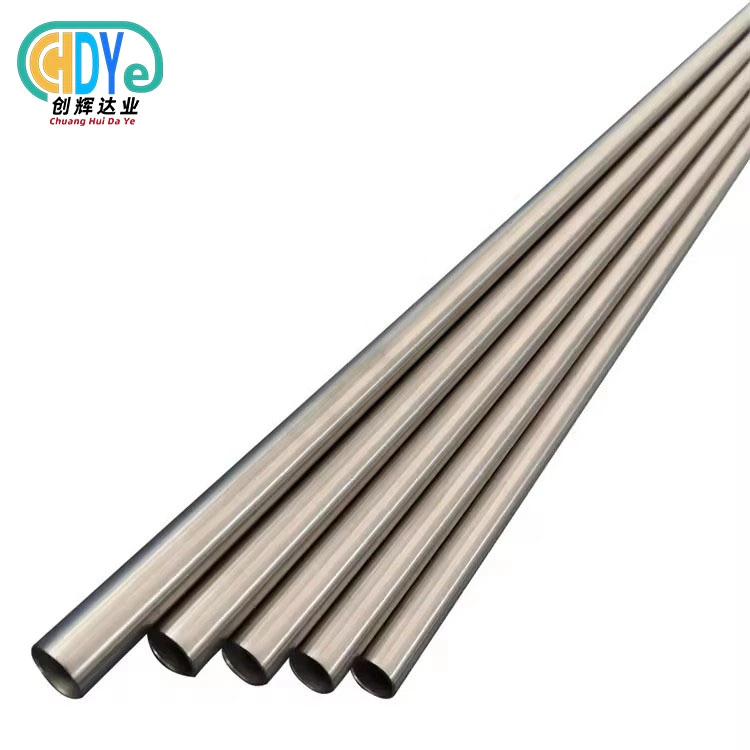
Common Applications and Industries Using Niobium Titanium Alloy Tubes
The usefulness of Niobium Titanium Alloy Tubes comes from the fact that they are both high-performance structure parts and materials that carry electricity very well. Based on their practical needs, different businesses use different properties.
Superconducting Magnet Systems
These tubes are used as barriers in particle accelerators at study centers around the world when making multifilamentary wire. The Niobium Titanium Alloy Tube products are used as sleeves in the bronze route manufacturing process. They keep the copper from getting dirty and maintain the exact shape of the wires while they are being drawn. NbTi parts are used by MRI makers to create the strong magnetic fields needed for medical imaging. Because the material can carry a lot of electricity without any resistance below its critical temperature, it can create magnetic field strengths that aren't possible with normal conductors. At Chuanghui Daye, we only sell tubes with controlled interstitial impurity levels of oxygen, nitrogen, carbon, and hydrogen that are below 150 ppm. This is because even small amounts of contamination can make the tubes brittle and lower their superconducting performance.
Aerospace and Defense Applications
The alloy's high strength-to-weight ratio makes it useful for aircraft hydraulic systems that work under high pressure and changing temperatures. NbTi tubes are used by companies that make jet engines in heat exchangers where temperature stability and resistance to oxidation are very important. The material's density of 5.7 to 6.0 g/cm³ makes it lighter than stainless steel alternatives while still having the same level of strength as pure titanium. Defense companies use these tubes to support the structure of propulsion systems. Every gram saved means more cargo space or a longer range.
Chemical and Petrochemical Industries
Chemical working settings that are corrosive need materials that don't crack or corrode in cracks. The mix of Nb55 and Ti45 makes a solid oxide film that guards against nitric acid, hydrochloric acid, and oxidizing electrolytes that are used in acid recovery and hydrometallurgical extraction. When these tubes are used to build heat exchangers, they work reliably in conditions that would break down stainless steel in months. Chemical equipment makers assess how well the material works in high-pressure filter systems that remove gold and nickel. Niobium's ability to keep things from catching fire adds to the safety in environments with a lot of air.
Medical Device Manufacturing
Because they are biocompatible, niobium titanium alloys can be used to make some surgical instruments and specialized implant parts. However, pure titanium is still the most popular metal for medical devices overall. For prototype development, research labs that study materials need small batches of custom tubes for their testing equipment. They use the alloy's unique set of qualities to make these tubes.
In-Depth Look: Properties Driving the Use of Niobium Titanium Alloy Tubes
Procurement professionals can better match capabilities to application needs when they know the technical features that make this material stand out.
Superconducting Performance
The unique property of niobium titanium that sets it apart from other alloys is its Type II superconductivity. Electrical resistance drops to zero below about 9.2 Kelvin. This lets electrical currents flow continuously and create strong magnetic fields. At temperatures of liquid helium, the upper critical field is much higher than 10 Tesla, which is a lot higher than Type I superconductors like pure niobium. Because of this property, compact magnet designs can be used in particle physics research and medical diagnosis. Material purity has a direct effect on superconducting performance. That's why, as part of our manufacturing process at Chuanghui Daye, we use ICP-OES to do a thorough chemical composition analysis to make sure we have the right Nb/Ti ratios and as few impurities as possible.
Mechanical Strength and Ductility
The tensile strength at room temperature is more than 480 MPa, but the material is still flexible enough to be cold worked, deep drawn, and formed into tubes. This mechanical profile is useful for aircraft structure uses where parts need to be able to handle vibration, temperature changes, and mechanical stress without permanently deforming. The alloy's structure stays the same at temperatures ranging from very cold to several hundred degrees Celsius. However, its superconducting properties naturally disappear above the critical temperature. Adding titanium makes the niobium much easier to work with during fabrication, since pure niobium is naturally very fragile.
Corrosion Resistance Mechanisms
Titanium's impact goes beyond improving mechanical performance; it also protects against chemicals. When the element is exposed to oxidizing conditions, it forms a thick layer of titanium dioxide that protects the metal below from breaking down over time. This passive film forms back together on its own if it is mechanically damaged, protecting chemical processing equipment in a way that fixes itself. Organic acids, salt solutions, and reactive media that quickly rust carbon steel or weaken stainless steel by forming pits in it can't damage Niobium Titanium Alloy Tube material. Chemical plant operators like this durability because the costs of replacing equipment and resuming production often go over the initial material premiums...
Procurement Guide: How to Source High-Quality Niobium Titanium Alloy Tubes
To choose the right provider, you need to look at more than just the unit price. Quality assurance, on-time delivery, and expert help all have a big effect on the success of a project.
Certification and Quality Standards
ISO 9001:2015 approval means that quality is managed in a planned way throughout the whole production process. Following the rules in ASTM B394 ensures that the sizes and properties of the materials are in line with established industry standards. Material certificates should show the chemical make-up, mechanical test results, and ultrasound testing done to ASTM E213 standards to find internal flaws. This should be asked for by procurement managers. Laser micrometry inspection of dimensions proves that the outer diameter, inner diameter, and structural integrity are always the same from one production run to the next. At Chuanghui Daye, each tube is carefully checked one last time before being put in a foam-lined wooden box to protect it from damage during shipping.
Customization and Lead Times
Specialized refractory metals don't usually come in standard supplies. Most tubes are made to order based on the grade, size, and number requirements of the customer. Our factory in Baoji's Titanium Capital region has electron beam furnaces, precision lathes, and rolling equipment that can make tubes with an outer diameter of 3mm to 100mm, a wall thickness of 0.5mm to 5mm, and lengths up to 6000mm when needed. We send quotes within three hours of getting full specifications, including grade, size, quantity, standard requirements, and any special processing needs. Production usually starts as soon as payment is confirmed, and regular updates on progress keep everyone informed throughout the whole process.
Supplier Evaluation Criteria
When working with tough products, experience is important. Suppliers who have worked with hard metals for a long time know how to work with niobium and titanium alloys in a specific way. A test of a company's ability to make things should include a tour of the building or detailed records of its melting, forging, annealing, and machining tools. References from users in flight, medical devices, or scientific studies show that the quality and dependability are good. Logistics are affected by geography; buying from well-known manufacturing areas like Baoji lets you use a lot of technical knowledge and supply chain facilities that sellers in other areas can't match.
Why Choose Niobium Titanium Alloy Tubes? Advantages and Decision-Making Criteria
When you buy high-quality materials, you need to be able to show that they will improve performance and create long-term value.
Performance Advantages
The strength-to-weight ratio is better than that of most structural alloys, and it can conduct electricity in a way that no other material combination can. When systems are built around NbTi tubes, they can work in ways that aren't possible with copper wires or resistance magnets. Corrosion resistance means a longer service life in chemical processing environments, which means fewer replacements and lower costs for downtime. High purity and a regular microstructure make sure that performance is the same across production runs. This is very important for makers who need to know how materials will behave during production and use.
Cost-Effectiveness and Longevity
Niobium Titanium Alloy Tube has been proven to provide long-term value in demanding applications. Niobium Titanium Alloy Tube often comes out on top in lifetime analyzes, even though it costs more than normal alloys at first. Chemical equipment that lasts decades instead of years spreads out the higher cost over longer periods of use. Aerospace parts that allow for lighter planes explain their high cost by saving money on fuel over the life of the plane. Superconducting magnet systems offer performance that can't be matched by other technologies. This means that cost comparisons with less effective alternatives are pointless. Total cost of ownership, which includes maintenance, replacement cycles, and operational efficiency, is something that procurement professionals often look at and decide that NbTi tubes are a better value, even though they cost more to buy.
Supply Chain Considerations
Production stops can be avoided with reliable sourcing. Buying from established sellers whose quality is always the same and whose contact is quick and easy is the best way to lower procurement risk. Long-term relationships let people work together to solve problems as applications change or requirements get stricter. Companies that keep a lot of inventory on hand or can make things quickly can be flexible for urgent projects that need to be finished quickly. Shaanxi Chuanghui Daye Metal Material Co., Ltd. has been working with rare metals for more than 30 years and has modern manufacturing facilities, an ISO 9001:2015 quality system, and is located in China's best titanium production area. This makes them a reliable supplier of both high-quality materials and materials.
Conclusion
These Niobium Titanium Alloy Tubes are unique because they combine superconducting performance, mechanical strength, and corrosion resistance to make technologies that change medicine, science, aerospace, and chemical processing. Procurement professionals can make decisions that balance technical performance with lifecycle economics when they know about the material's unique properties, application needs, and sourcing issues. The strategic value of these advanced materials rises as industries keep pushing the limits of what they can do by making magnets stronger, planes lighter, and chemical processes more aggressive. Working with seasoned manufacturers guarantees you can get the good materials, technical know-how, and reliable supply chain that are necessary for the project to succeed.
FAQ
Q: What temperature range can niobium-titanium alloy tubes withstand?
A: The temperatures of these tubes work well from very cold (almost zero degrees Celsius) to about 400°C. They become superconducting below 9.2 Kelvin, which makes them perfect for magnet systems that are cooled by liquid helium. The material is a high-strength structural alloy that doesn't rust at room temperature or higher temperatures. It can be used in aircraft and chemical processing uses that go through thermal cycles.
Q: How does corrosion resistance compare to stainless steel?
A: Niobium-titanium alloys work much better than stainless steel in harsh chemical environments, especially when it comes to nitric acid, hydrochloric acid, and electrolytes that oxidize. The titanium part creates an oxide layer that heals itself and keeps the metal from breaking and corroding in cracks. Stainless steel may be fine for light service conditions and is less expensive, but NbTi tubes last longer in places where chemicals would break down other materials faster.
Q: Can tubes be customized for specific industrial needs?
A: In this case, customization is the norm, not the exception. Manufacturers make tubes based on what the customer wants in terms of grade, length, wall thickness, and outer diameter. Special processing, like precise machining, surface treatments, or non-standard dimensional tolerances, can be used to meet the specific needs of an application. Collaborative engineering lets you choose the best materials and shapes for the job by working directly with skilled sources.
Partner with a Trusted Niobium Titanium Alloy Tube Supplier
Finding refractory metal can be hard, and you need to know more than just how to place an order to do it right. Shaanxi Chuanghui Daye Metal Material Co., Ltd. has been in business for 30 years and has a lot of specialized knowledge that it brings to every job. They help aerospace manufacturers, chemical processors, medical device companies, and research institutions by providing materials that meet the highest standards. Our ISO 9001:2015-certified factory in Baoji's High-tech Development Zone uses electron beam heating, precise cutting, and full quality control to make tubes that meet ASTM B394 standards in grades Nb52-Ti48, Nb50-Ti50, and Nb45-Ti55. Our technical team can help you match the right material to your needs, whether you need superconducting performance for next-generation MRI systems, corrosion-resistant tubes for chemical heat exchangers, or lightweight structural components for aerospace applications. Contact us at info@chdymetal.com to talk about your Niobium Titanium Alloy Tube needs, get quick quotes, and experience the dependability that turns difficult projects into successful ones.
References
1. Boyer, R., Welsch, G., and Collings, E.W. (1994). Materials Properties Handbook: Titanium Alloys. ASM International, Materials Park, Ohio.
2. Scanlan, R.M., Malozemoff, A.P., and Larbalestier, D.C. (2004). "Superconducting Materials for Large Scale Applications," Proceedings of the IEEE, Volume 92, Issue 10.
3. American Society for Testing and Materials. (2019). ASTM B394-19: Standard Specification for Niobium and Niobium Alloy Seamless and Welded Tubes. West Conshohocken, Pennsylvania.
4. Godlewski, L.A. and Zardiackas, L.D. (2012). "Characterization of Niobium-Titanium Alloys for Biomedical Applications," Journal of Materials Engineering and Performance, Volume 21, Issue 12.
5. Reed, R.P. and Clark, A.F. (1983). Materials at Low Temperatures. American Society for Metals, Metals Park, Ohio.
6. Wilson, M.N. (2017). Superconducting Magnets for Accelerators. Oxford University Press, Oxford, United Kingdom.
Learn about our latest products and discounts through SMS or email