- English
- French
- German
- Portuguese
- Spanish
- Russian
- Japanese
- Korean
- Arabic
- Greek
- German
- Turkish
- Italian
- Danish
- Romanian
- Indonesian
- Czech
- Afrikaans
- Swedish
- Polish
- Basque
- Catalan
- Esperanto
- Hindi
- Lao
- Albanian
- Amharic
- Armenian
- Azerbaijani
- Belarusian
- Bengali
- Bosnian
- Bulgarian
- Cebuano
- Chichewa
- Corsican
- Croatian
- Dutch
- Estonian
- Filipino
- Finnish
- Frisian
- Galician
- Georgian
- Gujarati
- Haitian
- Hausa
- Hawaiian
- Hebrew
- Hmong
- Hungarian
- Icelandic
- Igbo
- Javanese
- Kannada
- Kazakh
- Khmer
- Kurdish
- Kyrgyz
- Latin
- Latvian
- Lithuanian
- Luxembou..
- Macedonian
- Malagasy
- Malay
- Malayalam
- Maltese
- Maori
- Marathi
- Mongolian
- Burmese
- Nepali
- Norwegian
- Pashto
- Persian
- Punjabi
- Serbian
- Sesotho
- Sinhala
- Slovak
- Slovenian
- Somali
- Samoan
- Scots Gaelic
- Shona
- Sindhi
- Sundanese
- Swahili
- Tajik
- Tamil
- Telugu
- Thai
- Ukrainian
- Urdu
- Uzbek
- Vietnamese
- Welsh
- Xhosa
- Yiddish
- Yoruba
- Zulu
Top 7 Uses of Titanium Alloy Wire in Medical and Aerospace
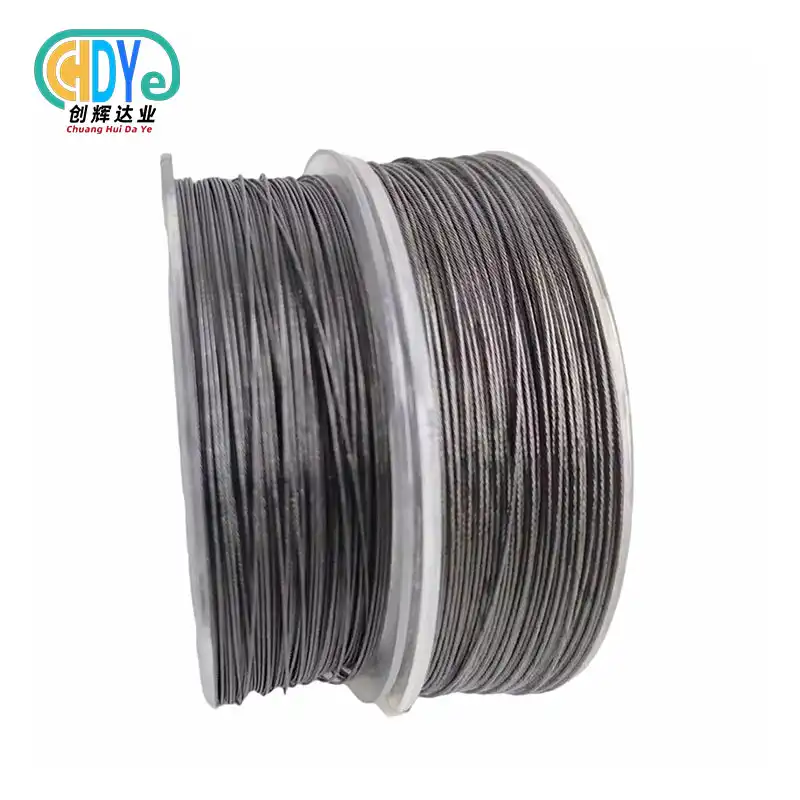
Titanium alloy wire has revolutionised the medical and aerospace sectors, providing unparalleled mechanical qualities, corrosion resistance, and biocompatibility that reshape the way we approach key components. This knowledge of varied uses becomes vital to procurement specialists when evaluating materials for life-saving medical equipment or mission-critical aircraft systems, allowing them to make selections that balance performance, regulatory compliance and cost-efficiency. This exhaustive study exposes the seven best applications in which titanium wire performs, proving why global manufacturers are turning more and more to this extraordinary material for use in situations when failure is just not an option.
Understanding Titanium Alloy Wire: Composition and Key Properties
Titanium alloy formulations have better properties that blow others out of the water. The most prevalent grade is Ti-6Al-4V (Grade 5). It's all pure titanium, aluminium, and vanadium. It weighs just 4.43 g/cm³, roughly 60% less than steel, and has a tensile strength of between 895 and 1100 MPa. It is quite powerful given how light it is and is crucial for applications that need to be light.
Physical Characteristics That Define Performance
The special features of titanium wire come from the way it is made and the way its atoms are arranged. These metals don't change size when the temperature goes from -250°C to +400°C because their melting point is higher than 1600°C. The modulus of elasticity of the material is about 110 GPa, which makes it perfect for surgical instruments and aerospace fasteners that need to spring back. When exposed to oxygen, a natural passive oxide layer (TiO₂) forms right away. This makes a self-healing barrier that protects against saltwater, most oxidizing acids, and stress corrosion caused by chloride.
Manufacturing Excellence Through Process Control
The process starts with certified titanium sponge that is vacuum arc remelted (VAR) or electron beam (EB) furnace. This gets rid of any impurities and makes the alloy composition more uniform. Several stages of hot forging smooth out the grain structure, and then precise wire drawing through carbide dies makes the dimensions accurate to within ±0.01 mm. Vacuum annealing in the middle, between drawing passes, reduces internal stresses and keeps the material flexible. As required by ASTM B863, AMS 4954, and ISO 5832-3, each production lot goes through strict testing. Every package comes with full traceability paperwork.
Top 7 Uses of Titanium Alloy Wire in Medical and Aerospace
Titanium wire can be used in many different situations where safety, structural stability, and environmental resistance are all important. These seven important uses show how procurement teams can use the properties of materials to solve hard engineering problems.
Orthopedic Implants and Surgical Cables
Grade 23 (Ti-6Al-4V ELI) wire is used a lot by companies that make medical devices for both permanent and temporary implants. Kirschner wires keep broken bones stable while they heal by applying precise mechanical loads without triggering immune responses. Surgical wires hold joint replacements and spine constructs in place, and because they aren't magnetic, they can be used safely with an MRI after surgery. The biocompatibility of the material encourages osseointegration, which is direct bone bonding. This lowers the rate of rejection and greatly improves patient outcomes compared to alternatives made of stainless steel.
Aerospace Structural Components and Fasteners
Titanium wire is used by aircraft manufacturers in safety-critical areas that need to be very reliable even when they are loaded and unloaded many times. High-strength bolts, rivets, and locking wire assemblies hold airframe panels and engine cowlings together. Titanium alloy wire stays strong even when the temperature changes from -200°C at cruise altitude to +400°C near the propulsion systems. The lighter parts directly lead to better fuel economy; switching from steel fasteners to titanium ones cuts the weight of some parts of an aircraft by up to 40%, which results in measurable cost savings over the life of the aircraft.
Dental Orthodontics and Maxillofacial Reconstruction
Titanium alloys are used to make orthodontic archwires that move teeth into place over long treatment periods with constant, gentle force. Compared to stiff stainless steel wires, the low modulus of the material makes loads comfortable and biologically appropriate. Maxillofacial surgeons use titanium wire for mandibular fixation plates and cranial mesh repairs because it is radiolucent and doesn't show up on images after surgery as metal artifacts. This makes it easier to see how well the patient is healing.
Welding Consumables for Critical Joints
Titanium wire can be used as a filler metal that meets the requirements of AWS A5.16 (ERTi-5, ERTi-7), which lets pressure tanks, heat exchangers, and pipe systems in petrochemical plants to be welded with high integrity using TIG and MIG. In highly acidic or salty offshore environments, the weld bead keeps its corrosion resistance at least as good as the base metal. When aerospace makers join structural titanium parts, these tools make sure that the weld zones meet fatigue requirements so that the airframe lasts a long time.
Precision Springs for High-Performance Applications
Titanium wire springs are used in medical ventilator valves, aerospace actuation mechanisms, and racing car suspension systems where other spring materials fail in tough conditions. The material's resistance to fatigue under cyclic stress keeps it from breaking too soon, and its resistance to corrosion keeps it from losing its performance in wet or chemically harsh environments. These springs keep their force qualities the same over a wide range of temperatures, which is very important for the stability of precision instruments.
Marine Engineering and Seawater Exposure Components
Titanium wire is used by naval architects for mooring cables, underwater sound arrays, and parts of desalination plants that are always in contact with salt water. The inactive oxide layer stops galvanic rusting even when different metals are connected, which greatly increases the time between repairs. Offshore oil platform managers like titanium because it doesn't break down quickly in settings with hydrogen sulfide and carbon dioxide.
Custom OEM Manufacturing Solutions
Niche markets need specialized wire shapes, like coiled catheter guidewires that can remember their shape exactly, radar antenna elements that can be controlled electrically, or semiconductor processing fixtures that need to be very pure. The material is easy to shape and can be cold-worked into complicated shapes. Its dimensional stability makes sure that parts stay within tolerances during production and use.
Titanium Alloy Wire vs Alternatives: Making the Right Choice
To choose the best wire material, you need to know how its benefits compare across different performance measures for your application. Even though stainless steel (316L) is cheaper, titanium alloy wire is better when weight or environmental exposure is more important than cost. Nickel-based superalloys, such as Inconel 625, are better at resisting oxidation above 500°C, but they are very expensive, and only high-temperature aircraft can afford them. Commercially pure titanium (Grade 2) is biocompatible and resistant to corrosion, but it doesn't have the tensile strength needed for load-bearing orthopedic or structural aerospace parts.
This is where the Ti-6Al-4V alloy comes in handy. Copper metals work great for electrical transfer tasks, but they rust quickly and don't have enough strength-to-weight ratios for systems that need to be light. Professionals in procurement have to weigh the initial costs of materials against their long-term costs, such as repairs, replacements, and improvements in operating efficiency. A detailed chart that compares materials based on their density, tensile strength, resistance to corrosion, biocompatibility, and thermal stability helps with making choices that are in line with performance goals and regulatory requirements.
Procurement Guide: How to Source Quality Titanium Alloy Wire
To make good procurement plans, you need to know how the market works and how that affects prices and supply. When you buy in bulk, the prices are usually 15–25% lower than when you buy in small amounts, but for regular grades, the minimum order quantity is usually 50–100 kg. Lead times range from 7 to 15 days for unique standards that need special drawing and annealing steps to as little as one to three days for common sizes that can be shipped right away.
Quality assurance starts with checking the qualifications of the seller. Systematic quality management is shown by ISO 9001:2015 certification, while industry-specific certifications like AS9100 (aerospace) or ISO 13485 (medical devices) show specialized skills. Reputable manufacturers offer complete documentation packages that include chemical composition certificates (which show that the elements are within certain limits), mechanical test reports (which show the tensile strength, yield strength, and elongation), and records of non-destructive testing (which include ultrasonic inspection for flaws inside the material).
Material traceability from heat numbers on raw materials to lot codes on finished products allows for recalls and proof of regulatory compliance. Chuanghui Daye keeps full process traceability and makes archived test data available for auditing, which meets the needs of customers' quality management systems. Request sample materials with full documentation from potential suppliers, inspect incoming materials according to ASTM standards, and set clear specifications that include tolerances for diameter, surface finish, straightness, and packaging methods that keep items from getting damaged during international shipping.
Strategic relationships with suppliers go beyond just buying things from them. They become partnerships where technical support helps with choosing materials, application engineering advice solves problems with fabrication, and flexible delivery schedules allow for changes in production planning. When buying from China's "Titanium Capital" region, global logistics planning is very important. Baoji blends metalworking knowledge with well-established export infrastructure that makes international shipping easier by using reliable freight forwarding networks and streamlined customs processes.
Conclusion
As medical and aircraft technologies get better, titanium alloy wire becomes more important from a strategic point of view. Its unique mix of strength, biocompatibility, rust resistance, and light weight solves engineering problems that happen when regular materials are used and make products less safe or less efficient. When procurement workers know a lot about the qualities of materials, the needs of specific applications, and the strengths and weaknesses of suppliers, they can help their companies gain a competitive edge through smart material choice. Our discussion of seven important uses for titanium wire shows that it has measurable value. However, more uses may come up as manufacturing techniques improve and the cost of materials drops, as materials science research continues.
FAQ
Q: What distinguishes aerospace-grade titanium alloy wire from medical-grade specifications?
A: Aerospace grades like AMS 4954 focus on mechanical properties like tensile strength, fatigue resistance, and consistent dimensions across large production lots. Medical Grade 23 (ELI - Extra Low Interstitial), on the other hand, has ultra-low levels of oxygen, nitrogen, and iron to make it more biocompatible and flexible. Medical standards like ASTM F136 and ISO 5832-3 need extra checks for purity and proof that the surface is clean.
Q: How does titanium wire compare to stainless steel for medical implant applications?
A: Titanium is better for biocompatibility because it has lower immune response rates, is nonmagnetic, which makes MRIs safe, and has a modulus that is closer to bone, which lowers the stress shielding effects that cause implants to come loose. Even though stainless steel is cheaper at first, titanium's ability to fuse with bone and resistance to rust in physiological settings make it worth the higher price for lasting implants.
Q: Which certifications should buyers verify when sourcing titanium wire?
A: Some important certifications are ISO 9001:2015 for quality management systems, AS9100 for aerospace, or ISO 13485 for medical, and material conformance to ASTM B863, AWS A5.16, or any relevant AMS requirements. With every shipment, you should ask for material test reports, chemical composition certificates, and proof of traceability.
Partner with Chuanghui Daye for Your Titanium Alloy Wire Requirements
Shaanxi Chuanghui Daye Metal Material Co., Ltd. can help you make medical devices and aerospace parts by providing you with precision-engineered titanium alloy wire solutions. As the "Titanium Capital" of China, Baoji is where we are located. With 30 years of experience working with rare metals and ISO 9001:2015-certified processes, we can provide materials that meet ASTM B863 and AMS 4954 standards. We have Ti-6Al-4V and Grade 23 wire in stock, and it comes in both straight and coil forms. Standard sizes ship within 1 to 3 days. As a direct manufacturer of titanium alloy wire, we can offer you competitive factory prices, custom alloy development, dimensional accuracy within ±0.01 mm, and full traceability documentation to meet your quality assurance needs. You can talk to our expert team at info@chdymetal.com about your specific application needs, ask for free samples of materials, or set up a meeting to talk about how our stable supply chain and metallurgical skills can help you get the best deals.
References
1. Anderson, R. C. (2019). Titanium Alloys in Aerospace Structural Applications: Performance and Manufacturing Considerations. Journal of Materials Engineering and Performance, 28(4), 2156-2168.
2. Chen, Q., & Thouas, G. A. (2020). Metallic Implant Biomaterials: Properties and Clinical Performance of Titanium Alloys. Materials Science and Engineering Reports, 87, 1-57.
3. Donachie, M. J. (2018). Titanium: A Technical Guide, 3rd Edition. ASM International, Materials Park, Ohio.
4. Froes, F. H., & Qian, M. (2021). Titanium in Medical and Dental Applications: Materials Science and Clinical Performance. Woodhead Publishing, Cambridge, United Kingdom.
5. Peters, M., Kumpfert, J., Ward, C. H., & Leyens, C. (2017). Titanium Alloys for Aerospace Applications. Advanced Engineering Materials, 19(6), 1600748.
6. Wang, K. (2020). The Use of Titanium for Medical Applications in the USA: Manufacturing, Properties, and Clinical Outcomes. Materials Transactions, 61(6), 1012-1025.
Learn about our latest products and discounts through SMS or email