- English
- French
- German
- Portuguese
- Spanish
- Russian
- Japanese
- Korean
- Arabic
- Greek
- German
- Turkish
- Italian
- Danish
- Romanian
- Indonesian
- Czech
- Afrikaans
- Swedish
- Polish
- Basque
- Catalan
- Esperanto
- Hindi
- Lao
- Albanian
- Amharic
- Armenian
- Azerbaijani
- Belarusian
- Bengali
- Bosnian
- Bulgarian
- Cebuano
- Chichewa
- Corsican
- Croatian
- Dutch
- Estonian
- Filipino
- Finnish
- Frisian
- Galician
- Georgian
- Gujarati
- Haitian
- Hausa
- Hawaiian
- Hebrew
- Hmong
- Hungarian
- Icelandic
- Igbo
- Javanese
- Kannada
- Kazakh
- Khmer
- Kurdish
- Kyrgyz
- Latin
- Latvian
- Lithuanian
- Luxembou..
- Macedonian
- Malagasy
- Malay
- Malayalam
- Maltese
- Maori
- Marathi
- Mongolian
- Burmese
- Nepali
- Norwegian
- Pashto
- Persian
- Punjabi
- Serbian
- Sesotho
- Sinhala
- Slovak
- Slovenian
- Somali
- Samoan
- Scots Gaelic
- Shona
- Sindhi
- Sundanese
- Swahili
- Tajik
- Tamil
- Telugu
- Thai
- Ukrainian
- Urdu
- Uzbek
- Vietnamese
- Welsh
- Xhosa
- Yiddish
- Yoruba
- Zulu
What makes pure niobium bar ideal for superconductors?
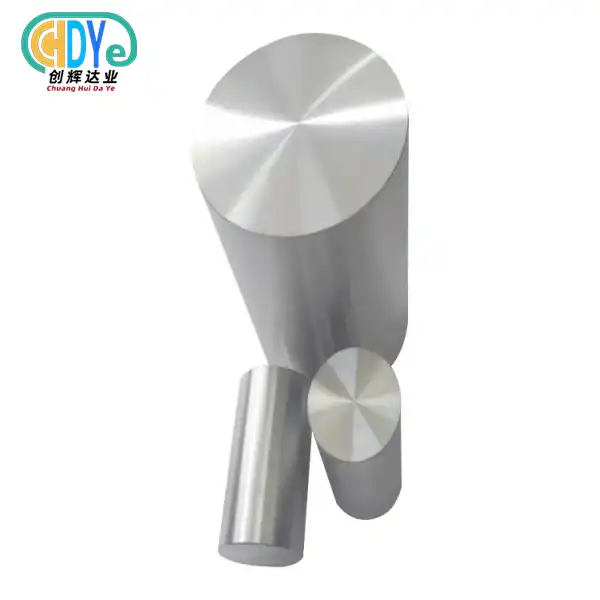
Because of its exceptional critical temperature of 9.2 Kelvin, better type-II superconductivity, and features of zero electrical resistance, a pure niobium bar is the standard material for superconducting applications. The square shape is easier to machine than a cylindrical shape, which lets it be precisely made into superconducting radio frequency (SRF) holes, cryomodule parts, and structural supports. Because it is very stable chemically and doesn't let magnetic fields through, this material is reliable enough to be used in particle accelerators, MRI systems, and other high-tech study settings where performance can't be hampered.
Understanding Pure Niobium Bar and Its Superconducting Properties
What Defines High-Purity Niobium Material
High-purity niobium usually has at least 99.95% atomic niobium and only a few minor elements that don't affect its superconducting properties. This amount of clarity tells pure niobium bar apart from alloys like Nb-Ti, which are used for different things. The elemental form keeps its superconducting qualities without adding the complexity that comes with alloying elements. This makes it the best choice for uses that need to be able to depend on reliable performance.
Critical Temperature and Type-II Superconductivity
The critical temperature (Tc) of niobium is 9.2 K, which is the highest of all pure metal superconductors. Because of this feature, it can still be superconducting in liquid helium, which is often used in cold systems. As a type-II superconductor, niobium lets some magnetic fields pass through quantized vortices while still being superconducting overall. This is a key property for high-field magnet uses and SRF cavity operations.
Mechanical Attributes Supporting Demanding Environments
Because the material is very flexible, it can be cold worked and shaped without breaking or losing its properties. Resistance to corrosion in cold and cryogenic temperatures keeps the material intact over long periods of time. The right heat treatment methods improve the structure of the grains and get rid of any remaining stresses. This directly improves the efficiency and safety of the superconducting field. These combined mechanical qualities solve the problems that come up during fabrication and long-term use in medical and study settings.
Why Pure Niobium Bar is the Material of Choice for Superconductors
Superior Performance Compared to Alternative Materials
Compared to titanium, stainless steel, and molybdenum, niobium has superb superconducting properties that these other materials just can't match. Titanium is very strong for its weight, but it doesn't have any superconducting qualities. Stainless steel helps hold things together, but it also loses heat and causes magnetic interference. Molybdenum can handle high temperatures, but it doesn't superconduct at freezing temperatures that most people can reach. The comparison shows that niobium is the only material that can be used in real-world zero-resistance situations.
Niobium not only behaves like a superconductor, but it also shows better resistance to oxidation and corrosion when put through practical pressures. Surface oxide layers form quietly and protect the material below without lowering performance, which is very useful in chemical processing equipment and vacuum settings. This security means that parts last longer and need less upkeep, which lowers the total cost of ownership even though the materials cost more at first.
Geometric Advantages of Square Bar Configuration
Compared to round rods or other uneven forms, pure niobium bars are easier to machine. Milling, drilling, and EDM processes can use flat surfaces as stable guides. This cuts down on setup time and improves the accuracy of measurements. This arrangement also makes the best use of the materials during production, reducing waste when making rectangular hole parts or structural frames.
The square shape makes it easy to fit into assembly jigs and fixtures, which speeds up the production process. Standard measuring tools make it easy for engineers to check the dimensions of things, which makes quality control simpler. These useful benefits add up to big-time and money savings over the course of production cycles. They are especially helpful for custom or small-batch orders that are popular in prototype and research development.
Heat Treatment Enhancement of Superconducting Properties
Controlled heating processes improve the structure of the grains and get rid of any flaws that might affect the superconducting properties. Stress relief methods get rid of any remaining mechanical pressures that were put on the material during the forming process. This stops possible weak spots from happening. Electropolishing is one way to prepare the surface and get the very smooth finishes needed for SRF hollow uses, where surface roughness directly impacts quality factors.
These steps, after processing, turn raw materials into parts that are ready for use and meet strict performance standards. Suppliers who can do heat treatment in-house make it easier to track and make sure quality standards are met, which lowers the risk of buying. We suggest making sure that possible providers can show proof of their thermal processing methods and that they follow set standards for superconducting materials.
Manufacturing and Quality Assurance of Pure Niobium Bars
Production Process from Raw Material to Finished Product
To make something, high-purity niobium waste or recycled scrap is first heated with an electron beam to get it to the right purity level and get rid of any remaining impurities. The resulting ingots are formed at controlled temperatures to get a rough idea of the grain structure and fill up any holes. Rolling operations gradually lower cross-sections while keeping tight tolerances on dimensions. Annealing processes in between rolling operations keep the work from becoming too hard.
Precision cutting or grinding sets the final measurements and requirements for the surface finish. Modern CNC equipment makes it possible to consistently reproduce unique sizes, meeting the specific dimensional needs of each job. Before the materials are packed and sent out, they go through a final inspection that checks their physical measurements and surface quality. This makes sure that the materials come ready to be used in the customer's processes.
Quality Certifications and Chemical Composition Standards
Niobium goods must meet certain chemical makeup and mechanical property standards set by international organizations like ASTM B392. ISO 9001:2015 approval shows that quality is managed in a planned way at all steps of production, from receiving the raw materials to sending them out for shipping. Material test records (MTRs) show the exact chemical analysis results and physical property readings for every production batch. They provide the traceability that regulated industries need.
Third-party verification by independent labs adds another level of validation. This is especially helpful for high-stakes uses in medical products or aircraft. Professionals in charge of buying things should ask for written proof that the seller follows the quality system and ask if the supplier takes part in tests or certifications that are specific to superconducting materials.
Testing Protocols Ensuring Superconducting Performance
Full testing plans look at both normal material features and features that are unique to superconductors. Inductively coupled plasma (ICP) spectroscopy proves the elements' composition and the amounts of trace impurities. To make sure a material is flexible and good for shaping, mechanical testing checks its tensile strength, yield strength, and strain.
Checking the properties of a pure niobium bar superconductor involves measuring the crucial temperature, finding the residual resistivity ratio (RRR), and checking the surface resistance if needed. For these specialized tests, you need cryogenic tools and knowledge that not all sources keep on hand. When you work with providers who do or organize these tests, it shows that they care about application-specific quality assurance and makes it easier for you to validate their work.
How to Choose and Procure Pure Niobium Bars for Superconducting Applications
Evaluating Supplier Credentials and Capabilities
Suppliers you can trust have a long history of producing with rare and difficult metals, as shown by case studies from superconducting uses. ISO 9001:2015 certification is a basic guarantee of structured quality management. Certifications specific to an industry show that the company has specialized knowledge. Your project plans will be directly affected by how much production you have, as well as wait times and your ability to accommodate urgent or large orders.
The past of deliveries shows how reliable an operation is and how good they are at logistics, which is especially important when managing foreign shipments. We suggest getting references from customers who have had similar application needs and making sure the provider responds quickly to your first questions. Clear conversation about what can and can't be done, as well as lead times, shows that you have a professional relationship with your source that will last for a long time.
Cost Considerations Beyond Initial Purchase Price
The price of high-purity niobium on the market changes depending on the supply of raw materials and the demand around the world in the aircraft, electronics, and superconducting industries. Volume discounts can be very helpful for bigger sales or long-term supply deals because they can lower the cost per unit by a large amount. But the total cost of ownership is more than just the price of the things themselves.
Transportation costs, customs taxes, and coordinating operations all add up to real costs when you buy something internationally. Material waste during manufacturing affects the actual cost per finished component. This means that, even though they cost more, higher-quality materials with tighter tolerances might be cheaper in the long run. Technical help from suppliers and quick responses to quality issues lower project risk and the cost of possible redo, which adds a lot of value that is hard to measure.
Ordering Processes and Inventory Management
For efficient buying, it's important to be clear about the sizes, purity standards, surface finish, and conditions for heat treatment. Custom sizing choices meet the needs of particular applications without the need for extra processing. Minimum order amounts change by seller and product type, which makes it harder to use smaller quantities for research or prototype development.
Pure niobium bars usually have lead times of a few weeks for normal sizes and months for special sizes that need dedicated production runs. Keeping a planned inventory balances access against carrying costs. This is especially important when handling projects whose due dates aren't clear. Setting up a framework with qualified suppliers gives you more buying options while also getting better prices and giving your production more importance.
Case Studies: Successful Applications of Pure Niobium Bars in Superconductors
Particle Accelerator Components
Large-scale physics study centers use pure niobium bars as the raw material for making SRF cavities. These bars are then shaped, bonded, and electropolished to make structures that resonate. When these holes are working in places with strong magnetic fields and radiation, they have to keep their quality factors (Q-values) above 10^10. Material purity and surface treatment directly affect the performance that can be achieved. This makes choosing the right provider essential for the success of the facility.
The European Organization for Nuclear Research (CERN) and other similar organizations have strict requirements for materials that can only be met by regularly high-quality niobium goods. In this sector, projects need full paperwork that can be tracked back to their source, and they often need witness testing or supplier checks. Successfully delivering materials to these picky customers shows that the seller has the technical know-how and quality system strength to do so.
Medical Imaging Equipment
MRI devices need superconducting magnets that make magnetic fields that are stable and regular and are stronger than 1.5 Tesla. In cryostat systems, pure niobium parts support the structure, carry current, and control temperature, while niobium-titanium alloy wire is the main carrier. These parts have to stay the same size even after being heated and cooled many times, and they have to be reliable for decades of constant use.
Manufacturers of medical devices need suppliers to have detailed quality paperwork, biocompatibility data when it's needed, and production methods that meet the regulatory standards of the medical industry. Patient safety and accurate diagnoses are at stake in this field, so people need to think in terms of zero defects and use proactive quality control to stop nonconformances before they happen.
Emerging Superconducting Technologies
Niobium-based superconducting circuits and resonators that work at millikelvin temperatures are being used in quantum computer systems more and more. In these uses, the cleanliness of the material has to be pushed to new heights because even small amounts of contaminants can cause decoherence and lower the performance of qubits. For these next-generation systems to be built, research institutions and tech companies need suppliers who are willing to work with them on new specs and support rapid prototyping processes.
Niobium's special qualities make it possible for breakthroughs in areas like superconducting power transfer demos and compact particle therapy systems. As these technologies get better and are ready for business use, suppliers who can help these new applications with expert advice and flexible production will be able to take advantage of growing market possibilities.
Conclusion
For challenging uses in the research, medical, and emerging technology sectors, pure niobium bars provide the mix of superconducting performance, mechanical stability, and fabrication practicality needed. The material is technically better because it has the highest elemental critical temperature, type-II superconductivity, and good corrosion protection. When machining and putting things together, a square shape is clearly better than other designs.
Finding suppliers with proven knowledge, strong quality systems, and production powers that match your exact needs is key to successful buying. In the long run, it is more valuable to look at the total cost of ownership instead of just the buying price. As superconducting technologies keep being used in more areas, relationships with dependable material suppliers become valuable assets that help your innovation efforts and place you in the market.
FAQ
Q: What distinguishes pure niobium from niobium alloys in superconducting applications?
A: A pure niobium bar is made up of 99.95% or more of the element niobium and very few other elements. It has the highest critical temperature (9.2 K) of any pure metal and is known to have superconducting qualities. Niobium alloys, such as Nb-Ti, give up a critical temperature (Tc = 9 K for Nb-Ti), but they get stronger mechanically and have a higher critical current density in high magnetic fields. Pure niobium works best in SRF hollow applications that need the highest quality factors, while alloys dominate wire and magnet applications needing mechanical robustness and field performance.
Q: How does corrosion resistance benefit long-term device durability?
A: Niobium forms stable, passive oxide layers that protect underlying material from atmospheric corrosion and chemical attack without degrading superconducting properties. This characteristic proves particularly valuable in vacuum systems, cryogenic environments, and chemical processing equipment, where material degradation would compromise performance or introduce contamination. The extended component lifecycles resulting from this corrosion resistance reduce replacement frequency and maintenance costs, improving total cost of ownership despite premium material pricing.
Q: Can I order custom sizes for specific project requirements?
A: Most specialized providers offer custom sizing services so that they can meet the specific needs of a project that aren't met by standard product measurements. Custom orders usually have minimum amounts and longer wait times than stock items, but they don't need any extra cutting or waste of materials. To get accurate quotes and wait time estimates for custom sizing, be sure to include full measurement specifications, tolerance needs, surface finish needs, and any special heat treatment or certification needs.
Partner with Chuanghui Daye for Premium Pure Niobium Bar Supply
Shaanxi Chuanghui Daye Metal Material Co., Ltd. has been working with rare metals for more than 30 years and can help you find superconducting materials. We have modern electron beam ovens, precision machining tools, and full testing capabilities in Baoji, China, which is known as the "Titanium Capital." This allows us to provide high-purity niobium square bars that meet the strictest requirements. Our quality control system, which is ISO 9001:2015 certified, makes sure that everything can be tracked, from the raw materials to the final review.
We offer stable high-volume supply for business setups as well as flexible small-batch production for research uses. Custom sizes, special heat treatments, and fast shipping choices can all be used to meet tight project deadlines. Our technical team can help you choose the best material and meet the standards for your unique superconducting needs, whether they are for particle accelerators, MRI systems, or new quantum technologies.
Contact our pure niobium bar supply team today at info@chdymetal.com to discuss your project needs, request detailed material certifications, and receive competitive factory-direct quotations. We deliver the quality, reliability, and responsive service that B2B procurement professionals expect from trusted long-term partners.
References
1. Wilson, M.N. (2017). Superconducting Magnets: Materials, Fabrication and Applications. Oxford University Press, Oxford, UK.
2. Padamsee, H., Knobloch, J., and Hays, T. (2008). RF Superconductivity for Accelerators. Second Edition, Wiley-VCH, Weinheim, Germany.
3. Cantoni, M. and Schilling, A. (2004). "Superconducting Properties and Applications of Pure Niobium." Materials Science Forum, Vol. 449-452, pp. 1285-1288.
4. Antoine, C.Z. (2012). "Review of Surface Treatments for Superconducting Niobium Cavities." Physical Review Special Topics - Accelerators and Beams, 15(7), 072001.
5. Tafuri, F. (2019). Fundamentals and Frontiers of the Josephson Effect. Springer Series in Materials Science, Vol. 286, Springer Nature, Switzerland.
6. Prokopec, R. and Weber, H.W. (2015). "Refractory Metals and Their Applications in Superconducting Technologies." International Journal of Refractory Metals and Hard Materials, 50, pp. 59-64.
Learn about our latest products and discounts through SMS or email