- English
- French
- German
- Portuguese
- Spanish
- Russian
- Japanese
- Korean
- Arabic
- Greek
- German
- Turkish
- Italian
- Danish
- Romanian
- Indonesian
- Czech
- Afrikaans
- Swedish
- Polish
- Basque
- Catalan
- Esperanto
- Hindi
- Lao
- Albanian
- Amharic
- Armenian
- Azerbaijani
- Belarusian
- Bengali
- Bosnian
- Bulgarian
- Cebuano
- Chichewa
- Corsican
- Croatian
- Dutch
- Estonian
- Filipino
- Finnish
- Frisian
- Galician
- Georgian
- Gujarati
- Haitian
- Hausa
- Hawaiian
- Hebrew
- Hmong
- Hungarian
- Icelandic
- Igbo
- Javanese
- Kannada
- Kazakh
- Khmer
- Kurdish
- Kyrgyz
- Latin
- Latvian
- Lithuanian
- Luxembou..
- Macedonian
- Malagasy
- Malay
- Malayalam
- Maltese
- Maori
- Marathi
- Mongolian
- Burmese
- Nepali
- Norwegian
- Pashto
- Persian
- Punjabi
- Serbian
- Sesotho
- Sinhala
- Slovak
- Slovenian
- Somali
- Samoan
- Scots Gaelic
- Shona
- Sindhi
- Sundanese
- Swahili
- Tajik
- Tamil
- Telugu
- Thai
- Ukrainian
- Urdu
- Uzbek
- Vietnamese
- Welsh
- Xhosa
- Yiddish
- Yoruba
- Zulu
What Makes Pure Niobium Round Bars Ideal for Advanced Applications?
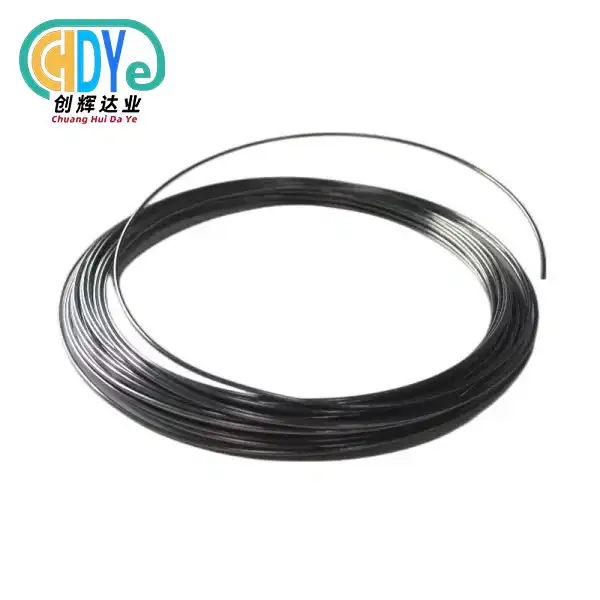
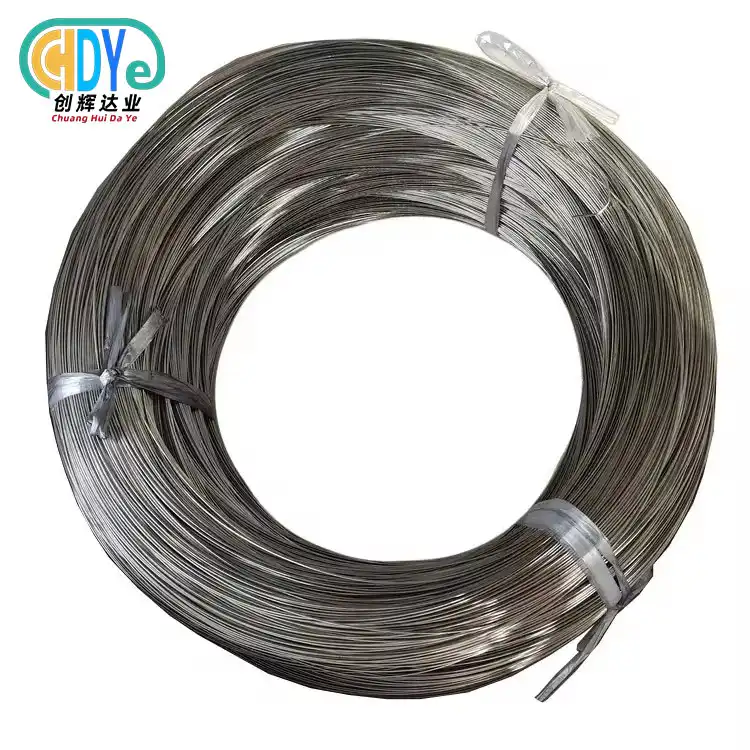
Pure niobium round bars have always been one of the best options for engineers and procurement managers who are looking for materials that perform well under demanding circumstances. These refractory metal bars are >99.9% pure (Nb >99.9%) and provide a unique combination of high-temperature stability, excellent corrosion resistance, and biocompatibility. Whether your application is harsh chemical media, cryogenic electronics, or precise medical implants, niobium round bars provide a material profile that few metals can match at similar density and cost.

Understanding Pure Niobium Round Bars: Material Characteristics and Specifications
Key Physical and Chemical Properties
Niobium has a melting point of 2468°C (4474°F) and a density of 8.57 g/cm3 – nearly half that of tantalum, but with equivalent corrosion resistance in many harsh environments. The tensile strength of our niobium round bars is in the range of 200 to 350 MPa, and they have good ductility, which enables them to be cold worked without repeated annealing. A stable anodic oxide layer forms on their surface and inherently protects them against attack by nitric, hydrochloric, and sulfuric acid.
The rods are available in diameters from 1 mm to 50 mm and lengths up to 1,000 mm and are supplied with either polished or as-rolled surface finishes depending on application requirements. For vacuum and semiconductor applications where outgassing and contamination control are crucial, polished surfaces (Ra < 0.8 µm) are preferable.
Industry Standards and Grade Classification
Our niobium bars meet the requirements of ASTM B392, Standard Specification for Niobium and Niobium Alloy Bar, Rod and Wire. This certification gives purchasers the assurance that the chemical composition, dimensional tolerances, and mechanical qualities have been independently confirmed. Each purchase includes comprehensive material traceability data to enable procurement teams with ISO-regulated supply chains in quality audits and regulatory compliance—without adding friction.
How Heat Treatment Shapes Performance
Controlled heat treatment improves the grain structure and also has a direct effect on ductility and formability. The fully recrystallized pure niobium round bars have an elongation of over 20% and are very well suited for machining and shaping downstream. Our vacuum annealing technique guarantees that interstitial impurities, e.g., oxygen, nitrogen, and hydrogen, are maintained below critical levels to avoid embrittlement, which often affects lower-grade refractory metals.
Why Pure Niobium Round Bars Are Preferred in Advanced Applications
Superior Corrosion Resistance Versus Alternatives
Stainless steel and nickel alloys corrode rapidly in hot concentrated acid environments. Titanium is well adapted to various corrosive environments, but it becomes ineffective under certain limitations of temperature and concentration. In contrast, niobium resists attack by almost all inorganic and organic acids at both ambient and elevated temperatures. This makes niobium rods the preferred material for the construction of chemical processing equipment such as heat exchangers, bayonet heaters, and valve stems that are subjected to tough process streams.
Here are the key performance advantages that make niobium stand out from conventional substitutes:
- Acid resistance: Niobium preserves its shape in strong sulfuric, hydrochloric, and nitric acid conditions that rapidly degrade exotic stainless steel, improving equipment service life by years and reducing unplanned downtime.
- Cryogenic ductility: While most refractory metals are brittle at cryogenic temperatures, niobium is mechanically ductile at cryogenic temperatures. Niobium is therefore essential for superconducting radio frequency (SRF) cavities and the fabrication of MRI components where zero electrical resistance is required.
- Biocompatibility: Niobium is a medical-grade material that meets stringent biocompatibility standards and is an alternative for implanted devices and surgical equipment when osseointegration and non-cytotoxicity are necessary.
These advantages are directly reflected in reduced life span costs and enhanced operational reliability in harsh industrial environments.
Electrical and Thermal Performance in Electronics
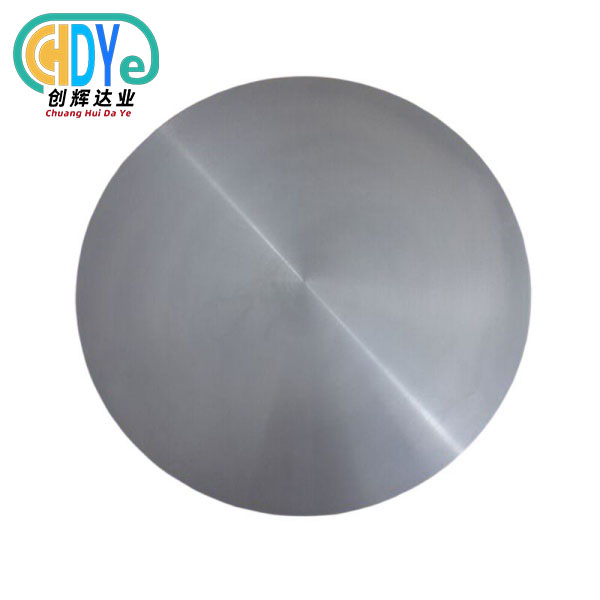
Electronics and semiconductor makers appreciate niobium for its outstanding dielectric characteristics, due to its stable surface oxide deposit. This renders the niobium material a reliable substrate for capacitor fabrication and high-purity sputtering targets. Fine grain structures created by controlled rolling provide consistent film deposition and eliminate the particulate problems that reduce yield in PVD coating processes.
Selecting the Right Pure Niobium Round Bars for Your Industry Needs
Pure vs. Alloyed Niobium: Making the Right Call
Pure niobium (Nb >99.9%) is the most ductile and corrosion-resistant and is good for chemical processing, electronics, and medical applications. Aerospace applications like as thrust chambers and rocket nozzle extensions, where structural integrity under thermal shock conditions is of crucial importance, are suitable for Niobium-based alloys like Nb-1Zr and C-103 due to their improved high-temperature creep resistance. The choice of these versions is determined by your operational temperature range, mechanical load profile, and regulatory constraints.
When comparing niobium to titanium or stainless steel, be aware that niobium offers a better density-to-performance ratio and gives concrete weight savings in aerospace assemblies. The corrosion profile of niobium also reduces coating and maintenance cycles for steel-based components.
Customization, Certification, and Traceability
Material quality is just one factor of procurement security. If you sell to regulated sectors — aerospace, medical devices, nuclear — you have to provide full paperwork, from where the raw materials came from to melting and processing records, dimensional inspection reports, and mechanical test certifications. Our quality management system is accredited to ISO 9001:2015 and controls every aspect of manufacturing from raw material inspection to final packing.
You may choose the surface finish—polished, ground, or as rolled—to suit the environment of the ultimate usage. Custom diameters, lengths, and heat treatment states are available on request for exact matching to your design tolerances.
Navigating the Procurement Process for Pure Niobium Round Bars
The risks of obtaining refractory metals from questionable sources are severe, including uneven purity, lack of certificates, and unexpected lead times. The danger is minimized by choosing a confirmed pure niobium round bars producer with an existing manufacturing infrastructure.
The pricing of niobium depends on the worldwide demand for the ore, the difficulties of processing it, and the order size. Bulk purchase agreements may help to stabilize unit prices and guarantee priority manufacturing slots during times of strong demand. We provide comprehensive estimates with detailed cost breakups to assist procurement managers in planning their budgets more effectively.
Lead times vary according to the specifications and quantity. Standard dimensions often arrive on specified commercial schedules, but custom machined components need extra production scheduling. Supply continuity is unbroken for long-term projects, and after-sales service includes technical consulting, re-inspection, and documentation updates.
Building Trust: Why Our Niobium Products Stand Out
Shaanxi Chuanghui Daye Metal Material Co., Ltd. is situated in the High-tech Development Zone of Baoji, Shaanxi, the “Titanium Capital” of China, where there is an unmatched concentration of rare metal knowledge and industrial infrastructure. We were founded by a specialist with over 30 years' expertise in refractory and rare metals and have established our name on the delivery of products that function precisely as required.
We operate under one quality-controlled roof with electron beam furnaces, vacuum annealing equipment, precision rolling mills and CNC machining centers. All niobium bars we manufacture are subject to multi-stage inspection: chemical composition, dimensional measurement, surface quality, and mechanical properties. We provide a reliable, traceable, technically supported supply to clients in the aerospace, chemical processing, electronics, and medical device industries.
We provide both high-volume OEM contracts and small-batch R&D purchases, providing a level of flexibility that huge commodity wholesalers seldom supply. Our technical staff works closely with the engineers throughout the specification process, so the material solution picked really meets the application need.
Conclusion
Pure niobium round bars earn their place in advanced industrial applications through a combination of properties that few single materials can replicate: extreme corrosion resistance, refractory-grade thermal stability, cryogenic ductility, and medical-grade biocompatibility. Sourcing chemical equipment, electronic components, aeronautical constructions, or medical implants, requesting Nb >99.9% purity bars from a verified, experienced producer provides procurement teams the performance assurance and documentation integrity their projects need.
FAQ
1. What purity level do your niobium round bars carry?
Our niobium round bars carry a purity level exceeding 99.9% (Nb >99.9%), conforming to ASTM B392 standards for unalloyed niobium. Each batch undergoes chemical composition verification before shipment.
2. What diameter and length options are available?
We supply diameters from 1 mm to 50 mm and lengths up to 1,000 mm as standard. Custom dimensions are available upon request to match specific design requirements.
3. Can niobium bars be machined using standard equipment?
Yes. Niobium's high ductility makes it machinable, though tooling selection matters. High-speed steel tooling with water-soluble coolants and adequate chip loads is recommended to prevent galling during cutting operations.
4. Why does surface finish matter for vacuum applications?
A polished surface (Ra < 0.8 µm) minimizes outgassing in high-vacuum environments. Rough surfaces trap moisture and contaminants, extending pump-down times in semiconductor and PVD coating systems.
5. Do you provide material certifications and traceability?
Every order ships with full documentation including chemical analysis reports, dimensional inspection records, and mechanical test certificates, supporting ISO-regulated and aerospace-grade supply chain requirements.
Get a Quote on Niobium Round Bars from Chuanghui Daye
Shaanxi Chuanghui Daye supplies certified pure niobium round bars to industrial buyers across the United States and globally. As a trusted pure niobium round bars supplier backed by ISO 9001:2015 certification and over 30 years of rare metal expertise, we offer competitive factory-direct pricing, full traceability documentation, and flexible order sizes. Send your specifications to info@chdymetal.com to request a quote today.
References
1. ASTM International. ASTM B392: Standard Specification for Niobium and Niobium Alloy Bar, Rod, and Wire. ASTM International, 2021.
2. Cardarelli, François. Materials Handbook: A Concise Desktop Reference. Springer, 2018.
3. Savitzky, B. H., et al. "Niobium-Based Superconducting Materials for RF Cavity Applications." Superconductor Science and Technology, 2020.
4. Donachie, Matthew J. Superalloys: A Technical Guide. ASM International, 2002.
5. Lide, David R. (Ed.). CRC Handbook of Chemistry and Physics, 97th Edition. CRC Press, 2016.
6. Schulson, Erland M., and Philippe Duval. Creep and Fracture of Ice and Refractory Metals. Cambridge University Press, 2009.
Learn about our latest products and discounts through SMS or email