- English
- French
- German
- Portuguese
- Spanish
- Russian
- Japanese
- Korean
- Arabic
- Greek
- German
- Turkish
- Italian
- Danish
- Romanian
- Indonesian
- Czech
- Afrikaans
- Swedish
- Polish
- Basque
- Catalan
- Esperanto
- Hindi
- Lao
- Albanian
- Amharic
- Armenian
- Azerbaijani
- Belarusian
- Bengali
- Bosnian
- Bulgarian
- Cebuano
- Chichewa
- Corsican
- Croatian
- Dutch
- Estonian
- Filipino
- Finnish
- Frisian
- Galician
- Georgian
- Gujarati
- Haitian
- Hausa
- Hawaiian
- Hebrew
- Hmong
- Hungarian
- Icelandic
- Igbo
- Javanese
- Kannada
- Kazakh
- Khmer
- Kurdish
- Kyrgyz
- Latin
- Latvian
- Lithuanian
- Luxembou..
- Macedonian
- Malagasy
- Malay
- Malayalam
- Maltese
- Maori
- Marathi
- Mongolian
- Burmese
- Nepali
- Norwegian
- Pashto
- Persian
- Punjabi
- Serbian
- Sesotho
- Sinhala
- Slovak
- Slovenian
- Somali
- Samoan
- Scots Gaelic
- Shona
- Sindhi
- Sundanese
- Swahili
- Tajik
- Tamil
- Telugu
- Thai
- Ukrainian
- Urdu
- Uzbek
- Vietnamese
- Welsh
- Xhosa
- Yiddish
- Yoruba
- Zulu
Which Certifications Matter for pure niobium square bar?
When you’re searching for a pure niobium bar for aircraft components, chemical equipment, or superconducting research, certificates aren’t just formalities; they’re your main proof of material integrity. The correct certificates verify chemical purity, mechanical uniformity, and regulatory compliance. From permissible interstitial impurity levels to dimensional tolerances, everything is governed by standards such as ASTM B392, ISO 9001:2015, and AMS 4350. Procurement teams that do not verify paperwork risk getting poor niobium stock that fails under operational stress, triggering regulatory rejection, or undermining end-product safety.
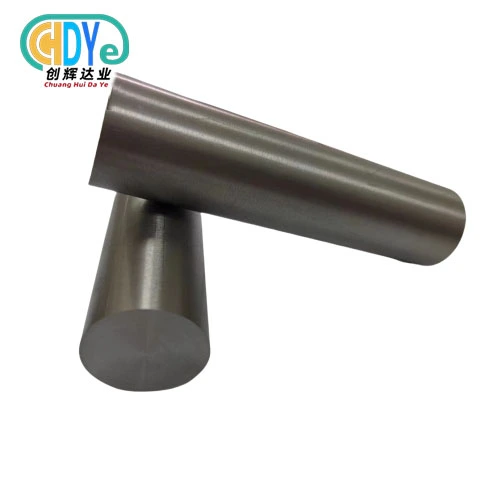
Why Certifications Are Non-Negotiable in Niobium Bar Procurement
Certifications serve as binding technical commitments between a supplier and a buyer. In the niobium supply chain, where material grades range from commercial-grade R04210 to reactor-grade R04200, a single misidentified batch can cascade into significant downstream failures.
Certifications Reduce Supply Chain Risk
Unverified material composition is always cited by aerospace and chemical processing procurement managers as a major reason for rejection of components. A certified niobium bar is provided with a material test report (MTR) including chemical analysis, mechanical test data, and heat/lot traceability. This documentation chain enables engineers to track each bar back to its initial melt, a capability that is critical when regulatory audits occur or when product recalls are under investigation.
The Cost of Non-Compliance
International Journal of Advanced Manufacturing Technology has reported oxygen contamination over 300 ppm in uncertified refractory metals, producing brittle fracture of shaped parts. In particular for niobium, oxygen levels in excess of the permitted limits (often < 100 ppm for high-grade applications) immediately impair ductility and long-term fatigue resistance. Certified procurement removes this vulnerability.
Key Certifications to Look for When Buying Niobium Bar Stock
Not all certificates are the same. Understanding which standards apply to your application can help you ask the necessary questions before you purchase.
Here are the basic certification requirements that reputable niobium bar suppliers adhere to:
- ISO 9001:2015 – Governs the supplier’s quality management system for the whole production cycle, starting from the input of raw material to final inspection and dispatch. This means the manufacturer is working within established and auditable processes, not ad hoc methods.
- ASTM B392 — The main material standard for unalloyed niobium and niobium alloy pure niobium bar, rod, and wire. It defines permitted chemical composition ranges, tensile characteristics, and acceptable surface condition for both R04200 and R04210 grades.
- AMS 4350 — Aerospace material standard for niobium materials for use in high-performance structural and functional aerospace systems. Its dimensions and purity restrictions are more stringent than typical commercial norms.
- RoHS / REACH Compliance – Required for any niobium components entering the EU market or used in electronics. These restrictions limit toxic compounds and mandate full disclosure of chemical components.
- MIL-STD Documentation Niobium bar stock flowing into military supply channels. Military specs confirm material performance satisfies set benchmarks for environmental and mechanical stress.
- These certifications include quality systems, performance of particular materials, and regulatory market access. Suppliers with all five kinds of evidence are showing a mature compliance posture that safeguards your procurement choices at every level.
ISO 9001:2015 is a good indicator by itself, but to make a comprehensive procurement safety net, include ASTM B392 test results and REACH compliance documents. I usually suggest getting the whole certificate bundle before you approve a new vendor.
How to Verify Niobium Bar Certifications Before Purchase
Receiving a certificate and trusting a certificate are two different things. Verification is a discipline, not a formality.
Understand Material Certificate Types
EN 10204 establishes two important kinds of certificates for the purchase of niobium. 3.1 certificate must be provided by the manufacturer and shall certify that the material supplied conforms to the stipulated standards. For important aerospace or nuclear applications, a 3.2 certificate provides an independent third-party examination and is a greater level of assurance. Always mention what kind of certificate your application needs when purchasing.
Conduct Supplier Audits
Supplier audit: Physical manufacturing environment, calibration records of testing equipment, and traceability logs. Reputable manufacturers have annealing furnaces, electron beam furnaces, and rolling equipment that are routinely maintained and recorded. Audits verify that the equipment used to produce your niobium bar stock can handle the specified specification range.
Leverage Digital Traceability Tools
Leading suppliers now affix QR codes on certification certificates so that the physical identification of each bar is linked to its digital test record. This real-time traceability mitigates the possibility of certificate replacement, a recognized concern in secondary metal markets. Blockchain-based verification is beginning to appear in high-value refractory metal transactions, providing an immutable audit trail from melt to delivery.
Certified vs. Non-Certified Niobium Bar: A Direct Comparison
In a procurement cycle when costs are under pressure, the initial price differential between certified and non-certified pure niobium bar stock might seem favorable. But the arithmetic for keeping things running almost never works for the non-certified path in demanding uses.
Typically, tantalum concentration, grain size distribution outside of ASTM E112 specifications, and surface characteristics outside the Ra tolerances necessary for precise machining are hidden in uncertified niobium stock. Such aberrations in semiconductor and medical device production immediately lead to yield loss and failure of regulatory submissions.
Certified niobium bar is tested to ASTM B392 and furnished with complete MTR documentation for consistent mechanical performance. Tensile testing to ASTM E8 verifies yield and elongation results, and engineering teams may design with confidence. The investment in certification pays back by reducing scrap rates, speeding up regulatory clearance procedures, and maintaining supplier trust with OEM customers.
Choosing the Right Certified Niobium Bar Supplier
Selecting a supplier is not simply about price per kilogram. It is about evaluating the complete compliance and manufacturing infrastructure behind each shipment.
Supplier Assessment Checklist
The following criteria provide a solid baseline for qualification of prospective niobium bar suppliers:
- Certified (verified) to ISO 9001:2015; current audit cycle
- Traceable MTR's for each batch and documented conformance to ASTM B392
- In-house testing capabilities: chemical analysis, tensile testing, and grain size assessment
- Full documentation capability for small-batch and bespoke cross-section orders
- Experience providing to aerospace, chemical, or electronics industries
These criteria will shield your procurement process from quality holes that are only seen when material is in production.
Shaanxi Chuanghui Daye Metal Material Co., Ltd. is situated in Baoji, China’s well-known manufacturing center for titanium and refractory metals. The company is ISO 9001:2015 certified and has the most sophisticated equipment, including electron beam furnaces and precision rolling mills. Their niobium product range includes bars, plates, sheets, and custom machined components with complete traceability documentation, making them a trusted pure niobium bar supplier for B2B clients throughout the world.
Conclusion
Certifications are the technical language of a niobium supplier’s dependability. Responsible niobium procurement lexicon consists of ASTM B392, ISO 9001:2015, AMS 4350, and the supporting compliance papers, such as REACH and RoHS. Verified certifications secure your supply chain, fulfill regulatory requirements, and eliminate the expensive unpredictability that non-certified items cause. Certified pure niobium bar stock is a basic necessity – not a premium upgrade – for aerospace, chemical processing, or sophisticated electronics applications.
FAQ
1. What does ASTM B392 specify for niobium bar?
ASTM B392 covers unalloyed niobium and niobium alloy bar, rod, and wire. It defines permissible chemical composition ranges for both R04200 (reactor grade) and R04210 (commercial grade), along with tensile property requirements and surface quality criteria. Procurement teams reference ASTM B392 to confirm that a supplier's product aligns with the correct material grade for their specific application.
2. What is the difference between R04200 and R04210 niobium grades?
R04200 is reactor-grade niobium with strictly controlled tantalum impurity levels, designed for nuclear and superconducting applications. R04210 is commercial grade, permitting slightly higher impurity content and offering a cost advantage for general industrial and chemical resistance uses. Grade selection depends on the neutron cross-section requirements and operating environment of your application.
3. Why does niobium bar require vacuum or inert gas welding?
Niobium absorbs oxygen and nitrogen rapidly above approximately 200°C. Atmospheric welding causes immediate embrittlement. Industry-standard welding requires either a high-vacuum electron beam chamber or a glove box purged with 99.999% pure argon, maintaining vacuum levels below 1×10⁻⁴ Torr to preserve material ductility.
4. What is RRR and when does it matter for niobium?
RRR (Residual Resistance Ratio) measures material purity relative to electron scattering at cryogenic temperatures. A high RRR value (above 300) indicates low impurity interference, which is mandatory for superconducting cavity applications. For standard chemical or structural niobium bar uses, an RRR of 30–40 is generally sufficient.
Source Your Certified Niobium Bar Stock Through Chuanghui Daye
Shaanxi Chuanghui Daye delivers ISO 9001:2015-certified pure niobium bar for sale with full ASTM B392 traceability, custom dimensions, and flexible batch sizes—from prototype quantities to production volumes. Our electron beam furnace and in-house testing capabilities ensure every shipment meets your specifications before it ships. Contact our team today at info@chdymetal.com to request material certificates, pricing, and lead-time information.
References
1. ASTM International. ASTM B392: Standard Specification for Niobium and Niobium Alloy Bar, Rod, and Wire. ASTM International, 2021.
2. SAE International. AMS 4350: Niobium Bar, Rod, and Wire. SAE International, 2019.
3. European Chemicals Agency. REACH Regulation: Guidance on Requirements for Substances in Articles. ECHA, 2022.
4. ASM International. Metals Handbook: Properties and Selection of Nonferrous Alloys and Special-Purpose Materials, Volume 2. ASM International, 2018.
5. International Organization for Standardization. ISO 9001:2015 Quality Management Systems — Requirements. ISO, 2015.
6. Buckman, R.W. Niobium and Niobium Alloys in Industrial Applications. Journal of Metals and Materials Science, 2020.

Learn about our latest products and discounts through SMS or email