- English
- French
- German
- Portuguese
- Spanish
- Russian
- Japanese
- Korean
- Arabic
- Greek
- German
- Turkish
- Italian
- Danish
- Romanian
- Indonesian
- Czech
- Afrikaans
- Swedish
- Polish
- Basque
- Catalan
- Esperanto
- Hindi
- Lao
- Albanian
- Amharic
- Armenian
- Azerbaijani
- Belarusian
- Bengali
- Bosnian
- Bulgarian
- Cebuano
- Chichewa
- Corsican
- Croatian
- Dutch
- Estonian
- Filipino
- Finnish
- Frisian
- Galician
- Georgian
- Gujarati
- Haitian
- Hausa
- Hawaiian
- Hebrew
- Hmong
- Hungarian
- Icelandic
- Igbo
- Javanese
- Kannada
- Kazakh
- Khmer
- Kurdish
- Kyrgyz
- Latin
- Latvian
- Lithuanian
- Luxembou..
- Macedonian
- Malagasy
- Malay
- Malayalam
- Maltese
- Maori
- Marathi
- Mongolian
- Burmese
- Nepali
- Norwegian
- Pashto
- Persian
- Punjabi
- Serbian
- Sesotho
- Sinhala
- Slovak
- Slovenian
- Somali
- Samoan
- Scots Gaelic
- Shona
- Sindhi
- Sundanese
- Swahili
- Tajik
- Tamil
- Telugu
- Thai
- Ukrainian
- Urdu
- Uzbek
- Vietnamese
- Welsh
- Xhosa
- Yiddish
- Yoruba
- Zulu
What makes pure titanium wire Ideal for Aerospace Projects?
Pure titanium wire stands out in aerospace engineering because of its unmatched combination of lightweight construction, exceptional corrosion resistance, and impressive tensile strength. Aerospace manufacturers demand materials that endure extreme temperatures, resist oxidation at high altitudes, and maintain structural integrity throughout decades of service. These commercially pure titanium filaments deliver precisely that performance profile while weighing 40% less than comparable steel alternatives, directly contributing to fuel efficiency and payload optimization in modern aircraft designs.
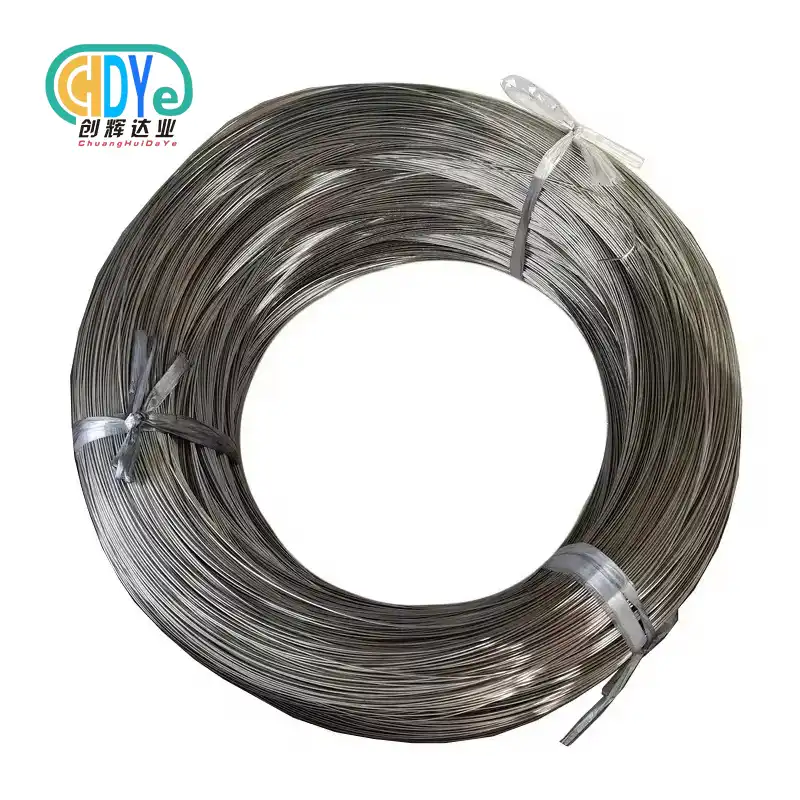
Unique Material Properties of Pure Titanium Wire That Suit Aerospace
Aerospace engineering presents some of the most demanding material challenges in manufacturing. Components must withstand temperature fluctuations ranging from -50°C at cruising altitude to over 300°C near engine assemblies, all while resisting corrosive atmospheric moisture and maintaining dimensional stability.
Exceptional Strength-to-Weight Performance
Commercially pure titanium has a density of about 4.51 g/cm³, which is about 60% of stainless steel's density. This trait alone changes the ways that aeroplanes can be designed. When flight engineers use pure titanium wire for electrical wiring connections, structural reinforcements, or fastening systems, they lower the weight of the plane without affecting its mechanical performance. The most common grade of pure titanium wire used in aircraft is Grade 2. This grade has tensile strengths of up to 345 MPa and is very flexible for shaping.
Corrosion Resistance in Harsh Environments
Normal metals break down quickly in the conditions that aeroplanes work in. Galvanic corrosion can happen in places with salt spray from ocean routes, industrial pollutants near airports in cities, and changes in humidity. Titanium forms a stable, self-healing oxide layer (TiO₂) when it comes into contact with oxygen. This passivation layer keeps the metal below it from chloride stress corrosion cracking, a failure mode that is common for stainless steel parts in aircraft and marine uses. Our pure titanium wire keeps its protective properties even if it gets scratched or worn down during installation. Its oxide layer forms back up right away.
Thermal Stability and High-Temperature Performance
Pure titanium wire, which has a melting point of 1668°C, keeps its shape in situations where aluminium alloys would soften and steel would be too heavy. In high-temperature areas where polymer insulation must be kept to a minimum, aerospace electronics depend more and more on titanium wiring. The material has a low thermal expansion coefficient (8.6 × 10⁻⁶ /°C), which keeps links strong during thermal cycling and stops the problems that happen when materials with different rates of expansion meet.
Because of these basic features, commercially pure titanium is always recommended by aerospace standards for uses such as aircraft tension lines and electronics shielding. The material answers several engineering problems at once, which makes aircraft supply lines simpler.
Comparing Pure Titanium Wire with Other Common Aerospace Materials
When choosing an aerospace material, you have to think about a lot of different things, such as its mechanical performance, resistance to environmental factors, weight, ease of fabrication, and overall cost over its lifetime. Knowing how titanium stacks up against other materials makes its value offer clearer.
Stainless Steel: Cost Versus Performance Trade-offs
Austenitic stainless steels, such as 316L, are better at resisting corrosion in many settings and cost less to make. Manufacturers of aerospace parts keep using stainless steel for tasks where cost is more important than weight. The main problem comes up in situations where weight is important: stainless steel's 8.0 g/cm³ mass means that it can't hold as much. When pure titanium wire is used instead of stainless steel in non-structural applications, thousands of dollars in fuel savings can be made over the life of an aeroplane. Also, stainless steel can still crack from chloride-induced stress rust in coastal areas, which means it needs protective coatings that make upkeep more difficult.
Titanium Alloys: When Alloying Elements Add Value
Ti-6Al-4V (Grade 5) is the most common titanium alloy used in aircraft. It is stronger than commonly pure grades because it has aluminium and vanadium added to it. Engineers in the aerospace industry use alloy wire for parts that need to have the highest tensile strength, like landing gear and turbine engine parts. Commercially pure titanium wire, on the other hand, works best in situations where formability, weldability, and greatest corrosion protection are important. Hydrogen embrittlement is less of a problem with pure grades, which is important for parts that will be exposed to water or cathodic protection systems. Pure titanium of Grades 1 and 2 also works better when cold, which makes it easier to make metal shapes with a lot of different shapes.
Specialty Metals: Niobium and Copper Applications
Niobium wire has some limited uses in aircraft, like in superconducting systems and certain high-temperature areas, but it doesn't have as many properties as titanium. Copper is better at conducting electricity than titanium, but it is heavier and rusts quickly without a protective coating. Pure titanium wire is being used more and more in aerospace electrical systems in setups that need to be light and where copper's better conductivity doesn't support its heavier weight. Titanium is not magnetic, so it doesn't mess up sensitive electronics. This is one reason why ferromagnetic stainless steels can't be used in some situations.
Understanding these important differences helps buying professionals make the best specs. We keep both Grade 1 and Grade 2 commercially pure titanium wire in stock at Shaanxi Chuanghui Daye Metal Material Co., Ltd. so that we can help aerospace clients who need fast prototyping but don't want to commit to full production numbers.
Manufacturing and Quality Specifications Critical for Aerospace Titanium Wire
For aerospace uses, manufacturing precision must be higher than what is required by industry norms. From raw titanium sponge to finished wire, there are several quality control steps along the way. Each one is checked against international aircraft standards.
Production Process and Quality Control
The first step in making commercially pure titanium wire is to remove sponge titanium using the Kroll process. This gives you material with fixed amounts of oxygen, nitrogen, and iron in the spaces between the atoms. The grade is based on these interstitial elements: Grade 1 has the least amount of oxygen (up to 0.18%) for maximum flexibility, while Grade 4 allows higher oxygen levels (up to 0.40%) for more strength. Our factory in Baoji, China's "Titanium Valley," uses electron beam melting to make sure the chemistry is uniform and get rid of any impurities that could cause fatigue cracks in aircraft service.
For the wire drawing process to work, the reduction ratios and intermediate heating steps need to be carefully managed. When you do too much cold work without relieving the stress, you leave behind residual stresses that hurt the stability of the dimensions and the corrosion resistance. We use bright annealing in inert atmospheres to keep the surface clean and relieve stress inside the wire, making it have the same mechanical properties all the way along its length.
Aerospace Certification Standards
ASTM B863 sets the general standards for commercially pure titanium wire. It says what the wire's chemical makeup limits are, what its mechanical properties must be, and how it should be tested. For aerospace uses, AMS standards are also used. These have stricter tolerances and require batch tracking. Our quality management system, which is ISO 9001:2015 approved, makes sure that every output lot goes through spectrochemical testing for chemicals, tensile testing according to ASTM E8, and checking for dimensions using calibrated micrometres that can be traced back to national standards.
When it comes to aerospace specifications, surface finish is very important. Surface contamination, die marks, or scratches can act as stress concentrators and cause fatigue failures when loaded and unloaded over and over again. We use eddy current testing to find breaks in the subsurface and keep the roughness of the surface below certain limits. Material Test Certificates (MTC) are sent with each batch. These show what the materials are made of, their mechanical qualities, and how they can be tracked back to the original melt lot.
Dimensional Precision and Straightness Requirements
For aerospace fastening systems and precision assemblies, the wire needs to be straight and have little variation in its diameter. We keep h8 tolerance grades on diameter specs to make sure that automatic production equipment always fits correctly. For straight-cut wire goods, straightness deviations stay below 1 mm per metre. This is very important for uses like lockwiring where kinks must not be caused by human handling. Controlled spooling tension is used on coil products to keep them from work hardening or setting permanently while they are being stored and shipped.
These ways of making things make sure that flight clients get materials that will work as expected in service settings with high and low temperatures, corrosive chemicals, and mechanical stresses.
Procurement Considerations for Pure Titanium Wire in Aerospace Projects
Cost structures, shipping dates, and seller qualification processes are all things that aerospace supply chain management has to keep in mind. Buying pure titanium wire has different factors to consider than buying regular metals.
Pricing Structures and Volume Economics
Pure titanium wire costs more than titanium that is mixed with stainless steel or aluminium. This is because it requires a lot of energy to be extracted and special tools to be made. The global markets for titanium sponge cause the costs of raw materials to change, but established suppliers keep prices stable by managing their inventory strategically. Volume buying deals lower the cost per kilogram and make sure that priority is given to buyers when supplies are low. When aerospace companies are making plans for new platforms, they should work with suppliers early on in the development process. They should make long-term deals with these suppliers to protect themselves from price changes and make sure they have enough capacity for production runs.
Supplier Qualification and Certification
Aerospace OEMs keep Approved Vendor Lists (AVLs) that require suppliers to meet strict qualifications. As a minimum, vendors must show that their quality management systems are up to code. This is usually done by getting an AS9100 or ISO 9001:2015 certification and keeping records of everything from receiving the raw materials to the final inspection. Our 30 years of experience in the rare metals business and location in Baoji's specialised titanium production area give aerospace clients the technical basis they need. We keep good relationships with certified titanium sponge producers for raw materials. This keeps the supply chain honest, which is what aerospace auditors want.
Logistics and Customization Capabilities
For global aircraft manufacturing to happen, suppliers must be able to support foreign operations with the best shipping options. Our normal stock items ship within one to three days of receiving proof of your order. This is possible because we keep a lot of standard inventory in popular aerospace sizes. Custom diameter, surface finish, or packaging needs add time to the lead time, but they give exact specifications for unique uses. We have both straight-cut lengths for precise assembly tasks and coil forms for automatic wire-forming equipment. Both types of wire are packed in materials that keep out moisture and protect against oxidation in the air while it is being stored and shipped.
Free sampling programs let aerospace engineers test the properties of a material in a way that is specific to its use before committing to large quantities for production. This way of reducing risk works especially well when building a new platform and making decisions about what materials to use have big effects further down the line.
Real-World Applications and Case Studies in Aerospace Using Pure Titanium Wire
When you use theoretical material properties in real life, they make more sense. Commercially pure titanium wire is used for many different aerospace tasks, each of which takes advantage of different performance characteristics.
Structural and Fastening Systems
Lockwiring is one of the most common uses for pure titanium wire in the aircraft industry. Safety-important fasteners on engine cowlings, landing gear assemblies, and flight control surfaces need extra locking systems to keep them from coming loose due to vibrations. In this case, 0.81 mm and 1.04 mm sizes of grade 2 titanium wire are most common. This type of wire is flexible enough for twist-locking and won't strengthen during installation. The resistance to rust means that the lockwire doesn't need to be inspected and replaced as often as stainless steel lockwire does in coastal areas. A big company that makes commercial aeroplanes found that using titanium lockwire on airframes that work in marine environments cut maintenance costs by 30%.
Electronics and Electrical Systems
Avionics bays hold more and more complex electronics that need to be protected from electromagnetic interference (EMI) while keeping weight low. Titanium is electrically conductive and not magnetic, so it can be used to make woven mesh screens that protect important communication and guidance systems without affecting compass systems. Because the material is stable at high and low temperatures, wiring leads close to weather control systems can keep the electricity flowing even when the temperature changes. Titanium is useful for defence and aircraft uses because it doesn't break down easily in hydrogen-rich environments like fuel tanks, where aluminium alloys would rust, and copper would be too heavy.
Emerging Applications in Additive Manufacturing
More and more, pure titanium wire is used as a feedstock for directed energy deposition methods in aerospace additive manufacturing. This method makes it possible to fix broken engine parts on demand and make quick prototypes of improved structural designs that would not be possible with traditional machining. Commercially pure titanium grades are better than Ti-6Al-4V alloy wire in situations where heat treatment after processing needs to be kept to a minimum. The parts that were made have fine-grained microstructures and great fatigue properties, which supports the aerospace industry's growing focus on making things lighter and more environmentally friendly.
These uses show how useful titanium wire is in a variety of aerospace fields. Engineers are choosing titanium more and more instead of steel or aluminium as the default material because they know that the higher cost of the material at first will be offset by lower maintenance costs, longer service life, and higher operational efficiency.
Conclusion
Commercially pure titanium wire has a special mix of being light, not rusting, and strong, which makes it perfect for solving the most difficult material problems in aircraft. Its high strength-to-weight ratio makes aeroplanes lighter while keeping safety margins the same. This directly saves fuel over the course of their working lives. The spontaneous passivation layer guards against environmental damage without the need for upkeep coatings. This makes operations easier and lowers the costs over the product's lifetime. Those who work in aerospace procurement benefit from working with qualified suppliers who know the certification requirements, quality control protocols, and quick delivery times that are needed for aerospace manufacturing. Pure titanium wire is an important part of next-generation aerospace platforms because it has a history of success in structural fastening, electronics, and new additive manufacturing processes.
FAQ
Q: What grades of pure titanium wire are most common in aerospace applications?
A: Grade 2 commercially pure titanium wire is the most common type used in aerospace. It has good resistance to corrosion, moderate strength (345 MPa tensile), and excellent formability. Grade 1 is used in situations where maximum flexibility is needed for complicated shaping, while Grade 4 is used in situations where high strength is needed but some shapeability loss is okay. Aerospace experts choose grades based on specific engineering needs, how the parts will be made, and the environments they will be used in.
Q: How does titanium wire pricing compare to aerospace-grade stainless steel?
A: Pure titanium wire usually costs three to five times more per kilogram than stainless steel products that are the same. But lifetime cost studies that look at weight savings, resistance to corrosion, and less upkeep often show that titanium is better for uses that need to save weight. Long-term supply contracts and agreements to buy in bulk lower effective prices and make sure that supplies are distributed when supplies are low.
Q: Can commercially pure titanium wire be welded in aerospace assemblies?
A: Yes, Grades 1 and 2 commercially pure titanium wire can be welded very well with gas tungsten arc welding (GTAW) and the right inert gas protection. According to AWS A5.16, these items are ERTi-1 and ERTi-2 welding supplies. Using the right welding techniques keeps the air from contaminating the welds, which makes sure that the joints are as strong as or stronger than the base material.
Partner with a Trusted Pure Titanium Wire Manufacturer for Your Aerospace Needs
Shaanxi Chuanghui Daye Metal Material Co., Ltd. has been working with rare metals for more than 30 years and has ISO 9001:2015 quality systems in place. They are also strategically located in Baoji's specialised titanium manufacturing cluster. Our collection of pure titanium wire includes Grades 1 through 4 in both straight-cut and coil forms, so we can quickly meet the needs of both concept development and production. Free sampling programs help flight engineers check how well a material works before placing a large order, and full traceability paperwork helps your source qualification processes. Get in touch with our technical team at info@chdymetal.com to talk about your specific diameter, surface finish, and delivery needs with a pure titanium wire supplier that is committed to aerospace excellence.
Reference
1. Boyer, R., Welsch, G., & Collings, E.W. (1994). Materials Properties Handbook: Titanium Alloys. ASM International, Materials Park, Ohio.
2. Donachie, M.J. (2000). Titanium: A Technical Guide, 2nd Edition. ASM International, Materials Park, Ohio.
3. Peters, M., Kumpfert, J., naturalist, Ward, C.H., & Leyens, C. (2003). "Titanium Alloys for Aerospace Applications." Advanced Engineering Materials, Volume 5, Issue 6, pp. 419-427.
4. Lutjering, G. & Williams, J.C. (2007). Titanium, 2nd Edition. Springer-Verlag, Berlin Heidelberg.
5. American Society for Testing and Materials. (2020). ASTM B863-20: Standard Specification for Titanium and Titanium Alloy Wire. ASTM International, West Conshohocken, Pennsylvania.
6. SAE International. (2019). AMS 4921: Titanium Alloy Wire, Commercially Pure, Annealed. SAE Aerospace Material Specification, Warrendale, Pennsylvania.
Learn about our latest products and discounts through SMS or email