- English
- French
- German
- Portuguese
- Spanish
- Russian
- Japanese
- Korean
- Arabic
- Greek
- German
- Turkish
- Italian
- Danish
- Romanian
- Indonesian
- Czech
- Afrikaans
- Swedish
- Polish
- Basque
- Catalan
- Esperanto
- Hindi
- Lao
- Albanian
- Amharic
- Armenian
- Azerbaijani
- Belarusian
- Bengali
- Bosnian
- Bulgarian
- Cebuano
- Chichewa
- Corsican
- Croatian
- Dutch
- Estonian
- Filipino
- Finnish
- Frisian
- Galician
- Georgian
- Gujarati
- Haitian
- Hausa
- Hawaiian
- Hebrew
- Hmong
- Hungarian
- Icelandic
- Igbo
- Javanese
- Kannada
- Kazakh
- Khmer
- Kurdish
- Kyrgyz
- Latin
- Latvian
- Lithuanian
- Luxembou..
- Macedonian
- Malagasy
- Malay
- Malayalam
- Maltese
- Maori
- Marathi
- Mongolian
- Burmese
- Nepali
- Norwegian
- Pashto
- Persian
- Punjabi
- Serbian
- Sesotho
- Sinhala
- Slovak
- Slovenian
- Somali
- Samoan
- Scots Gaelic
- Shona
- Sindhi
- Sundanese
- Swahili
- Tajik
- Tamil
- Telugu
- Thai
- Ukrainian
- Urdu
- Uzbek
- Vietnamese
- Welsh
- Xhosa
- Yiddish
- Yoruba
- Zulu
Tantalum Alloy Plate Procurement Guide for Industrial Buyers
When sourcing materials for critical industrial applications, understanding the nuances of tantalum alloy plate procurement becomes essential for project success. This guide walks you through the vital considerations that impact both performance and cost-effectiveness. From evaluating composition and certifications to selecting reliable suppliers with proven track records, we cover the practical steps that help procurement professionals, engineers, and manufacturing decision-makers navigate the complexities of acquiring these specialized refractory metal materials. Whether you're retrofitting chemical processing equipment or developing aerospace components, this resource equips you with actionable insights to make informed purchasing decisions that align with your operational requirements and budget parameters.
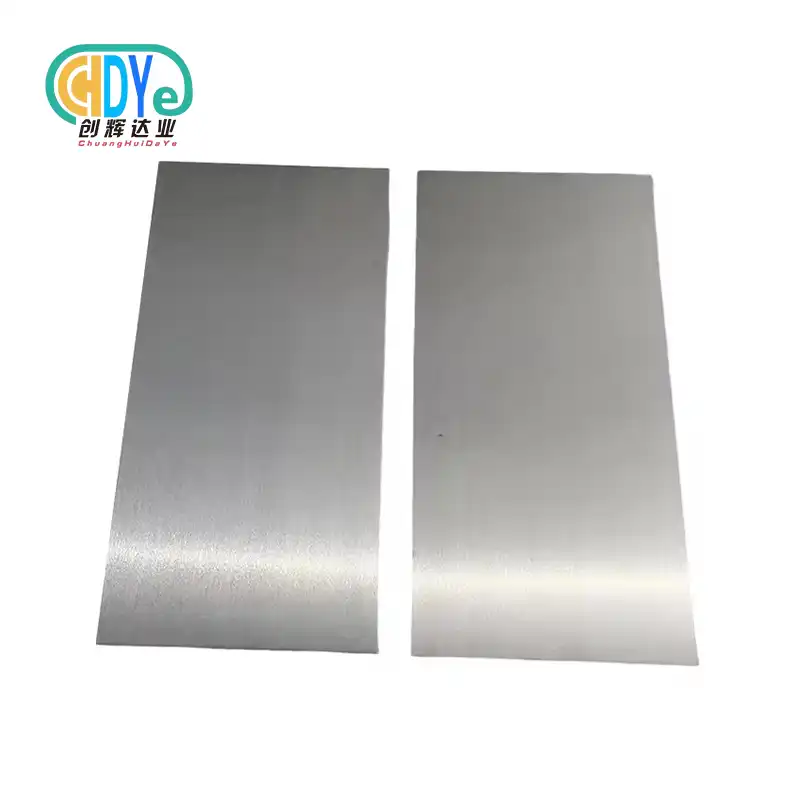
Understanding Tantalum Alloy Plates: Composition, Properties, and Benefits
Tantalum alloys are an improvement over pure tantalum. They are made to meet the strict needs of current industrial uses. When elements like tungsten are added to a base metal, it changes it into a material that is very resistant to rust and has much better mechanical qualities.
Core Composition and Alloy Grades
Most of the time, grades like R05200 (commercially pure tantalum), R05240, R05252 (Ta-2.5W with 2.5% tungsten), and R05255 (Ta-10W with 10% tungsten) are given. The ASTM B708 standards are used to make these metals. These standards set the composition limits and mechanical property requirements. The amount of tungsten in an alloy directly affects its strength. For example, Ta-10W alloys have 30–50% higher tensile strength at high temperatures than pure tantalum. This makes them very useful in situations where thermal stress is a major concern.
Key Physical and Chemical Properties
The performance benefits of these alloys come from the unique ways they are made. Tantalum-tungsten alloys stay strong in conditions where other superalloys would soften or break because their melting point is higher than 3000°C. The substance is almost completely safe from attack by hydrochloric acid, sulphuric acid, and nitric acid over a wide range of temperatures and concentrations. Tantalum alloys don't rust like stainless steels do because they don't have any active oxide films to protect them. Instead, they are chemically inactive, so you don't have to worry about pitting or crevice corrosion. The thermal conductivity stays the same across temperature differences. This keeps localised stress concentrations from happening, which can cause heat exchangers to fail too soon.
Economic and Operational Benefits
The initial cost of materials may seem higher than other options, but the total cost of ownership tells a different story. When tantalum alloys are used to line or make equipment, it can work for decades without needing to be shut down for upkeep because of corrosion. Chemical makers say that tantalum heat exchanger parts can be used in boiling acid for more than 20 years, while rare stainless steel parts need to be replaced every 2 to 5 years. Better strength-to-weight ratios allow for thinner cross-sections, which cuts down on the amount of material needed, partially making up for the higher price. In continuous process uses, getting rid of downtime and lowering upkeep costs usually pay for themselves in three to five years.
Typical Applications and Industry Use Cases of Tantalum Alloy Plates
Tantalum alloy plates are often used in industries where loss of a material would have bad results, like stopping production, polluting the environment, or posing safety risks.
Chemical Processing Equipment
Manufacturers of heat exchangers use tantalum alloys to make tube sheets, baffle plates, and covering for systems that deal with strong acids at high temperatures. A pharmaceutical company that was replacing glass-lined reactors found that tantalum alloy repair patches sealed the reactors well and wouldn't come loose under mechanical forces that would damage other repair methods. The material can be shaped to fit the shape of a vessel, making a reliable barrier against aggressive reaction media. Bayonet heaters made of Ta-2.5W alloy plates let you directly inject steam into corrosive process streams, which lets you get heat transfer rates that aren't possible with vessels that are heated from the outside.
Aerospace and Defense Components
The aerospace industry uses Ta-10W alloys for rocket nozzle plugs and propulsion system parts because they stay strong at high temperatures. These parts must be able to survive exhaust fumes that are more than 1600°C hot and corrosive while still being accurate in size. A defence contractor asked for tantalum-tungsten plates to be used as the cores of missile penetrators. They chose these plates because they have a high kinetic energy density and don't get hot when they hit something at high speed. Because they are both refractory and structurally sound, these alloys can't be replaced in situations where failure is not an option.
Vacuum Furnace Systems
Tantalum alloy plates are used as heating elements, heat shields and structure supports in heat treatment processes that go above 2000°C in vacuum or inert atmosphere settings. While molybdenum becomes flexible and tungsten becomes brittle when it recrystallises, this material stays rigid. Companies that make semiconductor equipment cut these plates into thermal management parts that keep the temperature even during crystal growth and chip processing processes.
Electronics and Semiconductor Manufacturing
Thin-gauge tantalum alloy plates are used as sputtering targets, crucibles are used to melt high-purity metals, and vacuum deposition system parts are bought by the electronics industry. The low vapour pressure and cleanliness of the material keep sensitive electrical surfaces from getting dirty during thin-film deposition processes. Manufacturers of capacitor-grade tantalum powder use metal crucibles to keep the melt pure while the powder is being made. This makes sure that the finished parts have the same dielectric qualities.
Comparing Tantalum Alloy Plates with Alternative Materials
When choosing a material, it's important to make sure that its properties match the stress factors and environmental conditions that will be used.
Tantalum Alloys Versus Pure Tantalum
Pure tantalum is the most resistant to corrosion and the most flexible, but it is also the weakest, especially at high temperatures. Alloyed types give the strength that is needed when structural loads or thermal cycle pressures are present, without giving up their ability to resist corrosion. The addition of 2.5% tungsten increases the tensile strength by about 40% while keeping the material's great shape for production tasks. For high-temperature structural uses, the 10% tungsten version has the best creep protection. Purchasing managers weigh these performance factors against differences in cost. For example, pure tantalum usually costs 10-15% less than Ta-2.5W, but Ta-10W costs 20–25% more because it has more tungsten in it and needs to be processed in a more complicated way.
Performance Against Titanium and Stainless Steels
Titanium alloys are very strong for their weight and don't rust very well, but they break down horribly in reducing acids and at temperatures above 300°C. Grade 316 stainless steel is cheap and doesn't rust in mild conditions, but it gets pitted when it comes into contact with chloride-containing fluids or oxidising acids. As an example of a premium nickel-based superalloy, Hastelloy C-276 improves performance, but it still corrodes more quickly in boiling hydrochloric acid, which is not the case with tantalum alloy plate. The lifecycle cost analysis changes a lot when replacement frequency is taken into account. For example, a tantalum component that lasts 20 years saves four to eight replacement cycles that would have been needed for lower-quality materials. This saves money on materials and time because production doesn't have to stop for change-outs.
Grade Selection and Cost Considerations
To choose between grades, you have to connect mechanical needs to alloy composition. For the best cost-performance balance, R05252 (Ta-2.5W) is usually chosen for chemical processing applications with low structural loads. High-temperature vacuum furnace parts need R05255 (Ta-10W) to keep them from sagging when they're working at high temperatures. Strategies for buying things that define the minimum suitable grade keep material costs from going up too much while still making sure there are enough performance margins. Technical advice from suppliers with a lot of knowledge can help you find these optimisation chances.
How to Choose and Procure the Best Tantalum Alloy Plate for Your Needs
To do effective buying, you must first clearly define the technical requirements and find sellers who have already shown they can meet those requirements.
Specification Development
Your material specification should list the alloy grade (R05200, R05240, R05252, or R05255), the size requirements (thickness, width, and length), the expected surface finish, and the standards that apply (ASTM B708). Think carefully about getting specs—tighter tolerances make manufacturing more difficult and cost more. Standard output sizes, such as 0.5 to 20 mm thick, 50 to 1200 mm wide, and 30 to 2500 mm long, can handle most needs without having to pay extra for special sizes. If you choose normal sizes from the supplier's stock, you can get them within one to three days. Custom sizes, on the other hand, usually take fifteen working days to make.
Supplier Evaluation Criteria
There are a few key things that qualified sellers do that make buying risk lower. Having ISO 9001:2015 certification means that you follow systematic quality management practices that include keeping track of materials, controlling the production process, and inspecting the work. As part of the manufacturing capability assessment, the supplier should be able to show that they have the vacuum melting equipment (such as electron beam or vacuum arc furnaces) needed to make high-purity refractory metals. The supplier's ability to roll and heat the metal determines whether they can manage the grain structure and mechanical qualities to meet the needs of the standard. The Shaanxi Chuanghui Daye Metal Material Co., Ltd. is based in Baoji, which is known as China's "Titanium Capital." It runs a full range of production facilities, such as electron beam furnaces, rolling mills, and annealing systems, which allow for vertical integration from melting ingots to making finished plates.
Documentation and Certification Requirements
Ask for certificates that show the material's chemical make-up (usually using glow discharge mass spectrometry to check for impurities), its mechanical properties (tensile strength, yield strength, elongation per ASTM E8), and its grain size (ASTM E112). Ultrasonic testing records (AMS 2631) should be sent with plates that are meant to be used in vacuum or pressure vessels to show that they don't have any holes or other problems inside them. These quality papers make it possible to track down materials and make sure they meet your engineering requirements.
Procurement Process Optimization
Sourcing that is streamlined follows a structured process: send out requests for quotes with full technical details, check supplier responses for compliance and lead time, ask for samples to make sure new suppliers are qualified, and set up framework agreements for ongoing needs to get better prices. When buyers are in charge of multiple projects, they need to keep in touch with qualified sellers who know what quality standards and delivery requirements they need to meet. This cuts down on transaction costs and buying cycle times.
Ensuring Successful Delivery and Long-Term Use of Tantalum Alloy Plates
Material procurement includes more than just placing a purchase order. It also includes logistics coordination, receiving inspection, and the right way to handle the materials.
Lead Time Planning and Logistics
Standard dimensional tantalum alloy plates that suppliers keep in stock ship within one to three business days of an order being confirmed, meeting the needs of urgent projects. Custom measurements made to specification usually take 15 working days to make plus the time it takes to ship. When sending goods from China to the United States, they usually take 15 to 25 days by ocean freight or 5 to 7 days by air freight. These dates should be taken into account when planning when to buy things, especially when coordinating when materials will arrive with the plans of fabrication shops or project goals. Established sellers stay in touch with each other throughout the production process and let you know about any changes that need to be made. This lets you handle transportation more effectively.
Storage and Handling Best Practices
Tantalum alloys don't rust in air, but they need to be kept safe from damage and contamination. Plates should be kept dry and with protective interleaving between sheets to keep the surface from getting scratched. Stay away from carbon steel or copper alloys because they can contaminate or cause galvanic corrosion during the high-temperature processing that comes after. Before you start making something, clean the surface with alcohol or acetone to get rid of any residue that has built up. When things are stored correctly, they keep their integrity and don't get contaminated, which could hurt their performance in tough work settings.
Receiving Inspection Protocols
When it arrives, use calibrated measuring tools to make sure the measurements are correct, look at the surfaces for scratches or other damage that could have happened during shipping, and check the quality documentation to make sure it is complete and meets the requirements of the purchase order. Keep samples from each production lot in case you need to look them up later during manufacturing or service. Recording the condition of the receipt helps avoid disputes and makes sure that only material that meets your standards enters the production process.
After-Sales Support and Technical Assistance
Suppliers who offer full technical help add a lot of value on top of offering materials. Having access to metallurgical experts can help solve problems during fabrication, improve welding parameters, or look into strange service behaviour. Chuanghui Daye Metal Material Co., Ltd. backs up its goods with technical consulting services that help customers choose the right grades, come up with manufacturing methods, and solve problems that are unique to their applications. This kind of support turns sellers into partners who help the project succeed.
Conclusion
When buying tantalum alloy plates, you have to weigh the technical performance needs against the cost, and you also have to make sure that the supplier is reliable and that the quality is high. Because they are so resistant to rust and don't change much at high temperatures, these materials deserve to be at the top of the list when regular metals don't work. Clear specification development, thorough supplier evaluation, and attention to quality documentation are all important parts of procurement strategies that work. Industrial buyers can get materials that last for decades without any problems by working with qualified manufacturers that offer full technical support and reliable delivery. This lowers the total cost of ownership even though the initial investment was higher. The information in this guide gives procurement professionals the practical knowledge they need to confidently source tantalum alloys.
FAQ
Q: Why choose tantalum alloys over pure tantalum?
A: When heated to high temperatures, alloyed types have much higher mechanical strength and creep resistance, while still being almost as resistant to rust as pure tantalum. The better qualities of Ta-2.5W or Ta-10W compositions make them better for uses with structural loads, thermal cycles, or service temperatures above 300°C.
Q: How do I select the appropriate grade for chemical processing equipment?
A: R05252 (Ta-2.5W) is often used in chemical processes because it has the best mix of cost, corrosion protection, and mechanical strength. This grade can handle strong acids at high temperatures and is strong enough for heat exchanger tube sheets and vessel linings. When planning for certain process chemicals, talk to experts in metallurgy.
Q: What factors most significantly impact supplier pricing?
A: Material costs depend on the alloy's composition (more tungsten means higher prices), the size of the plate (custom sizes cost more), the number of items ordered (bigger orders get bigger discounts), and the quality documentation needs (more testing means higher costs). The ability of a supplier to make things also affects prices. Usually, vertically integrated makers offer better value than wholesalers who buy from other companies.
Partner with Chuanghui Daye for Reliable Tantalum Alloy Plate Supply
Shaanxi Chuanghui Daye is an expert at making high-quality tantalum alloy plates that meet the strict requirements of the defence, aerospace, chemical processing, and electronics industries. Our Baoji factory is ISO 9001:2015 approved and uses cutting-edge electron beam melting and precision rolling methods to make ASTM B708-compliant R05200, R05240, R05252, and R05255 grade plates. We keep standard sizes in stock so that they can be delivered in one to three days. For special orders, our flexible manufacturing allows for 15-day production processes. As a seller of tantalum alloy plates with more than 30 years of experience in the rare metals business, we offer full professional support throughout the whole buying process, from helping you choose the grade to guiding you through the fabrication process. Email our team at info@chdymetal.com to talk about your particular needs and get a full quote backed by our dedication to quality, dependability, and customer satisfaction.
References
1. Davis, J.R. (2000). Nickel, Cobalt, and Their Alloys. ASM International, Materials Park, OH.
2. Cardonne, S.M., Kumar, P., Michaluk, C.A., and Schwartz, H.D. (1995). "Tantalum and Its Alloys." International Journal of Refractory Metals and Hard Materials, 13(4), 187-194.
3. American Society for Testing and Materials (2021). ASTM B708-21: Standard Specification for Tantalum and Tantalum Alloy Plate, Sheet, and Strip. West Conshohocken, PA.
4. Shields, J.A. (1996). Applications of Molybdenum Metal and Its Alloys. International Molybdenum Association, London.
5. Lassner, E. and Schubert, W.D. (1999). Tungsten: Properties, Chemistry, Technology of the Element, Alloys, and Chemical Compounds. Kluwer Academic Publishers, New York.
6. Pergament, H.S. and Paprocki, S.J. (1962). "Mechanical Properties of Tantalum and Tantalum Alloys at Elevated Temperatures." Transactions of the American Society for Metals, 55, 477-491.
Learn about our latest products and discounts through SMS or email