- English
- French
- German
- Portuguese
- Spanish
- Russian
- Japanese
- Korean
- Arabic
- Greek
- German
- Turkish
- Italian
- Danish
- Romanian
- Indonesian
- Czech
- Afrikaans
- Swedish
- Polish
- Basque
- Catalan
- Esperanto
- Hindi
- Lao
- Albanian
- Amharic
- Armenian
- Azerbaijani
- Belarusian
- Bengali
- Bosnian
- Bulgarian
- Cebuano
- Chichewa
- Corsican
- Croatian
- Dutch
- Estonian
- Filipino
- Finnish
- Frisian
- Galician
- Georgian
- Gujarati
- Haitian
- Hausa
- Hawaiian
- Hebrew
- Hmong
- Hungarian
- Icelandic
- Igbo
- Javanese
- Kannada
- Kazakh
- Khmer
- Kurdish
- Kyrgyz
- Latin
- Latvian
- Lithuanian
- Luxembou..
- Macedonian
- Malagasy
- Malay
- Malayalam
- Maltese
- Maori
- Marathi
- Mongolian
- Burmese
- Nepali
- Norwegian
- Pashto
- Persian
- Punjabi
- Serbian
- Sesotho
- Sinhala
- Slovak
- Slovenian
- Somali
- Samoan
- Scots Gaelic
- Shona
- Sindhi
- Sundanese
- Swahili
- Tajik
- Tamil
- Telugu
- Thai
- Ukrainian
- Urdu
- Uzbek
- Vietnamese
- Welsh
- Xhosa
- Yiddish
- Yoruba
- Zulu
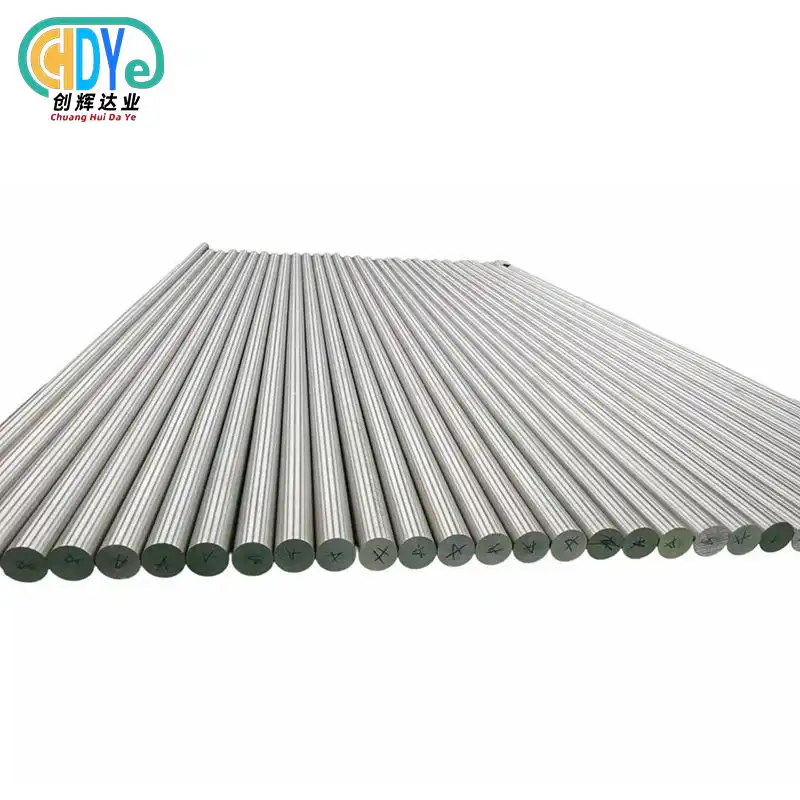
What Should You Check Before Buying a titanium rod for sale?
When you're considering purchasing a titanium rod for sale, you need to verify several critical factors to ensure the material meets your application requirements. Pay attention to the titanium grade specification—whether it's commercially pure titanium like Grade 1 or Grade 2, or an alloy such as Ti-6Al-4V—because each offers different mechanical properties and corrosion resistance levels. Confirm that the supplier provides full material certifications aligned with ASTM B348, AMS 4928, or ISO standards, along with complete traceability documentation. Understanding these elements upfront protects your project from costly material failures and ensures long-term reliability.
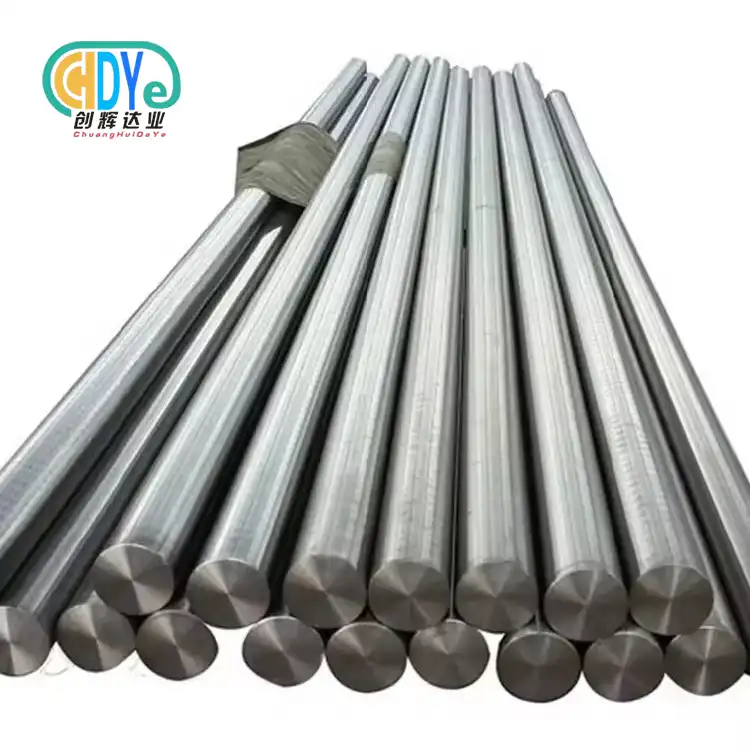
Understanding Titanium Rods: Key Properties and Grades
When evaluating a titanium rod for sale, it is important to know that these components are now necessary in many fields, such as the manufacturing of medical products, aeroplanes, and chemical processing. They are very popular because they are strong for their weight, don't rust, and work well with biological materials in surgical implants. When you know the exact grades and properties of the materials you can use, you can make them work for your specific needs.
Why Titanium Rods Outperform Many Alternatives
Titanium is about 45% lighter than steel, making it about 4.51 g/cm³, but it still has the same tensile strength. The lighter weight of these parts means that they use less fuel and put less stress on structural parts. Titanium naturally builds up a solid layer of titanium dioxide (TiO₂) on its surface. This layer doesn't combine with seawater, acidic solutions, or places with a lot of chloride, which are all places where stainless steel rusts. Based on the alloy's make-up, the material doesn't become magnetic and stays physically stable at temperatures from very cold to 400°C.
Common Titanium Grades and Their Industrial Uses
You can tell how well you do in school by the grades you pick. The most flexible and soft form of titanium is Grade 1. It works best for cold-forming and deep drawing tasks that need flexibility more than strength. The tensile strength of Grade 2 is a little stronger at about 345 MPa, but it is still very easy to form. It is the standard grade for heat exchangers, chemical equipment, and military gear because of this.
Ti-6Al-4V, which is also called Grade 5 or TC4, is mostly used in places where performance is important. This metal can be heated to make it even stronger. Its tensile strength is more than 895 MPa. About 6% of it is aluminium and 4% is vanadium. Aerospace companies use it to make parts for landing gear, turbine blades, and the frames of aeroplanes. It helps bones fuse without harming living things, which is why it is used to make orthopaedic devices and surgical tools.
It's good to use Ti-3Al-2.5V in cold places and when hardness is important at low temperatures. Ti-6Al-4V ELI (Extra Low Interstitial) makes the material tougher by lowering the amount of oxygen and iron in it. This makes it less likely to crack when it's stressed. It was made to work best in spinal fusion devices and stents for the heart. There are pros and cons to each grade, so pick the metal recipe that is best for your needs and the situations it will be in to hold up.
Critical Factors to Evaluate Before Purchasing Titanium Rods
It's important to follow the rules when looking for titanium rods for sale and pay attention to the technical specs. There could be flaws in the structure that make it less strong or not up to industry standards if these things aren't taken into account.
Material Certifications and Traceability Documentation
It is important to get mill test records (MTR) from suppliers of titanium rod for sale. These reports show the outcomes of tensile tests, chemical makeup studies, and heat treatments for each output lot. For example, AMS 4928 should be used for aerospace-grade Ti-6Al-4V, ASTM B348 should be used for general industry rods, and ISO 5832-2 should be used for materials used in medical implants. When the material is traceable, you can find out all the way back to its melt number. This makes sure that everyone in the chain is in charge. Without the right paperwork, you can't be sure that the rod meets your grade requirements or that it will pass checks by a third party.
Corrosion Resistance Matched to Operating Environment
How hard titanium is to rust depends on the chemistry of the air. Titanium usually doesn't react with oxidising acids like nitric acid and chloride solutions. But when sulphuric or hydrochloric acid is used in large amounts, it can rust. You should check to see if the rod will be in contact with salt water, chemical process streams, or high-temperature oxidation. Grade 2 titanium can handle most conditions in the sea and the air. In harsher chemical environments, however, alloyed grades may be needed. These have molybdenum or nickel added to them to calm them down.
Mechanical Properties Aligned with Load Requirements
Compare the stresses in your design to the tensile strength, yield strength, elongation limits, and fatigue limits of the material. Pulling force on a Grade 2 rod is about 345 MPa, and its yield force is about 275 MPa. For moderate loads, like fasteners or heat exchanger tubes, this is enough. Ti-6Al-4V can withstand 895 MPa of tension and doesn't wear down as quickly as other metals used in car and aeroplane structure parts. Look at the hardness specs to get an idea of how long it will last and how easy it will be to work with. About 30 to 34 HRC is what these are for TC4. When you match mechanical properties to how they will be used in the real world, you avoid both over-engineering and catastrophic under-specification.
Manufacturing Process Impact on Product Integrity
The texture and number of flaws inside something are affected by how it is made. By getting rid of flaws and smoothing out the alloy's makeup, vacuum arc remelting (VAR) makes titanium bars better. This makes rods that are more stable mechanically and have fewer inclusions. When you look at forging methods next to casting or fused ones, forging ones match grain flow better and make wear strength better. For CNC cutting or direct assembly, size tolerances need to be very close. This is why precision rolling and drawing are used. Make sure that the company you work with uses controlled annealing to get rid of any leftover strains and keep the microstructure stable. There is less chance that the shape will change in the next steps of the making process.
Comparing Titanium Rods to Alternative Materials
Should you pick titanium rods for sale over stainless steel, aluminium, or composite rods, you should think about how much they cost up front and how much better they will work and perform in the long run.
Titanium Versus Stainless Steel
Titanium bars are more useful in the long run because they don't rust and are lighter. At first, stainless steel bars are cheaper—often 30–50% less than similar titanium types. A 10mm titanium rod is about 45% lighter than a 10mm 316 stainless steel rod. This makes machines that spin lighter and cuts down on the fuel used for movement. When chloride is present, titanium doesn't rust or pit, but passivation fails on stainless steel. In this case, there's no need for protective coats or to replace parts very often. Titanium costs more to buy, but part maintenance costs are lower and parts last longer, so the extra cost is usually worth it.
Titanium Versus Aluminum Alloys
Alum bars are about 40% lighter than titanium rod for sale, but they are not as strong or stable when heated up. Al metals become softer and less strong above 150°C. Because of this, they can't be used in chemical labs or hot parts of engines. Based on the grade, titanium can handle temperatures as high as 400°C or even higher. Aluminium that hasn't been anodised or coated rusts quickly in acidic water and the ocean. On the other hand, titanium doesn't need any surface treatments to be able to handle these circumstances. Titanium costs more than other metals, but it is better for tasks that need the most strength for the weight and resistance to corrosion.
Cost Justification Through Lifecycle Analysis
When you look at how much titanium costs altogether, the first price makes sense. Parts made of titanium rods don't need to be inspected as often, don't need to be taken apart for rust reasons, and can be used for longer before they need to be fixed up. Titanium is biocompatible, which means it doesn't react badly with body tissues or cause allergic reactions that could mean having to have more surgery. Parts made from Ti-6Al-4V in aerospace make planes lighter, which saves fuel and makes it possible for more cargo to be carried over thousands of flight hours. There are clear times when titanium gives the best return on investment. This is shown by a detailed life-cycle cost analysis that considers things like cost to buy, frequency of maintenance, energy economy, and replacement times.
Choosing the Right Supplier and Procurement Tips
If you pick the wrong suppliers for your titanium rod for sale, you might not get regular quality and delivery, or you might have problems like things being late or broken.
Verifying Supplier Certifications and Industry Reputation
Find businesses that have ISO 9001:2015 quality management certification and AS9100 aerospace quality standards if they work in your field. Checking the raw materials, keeping an eye on the production process, and testing the finished product are all written steps that the company has to follow under these permits. Suppliers in places like Baoji, Shaanxi Province, which is known as China's "Titanium Capital" and a major hub for titanium production, benefit from having access to expert infrastructure, skilled workers, and raw materials. Chuanghui Daye is in a good spot and has been in the rare metals business for more than 30 years, so they know how to do their job both technically and in terms of output.
Importance of Product Traceability and After-Sales Support
There are ways to keep track of each rod from the time it is melted to the time it is forged, rolled, machined, and inspected. Because everything is so open, it's easy to figure out why there are quality issues right away. This also helps with the compliance checks that the defence, medical, and flight industries need. Technical help with choosing the right material, help with heat treatment specs, and faster replacement services for projects that need to be done right away are all parts of after-sales support. You can buy things with less risk and faster wait times when production goes up, or materials suddenly run out, if you know sellers who offer quick and helpful customer service.
Leveraging Wholesale Purchasing for Cost Efficiency
You can get bulk discounts if you buy more. These discounts can cut the price per unit by 10–20%, based on how the supplier sets prices and the size of the order. Buying from a single approved seller makes things easier, makes it easier to check the quality, and gives you more negotiating power when you want to get better payment terms. You need to carefully guess what people will want in order to find the best balance between the costs of keeping stock and the savings from buying in bulk. But if you stock up on standard sizes in a smart way, you can avoid problems in the supply chain and changes in the price of raw titanium.
Best Practices for Seamless Titanium Rod Procurement
Specifications should be right for the job when procuring a titanium rod for sale, and there should be strict quality checks all along the supply chain to keep everyone honest.
Customizing Specifications to Match Application Demands
Make it clear what the allowed variations are for length, width, surface finish, and other things. Different ways of making them allow for lengths of up to 6000 mm and widths from 6 mm to 300 mm. Tell them whether you need the surfaces to be machined, polished, or pickled based on the next steps in the process. For precise cutting, polished finishes are best, and pickled finishes get rid of rust scale so they can be used for welding. Classifications of tolerances like h8 and h9 have an impact on both CNC feed rates and measurement control. If you want to save money, don't set tolerances to stricter levels by default. Instead, adjust them based on what you need them for.
Implementing Rigorous Incoming Material Inspections
Laser micrometres or coordinate measuring machines (CMM) can be used to compare the width, ovality, and straightness to the specs. Find any holes, spots, or casting flaws inside the material that could spread during cycle loading by following the steps in AMS 2631 or ASTM B348. Optical emission spectroscopy (OES) or X-ray fluorescence (XRF) tests on the chemical make-up of the alloy elements show that they meet the grade standards. The microstructure is shown by metallographic analysis, which involves looking for unwanted alpha cases (a layer of oxygen-rich, brittle metal) and making sure that the alpha or alpha-beta phases are spread out evenly. Certain values are used to check the tensile strength, yield strength, extension, and hardness. It is easier to review results when you write them down. This also helps you and your provider keep getting better.
Managing Logistics and Inventory Traceability
Plan delivery times so that supplies get to the factory on time for production. This way, you won't have to pay extra for faster shipping or wait longer for production to begin. You can keep track of lot numbers, licenses, and the amount of stock that is still available with inventory management systems. This way, you won't mix up different types or heat lots. Set up sale stocking plans for when you need a lot of items. This way, sellers will keep stock at your building, which frees up money that would have been used to buy inventory and makes sure it is ready to use right away. Sellers you can trust can send goods anywhere in the world and know how to handle customs forms, export controls, and quality standards that are recognised around the world. This makes it easier for companies from other countries to buy things in other countries.
Conclusion
When you buy titanium rods for sale, you should carefully think about the types of materials used, how they work, the sellers' certifications, and how well they were made. Whether you use widely pure grades or high-strength Ti-6Al-4V, the metal won't fail too soon if the makeup is right for the load and corrosion protection needs of the job. Traceability documentation in line with ASTM B348, AMS 4928, or ISO makes sure that rules are followed and that materials are always the same. Titanium costs more up front than materials like stainless steel or aluminium, but it will usually be worth it in the long run because it lasts longer and needs less maintenance. You can make your supply chain stronger and your business more successful in the long run by working with approved providers who have tested quality systems, offer quick technical support, and deliver regularly around the world.
FAQ
Q: What are the main differences between Grade 2 and Ti-6Al-4V titanium rods?
A: Finding a titanium rod for sale with the right properties starts with understanding that Grade 2 titanium is pure enough to be sold, offering tensile strength around 345 MPa. It doesn't rust and is easy to shape, so it's good for chemical equipment and boat parts. Ti-6Al-4V is an alpha-beta metal that can hold its shape for more than 895 MPa. It is often used for medical procedures and things in space that need to work well physically. It can be heated to make it stronger.
Q: How does titanium rod corrosion resistance compare to stainless steel?
A: There is a solid layer of titanium dioxide that protects against pitting and crevice rust caused by chloride better than stainless steel. This is especially true in acidic and seawater environments. Stainless steel can rust in certain places when chloride is present, but titanium stays strong even without coatings or cathodic protection systems.
Q: Where can I source certified aerospace or medical-grade titanium rods?
A: Companies that are approved to AS9100 for aeroplanes or ISO 13485 for medical equipment should be your first choice. These companies will be able to give you full material traceability and mill test results. Titanium manufacturers in places like Baoji have specialised knowledge, use cutting-edge tools, and follow the ASTM, AMS, and ISO standards that are needed for use in medicine and aircraft.
Ready to Source Premium Titanium Rods? Partner with Chuanghui Daye
Are you ready to discover top-notch titanium rods for sale? Shaanxi Chuanghui Daye has fair deals on high-purity titanium bars. Strict ISO 9001:2015 quality standards are used to make these rods, which can be made in diameters ranging from 6 mm to 300 mm. Also, you can send them anywhere in the world. We are in Baoji, which is known as the Titanium Capital, and have been working with rare metals for more than 30 years. We can give you widely pure grades that are fully approved by ASTM B348 and AMS 4928, as well as aerospace-grade Ti-6Al-4V and medical-grade ELI alloys. Contact our knowledgeable staff at info@chdymetal.com to talk about your unique requirements and receive quotes from a trustworthy titanium rod supplier that values quality, reliability, and customer satisfaction.
References
1. Donachie, Matthew J. Titanium: A Technical Guide. ASM International, 2000.
2. Lütjering, Gerd, and James C. Williams. Titanium: Engineering Materials and Processes. Springer, 2007.
3. American Society for Testing and Materials. ASTM B348 Standard Specification for Titanium and Titanium Alloy Bars and Billets. ASTM International, 2021.
4. Aerospace Material Specification. AMS 4928: Titanium Alloy Bars, Wire, Forgings, Rings, and Drawn Shapes 6Al-4V Annealed. SAE International, 2019.
5. Boyer, Rodney, Gerhard Welsch, and E.W. Collings. Materials Properties Handbook: Titanium Alloys. ASM International, 1994.
6. International Organization for Standardization. ISO 5832-2: Implants for Surgery — Metallic Materials — Part 2: Unalloyed Titanium. ISO, 2018.
Learn about our latest products and discounts through SMS or email