- English
- French
- German
- Portuguese
- Spanish
- Russian
- Japanese
- Korean
- Arabic
- Greek
- German
- Turkish
- Italian
- Danish
- Romanian
- Indonesian
- Czech
- Afrikaans
- Swedish
- Polish
- Basque
- Catalan
- Esperanto
- Hindi
- Lao
- Albanian
- Amharic
- Armenian
- Azerbaijani
- Belarusian
- Bengali
- Bosnian
- Bulgarian
- Cebuano
- Chichewa
- Corsican
- Croatian
- Dutch
- Estonian
- Filipino
- Finnish
- Frisian
- Galician
- Georgian
- Gujarati
- Haitian
- Hausa
- Hawaiian
- Hebrew
- Hmong
- Hungarian
- Icelandic
- Igbo
- Javanese
- Kannada
- Kazakh
- Khmer
- Kurdish
- Kyrgyz
- Latin
- Latvian
- Lithuanian
- Luxembou..
- Macedonian
- Malagasy
- Malay
- Malayalam
- Maltese
- Maori
- Marathi
- Mongolian
- Burmese
- Nepali
- Norwegian
- Pashto
- Persian
- Punjabi
- Serbian
- Sesotho
- Sinhala
- Slovak
- Slovenian
- Somali
- Samoan
- Scots Gaelic
- Shona
- Sindhi
- Sundanese
- Swahili
- Tajik
- Tamil
- Telugu
- Thai
- Ukrainian
- Urdu
- Uzbek
- Vietnamese
- Welsh
- Xhosa
- Yiddish
- Yoruba
- Zulu
How to Find a Reliable ASTM B 265 titanium sheet Supplier?
Finding a reliable ASTM B 265 titanium sheet supplier demands careful evaluation of technical capabilities, quality systems, and supply chain reliability. It's important to find the right partner to make sure that things are uniform, rules are followed, and business runs easily. All of these are needed in the aircraft industry, to make medical gadgets, to handle chemicals, and to make things for industry. Checking permits, finding out what materials can be used, and making sure there is clear contact are all important parts of buying. This book tells engineers and procurement managers tried-and-true ways to find suppliers that can meet their needs for both small-batch testing and large-scale production with service that they can count on and prices that are fair.
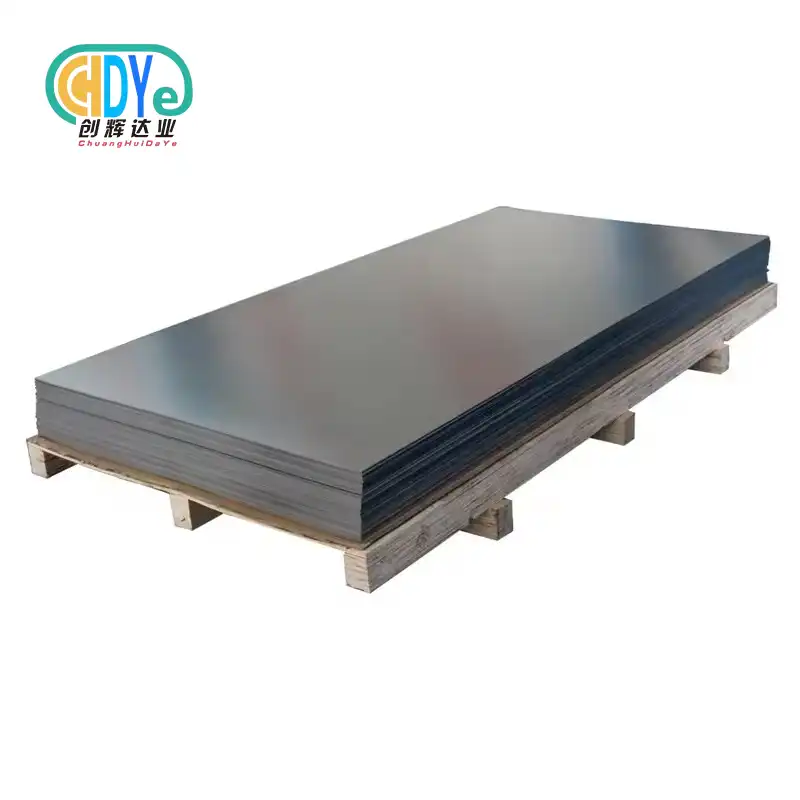
Understanding ASTM B 265 Titanium Sheet Specifications and Quality Criteria
ASTM B 265 is a set of rules made by the American Society for Testing and Materials. That is all you need to know about ASTM B 265 titanium sheets, which are used in tough fields. This standard limits the materials that can be used and also gives rules for how things should work mechanically, how accurate measurements should be, and how the surface should look. See if this stuff is good enough for important jobs.
Decoding Common Titanium Grades
ASTM B 265 includes many different grades, each of which is designed to have certain performance characteristics. Grade 1 is the most resistant to rust and is very easy to shape, so it can be used in heat exchangers and chemical processing equipment that comes into contact with aggressive media. Grade 2 titanium is the most commonly used commercially pure titanium. It has good resistance to corrosion and average strength, making it useful for everything from building panels to medical tools. Grade 5 (Ti-6Al-4V), an alpha-beta alloy, has better strength-to-weight ratios that are needed for high-performance sports equipment and aircraft structural parts. Palladium is added to grades 7 and 12, which makes them more resistant to reducing acids that are common in chemical industrial settings.
Key Mechanical and Chemical Benchmarks
Mechanical qualities have a direct effect on how well and how long a part works. The tensile strength of Grade 2 is usually between 345 and 480 MPa, the yield strength is around 275 MPa, and the elongation is more than 20%. This means that it is flexible enough to be used in making processes. Grade 5 has a tensile strength of more than 895 MPa, which means it can be used in high-stress aerospace and medical implant applications. Controlling the chemical makeup is also very important. For example, the amount of oxygen in a material affects its strength and flexibility, and hydrogen levels below 0.015% stop delayed hydride cracks. Suppliers you can trust give full material test reports (MTR) that follow EN 10204 3.1. These reports include heat number tracking, chemistry proof using ASTM E120 or E1409 spectrometry, and mechanical test results from ASTM E8 tensile testing.
Quality Assurance Testing Requirements
In addition to chemical and mechanical checks, full quality control includes ultrasonic testing (UT) on thicker plates to find internal laminations or inclusions that weaken the structure. A surface inspection makes sure that there are no harmful flaws like cracks, seams, or scale that could cause stress concentration points. Dimensional verification makes sure that the tolerances for thickness, flatness, and edge condition meet the requirements of the drawing. ASTM B 265 titanium sheet products that are going to be cold-worked must pass bend testing to make sure they can be shaped. Leading providers follow the quality management principles set out in ISO 9001:2015 and make sure their checking processes are written down, their equipment is calibrated, and their staff is qualified.
Essential Criteria to Evaluate When Selecting an ASTM B 265 Titanium Sheet Supplier
It's not enough to just compare prices when looking for an ASTM B 265 titanium sheet supplier. You also need to look at their quality systems, technical resources, and business dependability.
Certification and Compliance Verification
Getting ISO 9001:2015 approval means that you follow structured quality management practices, from getting the raw materials to making sure they are delivered and inspected properly. AS9100 approval shows that suppliers who work with aircraft customers have extra checks in place to make sure products are safe, can be tracked, and can be managed in different ways. Being a member of ASTM and taking part in activities that create standards shows that you have a lot of professional knowledge and are committed to best practices in your field. To make sure the certificate is real and still valid, ask for pictures of its most recent certifications and check its registration with the organization that issued it.
Production Capabilities and Customization Options
If a supplier can meet your needs efficiently, their manufacturing capabilities will tell you that. Vacuum melting kilns keep the chemistry under control, electron beam melting makes sure the product is very pure, precision hot and cold rolling mills make sure the thickness tolerances are very tight, and controlled atmosphere annealing ovens make sure the mechanical properties are at their best. CNC shearing, waterjet cutting, and laser profiling are some of the machining tools that can be used to make custom sizes without having to wait for subcontractors. When compared to traders who buy from multiple mills, suppliers who can do everything themselves—from melting raw materials to making finished parts—offer better quality control, shorter wait times, and easier supply chain management.
Stock Availability and Lead Time Management
The amount of inventory has a direct effect on project timelines and the freedom of output schedules. When suppliers keep common grades and thicknesses in stock, they can quickly meet the needs of prototype development and emergency replacements. Costly project delays can be avoided by being clear about stock levels, production schedules, and realistic delivery dates. Make sure you know the minimum order quantity (MOQ) right away. Some suppliers can handle small study amounts, while others only take orders for large quantities. Understanding these parameters early on keeps expectations from being misaligned and makes it easier to match the right supplier with your procurement volume.
Pricing Transparency and Total Cost Analysis
Because they don't have to pay markups to middlemen, factory-direct sellers usually have more affordable prices than multi-tier distribution channels. When you look at prices, you should think about the total cost of ownership, which includes things like how complete the material certification is, how well the packaging protects against shipping damage, how efficient the operations are, and how easy it is to get expert help. If the price is suspiciously cheap, it could mean that quality control has been weakened, material doesn't meet standards, or there are secret costs that come up during order fulfilment. To get accurate quotes from different suppliers, you should ask for detailed quotes that include the material grade, dimensions, quantity breaks, delivery terms, and payment terms.
Reputation Assessment and Reference Verification
Established suppliers show their track records by being in the business for a long time, having repeat customers, and having project references that can be checked. Online reviews can give you a basic idea of what to expect, but for B2B purchases, you should talk to direct reference contacts for more information. Ask suppliers if they work with original equipment makers (OEMs) in your business. For example, aerospace suppliers know how to deal with strict traceability rules, while medical device suppliers know how to handle biocompatibility documentation needs. Being a member of a professional association, writing for a technical publication, or attending industry workshops are all signs of technical knowledge and dedication to the market that set serious makers apart from transactional traders.
Comparing ASTM B 265 Titanium Sheet with Other Materials and Standards
Material choice has a big effect on how well a part works, how much it costs to make, and how long it lasts in a variety of operating conditions. This is why putting an ASTM B265 titanium sheet up against other standards and materials is essential for engineers.
ASTM B 265 versus ASTM B 348 Bar Stock
Both standards cover titanium goods, but ASTM B 265 focuses on flat-rolled products like strip, sheet, and plate by using annealed processing that is best for making. ASTM B 348 covers bar and billet shapes that are usually sold hot-worked or solution-treated for use in machining. Knowing the differences between these types of materials helps make sure that the specs for buying them match the processes used for making them. For example, sheet materials are good for stamping, bending, and welding, while bar stock is good for turning parts and threaded bolts.
Titanium Sheets versus Stainless Steel Alternatives
ASTM B 265 titanium sheets are more resistant to rust than 316L stainless steel in chloride-containing settings like seawater and bleaching solutions, where stainless metals can pit and crack. Titanium's density is only 4.5 g/cm³, while stainless steel's is 8.0 g/cm³. This means that aircraft structures and portable tools can be made lighter. But titanium is more expensive as a material and has special welding needs that mean it needs to be carefully studied before it is used. Titanium keeps its surface stable up to 600°C in oxidising high-temperature environments, but stainless steel only works reliably up to 400°C. These differences in performance make titanium a good choice when operational benefits like resistance to corrosion, reduced weight, or ability to work at high temperatures outweigh the cost premiums.
Grade 2 versus Grade 5 Selection Criteria
Grade 2 commercially pure titanium is the best when it comes to resistance to corrosion and ease of fabrication. It is good for chemical process equipment, building uses, and medical tools that need mild strength. Because it is so easy to shape, it can be used for complicated cutting tasks and welding across thin gauges. Grade 5 Ti-6Al-4V alloy gives up some corrosion protection in exchange for a lot more strength. This makes it possible to make lighter structures for aircraft frames, engine parts, and high-performance cars. The alloy needs to be treated with a solution and aged with heat, which improves its mechanical properties but makes forming operations more difficult because they need to be done at high temperatures. Which one to choose depends on whether the product needs corrosion protection and ease of fabrication, or strength and weight economy.
How to Effectively Procure ASTM B 265 Titanium Sheets: Process and Best Practices
Throughout the entire purchasing lifecycle, strategic procurement practices improve the quality of ASTM B 265 titanium sheets, cut costs, and make sure that supplies are reliable.
Strategic Supplier Sourcing Across Key Markets
There are well-known titanium producers in the United States that give a wide range of expert support, quick delivery to local sites, and easy compliance with regulations for defence and aerospace uses. Chinese makers, especially those based in Baoji's Titanium Valley, offer reasonable prices, a lot of production capacity, and quality systems that are getting better to serve markets around the world. European suppliers stress the use of specific alloys, strict quality documentation, and the benefits of being close to customers in the area. Effective procurement strategies often build relationships across multiple regions, balancing the need to be cost-competitive with the need for a resilient supply chain and easy access to technical support.
Lead Time Planning and Export Compliance
Standard production wait times range from 4 to 8 weeks, but they can be shorter or longer based on the grade, the amount ordered, and any customisation needs. Complex requirements that need special melting or heat treatments make the lead times even longer. When planning your purchases, you should think about how long international shipping takes, how long it takes to clear customs, and any possible delays. Check that the seller knows the rules about exporting, such as the dual-use technology limits that apply to aerospace-grade materials and the paperwork that is needed for country-of-origin approval. Suppliers who are used to doing business internationally can easily handle these issues, keeping shipments on schedule and making sure all the necessary paperwork is included with orders.
Leveraging Supplier Technical Expertise
Knowledgeable suppliers do more than just provide materials; they also act as technical resources. Advice on choosing the right grade of material improves its performance in certain operating conditions and keeps costs from going up too much. Giving processing instructions on forming temperatures, welding methods, and machining factors lowers the risks of manufacturing and raises the return rate. If a supplier has experience with applications in more than one industry, they can offer useful insights from similar uses. This speeds up development times and avoids expensive iterations of trial and error.
Building Long-Term Partnership Value
Transactional buying relationships for ASTM B 265 titanium sheet miss chances to keep getting better and work together strategically. Clear demand projections help sellers place their stock more efficiently, which cuts down on lead times and lets them get better prices on large orders. Regular comments on performance lead to better quality and better service that meets changing needs. Partnerships that have been in place for a while make it easier to get special care when capacity is limited and early access to new products. When you treat your suppliers as strategic partners instead of just another vendor, you encourage them to invest in your success as well.
Case Studies & Practical Examples: Choosing Trusted ASTM B 265 Titanium Sheet Suppliers
Real-life examples show useful ways to make choices when selecting an ASTM B 265 titanium sheet supplier and the lessons we can learn from both good and bad buying situations.
Aerospace Component Manufacturer Success
A company that makes precision aerospace parts needed Grade 5 titanium sheet with tight chemistry control and clear traceability for FAA-approved parts. The purchasing team looked at five possible sources and gave the most weight to those with AS9100 approval, heat lot traceability systems, and the ability to do ultrasonic inspections. The chosen provider showed full production integration from vacuum melting to finished sheet, which got rid of the gaps in tracking that come with supply chains with multiple sources. Reviewing the business every three months started a conversation about ongoing improvement, which cut down on wait times and improved technical paperwork to make customer audits easier. This partnership ensured consistent material quality over three years of mass production, with not a single nonconformance event.
Chemical Processing Equipment Lessons Learned
A company that makes chemical equipment had heat exchangers break down early because they weren't resistant to corrosion well enough, even though the materials were certified to meet ASTM B 265 Grade 2 standards. An investigation showed that the seller had used a lower-purity grade instead and lied on test results to get the order. This expensive mistake showed how important it is to qualify suppliers in more ways than just looking at documents. Later guidelines for buying things included on-site facility checks, testing of materials by a third party, and contractual responsibility clauses. Customers' trust was restored when the company switched to an ISO-certified supplier whose production processes were clear and whose facilities were open to the public.
Medical Device Prototyping Flexibility
A new medical device company needed small amounts of Grade 23 titanium sheet to make prototypes for implants, but most sources' minimum order numbers were higher than what they needed right away. Finding a source that would take research-scale orders without a minimum order quantity (MOQ) penalty allowed for quick design changes and cost control during the pre-commercial development stages. As the device moved from clinical trials to mass production, the established relationship made it easy to scale up to higher volumes while keeping the material's properties the same. This made sure that biocompatibility tests were still valid at all stages of development.
Procurement Evaluation Checklist
Systematic evaluation across multiple dimensions is an important part of successful procurement:
• Check that the current ISO 9001:2015 or AS9100 certification is still valid by confirming with the registry.
• Ask for documents about the facility's capabilities, such as a list of its tools and a process flow diagram.
• Get customer references from people who work in the same industry as you and call them to ask about consistency in quality, reliability in delivery, and responsiveness to technical support requests.
• Check sample material test records to make sure they include all the necessary chemistry analysis, mechanical testing, and measurement checks.
• Ask for detailed quotes to find out about wait times, minimum order amounts, customisation options, and price structures.
• Check the quality of conversation during the initial questions—responsive, technically-savvy engagement is a good indicator of long-term relationship happiness.
Conclusion
To find a trustworthy ASTM B 265 titanium sheet supplier, you need to carefully look at their technical skills, quality control systems, production facilities, and how they run their business in a way that fits your needs. To choose the right material, you need to know about the differences between ASTM B 265 grades, how they affect mechanical properties, and the standards for quality documentation. A full evaluation of a supplier's credentials, including licenses, production skills, inventory management, and image in the industry, helps separate good partners from bad ones. Comparative research against other materials and competing standards makes sure that the best design is used for the job. Value is maximised throughout the supply chain through strategic procurement practices such as planning lead times, global sourcing, technical collaboration, and building relationships. Using structured evaluation frameworks and learning from case studies in the industry can lower risks and improve the results of procurement. As the need for high-performance materials grows around the world, working together with reliable sources becomes a competitive benefit that drives innovation, efficiency, and dependability in production.
FAQ
Q: What certifications should I require when sourcing titanium sheets?
A: Important certifications include ISO 9001:2015 for quality management systems and material test reports (MTR) per EN 10204 3.1 that show the chemical make-up of ASTM B 265 titanium sheets, which is confirmed by ASTM E120 spectrometry, and the mechanical properties, which are determined by ASTM E8 tensile testing. AS9100 certification is needed for aerospace applications, while medical device suppliers need to show that they know how to do FDA registration and biocompatibility testing. Ask for copies of current certificates and check their accuracy with the registrars who issued them.
Q: How does titanium corrosion resistance compare to stainless steel?
A: Titanium is better at resisting corrosion than stainless steel in salt conditions, seawater, and oxidising acids, where stainless steel gets pitting and crevice corrosion. Solutions that quickly degrade 316L stainless steel, like hot chloride solutions and bleaching conditions, don't affect grade 2 titanium. However, titanium is not very resistant to hydrofluoric acid or situations where it is reduced without any oxidising species present.
Q: Can suppliers provide custom sheet sizes and surface finishes?
A: Reliable makers offer custom cutting services, such as shearing, waterjet, and laser shaping, that can be done to exact specs and don't cost extra. Surface finishes can be mill finish, pickled, annealed, or polished, depending on the needs of the application. Make sure the provider can meet your needs by being clear about the limits for dimensions, edge preparation, and surface finish when you ask for a quote.
Partner with a Trusted ASTM B 265 Titanium Sheet Manufacturer
Shaanxi Chuanghui Daye is in Baoji's Titanium Capital and has been in the rare metals business for more than 30 years. They have advanced manufacturing infrastructure and quality systems that are ISO 9001:2015 certified. We can make a wide range of products, from vacuum freezing to precise cold rolling. We can provide reliable Grade 1 through Grade 23 ASTM B 265 titanium sheets that meet the strict standards. We offer free custom sizing and other forms of customisation, so we can handle both small-batch prototyping for research institutions and high-volume production for companies in the aerospace, chemical processing, and medical device industries. You will be able to successfully finish your procurement with factory-direct pricing, full traceability paperwork, and helpful technical support. Email us at info@chdymetal.com right now to talk about your project needs, get material test results, or get a personalised quote from a dependable supplier who cares about your long-term success.
References
1. American Society for Testing and Materials. (2015). "Standard Specification for Titanium and Titanium Alloy Strip, Sheet, and Plate." ASTM B265-15, West Conshohocken, PA.
2. Boyer, R., Welsch, G., and Collings, E.W. (1994). "Materials Properties Handbook: Titanium Alloys." ASM International, Materials Park, Ohio.
3. Donachie, M.J. (2000). "Titanium: A Technical Guide, 2nd Edition." ASM International, Materials Park, Ohio.
4. Lutjering, G. and Williams, J.C. (2007). "Titanium, 2nd Edition: Engineering Materials and Processes." Springer-Verlag, Berlin.
5. Schutz, R.W. and Watkins, H.B. (1998). "Recent Developments in Titanium Alloy Application in the Energy Industry." Materials Science and Engineering A, Volume 243, Issues 1-2, Pages 305-315.
6. International Organization for Standardization. (2015). "Quality Management Systems — Requirements." ISO 9001:2015, Geneva, Switzerland.
Learn about our latest products and discounts through SMS or email