- English
- French
- German
- Portuguese
- Spanish
- Russian
- Japanese
- Korean
- Arabic
- Greek
- German
- Turkish
- Italian
- Danish
- Romanian
- Indonesian
- Czech
- Afrikaans
- Swedish
- Polish
- Basque
- Catalan
- Esperanto
- Hindi
- Lao
- Albanian
- Amharic
- Armenian
- Azerbaijani
- Belarusian
- Bengali
- Bosnian
- Bulgarian
- Cebuano
- Chichewa
- Corsican
- Croatian
- Dutch
- Estonian
- Filipino
- Finnish
- Frisian
- Galician
- Georgian
- Gujarati
- Haitian
- Hausa
- Hawaiian
- Hebrew
- Hmong
- Hungarian
- Icelandic
- Igbo
- Javanese
- Kannada
- Kazakh
- Khmer
- Kurdish
- Kyrgyz
- Latin
- Latvian
- Lithuanian
- Luxembou..
- Macedonian
- Malagasy
- Malay
- Malayalam
- Maltese
- Maori
- Marathi
- Mongolian
- Burmese
- Nepali
- Norwegian
- Pashto
- Persian
- Punjabi
- Serbian
- Sesotho
- Sinhala
- Slovak
- Slovenian
- Somali
- Samoan
- Scots Gaelic
- Shona
- Sindhi
- Sundanese
- Swahili
- Tajik
- Tamil
- Telugu
- Thai
- Ukrainian
- Urdu
- Uzbek
- Vietnamese
- Welsh
- Xhosa
- Yiddish
- Yoruba
- Zulu
What Sizes of Straight Titanium Wire Are Available?
Straight titanium wire is available in a comprehensive range of sizes to accommodate diverse industrial applications. Precision-engineered titanium wire with widths from 0.5mm to 7.0mm and lengths from 500mm to 3000mm is what we make at Chuanghui Daye. Our stress-relieved, cut-to-length wire gets rid of the coil memory that comes with spooled goods. This makes sure that high-performance production systems in the aerospace, medical, electronics, and chemical engineering fields have perfect uniformity and dimensional stability.
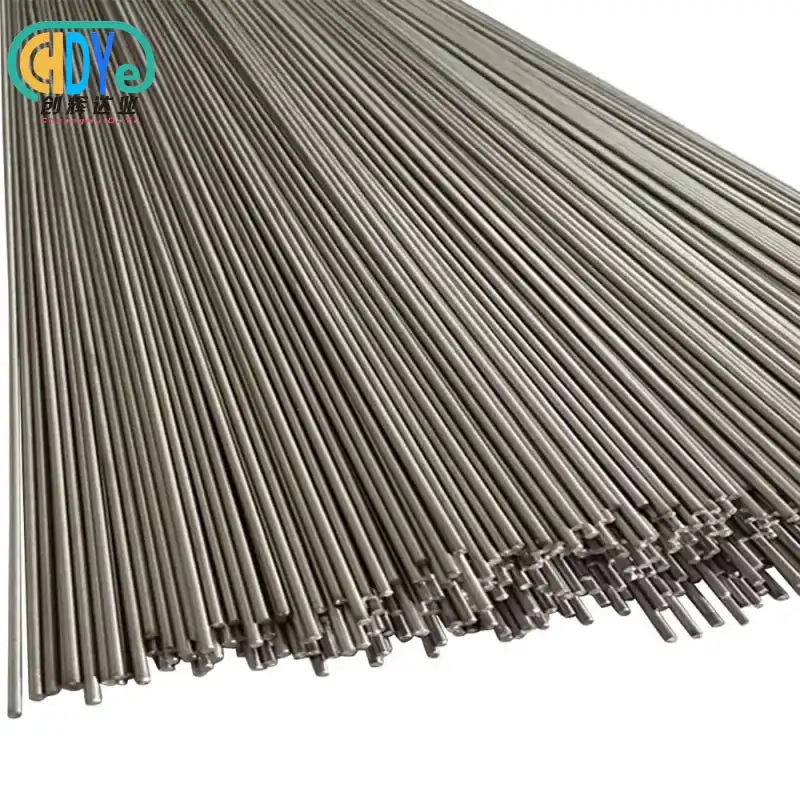
General Overview of Straight Titanium Wire Sizes
Professionals in procurement who are looking for the best material options need to know about the different size ranges of titanium wire goods. Diameters on the market usually run from very small (0.1 mm) for uses to very strong (10 mm) structural parts. However, some makers may focus on certain ranges based on their production skills and target markets.
Standard Diameter Classifications
Wire width classifications follow models that have been used for a long time and are in line with standard requirements for machining and assembly. Small-diameter wires (0.5mm to 2.0mm) are used for precise tasks like making electronic links, medical device parts, and fine welding. Options with a width of 2.1mm to 5mm can be used for structural fasteners, aircraft parts, and chemical processing equipment. Large-diameter versions (5.1mm to 7.0mm and beyond) are used for heavy-duty tasks that need to carry a lot of weight.
Application fit is directly affected by the link between wire diameter and mechanical qualities. Smaller diameters make things more flexible and easier to handle precisely, while larger diameters make things stronger and more stable. Multi-pass drawing and centerless cutting are two manufacturing methods that make sure that all sizes are the same level of accuracy in terms of dimensions.
Length Specifications and Custom Options
Length standards have a big effect on both how well an application works and how easy it is to get it. Standard lengths are usually between 500 mm and 3000 mm, which allows for a variety of industrial methods and makes good use of the material. Specialized needs can be met by custom length cutting services, but there may be a minimum order quantity for non-standard needs.
When wires get longer, packaging becomes more important because damage can happen during shipping and storage if they are not handled properly. Modern packaging systems keep surfaces in good shape and make it easy for materials to move through automated production settings.
Key Dimensions for Selecting Straight Titanium Wire Based on Application
When choosing the right dimensions for an application, you need to think carefully about the mechanical needs, the surroundings, and the manufacturing methods. Different businesses put different values on different traits, so choosing the right size is very important for the project's success.
Aerospace and Defense Applications
To meet strict weight and performance standards, aerospace uses need precise diameter control. Straight titanium wire used to make airplane fasteners is usually between 1.5 mm and 6 mm thick, based on the load requirements and the requirements for the assembly. Titanium's high strength-to-weight ratio and ability to fight corrosion make it an essential material for parts that will be subject to harsh weather.
For aircraft uses, manufacturing standards often need h7 or h8 dimensional accuracy. This can be reached by using advanced production methods like vacuum melting and controlled drawing. Surface finish standards may say that Ra values must be less than 0.8µm to make sure that the component has the best wear resistance and lasts the longest.
Medical Device Manufacturing
For medical devices, safe materials that can be precisely measured are needed. Kirschner wires and prosthetic pins usually have widths that are between 1.0 mm and 4.0 mm, and their surfaces must meet strict biocompatibility standards. Because it stays the same size during cleaning processes, titanium wire is perfect for gadgets that are implanted.
Custom length specs allow for the best surgery results with the least amount of waste. For medical uses, packaging rules usually include clean handling instructions and paperwork for tracking to make sure they follow the rules.
Electronics and Semiconductor Industries
For electronic uses, the width needs to be precisely controlled, and the material needs to have low magnetic leakage. Electronic parts usually have wire sizes that are between 0.5 mm and 3.0 mm, with a focus on stable electrical qualities and temperature. Because it can withstand temperatures up to 600°C, it can be used in harsh electrical settings where other materials would fail.
Comparison of Straight Titanium Wire Sizes with Alternative Wire Materials
Material selection decisions often involve comparing titanium wire characteristics with alternative materials such as stainless steel, nickel metals, and special compounds. By understanding these similarities, you can make smart purchasing choices based on performance needs and cost factors.
Titanium versus Stainless Steel
Even though stainless steel wire and titanium wire intersect in many diameter areas, the two materials work differently. Titanium's mass of 4.54g/cm³ makes it 43% lighter than steel while keeping the same level of mechanical strength. This edge in weight is especially important in flight, where every gram affects how much fuel is used and how much can be carried.
Resistance to corrosion is another important factor that sets one thing apart from another. Compared to most types of stainless steel, titanium's passive oxide layer protects better in salt and acidic environments. This improved corrosion protection is especially helpful in chemical processing uses because it lowers the need for upkeep and increases the life of parts.
Size Range Optimization
Straight titanium wire has special benefits that other materials can't match within certain size ranges. Because it is both strong and light, it can be used for bigger diameter uses without adding too much weight. On the other hand, titanium's biocompatibility and corrosion protection make it useful for small-diameter uses.
Different materials don't always work well with each other in the manufacturing process. For example, titanium needs special handling methods but performs better in tough situations. Investing in titanium processing often pays off in the long run by lowering the number of replacements needed and improving the efficiency of performance.
Practical Tips for Procuring Straight Titanium Wire in Various Sizes
To make good procurement plans, you need to know a lot about the project standards, the supplier's skills, and the quality assurance needs. Good buying practices keep costs low while making sure that the performance of the material meets the needs of the application.
Specification Development and Supplier Evaluation
The engineers, procurement, and quality testing teams must work together to make detailed specs. Tolerances for diameter, length requirements, surface finish standards, and mechanical property requirements are some of the most important factors. To make sure that all suppliers understand, documentation should include references to relevant standards like ASTM B863 or AWS A5.16.
When judging a supplier, you should focus on their ability to make things, their quality standards, and how reliable their service is. Systematic quality control is shown by ISO 9001:2015 approval. For medical or aerospace uses, different certifications may be needed. For long-term relationships, the site of the factory and the stability of the supply chain become more and more important.
Order Quantity Optimization and Cost Management
Minimum order amounts have a big effect on the cost of buying things, especially when it comes to custom sizes or specs. Straight titanium wire procurement benefits from volume consolidation across projects to achieve favorable pricing while maintaining inventory turnover rates. When you figure out the cost-per-meter, you should include all of the fees that apply, like cutting fees, packing costs, and shipping costs.
Through long-term deals and pledges to volume, supplier partnerships make it possible for better pricing arrangements. Technical support services from sellers with a lot of experience often make the higher prices worth it because they cut down on development time and make applications run better. Regular reviews of the supplier's work make sure that the value is delivered and look for ways to make things better.
Industry Applications and Case Studies Highlighting Size Selection
Real-world examples show how important it is to choose the right size for the job to get the best performance and value for money. Case studies from different industries can teach you a lot about the best ways to do things and the problems that people in different industries often face.
Medical Orthopedic Success Stories
One of the biggest companies that makes orthopedic devices got better results from surgeries when they switched from stainless steel to straight titanium wire for spine bracing. The 3.5 mm diameter wire was the best compromise between the need for entry force and the stability of the structure. The benefits of biocompatibility include lowered inflammatory reactions and long-term anchoring security.
Custom length cutting got rid of the need to make waste during surgery and made sure that the right-sized parts were always available. New ideas in packaging made it possible to handle things in a clean way, which sped up work in the operating room and lowered the risk of contamination.
Aerospace Component Optimization
A company that makes aircraft fasteners cuts weight by 25% by using titanium wire solutions in critical structural areas. The 4.2mm diameter specification gave the same level of strength as steel alternatives while significantly reducing overall aircraft weight. Corrosion protection increases lead to longer upkeep intervals and lower costs over the life of the product.
Advanced alignment methods made sure that the dimensions were correct so that they could be used with automatic assembly systems. Quality consistency made it possible to stick to a production schedule and meet the strict standards for aircraft approval.
Conclusion
The availability of straight titanium wire in diverse size ranges enables optimal material selection across numerous industrial applications. Diameter options from 0.5mm to 7.0mm, combined with customizable lengths up to 3000mm, provide flexibility for aerospace, medical, electronics, and chemical processing requirements. The right size choice has a direct effect on how well an application works, how much it costs, and how efficiently it is manufactured. Knowing the connection between the size of the wire and its mechanical features helps you make smart buying choices that meet technical requirements and save you money. Working with manufacturers with a lot of experience makes sure you can get the quality products, professional help, and on-time deliveries that are necessary for the project to be a success.
FAQ
Q: What diameter ranges are typically available for straight titanium wire?
A: Most manufacturers offer straight titanium wire diameters ranging from 0.5 mm to 7.0 mm, though some specialized makers may go beyond these ranges. Chuanghui Daye makes wire with a diameter between 0.5 mm and 7.0 mm so that it can be used successfully in aircraft, medicine, and industry.
Q: How do length specifications affect pricing and availability?
A: Standard lengths between 500 mm and 3000 mm usually have the best prices and are the easiest to find. Custom lengths may have higher cutting costs and a minimum order number, but they get rid of trash and make the best use of material for certain uses.
Q: What tolerance standards apply to straight titanium wire manufacturing?
A: Depending on the needs of the product, industry-standard tolerances usually follow the h7, h8, or h9 classes. For cost-effectiveness reasons, general industry uses may be able to handle wider tolerance ranges, while medical and aircraft applications often need tighter tolerances.
Contact Chuanghui Daye for Premium Straight Titanium Wire Solutions
Shaanxi Chuanghui Daye stands as your trusted straight titanium wire manufacturer, delivering precision-engineered solutions from our state-of-the-art facility in Baoji, China's "Titanium Capital." Our comprehensive size range, modern production skills, and ISO 9001:2015 certification make sure that the quality of our products is always the same and that they are delivered on time for your important projects. Email our technical experts at info@chdymetal.com to talk about your unique needs and find out how our knowledge can help you improve your manufacturing processes while cutting costs.
References
1. American Society for Testing and Materials. "Standard Specification for Titanium and Titanium Alloy Wire." ASTM B863-18, West Conshohocken, PA, 2018.
2. American Welding Society. "Specification for Titanium and Titanium-Alloy Bare Welding Electrodes and Rods." AWS A5.16/A5.16M-2018, Miami, FL, 2018.
3. Boyer, R., Welsch, G., and Collings, E.W. "Materials Properties Handbook: Titanium Alloys." ASM International, Materials Park, OH, 1994.
4. Lutjering, G. and Williams, J.C. "Titanium: Engineering Materials and Processes." 2nd Edition, Springer-Verlag, Berlin, 2007.
5. Peters, M., Kumpfert, J., Ward, C.H., and Leyens, C. "Titanium Alloys for Aerospace Applications." Advanced Engineering Materials, Vol. 5, No. 6, 2003.
6. Rack, H.J. and Qazi, J.I. "Titanium Alloys for Biomedical Applications." Materials Science and Engineering C, Vol. 26, Issues 8, 2006.
Learn about our latest products and discounts through SMS or email