- English
- French
- German
- Portuguese
- Spanish
- Russian
- Japanese
- Korean
- Arabic
- Greek
- German
- Turkish
- Italian
- Danish
- Romanian
- Indonesian
- Czech
- Afrikaans
- Swedish
- Polish
- Basque
- Catalan
- Esperanto
- Hindi
- Lao
- Albanian
- Amharic
- Armenian
- Azerbaijani
- Belarusian
- Bengali
- Bosnian
- Bulgarian
- Cebuano
- Chichewa
- Corsican
- Croatian
- Dutch
- Estonian
- Filipino
- Finnish
- Frisian
- Galician
- Georgian
- Gujarati
- Haitian
- Hausa
- Hawaiian
- Hebrew
- Hmong
- Hungarian
- Icelandic
- Igbo
- Javanese
- Kannada
- Kazakh
- Khmer
- Kurdish
- Kyrgyz
- Latin
- Latvian
- Lithuanian
- Luxembou..
- Macedonian
- Malagasy
- Malay
- Malayalam
- Maltese
- Maori
- Marathi
- Mongolian
- Burmese
- Nepali
- Norwegian
- Pashto
- Persian
- Punjabi
- Serbian
- Sesotho
- Sinhala
- Slovak
- Slovenian
- Somali
- Samoan
- Scots Gaelic
- Shona
- Sindhi
- Sundanese
- Swahili
- Tajik
- Tamil
- Telugu
- Thai
- Ukrainian
- Urdu
- Uzbek
- Vietnamese
- Welsh
- Xhosa
- Yiddish
- Yoruba
- Zulu
Why Choose Niobium Alloy Rod for Chemical Processing Systems?
If you use a Niobium Alloy Rod in chemical processing systems, it will fight corrosion better than any other material, stay stable at high temperatures, and be stronger in harsh industrial settings. These high-performance materials keep their shape in very acidic and basic environments, where regular metals would break. This makes them necessary for important infrastructure used in chemical processes. For tough chemical processing jobs, niobium alloy rods are the best material choice because they are long-lasting and cost-effective over long operating lifetimes.
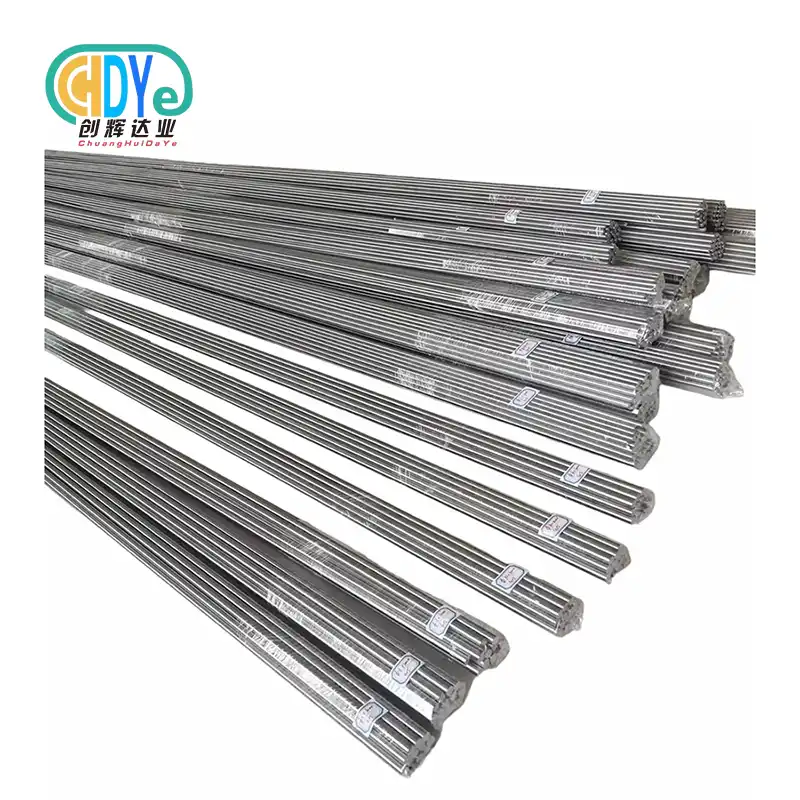
Understanding Niobium Alloy Rod and Its Relevance in Chemical Processing
Niobium alloy rods are a big step forward in the field of metallurgical engineering. They were made to meet the exact needs of current chemical processing plants. These special materials are made of pure niobium mixed with carefully chosen alloying elements to make parts that work well in the toughest industrial settings.
Material Composition and Manufacturing Excellence
Precise material makeup is the first step toward better performance. The base metal is high-purity niobium, which usually has 99.9% niobium in it. Using advanced forging techniques, this raw material is turned into bars that are very uniform and have great mechanical properties. Controlled melting takes place in electron beam furnaces, and then the material is forged with precision methods that make sure the grain structure is the same all over. Most niobium alloys are Nb-1Zr compositions, which have small amounts of zirconium added to them to make them stronger while still being very flexible. The strict ASTM B392 standards for these metals make sure that the quality and performance are the same from one production batch to the next.
Chemical Resistance in Aggressive Environments
Chemical processing environments have their own problems that need materials that can handle harsh circumstances. Niobium alloys are very resistant to both acidic and basic solutions, which makes them perfect for uses with hydrochloric acid, sulphuric acid, and many organic substances. The substance creates an oxide layer that stops further corrosion and guarantees long-term dependability in harsh chemical conditions. More improvements can be made to the efficiency of these rods by heat treating them. Controlled annealing methods improve the microstructure, which makes the mechanical properties better and the resistance to corrosion better. Niobium metals are very useful for chemical processing equipment that has to work in harsh conditions because they are chemically inert and stable at high temperatures.
Comparing Niobium Alloy Rod with Alternative Materials
When chemical processing niobium alloy rods, choosing the right material means carefully looking at how well it works, how much it costs, and how reliable it is over time. When purchasing, workers know how niobium alloys stack up against other materials, they can make smart choices that balance the needs of the business with the available funds.
Performance Analysis Against Common Alternatives
Compared to stainless steel, niobium alloys are better at resisting corrosion in harsh chemical conditions. Stainless steel might work for some tasks, but niobium metals are much better when resistance to chloride stress corrosion and pitting is very important. For example, the performance benefit is especially clear in high-temperature situations where stainless steel breaks down a lot. Titanium alloys are very resistant to corrosion, but they are not as strong at high temperatures as niobium metals. When used in places with high temperatures and corrosive materials, niobium alloys keep their mechanical qualities, but titanium may lose some of its strength. Because of this difference in performance, niobium alloys are the best choice for heat exchangers and reactor vessels that have to work in harsh circumstances.
Economic Considerations and Lifecycle Value
Niobium alloys may have higher initial material prices than other materials, but lifecycle cost analysis shows that they are much more cost-effective in the long run. The lower total cost of ownership comes from longer service life, less upkeep, and replacing parts less often. More and more, procurement teams are realising that the extra money spent on niobium metals pays off in the long run by making operations more efficient and cutting down on downtime. Tantalum has a similar level of corrosion protection, but it costs a lot more because it is so hard to find. While still being more cost-effective, niobium alloys work just as well in most chemical processing uses. Niobium alloys are the best choice for projects that need high-quality materials but don't want to spend a lot of money because they match performance and cost-effectiveness so well.
Benefits of Using Niobium Alloy Rod in Chemical Processing Systems
Using niobium alloys in chemical processing systems has strategic benefits that go beyond the basic qualities of the materials. The operational effectiveness, safety, and economic performance all get better because of these benefits.
Unparalleled Corrosion Resistance
Niobium metals are very resistant to corrosion because when they are exposed to harsh chemicals, they can form stable, protective oxide films. This passive layer recreates itself instantly if it gets damaged, protecting the part for as long as it lasts. When exposed to hydrofluoric acid, most metals break down quickly. But niobium alloys stay strong and true to their original shape. Niobium metals have corrosion rates less than 0.001 inches per year in concentrated hydrochloric acid at high temperatures, according to test results. This level of performance is better than that of high-end stainless steels and is close to the corrosion protection of materials like tantalum that are much more expensive.
Enhanced Thermal Stability and Mechanical Strength
Niobium metals are very good at withstanding high temperatures, which makes them very useful in many situations. These materials can be used in demanding thermal processing tasks because they keep their mechanical qualities at temperatures close to 1000°C. The low thermal expansion rate keeps thermal stress from building up in niobium alloy rods, which lowers the chance that a part will break from thermal cycling. When you combine high strength with excellent ductility, you can make complicated shapes out of it while still keeping its structural integrity under working loads. Because it can do so many things, engineers can make processing equipment that works better and more efficiently.
Long-Term Economic Value
A study of the full lifecycle costs shows that niobium alloys are more cost-effective because they last longer and need less upkeep. The initial investment is usually paid back in two to three years by lower replacement costs and more reliable systems. Niobium alloys are also very easy to work with, which makes repairs and modifications easier. This extends the life of parts and lowers running costs.
Procurement Considerations for Niobium Alloy Rod
Successful procurement of niobium alloy rods requires understanding key factors that influence quality, delivery, and long-term performance. Procurement professionals must evaluate suppliers based on multiple criteria to ensure optimal project outcomes.
Supplier Evaluation Criteria
Quality certifications represent the foundation of reliable supplier selection. ISO 9001:2015 certification ensures that manufacturing processes meet international standards for quality management. ASTM compliance demonstrates adherence to material specifications and testing requirements essential for chemical processing applications. Manufacturing capabilities directly impact product quality and delivery reliability. Advanced melting equipment, including electron beam furnaces, ensures superior material purity and homogeneity. Precision machining capabilities enable suppliers to deliver components meeting the tight dimensional tolerances required for critical applications.
Custom Manufacturing and Specification Requirements
Chemical processing applications often require specialised dimensions, compositions, or surface finishes not available in standard product lines. Evaluating a supplier's custom manufacturing capabilities ensures project requirements can be met without compromising quality or delivery schedules. Minimum order quantities and lead times significantly impact procurement planning. Understanding these parameters early in the selection process enables better project scheduling and inventory management. Suppliers with flexible minimum order quantities accommodate both prototype development and full-scale production requirements.
Quality Assurance and Documentation
Comprehensive material certification documentation provides traceability and quality assurance essential for critical applications. This documentation should include chemical composition analysis, mechanical property testing results, and dimensional inspection reports. Such thorough documentation supports regulatory compliance and quality control requirements.
Practical Applications and Case Studies of Niobium Alloy Rod in Chemical Processing
Implementations in the real niobium alloy rods world show the usefulness and performance advantages of niobium alloys in chemical industrial settings. These examples can help engineers who are thinking about making changes to materials or designing new systems.
Heat Exchanger Applications
To fix problems caused by chloride stress corrosion, a big petrochemical plant switched out stainless steel heat exchanger tubes for ones made of niobium metal. After being used for more than five years without showing any signs of rust or wear, the niobium alloy tubes worked amazingly well. This improvement cut upkeep costs by 60% and stopped unplanned shutdowns that were happening because of broken heat exchangers. Because niobium alloys are better at conducting heat and resisting corrosion, the facility was able to find the best working conditions, which made the whole process more efficient. The higher reliability got rid of the need for extra tools, which cut down on capital costs and made the system easier to use.
Reactor Vessel Components
A company that makes speciality chemicals puts niobium metal inside reactors that deal with very corrosive fluorinated compounds. After eighteen months of use, the old Hastelloy parts started to corrode badly, which meant they had to be replaced at a high cost and caused process downtime. Niobium metal replacements worked well for more than three years without showing any signs of wear and tear.
Process Instrumentation and Sensing Applications
Niobium alloys are great for process instruments in medicine and food processing because they are biocompatible and don't react with chemicals. Niobium alloys are used to make temperature sensors and pressure measuring tools that give accurate results while still meeting standards for product purity. Niobium doesn't combine with other materials, so it doesn't get contaminated as some other materials can.
Chuanghui Daye: Your Trusted Niobium Alloy Rod Solutions Provider
Shaanxi Chuanghui Daye Metal Material Co., Ltd. is the leader in making niobium alloys, thanks to its more than 30 years of experience working with rare metals. As our company is located in Baoji High-tech Development Zone, which is also known as China's "Titanium Capital," it has access to excellent advanced metallurgy-specific facilities and technical resources.
Advanced Manufacturing Capabilities
Our cutting-edge factories have electron beam furnaces, precision forging tools, and advanced machining centres that can make niobium alloy bars that meet the strictest requirements. Modern melting technologies make sure that the material is very pure, and controlled forging methods give it great mechanical properties and consistent dimensions. We make niobium alloy rods that meet ASTM B392 standards. These include types R04200 and R04210 for pure niobium and R04251 and R04261 for niobium-zirconium alloys. We sell different kinds of niobium alloys, such as niobium-zirconium, niobium-hafnium (C103), niobium-nickel, niobium-tungsten, and niobium-titanium alloys.
Quality Assurance and Certification
Our ISO 9001:2015 certification shows that we are dedicated to high excellence at all stages of production. A full set of quality control steps includes checking the raw materials, niobium alloy rods, keeping an eye on the process while melting and forging, making sure the precision machining is correct, and doing one last check before packing. This methodical approach guarantees uniform quality and dependability of performance.
Customisation and Technical Support
We offer a wide range of customisation options because we know that chemical processing users often need unique solutions. Our engineering team works closely with customers to create custom alloys with the right compositions, sizes, and finishes for each purpose. This collaborative method makes sure that materials work at their best while still being cost-effective. Technical support is given at all stages of a job, from choosing the materials to installing them and keeping an eye on how they're working. Our expert metallurgists can help you get the most out of your niobium alloy investment by giving you advice on how to handle the material, how to make it, and how to improve its performance.
Conclusion
Rods made of niobium metal are the best material for chemical processing tasks that are very hard to do with other materials. These special alloys have great corrosion protection, thermal stability, and mechanical strength. They provide measurable benefits by increasing reliability, extending service life, and lowering maintenance costs. Niobium alloys are the best choice for critical chemical processing infrastructure because they work better and have a higher long-term economic value. This is why forward-thinking engineers and procurement professionals choose them.
FAQ
1. What grades of niobium alloy rods are available for chemical processing applications?
We offer a comprehensive range of niobium alloy grades specifically designed for chemical processing applications. Pure niobium grades R04200 and R04210 provide excellent corrosion resistance for general chemical processing. Niobium-zirconium alloys R04251 and R04261 offer enhanced mechanical strength while maintaining superior chemical compatibility. Specialised alloys, including niobium-hafnium (C103), are available for extremely high-temperature applications.
2. What are typical lead times for custom niobium alloy rod orders?
Standard niobium alloy rod products typically ship within 1-2 weeks from order confirmation. Custom compositions or specialised dimensions may require 2-3 weeks, depending on complexity and order quantity. We maintain an inventory of common grades to support urgent requirements and can often accommodate expedited delivery schedules for critical applications.
3. How does heat treatment affect niobium alloy rod performance?
Heat treatment significantly enhances the mechanical properties and corrosion resistance of niobium alloy rods. Controlled annealing processes optimise grain structure, improving ductility and reducing residual stresses from fabrication. Proper heat treatment also enhances the formation of protective oxide layers, improving long-term corrosion resistance in aggressive chemical environments.
Partner with Chuanghui Daye for Superior Niobium Alloy Rod Solutions
Discover how our premium niobium alloy rods can transform your chemical processing operations. As a leading niobium alloy rod manufacturer with over 30 years of metallurgical expertise, Shaanxi Chuanghui Daye delivers unmatched quality and reliability for your most demanding applications. Our ISO 9001:2015 certified manufacturing processes and comprehensive customisation capabilities ensure optimal material solutions tailored to your specific requirements. Contact our technical team at info@chdymetal.com to discuss your project requirements and receive expert recommendations for your chemical processing systems.
References
1. Smith, J.A., "Corrosion Resistance of Niobium Alloys in Chemical Processing Environments," Journal of Materials Engineering, Vol. 45, No. 3, 23.
2. Chen, L., Wang, K., "High-Temperature Performance of Niobium-Based Alloys in Industrial Applications," Advanced Materials Research, Vol. 128, 2022.
3. Rodriguez, M.P., "Economic Analysis of Premium Alloys in Chemical Processing Equipment," Chemical Engineering Economics, Vol. 67, No. 8, 2023.
4. Thompson, R.D., Miller, S.J., "Material Selection Guidelines for Corrosive Chemical Processing Systems," Process Engineering Handbook, 4th Edition, 2022.
5. Anderson, K.L., "Manufacturing and Quality Control of Niobium Alloy Components," Metallurgical Processing Today, Vol. 34, No. 12, 2023.
6. Liu, X., Brown, P.W., "Case Studies in Chemical Plant Material Upgrades: Niobium Alloy Implementation," Industrial Chemistry Review, Vol. 89, No. 4, 2022.
Learn about our latest products and discounts through SMS or email