- English
- French
- German
- Portuguese
- Spanish
- Russian
- Japanese
- Korean
- Arabic
- Greek
- German
- Turkish
- Italian
- Danish
- Romanian
- Indonesian
- Czech
- Afrikaans
- Swedish
- Polish
- Basque
- Catalan
- Esperanto
- Hindi
- Lao
- Albanian
- Amharic
- Armenian
- Azerbaijani
- Belarusian
- Bengali
- Bosnian
- Bulgarian
- Cebuano
- Chichewa
- Corsican
- Croatian
- Dutch
- Estonian
- Filipino
- Finnish
- Frisian
- Galician
- Georgian
- Gujarati
- Haitian
- Hausa
- Hawaiian
- Hebrew
- Hmong
- Hungarian
- Icelandic
- Igbo
- Javanese
- Kannada
- Kazakh
- Khmer
- Kurdish
- Kyrgyz
- Latin
- Latvian
- Lithuanian
- Luxembou..
- Macedonian
- Malagasy
- Malay
- Malayalam
- Maltese
- Maori
- Marathi
- Mongolian
- Burmese
- Nepali
- Norwegian
- Pashto
- Persian
- Punjabi
- Serbian
- Sesotho
- Sinhala
- Slovak
- Slovenian
- Somali
- Samoan
- Scots Gaelic
- Shona
- Sindhi
- Sundanese
- Swahili
- Tajik
- Tamil
- Telugu
- Thai
- Ukrainian
- Urdu
- Uzbek
- Vietnamese
- Welsh
- Xhosa
- Yiddish
- Yoruba
- Zulu
Why Choose Titanium Welded Pipe for Corrosive Applications?
When your facility faces aggressive chemicals, saltwater exposure, or extreme pH environments daily, the choice of piping material becomes a critical business decision. Titanium welded pipe stands out as a specialized solution that addresses the most demanding corrosion challenges across chemical processing, desalination, offshore platforms, and power generation sectors. Unlike conventional materials that degrade rapidly under corrosive attack, titanium forms a stable, self-healing oxide layer that provides unmatched protection against pitting, crevice corrosion, and stress cracking. This inherent property translates directly into extended equipment lifespans, reduced maintenance schedules, and fewer unplanned shutdowns. The welded construction method offers dimensional flexibility and cost advantages over seamless alternatives while maintaining performance integrity through advanced fabrication techniques and post-weld heat treatment protocols. This guide walks through the material science, manufacturing standards, comparative economics, and procurement strategies you need to confidently specify titanium welded piping systems for your most challenging applications. Whether you're replacing failing stainless steel infrastructure or designing a new facility from the ground up, understanding the technical and commercial aspects of titanium piping helps optimize both capital expenditure and lifetime operational costs.
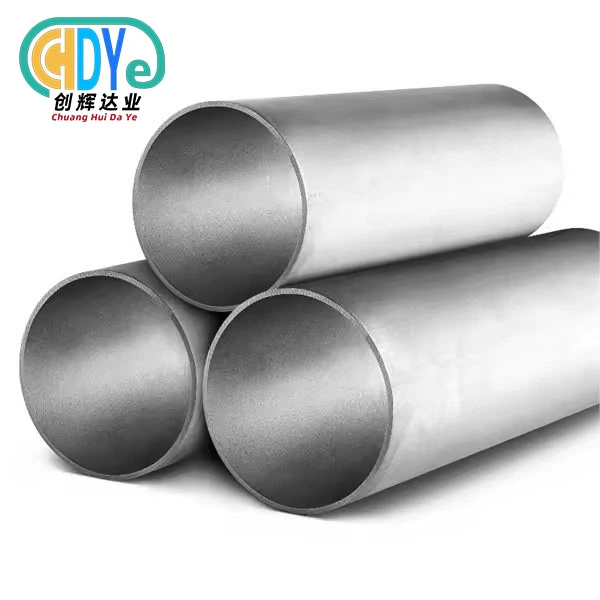
Why Titanium Welded Pipes Are Ideal for Corrosive Applications
The Hidden Costs of Corrosion in Industrial Systems
Corrosive attack is one of the most expensive ways for industrial infrastructure to break down. In addition to the direct costs of replacing broken parts, facilities also lose production when they have to shut down for no reason, run the risk of not following environmental rules when there are leaks, and put workers in danger. When chlorine compounds, sulfuric acid, or nitric acid are used in chemical plants, through-wall penetrations can happen in carbon steel and even 316L stainless steel pipes within months. When high-temperature brine is processed at desalination plants, it causes erosion and corrosion, which speed up material loss many times faster than static exposure. Maintenance plans that are based on regular inspection and replacement processes use up technical resources and leftover parts. The total cost of ownership for materials that are easily corroded includes not only buying them, but also keeping an eye on them, trying to fix them with welding that often fails too soon, and the downtime that each of these causes. By taking corrosion out of the failure mode study, titanium welded pipe completely changes this cost equation.
Performance Advantages Over Alternative Materials
Procurement teams usually look at duplex grades, nickel alloys, fiber-reinforced plastics, austenitic stainless steels like 316L, and other material options. Each alternative has problems that titanium gets around. When chloride levels rise above a certain temperature, stainless steel experiences pitting and crevice corrosion. To fix this, expensive upgrades to super-austenitic or nickel-based alloys are needed, but they still can't match titanium's resistance. While nickel metals are very resistant to rust, they are more expensive to make and weigh a lot more than titanium. When it comes to saltwater service, the comparison is even stronger. Copper-nickel alloys are often used in marine condensers, but they need corrosion allowances that make the walls thicker and make heat transfer less efficient. Titanium doesn't corrode, so condenser tubing can have walls as thin as 0.5 mm. This improves thermal performance and gets rid of the problems with biofouling and erosion that come with copper-based materials. Over the life of the equipment, this performance means that it will use less energy.
Real-World Applications Demonstrating Value
Multi-stage flash distillation plants are a good way to test how well materials work. After multiple failures with other materials, facilities all over the Middle East now only use titanium tubes for their brine heaters. The material can handle conditions of high temperature, high salinity, and high velocity that would destroy other materials in 5 to 10 years. Units that were installed in the 1970s are still in use today and aren't breaking down, which proves that the 40-year-plus service life predictions were accurate. Applications that use chemical processing show equally impressive results. Titanium pipes are used in chlor-alkali plants that move wet chlorine gas, which is one of the harshest working conditions in industry. Stainless steel pipes would rust in weeks. The material doesn't crack under stress, which gets rid of a failure mode that has led to terrible leaks in sites that used alloys that weren't right. Titanium is used in firewater deluge systems and ballast water handling on offshore oil platforms. Its lighter weight compared to corrosion-resistant options has structural benefits beyond resistance to rust.
How Titanium Welded Pipes Are Made: Quality and Certification Insights
Advanced Welding and Fabrication Processes
To make high-integrity welded titanium pipe, you need special tools and controls that aren't used for making steel products. Because the material reacts with gases in the air at high temperatures, it needs to be completely shielded while it is being welded. Using argon to purge during TIG welding protects both the weld pool and the inside of the pipe, keeping them from becoming weak from oxygen or nitrogen pickup. Plasma welding technology lets you move faster, which speeds up production while keeping the small heat-affected areas that are necessary to keep rust protection. Post-weld heat treatment is very important for reducing stress and making the microstructure better. During annealing cycles, the weld zone's properties are brought back to those of the base material. This makes sure that the joint works as a strong, uniform structure and not as a weak spot. We have dedicated heat treatment furnaces at our facility in Baoji, China, which is known as the "titanium capital." These furnaces have precise atmosphere control and temperature uniformity to meet the strict requirements of ASTM specifications. Before each output lot is certified and sent out, it is checked for quality using dimensional checking, non-destructive testing, and hydrostatic pressure testing.
Importance of International Standards and Certifications
The technical rules for welded titanium welded pipe for general corrosion service and pressure applications are set out in ASTM B862 and ASME SB-862. These standards set limits for chemistry, mechanical properties, and tolerances on dimensions. They also include testing procedures that make sure that all providers provide the same level of performance. Independent inspections and material test results that prove compliance give procurement teams faith in the quality of the products they buy, no matter where they are made. Our ISO 9001:2015 certification shows that we are committed to systematic quality management throughout the whole production process, from checking the quality of the raw materials to the final inspection and documentation of traceability. The certification audit method makes sure that there are systems in place that work well to stop problems, handle non-conformances, and encourage continuous growth. When specifying important piping systems, only buying from ISO-certified manufacturers who fully comply with ASTM cuts down on procurement risk by a large amount compared to buying from uncertified sources.
Selecting Qualified Manufacturers Globally
The world's titanium industry is mostly concentrated in a few areas that already have a lot of technical know-how and good infrastructure for the supply chain. In the United States, facilities are close to end users and have good names, but they usually cost more. European companies make high-end specialized goods and offer great expert help. Chinese production based in Baoji benefits from integrated supply chains, a lot of capacity, and low prices. When buying from trustworthy manufacturers like Chuanghui Daye, quality is not sacrificed. When choosing a supplier, you should do your research to make sure that their production capabilities match the needs of the project. Making large-diameter pipes needs heavy-duty bending and welding tools that smaller shops don't have. If you need custom metal grades or fast delivery, not all providers can meet your needs. By asking to see the facility, checking references from past projects, and making sure the maker has the right certifications, you can be sure that they have the technical skills and organizational stability to carry out the project successfully.
Comparing Titanium Welded Pipes with Other Pipe Types for Procurement Decisions
Welded Versus Seamless Titanium Construction
When you choose between welded and seamless titanium pipe, you have to weigh the pros and cons of supply, cost, and suitability for your purpose. When you extrude a seamless pipe, you get uniform qualities without any weld joints. This is helpful for high-pressure service or situations where inspecting welds is hard. Because of problems with production, seamless pipe can only have smaller diameters, and it costs more to make, which drives up the price of materials by a lot. Because of how the extrusion process works, wall thickness consistency varies more in seamless products. Welded construction gives you better control over the dimensions, which is important for heat exchanger tubes where wall thickness directly affects how well it transfers heat. When forming from a flat strip, tolerances for concentricity and ovality are tighter than when manufacturing something without any seams. With today's welding technology and post-weld treatment, joints have the same properties as the base material. This gives them a weld efficiency factor of 1.0 in the calculations for the ASME pressure vessel code. Welded construction is usually better in terms of both cost and technical value for large-diameter pipes and other uses where the weld area is properly checked.
Material Grade Selection for Specific Environments
Titanium Grade 2 is the most common material used for rust testing because it is cheap and has good resistance to acids, chlorides, and seawater. A small amount of palladium added to Grade 7 makes it much better at working in reducing acid conditions, especially with weak sulfuric acid at temperatures where Grade 2 fails. This change costs a little more, but it keeps things from breaking down in certain chemical service circumstances. Grade 12 with molybdenum and nickel added aims to resist crevice corrosion in harsh environments while still being compatible with welded construction. When it comes to structural uses and pressure service, Grade 5 (Ti-6Al-4V) is stronger, but it needs to be carefully welded and then heated afterward to get reliable properties. Instead of just choosing common grades without any research, specification decisions should be based on the individual corrosive climate and engineering needs.
Total Cost of Ownership Considerations
The initial cost of materials is only one part of lifecycle economics. Titanium is more expensive to buy than stainless steel or carbon steel, which can be a budgeting shock. However, this view doesn't take into account the most important costs over the life of the equipment. Over the course of 20 years, the costs of maintaining, inspecting, fixing, and replacing corrosion-damaged systems often go over the costs of installing them the first time. Unplanned outages that cut into production add a lot of secondary costs that may not be clear on balance sheets. Titanium doesn't corrode, so these ongoing costs are almost completely eliminated. This changes the economic model from ongoing upkeep costs to a capital investment with low future cash needs. The longer service life—often 40 years or more in saltwater—also makes the financial case better because the starting cost is spread out over a longer period of time than with traditional materials, which need to be replaced more than once. Even though titanium costs more up front, procurement analyzes that include reasonable maintenance forecasts and output value always come out in favor of it.
Making an Informed Purchase: Tips and Best Practices
Evaluating Supplier Capabilities and Support
For titanium piping projects to be successful, they need more from their suppliers than just delivering products. Technical support during the development of specifications helps match material grades and sizes to the needs of the application. This keeps specifications from being too broad, which wastes money, or too narrow, which increases the risk of failure too soon. Suppliers who know a lot about application engineering can look at the conditions of the process and suggest good solutions based on what has worked in the past, including the selection of suitable titanium welded pipe options when required. Production ability is important when project plans call for large amounts or quick delivery. If suppliers keep enough raw materials on hand and are flexible with their production plans, they can meet immediate needs that would cause projects to be delayed if vendors were always busy and had long lead times. Customization options, such as fabrication services for welded assemblies, bending, or special end preparations, increase value by bringing together the supply chain and making it easier to coordinate.
Installation and Maintenance Best Practices
When titanium is installed correctly, the corrosion protection that makes it useful is kept. Welding in the field needs trained methods and a welder license that is specific to titanium, because methods that work well for steel make joints that don't fit right in reactive metals. By purging both the weld face and the root sides with argon, contamination that lowers the resistance to corrosion and the mechanical properties is kept at bay. Cleaning procedures that get rid of organic residues, shop oils, or chloride contamination before putting the machine into service stop corrosion from starting up without warning. Maintenance plans for titanium systems are very different from those for steel structures. Instead of checking for corrosion, routine inspections focus on making sure the structure is strong and properly supported. This is because corrosion doesn't usually cause material loss in properly specified applications. This makes things easier, which lowers the cost of inspections and lets maintenance workers focus on valves, tools, and other parts that really need help. The fact that it doesn't need much maintenance is a big operational benefit that procurement should clearly measure.
Procurement Strategy for Optimal Results
Getting possible sellers involved early in the project development process leads to better results than buying materials late in the process. Early involvement lets suppliers suggest design improvements, find long-lead items that need to be ordered ahead of time, and set delivery schedules that work with the building schedule. Asking for quotes with detailed information like required material test reports, acceptable tolerances for size, and acceptance criteria ensures that bids are comparable and stops disagreements during production. Building ties with qualified suppliers can help with future projects by giving you better scheduling options, expert knowledge about your unique needs, and easier management of paperwork. Competitive bidding keeps costs in check, but choosing based on value other than the lowest price, such as consistent quality, reliable delivery, and expert support, leads to better project results than choosing based only on price. Suppliers who do a good job should get return business, which is good for both parties because it lowers transaction costs and helps everyone understand each other.
Conclusion
Titanium welded pipe has the best corrosion protection, mechanical strength, and light weight. This makes it the best choice for challenging industrial uses where other materials fail too soon. Because the material can handle harsh chemicals, high-temperature seawater, and oxidizing environments, it eliminates the need for regular maintenance and makes equipment last much longer than other options. International quality standards and advanced manufacturing processes make sure that products from qualified suppliers always work the same way. When making choices about what to buy, it's helpful to look at the total cost of ownership, which includes both the original material costs and the long-term operational benefits. Titanium is more resistant to corrosion, requires less maintenance, and can be replaced more often, which changes the project economics in its favor, even though it costs more up front. When you work with experienced manufacturers who offer technical support, quality certifications, and the ability to make changes, you can be sure that your titanium piping systems will be put in place correctly and work reliably for decades.
FAQ
Q: What distinguishes welded from seamless titanium pipe?
A: To make welded titanium pipe, a flat strip or plate is bent into the shape of a tube, and the ends are joined using special welding techniques. The pipe is then heated to improve its qualities. Extruding solid billets through dies makes hollow tubes with no joints, which are then used to make seamless pipe. Welded construction is better for most uses because it offers more diameter options, more consistent sizes, and lower costs. When you don't have any welds, seamless gives you uniform qualities, which is helpful for very high-pressure service or when it's hard to check the welds.
Q: How does titanium compare to stainless steel for corrosion resistance?
A: Titanium is more resistant to corrosion than stainless steel in chloride environments, acidic environments, and high-temperature seawater service. 316L stainlesspreventsl gets pitting and crevice rust i n seawater above 60°C, but titanium doesn't get damaged at any temperature. Titanium is better at resisting reducing acids than stainless steel, and it doesn't crack under stress in chloride service, which is a way that stainless steel fails in very bad ways. Titanium is more expensive at first, but its better performance makes up for it by eliminating problems caused by rust.
Q: Can titanium welded pipes be custom-sized for specialized projects?
A: Manufacturers who have the right production tools can make custom sizes, alloy grades, and assemblies to meet the specific needs of a project. Custom work needs clear communication of specifications, longer lead times for tooling or process qualification, and different minimum order quantities depending on the manufacturer and the level of customization.
Partner with Chuanghui Daye for Reliable Titanium Welded Pipe Supply
Shaanxi Chuanghui Daye Metal Material Co., Ltd. has been in the rare metals business for more than 30 years and has modern factories in Baoji, which is a well-known place for making titanium. Our production methods are ISO 9001:2015 certified, which means that every titanium welded pipe supplier order meets strict international standards for chemistry, mechanical properties, and accuracy of measurements. Our factory-direct prices are competitive, and we keep a large inventory and flexible production capacity so that we can meet the needs of both large-scale projects and small-batch special needs. Our engineering team can help you choose the best material grades and specifications for your corrosive environment problems by giving you application-specific technical advice. Whether you need standard ASTM B338 tubing for heat exchangers or large-diameter custom pipe for process systems, we can help you meet your project deadlines by delivering high-quality products on time and with full documentation for traceability. Get in touch with our team at info@chdymetal.com to talk about your titanium piping needs and get specific quotes backed by our dedication to quality and customer service greatness.
References
1. American Society for Testing and Materials. "ASTM B862-14: Standard Specification for Titanium and Titanium Alloy Welded Pipe." ASTM International, West Conshohocken, PA, 2014.
2. Boyer, R., Welsch, G., and Collings, E.W. "Materials Properties Handbook: Titanium Alloys." ASM International, Materials Park, OH, 1994.
3. Schutz, R.W. and Thomas, D.E. "Corrosion of Titanium and Titanium Alloys." ASM Handbook Volume 13B: Corrosion Materials, ASM International, 2005, pp. 252-299.
4. Sedriks, A.J. "Corrosion Resistance of Titanium in Industrial Process Environments." Industrial Applications of Titanium and Zirconium: Third Conference, ASTM STP 728, 1981, pp. 73-87.
5. Covington, L.C. "The Influence of Surface Condition and Environment on the Hydriding of Titanium." Corrosion, Vol. 35, No. 6, June 1979, pp. 278-282.
6. Japanese Standards Association. "JIS H4635: Titanium and Titanium Alloy Welded Pipes for Condensers and Heat Exchangers." Japanese Industrial Standards Committee, Tokyo, Japan, 2012.

Learn about our latest products and discounts through SMS or email