- English
- French
- German
- Portuguese
- Spanish
- Russian
- Japanese
- Korean
- Arabic
- Greek
- German
- Turkish
- Italian
- Danish
- Romanian
- Indonesian
- Czech
- Afrikaans
- Swedish
- Polish
- Basque
- Catalan
- Esperanto
- Hindi
- Lao
- Albanian
- Amharic
- Armenian
- Azerbaijani
- Belarusian
- Bengali
- Bosnian
- Bulgarian
- Cebuano
- Chichewa
- Corsican
- Croatian
- Dutch
- Estonian
- Filipino
- Finnish
- Frisian
- Galician
- Georgian
- Gujarati
- Haitian
- Hausa
- Hawaiian
- Hebrew
- Hmong
- Hungarian
- Icelandic
- Igbo
- Javanese
- Kannada
- Kazakh
- Khmer
- Kurdish
- Kyrgyz
- Latin
- Latvian
- Lithuanian
- Luxembou..
- Macedonian
- Malagasy
- Malay
- Malayalam
- Maltese
- Maori
- Marathi
- Mongolian
- Burmese
- Nepali
- Norwegian
- Pashto
- Persian
- Punjabi
- Serbian
- Sesotho
- Sinhala
- Slovak
- Slovenian
- Somali
- Samoan
- Scots Gaelic
- Shona
- Sindhi
- Sundanese
- Swahili
- Tajik
- Tamil
- Telugu
- Thai
- Ukrainian
- Urdu
- Uzbek
- Vietnamese
- Welsh
- Xhosa
- Yiddish
- Yoruba
- Zulu
Top Uses and Benefits of Titanium Alloy Plate in Industry
Titanium Alloy Plate is a revolutionary approach to acquiring materials for important industrial components. This designed metal blends titanium’s innate low weight with alloying elements that boost strength, making it vital for aerospace, chemical processing, marine and medical applications. You have your grade 2, grade 5 ( Ti-6Al-4V ) , grade 12, and so on. Each has a different performance profile, whether it be better resistance to corrosion or structural integrity under high stress. Procurement managers may use these features to optimise upfront investments and life cycle value, correlating material selection to operational requirements and financial considerations.
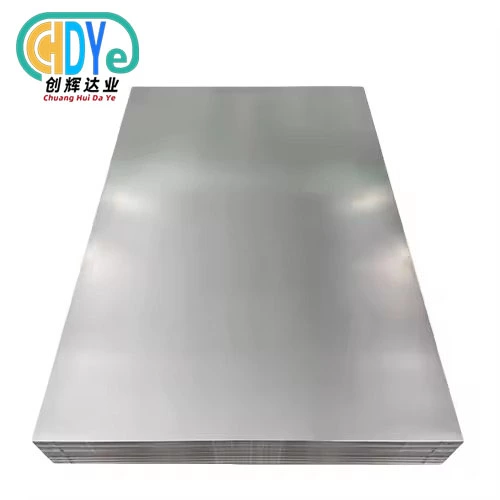
Top Industrial Applications of Titanium Alloy Plates
Aerospace and Defense Structural Components
Titanium plates are used by aircraft manufacturers for important parts of the airframe where less weight means less fuel use and a longer range. When compared to steel alternatives, wing skins made from Grade 5 plate reduce the overall weight of an airplane by 30% while still meeting the necessary strength standards under aerodynamic loads. Titanium is very stable at high temperatures, so engine firewall shields can survive temperatures over 800°F without breaking down. For military uses, armor plate that is both light and resistant to bullets is needed. Titanium alloy options meet MIL-DTL-46077 standards while lowering payload costs. These performance benefits justify the higher costs of the materials because they save money on operations over the decades that an airplane is in use.
Marine and Offshore Engineering
Hypersaline conditions and biological fouling are constant problems that cause corrosion in the shipbuilding and ocean businesses. Installing titanium alloy plates in desalination plants lets heat exchangers work without using sacrifice anodes or cathodic protection systems. This makes design easier and cuts down on maintenance needs. Deep-sea submersible hulls made from Grade 5 plate can survive hydrostatic pressures at depths of 6,000 meters and still have the nonmagnetic qualities that are needed for science instruments. Offshore oil platforms use titanium riser systems instead of carbon steel ones because carbon steel ones often fail due to pitting. This means that service times can be increased from 5 years to over 20 years, and expensive emergency fixes in rough open-ocean conditions are avoided.
Chemical Processing and Industrial Equipment
Titanium plates are required by chemical manufacturers for reactors, piping systems, and storage tanks that deal with corrosive materials. In chlor-alkali factories, Grade 2 plate is used in electrolysis cells, where chlorine gas and caustic solutions would kill other metals in months. Titanium's inert surface properties are used by pharmaceutical synthesis equipment to keep products pure and free of contamination, as required by FDA rules. Titanium's thermal conductivity and resistance to sulfur compounds and acidic condensates make it a good choice for heat exchangers in petroleum plants. It can last for decades without breaking down, while stainless steel needs to be replaced every few years.
Medical Device Manufacturing
Titanium alloys are the only ones that can be used in internal medical devices because they are biocompatible. Orthopedic fixing plates made from Grade 5 material have a value of flexibility that is closer to that of natural bone than that of stainless steel. This means that they don't create as much stress shielding, which can lead to bone loss around implants. Craniofacial reconstruction uses plates that are made just for each patient from ASTM F136-compliant stock, which bond forever with bone tissue without causing immune responses. Titanium is used to make surgical instruments because it is nonmagnetic and can be used in MRI machines. It also has the edge retention and corrosion resistance that surgeons need for more than 3,000 autoclave treatments over the life of an instrument.
Tiuseum an Alloy Plate vs. Competing Materials: Making the Right Choice
Comparing Strength-to-Weight and Corrosion Performance
When making choices about what to buy, you need to compare numbers to well-known things. Titanium alloys are 40% stronger per unit of weight than high-grade stainless steels. This means that parts can be redesigned to make systems lighter without lowering safety standards. Aluminum is lighter than titanium, but it is less resistant to corrosion. Aluminum pits within 18 months of being exposed to seawater, but titanium stays unaffected. Sacrificial kel-based superalloys have the same corrosion resistance as titanium, but their densities are almost twice as high, which makes them too heavy for use in aircraft. These differences in performance help explain why titanium has a large share of the market in situations where failure of a material would have serious consequences that make the higher cost of acquisition justified.
Understanding Grade Variations and Selection Criteria
Depending on operational needs, you can choose between commercially pure and alloyed grades. Grade 2 plate is best for chemical handling situations that need high resistance to corrosion and modest strength. Its yield strength of around 40 ksi is enough for pressure tank walls working below 500°F. Grade 5 is needed for aerospace structural uses that need tensile strengths of 120 ksi or more. This means that the material can't be shaped as easily, but it can hold more weight. Grade 12 is in the middle. It is stronger than Grade 5 but not as resistant to corrosion, making it perfect for marine fasteners and offshore structural members that are exposed to warm seawater. During source qualification, it is important to have material test results that show the chemical and mechanical qualities of the material.
Cost Analysis and Return on Investment
Titanium alloy plate costs about $15 to $40 per kilogram, but this can vary based on grade and order size. This is 3 to 8 times the price of stainless steel plates of the same size. When you consider that upkeep is no longer needed, service gaps are longer, and replacement costs are saved, this premium goes down over the duration of the product. Titanium heat exchangers for chemical plants might cost $120,000 compared to $35,000 stainless steel ones, but they last 25 years without needing to be fixed, while stainless steel ones need to be replaced every 7 years. When downtime costs, labor, and disposal costs are added to net present value calculations, titanium always comes out on top in corrosive environments, saving 40 to 60 percent over its lifetime despite costing more at the start.
Procurement Insights: How to Source Quality Titanium Alloy Plates
Evaluating Supplier Certifications and Quality Systems
Checking a supplier's qualifications and production skills is the first step in reliable sourcing. Getting ISO 9001:2015 certification makes sure that quality management principles like traceability, process control, and corrective action protocols are followed. Suppliers to the aerospace industry need to get extra NADCAP certification that covers chemical processing, heat treatment, and non-destructive testing. Check audit reports to make sure that the raw materials come from primary producers and not secondary scrap sources, which can have different compositions that change the mechanical properties. Suppliers with electron beam melting, vacuum arc remelting, and computer-controlled forging can provide the microstructural uniformity needed for important uses. This is what sets makers like Chuanghui Daye apart from wholesalers who just sell common stock.
Understanding Lead Times and Minimum Order Quantities
Titanium's complicated manufacturing timelines must be taken into account when planning production. Standard mill runs for common grades like Grade 2 and Grade 5 plate in thicknesses from 0.5 mm to 50 mm usually take 6 to 10 weeks from the time the order is placed until it is delivered. This is because of the stages of melting, forging, rolling, and inspecting. Mills plan production efforts that take 12 to 16 weeks longer because of custom sizes or grades. Thin gages less than 3 mm usually need 500 kg minimum orders, while plates more than 25 mm may be able to handle 200 kg orders because they need fewer rolling passes. Suppliers with inventory programs can cut lead times for standard sizes to two to three weeks, giving buyers more freedom for prototype development and urgent replacement needs without forcing them to keep too much stock on hand.
Verifying Material Authenticity and Test Documentation
In the specialty metals supply chain, fake products and grade replacement are big problems. Ask for Mill Test Reports (MTRs) that meet EN 10204 3.1 standards and list the chemical and mechanical test results that are specific to heat and can be linked to production lots. Ultrasonic inspection certificates make sure that the inside is sound by finding problems below the surface that can't be seen. Comparing the recorded chemical compositions to ASTM B265 standards will show that the alloying elements are within the acceptable ranges, with vanadium content between 3.5 and 4.5% and Grade 5 aluminum content between 5.5 and 6.75%. Reliable suppliers give buyers dimensional inspection reports and paperwork on the surface finish. These reports and receiving inspection processes keep buyers safe by keeping low-quality materials out of production streams, where failures could lead to safety incidents or product recalls.
Benefits of Using Titanium Alloy Plates in Industry
Long-Term Cost Efficiency Through Reduced Maintenance
Titanium plates are more expensive to buy than other materials, but they don't have any ongoing costs that add up over time. Marine parts don't need to be inspected, coated, or have their sacrificial anodes replaced every two years like carbon steel does. These maintenance tasks can cost anywhere from $15,000 to $50,000 per operation, based on how easy it is to get to the platform. Titanium alloy plate chemical processing equipment doesn't have to be shut down for repairs related to corrosion, so it keeps working between scheduled turnarounds. This saves money that would have been spent on repairs. These shortened maintenance cycles increase the rate at which assets are used, which lets factories reach design capacity factors above 95% instead of the 80–85% that are common for setups using corrosion-prone options.
Enhanced Product Performance and Competitive Advantages
Material choice has a direct effect on the capabilities and positioning of the final product in the market. Titanium exhaust systems help automakers make lighter cars by 40 to 60 percent. This improves fuel economy ratings, which affect what people buy and how they follow the rules. Aerospace OEMs can increase the range of airplanes by 8–12% by replacing gauges with titanium. This lets them fly nonstop routes that rivals can't, which gives them a strategic edge that commands higher fares. Medical device businesses that use titanium implants get FDA approvals faster because biocompatibility data is already available. This cuts down on the time it takes to get the product on the market compared to new materials that need a lot of clinical testing. These performance differences lead to more money coming in and a bigger share of the market, which more than justifies the higher material costs.
Sustainability and Recyclability Advantages
As industries are forced to cut carbon emissions, environmental concerns are becoming more important in the choices they make. Titanium is very durable, so products last longer and produce fewer emissions during production. For example, a heat exchanger that lasts 25 years instead of three stainless steel units over the same time period saves 60% of the carbon that was originally used to make it. End-of-life recycling is possible 100% of the time without losing any of its properties. This allows for closed-loop material flows that protect main ore resources. The move toward environmentally friendly operations in aviation sees titanium's ability to reduce weight while saving fuel as a key part of reaching the net-zero emissions goals set for 2050. Each kilogram of titanium removed from an airplane saves about 100 kg of CO2 emissions over its operating lifetime. These environmentally friendly features of titanium make it compatible with companies' ESG goals and provide real environmental benefits above and beyond what is required by law.
Conclusion
Titanium metal plates are smart investments that pay off in performance gains that can be measured in a wide range of challenging industrial settings. Their special mix of strength, resistance to corrosion, and durability solves problems that regular materials have, from lowering the weight of aerospace parts to making chemical processing more reliable. To be good at procurement, you need to know the differences between grades, how to find qualified suppliers, and how to do a lifecycle cost analysis that includes savings on maintenance and increases in productivity. Titanium alloy plate applications continue to grow as industries move toward higher performance standards and goals for sustainability. Partnering with qualified makers gives you access to certified products, professional know-how, and a reliable supply chain, all of which are important for staying ahead in global markets.
FAQ
Q: What distinguishes commercially pure titanium from titanium alloy plates?
A: Commercially pure grades, like Grade 2, have few alloying elements. They are very resistant to corrosion and easy to shape, but they are only about 50 ksi tensile strength. Alloy plates like Grade 5 are made of aluminum and vanadium. They have tensile strengths higher than 130 ksi but are harder to shape. Choose pure grades for chemical environments that need high resistance, and alloys for structural aerospace and medical uses that need high strength-to-weight ratios.
Q: How does heat treatment affect titanium plate properties?
A: Microstructure and mechanical properties are changed by heat treatment. Solution annealing at 1650–1750°F followed by rapid cooling creates regular, equiaxed grain structures that make the metal as flexible as possible. When materials are aged at lower temperatures, secondary layers form that make them stronger and harder. Stress relief annealing gets rid of any remaining stresses from the making process without changing the features much. Including the right heat treatment documents in MTRs ensures that the handling meets the needs of the application.
Q: What are typical minimum order quantities and lead times?
A: Standard plate sizes and common grades usually need at least 50 to 100 kg, and it takes 1 to 2 weeks from the time of order to delivery. The lead time can be 2 to 3 weeks if you need custom sizes or specialty grades. When suppliers keep inventory, wait times are cut down to 5-7 days for commonly ordered combinations. However, this convenience may come at a small price premium compared to buying directly from the mill.
Partner with Chuanghui Daye for Reliable Titanium Alloy Plate Supply
In Baoji, China, which is known as the "Titanium Capital,"Shaanxi Chuanghui Daye has been working with rare metals for more than 30 years and helps makers around the world find reliable materials. We have Grades 1, 2, 5, 7, 12, and TC20 titanium alloy plates in stock. The plates are between 0.5 mm and 50 mm thick and up to 3000 mm wide, and they meet the standards set by ASTM B265/ASME SB265, ASTM F67, ASTM F136, and ISO-5832-2(3). ISO 9001:2015 approval guaranties strict quality control, which includes checking the raw materials, testing them mechanically, inspecting them ultrasonically, and writing up a full Mill Test Report. Our high-tech factories have vacuum melting, electron beam furnaces, and precise CNC machining that make sure that every production lot has the same microstructure and the best surface quality. Email our expert team at info@chdymetal.com to talk about your unique needs and get quotes that are made just for you. As a reputable titanium alloy plate seller, we offer low factory-direct prices, the ability to make small batches on demand, and dependable global operations to meet your most demanding needs.
References
1. Boyer, R., Welsch, G., and Collings, E.W. (1994). Materials Properties Handbook: Titanium Alloys. ASM International, Materials Park, Ohio.
2. Donachie, M.J. (2000). Titanium: A Technical Guide, 2nd Edition. ASM International, Materials Park, Ohio.
3. Lutjering, G. and Williams, J.C. (2007). Titanium, 2nd Edition. Springer-Verlag, Berlin Heidelberg.
4. Veeck, S. and Rebstock, R. (2018). "Corrosion Resistance of Titanium Alloys in Chemical Processing Environments," Journal of Materials Engineering and Performance, Vol. 27, No. 8, pp. 4201-4215.
5. Peters, M., Kumpfert, J., Ward, C.H., and Leyens, C. (2003). "Titanium Alloys for Aerospace Applications," Advanced Engineering Materials, Vol. 5, No. 6, pp. 419-427.
6. ASTM International (2020). ASTM B265-20a: Standard Specification for Titanium and Titanium Alloy Strip, Sheet, and Plate. ASTM International, West Conshohocken, Pennsylvania.
Learn about our latest products and discounts through SMS or email