- English
- French
- German
- Portuguese
- Spanish
- Russian
- Japanese
- Korean
- Arabic
- Greek
- German
- Turkish
- Italian
- Danish
- Romanian
- Indonesian
- Czech
- Afrikaans
- Swedish
- Polish
- Basque
- Catalan
- Esperanto
- Hindi
- Lao
- Albanian
- Amharic
- Armenian
- Azerbaijani
- Belarusian
- Bengali
- Bosnian
- Bulgarian
- Cebuano
- Chichewa
- Corsican
- Croatian
- Dutch
- Estonian
- Filipino
- Finnish
- Frisian
- Galician
- Georgian
- Gujarati
- Haitian
- Hausa
- Hawaiian
- Hebrew
- Hmong
- Hungarian
- Icelandic
- Igbo
- Javanese
- Kannada
- Kazakh
- Khmer
- Kurdish
- Kyrgyz
- Latin
- Latvian
- Lithuanian
- Luxembou..
- Macedonian
- Malagasy
- Malay
- Malayalam
- Maltese
- Maori
- Marathi
- Mongolian
- Burmese
- Nepali
- Norwegian
- Pashto
- Persian
- Punjabi
- Serbian
- Sesotho
- Sinhala
- Slovak
- Slovenian
- Somali
- Samoan
- Scots Gaelic
- Shona
- Sindhi
- Sundanese
- Swahili
- Tajik
- Tamil
- Telugu
- Thai
- Ukrainian
- Urdu
- Uzbek
- Vietnamese
- Welsh
- Xhosa
- Yiddish
- Yoruba
- Zulu
Why Is Polishing Tantalum Rod Important for Performance?
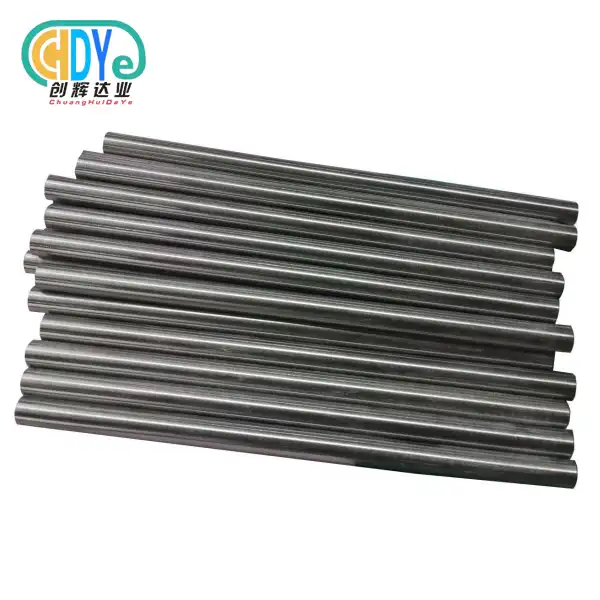
How well you polish a tantalum rod is a key factor in how well it works in high-stakes industry settings. The polished surface gets rid of tiny flaws, oxidation layers, and pollution zones that weaken the structure and make it less resistant to chemicals. When tantalum rods are precision polished to a mirror-like finish, they have much better corrosion resistance in acidic environments, less particulate contamination in semiconductor fabrication, polishing tantalum rod and longer operational lifespans by getting rid of stress concentration points that cause fatigue failures. With this surface treatment, tantalum goes from being a high-performance material to an ideal engineering answer.
Understanding Tantalum Rods and Their Properties
Because it has special properties that make it useful in many challenging areas, tantalum is one of the most refractory metals. This rare metal has a melting point above 3,000°C and a density of 16.65 g/cm³. It is resistant to almost all acids except hydrofluoric acid and hot concentrated alkalis. The material is flexible enough to be cold worked for a long time without needing to be annealed in between. It is also biocompatible, which means it can be used for medical implants.
Material Composition and Purity Standards
High-purity tantalum bars made at Chuanghui Daye have more than 99.95% tantalum in them, which meets the strict requirements for chemical processing equipment and lab equipment. To keep the material's high corrosion resistance, trace elements like niobium, tungsten, and iron are kept within very strict limits. The tensile strength is between 200 and 300 MPa after being annealed. This gives it good mechanical qualities for structural uses while still letting it be shaped easily. Our production follows strict rules for inspecting incoming materials. Before processing starts, spectrometric analysis is used to confirm the chemical makeup.
Surface Quality Impact on Functional Performance
The state of the surface has a big effect on how well tantalum rods work in service settings. Surfaces that are raw or pickled still have tiny flaws, oxide films, and contaminants that were there during the making process. These surface flaws make it easier for corrosion to start in harsh chemical conditions, lower the material's resistance to fatigue under repeated loading, and cause particle contamination in cleanrooms. A finished finish takes care of these problems in a planned way. When you smooth something, you get rid of surface-breaking flaws that cause stress to build up, oxide layers that get in the way of welding or soldering, and uneven surface energy that makes coatings stick better. Researchers have found that when exposed to hot sulphuric acid, polished tantalum surfaces corrode up to 40% less quickly than machined surfaces.
Polishing Tantalum Rods: Techniques and Best Practices
To get the best surface finish on tantalum, you need to know a lot about how the material behaves when polishing a tantalum rod and how to handle it. Because tantalum is brittle and tends to work-harden, it presents problems that can't be solved with standard metal finishing methods. Our facility uses a variety of polishing methods that are customised to different diameter ranges, length needs, and final surface requirements.
Mechanical Polishing Methods
Mechanics are the building blocks of finishing tantalum rods. The first step in the process is centerless grinding with aluminium oxide or silicon carbide abrasives to make sure the dimensions are correct and to get rid of cutting marks from the turning process. Starting with 120 grit and moving on to 240, 400, and 600 grit steps, progressive grit sequences gradually smooth out the surface texture while keeping diameter tolerances within ±0.05 mm. After grinding, buffing is done with cotton or sisal wheels that have been charged with aluminium oxide compounds to give the tantalum its typical shine. Choosing the right coolant is very important for mechanical processes. Water-based fluids keep surfaces from oxidising because they stop heat from building up, while petroleum-based coolants leave behind residues that need extra cleaning steps.
Electropolishing and Chemical-Mechanical Approaches
Electropolishing is a great way to make the surfaces of tantalum bars with complicated shapes or tight tolerance requirements very smooth. The anodic dissolving process takes away material from surface peaks more than anywhere else. This makes mirror finishes with roughness levels below 0.1 micrometres. Electrolytes are usually made up of mixes of sulphuric acid and methanol that are kept at temperatures between 10°C and 30°C. Current density parameters range from 10 to 30 A/dm², based on how much material needs to be removed and how good the surface needs to be. Chemical-mechanical cleaning is a process that removes damaged layers below the surface caused by mechanical grinding while keeping the shape and size of the part under control. For small sticks with a diameter of 1 to 5 mm, this hybrid method works especially well because normal buffing methods aren't practical.
Comparing Tantalum Polishing Rods with Alternatives
Material selection decisions in critical applications require understanding relative performance characteristics across candidate metals. While tungsten, niobium, and other refractory metals offer certain advantages, tantalum's combination of properties often makes it the preferred choice despite higher material costs.
Performance Comparison with Tungsten and Niobium
Tungsten provides superior high-temperature strength and the highest melting point among metallic elements at 3,422°C, making it ideal for extreme thermal environments. The material's brittleness and difficulty in forming complex shapes limit its application range compared to tantalum's exceptional ductility. Niobium shares many properties with tantalum—both belong to the same periodic table group—and costs significantly less, creating appeal for cost-sensitive applications. Tantalum surpasses niobium in corrosion resistance, particularly in oxidising acid environments, polishing the tantalum rod where niobium forms soluble compounds. The polished surface finish amplifies tantalum's inherent advantages by maximising corrosion resistance and minimising contamination risk.
Polished versus Unpolished Surface Performance
Direct comparison studies reveal substantial performance differences between polished and unpolished tantalum rods across multiple metrics. Corrosion testing in boiling 70% sulfuric acid demonstrates that polished surfaces exhibit weight loss rates 35-40% lower than pickled surfaces over 1,000-hour exposures. Fatigue testing shows polished specimens withstand 50% more load cycles before crack initiation compared to machined surfaces, attributed to the elimination of stress concentration sites. Particulate generation measurements in vacuum chamber simulations indicate polished rods produce 80% fewer particles than unpolished alternatives during thermal cycling. A major pharmaceutical manufacturer documented equipment lifespan improvements from 8 years to 12 years after switching from standard tantalum rods to polished versions in reactor vessel heating elements, representing a 50% increase in service life that offset the modest premium for polished material.
Procurement Considerations for Tantalum Polishing Rods
Successful procurement extends beyond identifying material specifications to encompass supplier evaluation, quality assurance verification, and total cost of ownership analysis. Buyers serving critical applications cannot afford supply chain disruptions or quality inconsistencies that compromise production schedules and product integrity.
Supplier Qualification Criteria
ISO 9001:2015 certification provides baseline assurance that suppliers maintain documented quality management systems with appropriate controls over production processes. Chuanghui Daye's certification demonstrates our commitment to consistent quality through systematic procedures covering material traceability, process control, inspection protocols, and corrective action systems. Beyond certification, evaluate suppliers based on production capabilities, including melting equipment quality, processing machinery precision, and inspection instrumentation sophistication. Our electron beam melting furnaces produce high-purity ingots free from crucible contamination, while precision lathes and centerless grinders maintain tight dimensional tolerances throughout rod production. Technical support capabilities matter significantly when specifying custom dimensions or addressing application-specific challenges. Our technical team, led by industry veterans with over 30 years of rare metal experience, provides consultation on material selection, surface finish requirements, and processing feasibility.
Pricing Structure and Order Flexibility
Tantalum pricing reflects raw material market dynamics, with costs fluctuating based on global supply-demand balance. Polished rods command premiums over standard pickled finishes, typically ranging from 15% to 30% depending on diameter, surface finish specifications, and order volume. Minimum order quantities vary by supplier and product configuration; our facility accommodates both large production runs for OEM manufacturers and small-batch orders serving research institutions. Volume pricing structures reward larger commitments, with cost reductions of 8-12% available for orders exceeding 100 kilograms. Lead times span 4 to 8 weeks for standard diameters in polished finish, while custom specifications may require 6 to 10 weeks to accommodate specialised processing steps and inspection requirements. Rush order capabilities exist for urgent project needs, with expedited production adding 20-25% to standard pricing.
Maximising Performance—Why Polishing Is a Strategic Investment
Viewing polished tantalum rods as cost centres rather than strategic investments overlooks substantial lifecycle value creation. The incremental investment in superior surface finish generates returns through multiple pathways: extended component lifespan, reduced maintenance frequency, improved process yields, polishing of the tantalum rod and enhanced equipment reliability.
Cost-Benefit Analysis and ROI Considerations
A full total cost of ownership model shows that polished tantalum bars are more valuable even though they cost more to buy. In the case of a chemical reactor heating element, unpolished rods need to be replaced every 5 years, which costs $8,000 for the supplies and the labour to install them. The annualised costs drop from $1,600 to $1,150 with polished rods, which cost $9,200 at first but last 8 years. This is a 28% drop. The longer time between replacements also cuts down on production problems. Each unplanned shutdown costs $15,000 in missed output and costs to start up again. A company that makes semiconductor equipment said that contamination-related yield losses went from 2.3% to 0.7% after switching to polished tantalum parts in vacuum tanks. This saved the company $340,000 a year on a production line that processed $50 million worth of wafers. In the real world, these results show that efforts in surface quality pay off in a measurable way.
Emerging Technologies and Future Trends
Automation, process monitoring, and hybrid finishing methods are all helping to make polishing technology better. Robotic polishing systems with force-feedback sensors get uniform results across production batches while cutting down on the amount of work that needs to be done by hand. In-process surface roughness measurement lets you change parameters in real time, which improves finish quality and cuts down on redo. Compared to traditional sequential methods, hybrid ways that use both electrochemical and mechanical action cut processing time by 40%. Closed-loop coolant systems and abrasive recycling programs that have less of an effect on the environment without lowering the quality of the surface are the result of worries about sustainability. As electronics and medical devices get smaller, there is a greater need for small-diameter polished rods with very smooth surfaces. This forces suppliers to improve their quality control methods and process technology.
Conclusion
When polished, tantalum rods go from being great materials to perfect engineering solutions that give measured performance gains in tough situations. The surface treatment gets rid of flaws that make the material less resistant to rust. It also increases the useful life by getting rid of places where fatigue can start, and it lowers the risk of contamination in sensitive areas. Polished rods cost more than standard finishes, but a full lifecycle study shows that they are worth it because they last longer, need less maintenance, and produce better results. To make sure that materials always work well, procurement decisions should give priority to suppliers with quality systems that have been checked, modern processing tools, and technical know-how. The smart investment in polished tantalum bars pays off by making operations more reliable and efficient.
FAQ
1. How much longer do polished tantalum rods last compared to unpolished versions?
Polished tantalum rods typically demonstrate 40-60% longer service life in corrosive environments compared to unpolished alternatives. The extended lifespan results from the elimination of surface defects where corrosion initiates, creating uniform passive films that resist chemical attack more effectively. Actual lifespan improvements vary based on application severity, with aggressive acid exposures showing the most dramatic differences.
2. Can tantalum rods be repolished multiple times without compromising performance?
Tantalum rods can undergo multiple repolishing cycles without material property degradation. Each polishing operation removes only 0.05-0.15 mm of material, allowing rods to be refinished 3-5 times depending on initial diameter and dimensional tolerances. The process restores surface quality and extends component life economically compared to purchasing replacement rods.
3. What certifications should I look for when selecting a polishing tantalum rod supplier?
ISO 9001:2015 certification indicates suppliers maintain documented quality management systems with appropriate process controls. Material test certificates documenting chemical composition and mechanical properties provide traceability and specification compliance verification. Suppliers serving medical or aerospace sectors may hold additional certifications demonstrating the capability to meet stringent industry-specific requirements.
Partner with Chuanghui Daye for Premium Polished Tantalum Rod Solutions
Shaanxi Chuanghui Daye Metal Material Co., Ltd. delivers polished tantalum rods engineered for performance in your most demanding applications. Our ISO 9001:2015 certified manufacturing facility in China's Titanium Capital combines advanced processing, polishing tantalum rod equipment with rigorous quality control protocols to produce rods meeting specifications for purity (Ta >99.95%), dimensional accuracy (diameters 1-50 mm), and surface finish. Each polishing tantalum rod undergoes a comprehensive inspection, ensuring consistent quality you can trust for chemical processing equipment, laboratory apparatus, and high-temperature environments. Our technical team provides expert guidance on material selection and custom processing requirements, backed by three decades of rare metal industry experience. Whether you need prototype quantities for research applications or production volumes for OEM manufacturing, we offer flexible ordering with competitive factory-direct pricing. Contact our team at info@chdymetal.com to discuss your requirements with a trusted polishing tantalum rod manufacturer committed to your success.
References
1. Davis, J.R. (2000). Corrosion of Refractory Metals: Tantalum, Niobium, Tungsten, and Molybdenum. Materials Park, OH: ASM International.
2. Klötzer, S., & Haubner, R. (2016). Surface finishing of refractory metals for high-purity applications. International Journal of Refractory Metals and Hard Materials, 58, 109-118.
3. Schmidt, P.F. (2018). Tantalum and Niobium: Properties, Processing, and Applications in Electronics. Berlin: Springer-Verlag.
4. Weatherly, G.C., & Dahms, M. (2015). Electropolishing of tantalum for corrosion-resistant applications in chemical processing. Corrosion Engineering Science and Technology, 50(4), 267-275.
5. Miller, G.L. (1959). Tantalum and Niobium: Their Industrial Applications and Production. London: Butterworths Scientific Publications.
6. Zhang, W., & Chen, Y. (2019). Surface quality effects on mechanical properties and corrosion resistance of refractory metal components. Journal of Materials Engineering and Performance, 28(6), 3421-3430.
Learn about our latest products and discounts through SMS or email